

Cart
0
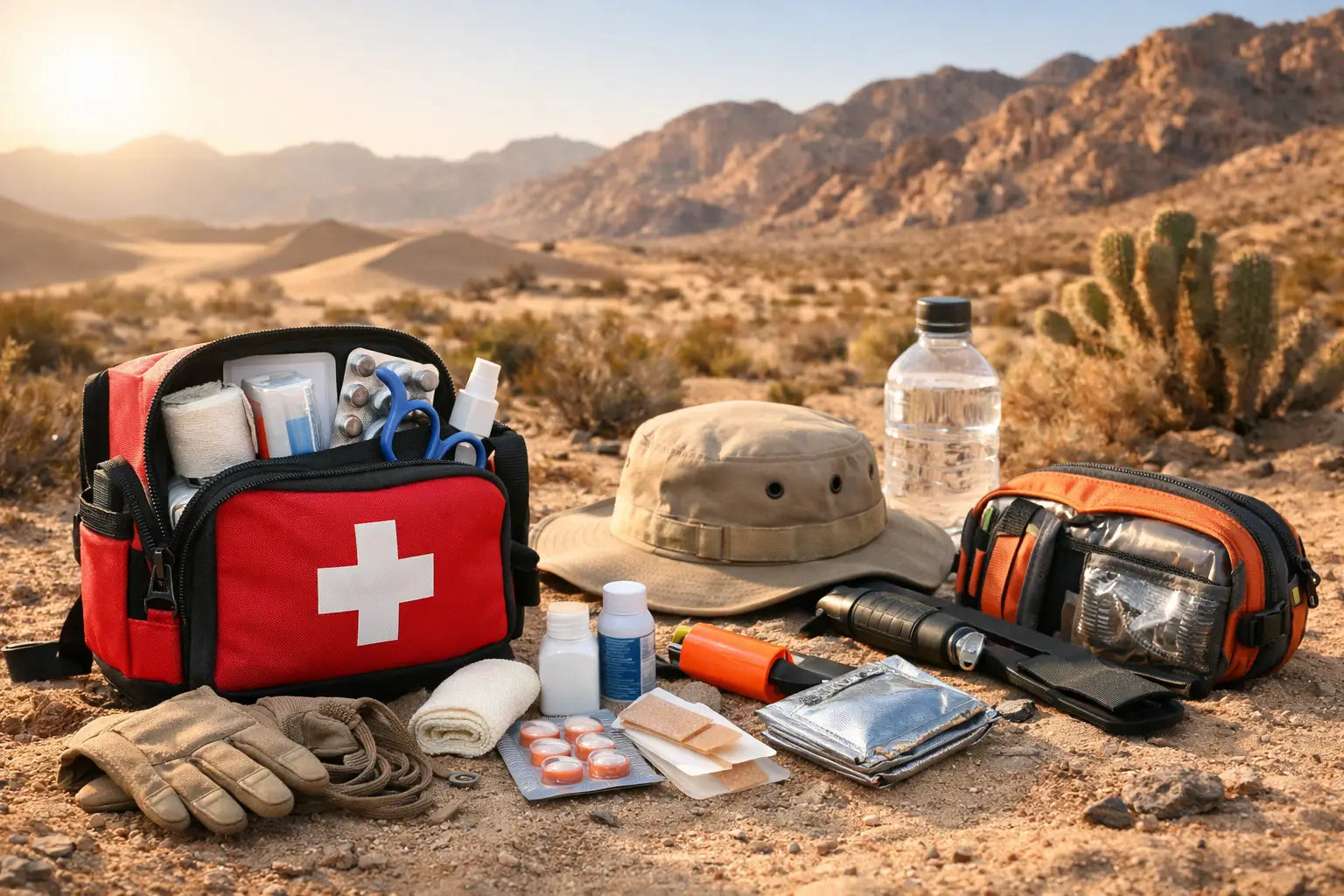
A scraped knee on a cool forest trail is one thing. A bad blister, deep cut, or heat problem five miles into open desert is a different problem entirely. The best desert first aid kit is not just a standard pouch with bandages tossed inside. It needs to handle heat, dust, distance, and the fact that help may be a long drive away.
In the Southwest, your kit has to do more than cover minor injuries. It has to stay organized in rough travel, hold up inside a hot vehicle, and give you what you need for the problems that show up most often in dry, exposed terrain. That means thinking beyond the generic prebuilt kit hanging on a store rack.
What makes the best desert first aid kit different
Desert conditions change what matters. In a mild climate, you can get away with a basic first aid setup for small cuts, headaches, and routine cleanup. In Arizona, Nevada, New Mexico, and similar terrain, sun exposure, dehydration, heat illness, cactus spines, sharp rock, and long response times all raise the stakes.
The biggest difference is environment. Adhesives can fail faster in sweat and heat. Medications can degrade if they sit in a truck all summer. Fine dust gets into everything. Water matters more, shade matters more, and minor issues can turn serious faster when someone is already overheated or low on fluids.
That is why the best desert first aid kit is built around likely field problems, not a generic checklist. You want gear that works when temperatures climb, when hands are dirty, and when you are treating someone from the tailgate, trail, or camp chair instead of a clean indoor space.
Start with the right bag and layout
Before you think about contents, think about the container. Soft, floppy kits with no internal organization waste time. In the desert, that matters. If someone is dizzy from heat or bleeding from a sharp edge on a rock slider, you do not want to dump the whole kit onto the ground to find gauze.
A compact zip case or pouch with clear sections is usually the best move for day trips, range bags, and short hikes. For overlanding, off-road rigs, or remote camps, a larger organizer with labeled compartments makes more sense. The bag should open fully, resist dust reasonably well, and be easy to grab with one hand.
Bright color helps. So does a simple layout. Trauma items in one section, wound care in another, meds in another. The goal is speed, not looking tactical.
Core wound care for desert travel
Cuts, scrapes, punctures, and abrasions are common in rocky country. You need more than a handful of small adhesive bandages.
A solid desert kit should include assorted bandages, sterile gauze pads, rolled gauze, medical tape, antiseptic wipes, antibiotic ointment, and blister treatment. Knuckle and fingertip bandages are worth having because hands take a beating around camp, tools, and vehicles. Larger nonstick dressings are useful for road rash, bigger scrapes, or burns from hot metal and cookware.
Tweezers matter more in the desert than many people realize. Cactus spines, splinters, and small debris are routine problems. A decent pair with a fine tip works better than the flimsy kind thrown into bargain kits. Irrigation also matters. A wound-cleaning syringe or saline wash can help remove grit that plain wiping will not touch.
This is where cheap kits usually fall short. They look full, but they are padded with low-value items and not enough of the basics you actually use.
Heat illness is not optional gear planning
If your first aid kit is built for the desert, it needs to account for heat exhaustion and heat stress. That does not mean your first aid pouch replaces water, electrolytes, shade, or common sense. It means your medical setup should support those essentials.
Cooling towels, instant cold packs, and oral rehydration packets all earn their space. Rehydration packets are especially useful because plain water alone is not always enough when someone has been sweating hard for hours. If a person is cramping, weak, lightheaded, or nauseated, electrolyte support can help while you move them into shade and cool them down.
That said, there is a trade-off. Instant cold packs are handy, but they are bulky and single-use. For a compact hiking kit, rehydration support and a plan to create shade may matter more. In a vehicle kit, carrying both is usually worth it.
Your first aid kit should also include a simple reminder card with signs of heat exhaustion versus heat stroke. Under stress, people miss obvious symptoms. Confusion, altered behavior, or loss of sweating in extreme heat is not a wait-and-see situation.
The best desert first aid kit should cover trauma too
For remote driving, backcountry travel, hunting access roads, and range use, basic first aid is only part of the picture. You should also carry a few trauma-focused items, especially if you are far from fast medical response.
A tourniquet from a reputable maker, compressed gauze, trauma shears, and pressure bandage are smart additions for higher-risk use. This is not about pretending every trip turns into a worst-case scenario. It is about acknowledging that recovery time is slower in remote country and sharp tools, firearms, and vehicle repairs carry real risk.
Training matters here. A tourniquet is valuable, but only if you know when and how to use it. The same goes for wound packing. If you spend time on trails, desert roads, or remote public land, a basic stop-the-bleed class is worth more than another gimmick tool in your bag.
Medications and personal-use items that belong inside
A desert kit should cover the boring problems too, because those are the ones most likely to cut a trip short. Pain relievers, antihistamines, anti-diarrheal medication, antacids, and personal prescriptions belong in the kit or right beside it.
Hydrocortisone cream helps with bites, rashes, and skin irritation. Burn gel can be useful around stoves, fire pits, and hot gear. Eye wash is worth considering in dusty country, especially for off-road use or windy camp conditions. Fine debris in the eye can stop someone cold.
Be realistic about storage. Medications left in extreme heat can lose effectiveness. If your kit lives in a vehicle full time, rotate those items often and check expiration dates. The best desert first aid kit is not the one with the longest contents list. It is the one that is stocked, usable, and maintained.
Desert-specific add-ons most people forget
Some supplies are not always labeled as first aid, but they solve medical problems in the field. A small CPR face shield takes almost no space. Nitrile gloves help with hygiene and wound care. Moleskin or blister pads are essential if you hike. A triangular bandage adds flexibility for slings, wraps, and improvised support.
Sun exposure also belongs in the conversation. Sunscreen and lip balm are prevention items, but they help reduce the kind of skin damage that turns into a medical issue over a long day. If you operate in snake country, the answer is not a snake bite kit full of gimmicks. It is pressure-free wound protection, calm patient handling, and a fast evacuation plan.
A notebook and marker can also help. Writing down time of injury, symptoms, medications given, or tourniquet application time is useful when stress is high.
Prebuilt kit or build your own?
It depends on how you use it. A good prebuilt kit can save time and give you a solid starting point. For casual day users, that may be enough if you upgrade the weak spots. Most prebuilt kits need better tweezers, more gauze, better tape, and added heat-management items.
For overlanders, regular desert hikers, and anyone spending real time off pavement, building your own usually makes more sense. You can size it for your group, your trip length, and your level of risk. A solo hiker needs a different loadout than a family in a side-by-side or a truck crew covering long backroads.
That use-case approach is where a desert-focused outfitter like Arizona Desert Gear makes more sense than a generic big-box shelf. The conditions are different, so the gear selection should be too.
How often should you check your kit?
At minimum, check it at the start of every season and before any major trip. In desert environments, more often is better. Heat, vibration, and dust wear things down. Tape dries out, wrappers split, meds expire, and items get borrowed without being replaced.
A quick five-minute inspection does the job. Make sure bandages still seal, gloves are intact, liquids have not leaked, and critical items are where they belong. If your kit rides in a vehicle year-round, treat it like any other maintenance item.
Build for the trip, not the fantasy
The best desert first aid kit matches the way you actually travel. For a short morning hike near a busy trailhead, a compact kit with blister care, wound basics, meds, and electrolyte support may be enough. For a full-day off-road run with poor cell coverage, add trauma gear, more water support, and supplies for multiple people.
Do not buy for the packaging or the item count. Buy for heat, dust, distance, and the kind of injuries and problems that show up in desert country. When the sun is high, the trail is rough, and the nearest help is not close, simple gear that works is what matters most.
If your kit can hold up to those conditions and you know how to use what is inside, you are already ahead of most people who head into the desert.

