

Cart
0
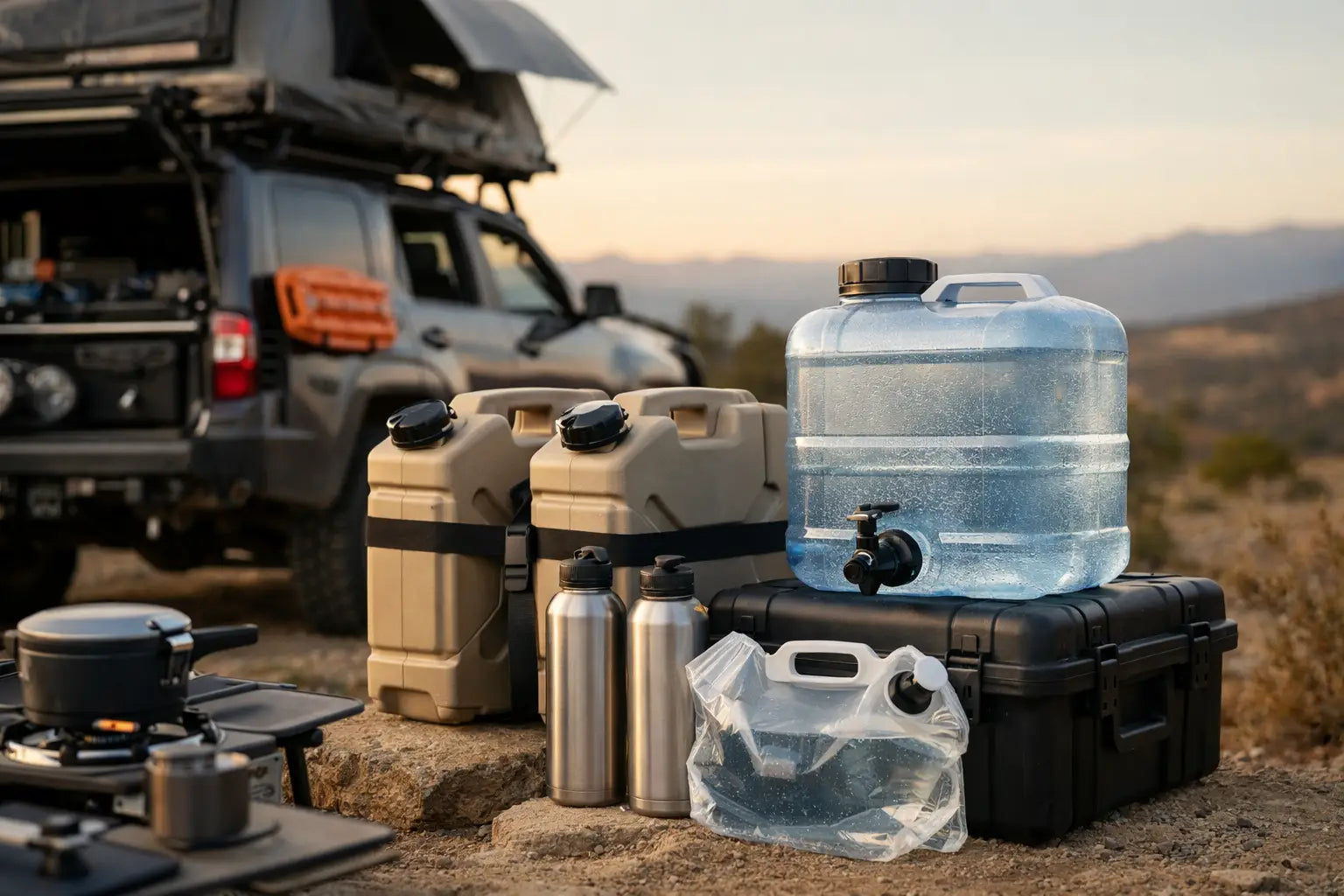
A bad water plan usually shows up late - miles from pavement, long after the cooler ice is gone, when the sun is still working and your margin for error is already thin. If you want to know how to pack overland water, start with one rule: pack for the environment you are actually driving through, not the trip you hope to have.
In the Southwest, that means heat, distance, dust, vibration, and the chance that a short day run turns into an overnight problem. Water is not just another supply item. It is your drinking water, your cooking water, your cleanup water, and in some cases your emergency buffer if the vehicle breaks down or the route takes longer than planned. The way you pack it matters as much as how much you bring.
How to pack overland water for desert travel
The first mistake most people make is treating water like one single load. They throw a few bottles in the cab, maybe a jug in the rear cargo area, and call it covered. That works until one container leaks, one gets buried under gear, or your main supply is hard to reach when you actually need it.
A better approach is to split your water into layers. Keep a small amount immediately accessible, keep your primary daily supply secured and easy to dispense, and keep part of your total volume protected as reserve. That setup gives you flexibility without turning your vehicle into a rolling pile of loose plastic.
For most overland trips, you are balancing three competing needs. You need enough water to stay ahead of heat and exertion. You need containers that can survive rough roads and sun exposure. And you need to carry that weight without wrecking your storage layout or loading the vehicle in a way that works against you.
That is why the best water setup is rarely the biggest tank you can fit. It is the one you can pack securely, access quickly, and manage over multiple days without wasting space or compromising reliability.
Start with realistic water volume
There is no single number that fits every trip, but desert travel punishes underestimating more than overpacking. Drinking needs climb fast with heat, wind, elevation, and trail work. Add cooking, basic washing, and any extra passengers, and your planned amount can disappear faster than expected.
A useful baseline is to separate water by purpose. Drinking water is non-negotiable. Utility water for cooking and cleanup is important, but it should never compete with your drinking reserve. If you are packing for remote Arizona routes or similar terrain, plan with extra margin. A delayed return, a recovery situation, or a mechanical issue can turn one day of supplies into two.
If your trip is short and supported, modular containers often make more sense than a hard-mounted tank. If you are traveling farther from resupply and building a repeatable rig setup, a larger dedicated storage system may be worth the space. The trade-off is simple: tanks are efficient and clean, but portable containers are easier to move, inspect, refill, and replace.
Pick containers that match the route
Not every water container belongs on washboard roads in triple-digit heat. Thin disposable bottles are fine as backup or day-use grab-and-go water, but they should not be your whole plan. They split, crush, and shift around too easily. Soft collapsible containers save space when empty, but some hold up better in camp than in constant vehicle use.
For rough travel, rigid containers usually give you the best mix of durability and packability. Good jugs and canteens handle vibration better, stack more cleanly, and are less likely to develop pinhole leaks from rubbing against other gear. Shape matters too. Square and low-profile containers pack tighter and waste less cargo room than round ones.
Cap design is another detail people ignore until it causes trouble. Wide mouths are easier to clean and refill. Spigots are convenient in camp but can be vulnerable if they are exposed in transit. Screw caps are simple and dependable, but pouring from a heavy jug gets old fast. If you use a spigot-style container, protect the valve and pack it so it cannot get bumped or crushed.
Whatever container you choose, test it before a real trip. Fill it, strap it down, drive with it, and see what leaks, flexes, or becomes annoying after a few hours. Water gear that fails in your driveway is useful information. Water gear that fails 40 miles into a desert route is a problem.
Pack heavy water low and secure
Water gets heavy in a hurry. That affects handling, braking, and how stable your load stays over rough ground. The general rule is straightforward: keep heavy water low, close to the center of the vehicle, and tied down so it cannot move.
Roof storage looks convenient, but water up high is usually a poor trade unless you have no other option. It raises your center of gravity, adds stress to the rack, and leaves your supply baking in direct sun. In hot desert conditions, that is not where you want your primary water load.
Inside the vehicle or in a protected cargo system is usually the better call. If you are running drawers, leave room for water where the weight stays low. If you are packing a rear cargo area, use straps, brackets, or containment panels so the containers do not slide into other gear. Loose water is more than annoying. It can damage the containers, wear through labels so you lose track of contents, or become a hazard during hard braking.
If your setup includes multiple smaller containers, spread them with intention. Keep everyday-use water easiest to reach. Put reserve water deeper in the loadout, but not so buried that you would have to unload half the rig to get to it.
Keep some water within arm's reach
Your main supply can ride in the cargo area, but some water should always be accessible from the cab or with a quick stop. That matters more in hot weather when small, frequent drinking beats waiting until you are already behind.
A bottle in a door pocket, an insulated bottle in a seat organizer, or a small canteen clipped where it will not roll around can cover that need. The point is not convenience for its own sake. The point is staying hydrated without tearing apart your load every time you need a drink.
This is also where separation matters. Do not rely on one large container for every use. If that container leaks, gets contaminated, or becomes hard to access, your whole water plan goes with it. Redundancy is not overkill in the desert. It is basic preparation.
Protect water from heat, contamination, and confusion
You cannot keep water cold forever in a hot vehicle, but you can keep it cleaner, better tasting, and less exposed to abuse. Store it out of direct sun when possible. Use shaded cargo areas, storage bins, or insulated covers if your setup allows. Heat alone will not automatically ruin stored water, but prolonged exposure inside a hot vehicle can make plastic taste worse and stress lower-grade containers.
Clean containers matter just as much as tough ones. If you refill reusable jugs without cleaning them properly, you are asking for bad taste and possible contamination. Dry them fully between trips when you can, and keep drinking water containers separate from fuel, chemicals, and dirty recovery gear.
Labeling helps more than people think. Mark containers for drinking water or utility water so nobody uses the wrong one for dishwashing, hand cleaning, or pet use. In low light or a rushed camp setup, clear labels prevent waste and keep your reserve intact.
Build in a backup plan
Anyone serious about learning how to pack overland water should plan for failure points. A cap can crack. A jug can leak. A route can take longer than planned. One backup method is not enough if the rest of your storage is fragile or badly organized.
That backup might mean sealed bottles tucked into a separate compartment. It might mean a second smaller jug stored away from your primary supply. It might also mean carrying basic purification capability if your route includes reliable water sources, though in much of the desert you should not count on finding water where and when you need it.
The backup plan should be boring and dependable. Fancy systems are fine when they work. A few sealed liters that stay untouched until needed are often what save the day.
Match the setup to the trip length
Day trips, weekend runs, and multi-day overland travel should not be packed the same way. For a day trip, you can get by with simple modular storage as long as you carry extra. For a weekend, access and dispensing start to matter more because you are using the system repeatedly. For longer travel, refill strategy, container cleaning, and cargo efficiency matter a lot more.
This is where purpose-built gear earns its keep. A clean, durable water setup that fits your vehicle and terrain will always outperform random bottles tossed into open cargo space. Arizona Desert Gear serves the kind of traveler who already understands that the desert exposes weak gear fast.
A solid water plan is not complicated, but it does need to be deliberate. Pack enough, split it into usable layers, secure the weight, and protect your reserve. When the temperature is high and help is far off, simple systems usually beat clever ones. Pack water like you expect the desert to test your setup, because sooner or later, it will.

