

Cart
0
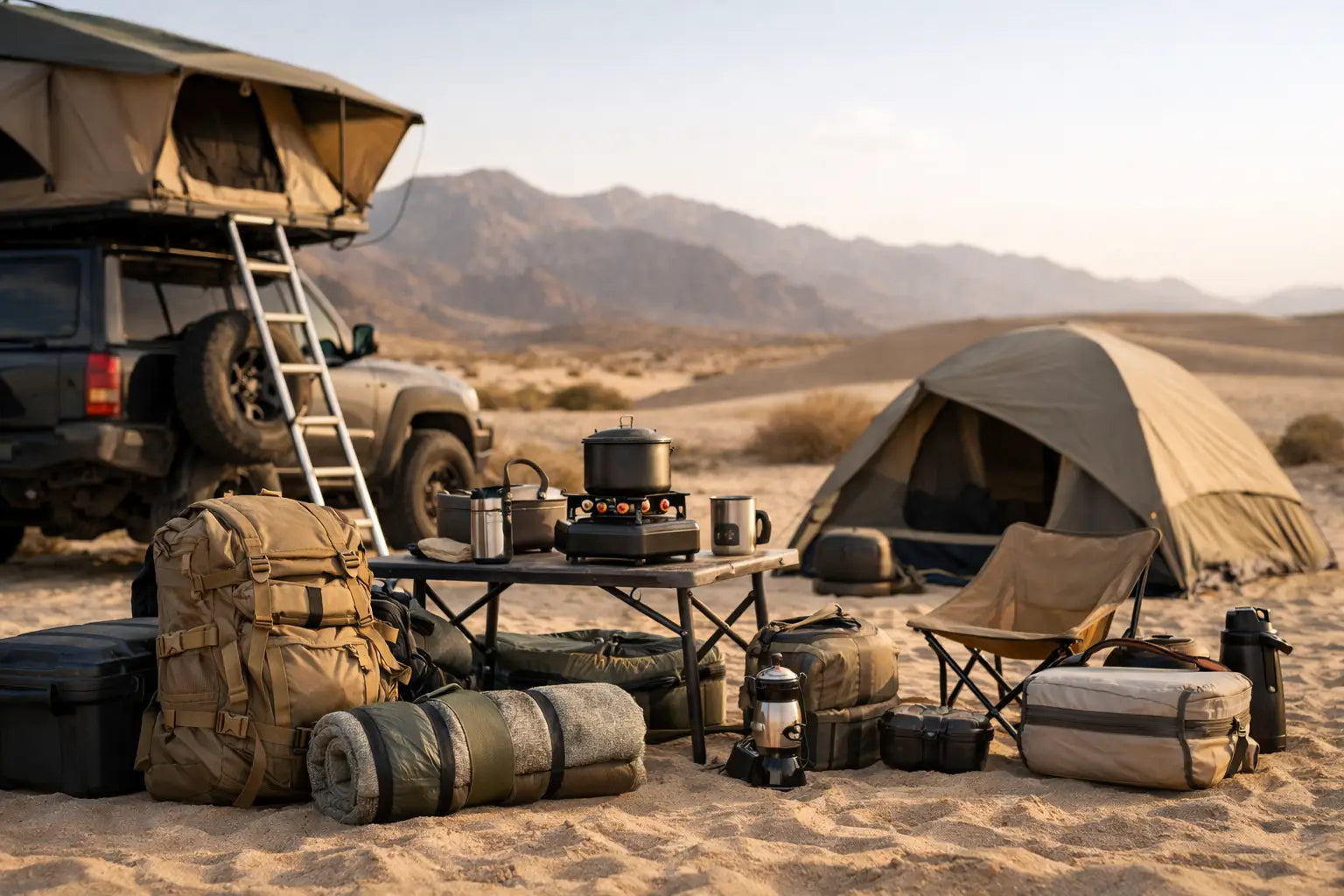
You find out fast in the desert whether your gear was chosen for the terrain or just bought on sale. A solid desert camping loadout example is not about packing more stuff. It is about carrying the right equipment for heat, wind, cold nights, sharp ground, and long distances from help.
That matters because desert camping punishes weak systems. Water planning gets exposed first. Shelter comes next. Then clothing, sleep setup, lighting, power, and recovery gear. If one piece is wrong, the rest of the loadout starts working harder than it should.
For most campers in Arizona and the Southwest, the best approach is simple: build around survival first, then comfort, then extras. That keeps your kit useful whether you are running an overland route, setting up a base camp near a trail system, or spending a single night off a dirt road.
A practical desert camping loadout example
A good loadout starts with the conditions, not the product category. In the desert, your biggest variables are heat exposure, low humidity, rough ground, blowing dust, and major temperature swings after sunset. A loadout that feels complete in a forest campground can come apart fast in open desert.
For a one- to two-night trip with vehicle access, think in layers of function. You need dependable water storage, sun protection, a shelter that handles wind, a sleep system that works on hard ground, clothing built for heat and abrasion, and enough lighting and power to stay operational after dark. If you are traveling farther from pavement, add recovery tools, navigation backups, and more water than you think you need.
The point is not to chase a perfect list. It is to build a system that still works when the forecast is wrong, the wind picks up, or the route takes longer than planned.
Water is the center of the loadout
If there is one category that defines a desert camp setup, it is water. Start with separate water for drinking, cooking, and emergency reserve. Combining all of it into one container is a gamble. If that container leaks, gets contaminated, or is harder to reach than expected, your margin disappears.
Rigid jugs work well for base camp because they ride securely and are less likely to collapse or puncture. Soft containers save space and can be useful as backup capacity, but they are better as part of the system, not the whole system. A practical setup often includes one primary water container, one smaller daily-use container, and one emergency reserve that stays sealed unless things go sideways.
How much is enough depends on season, activity level, and how far you are from resupply. In mild weather, a short vehicle-supported trip is one thing. In summer heat, or if you are hiking from camp, your consumption can climb fast. The trade-off is obvious: water is heavy, but running light on water is not a real option in desert country.
Shelter needs wind resistance more than luxury
A lot of campers focus on floor space and forget what desert wind does to weak shelter. The better choice is usually a low-profile tent or a compact shelter system that stakes out tight and handles gusts without turning into a kite. Fast setup matters too, especially if you are arriving late or dealing with fading light.
Shade is its own category. Your sleeping shelter may not give you enough daytime protection, so many desert campers add a tarp, awning, or shade structure for cooking and downtime. This is one place where cheap gear often fails. UV exposure and wind wear out fabric, stitching, and attachment points quickly.
Ground conditions matter just as much. Desert surfaces can be rocky, hard-packed, sandy, or covered in thorns. Standard stakes may not hold well, so your shelter system should include anchoring options that fit the terrain. If the weather is stable and bugs are low, some campers go lighter with a bivy or cot setup, but that depends on season and exposure.
Building the sleep system in a desert camping loadout example
Desert nights can get cold even after a hot day, so your sleep system has to handle both heat management and nighttime temperature drop. That usually means skipping bulky cold-weather gear and choosing pieces that breathe well but still insulate from the ground.
The sleeping pad does more work than many people think. In desert conditions, comfort is one part of the equation, but puncture resistance and insulation from hard ground matter just as much. Cots can be a strong option for vehicle-based camp because they get you off rocky surfaces and can improve airflow in warm weather. The downside is bulk.
For bedding, a light sleeping bag or quilt is often enough outside of winter. If your trips span different elevations, flexibility matters more than chasing one perfect temperature rating. Layering with a liner or blanket usually gives you more range than relying on one oversized bag.
Clothing should protect, not just breathe
People who are new to desert camping often overdress for heat in the wrong way. They think less coverage means more comfort. In reality, lightweight long sleeves, durable pants, and a wide-brim hat usually outperform minimal coverage once the sun is high and the brush gets thick.
Your base clothing should manage heat, dry quickly, and hold up against abrasion. Cotton can feel fine at first but becomes less useful once sweat, cool evenings, and repeated wear get involved. Synthetics and technical blends are usually the safer choice for active use.
Footwear depends on terrain and trip style. If you are mostly staying around camp and driving between stops, lighter boots or trail shoes may be enough. If you are hiking through rock, cactus, loose slopes, or sharp wash bottoms, stronger ankle support and better sole protection make sense. Gaiters can help in sandy or brush-heavy terrain, but they are not mandatory for every trip.
The gear that keeps camp functional
Once water, shelter, sleep, and clothing are covered, the next layer is camp function. This is where a loadout shifts from basic survival to practical field use.
Lighting should cover both hands-free movement and area light. A headlamp is hard to beat for setup, cooking, and night tasks. A compact lantern or area light makes camp easier to manage after dark. Dust resistance matters more than flashy output numbers.
A stove is usually the better call than relying on open flame. Fire restrictions are common, and dry conditions can turn a small mistake into a serious problem. Keep the cooking system simple: one reliable stove, enough fuel, and cookware that packs efficiently and cleans easily.
Power is another category where restraint pays off. If your trip is short, a compact battery pack may be enough for navigation devices, phones, and lighting. Longer trips or heavier electronics may justify a larger power station or vehicle charging setup. The key is to match your power system to actual use instead of hauling extra weight and complexity you do not need.
Recovery, tools, and backup planning
If your desert camping includes off-road travel, your loadout is not complete without basic recovery and repair gear. A shovel, tire repair kit, air source, traction aid, and work gloves solve a lot of common problems before they become tow bills or overnight delays.
Navigation should never rely on one device. A phone app is useful, but dead batteries, poor signal, and overheating happen. A secondary GPS unit, offline maps, or printed route information adds a safety margin that matters more in remote terrain than in most other environments.
A medical kit should match the trip, not just check a box. In the desert, that means paying attention to dehydration risk, blisters, cuts, burns, and sprains. Add sunscreen and lip protection here if you want them easy to find. They are not optional in this environment.
What to cut from your loadout
A smart desert camping loadout example includes what to leave behind. Heavy duplicates, oversized furniture, novelty cooking gear, and fragile organizers all eat up space without improving readiness. The same goes for gear that only works in mild weather or established campgrounds.
If an item does not help you stay hydrated, sheltered, rested, fed, visible, or mobile, it needs to justify its place. Comfort items are fine, but they should come after the essentials are locked in. That is where a specialized gear approach helps. Arizona Desert Gear exists for exactly this kind of use case - equipment that makes sense in harsh Southwestern conditions, not generic camping aisles built around average weather.
Your best loadout will probably get a little smaller and a little tougher over time. That is normal. The more experience you get in desert country, the more you start valuing gear that works without drama.
Build your camp like you expect the sun to be harsher, the wind to be stronger, and the route home to take longer than planned. When your gear is chosen with that mindset, the trip gets simpler, safer, and a whole lot more enjoyable.

