

Cart
0
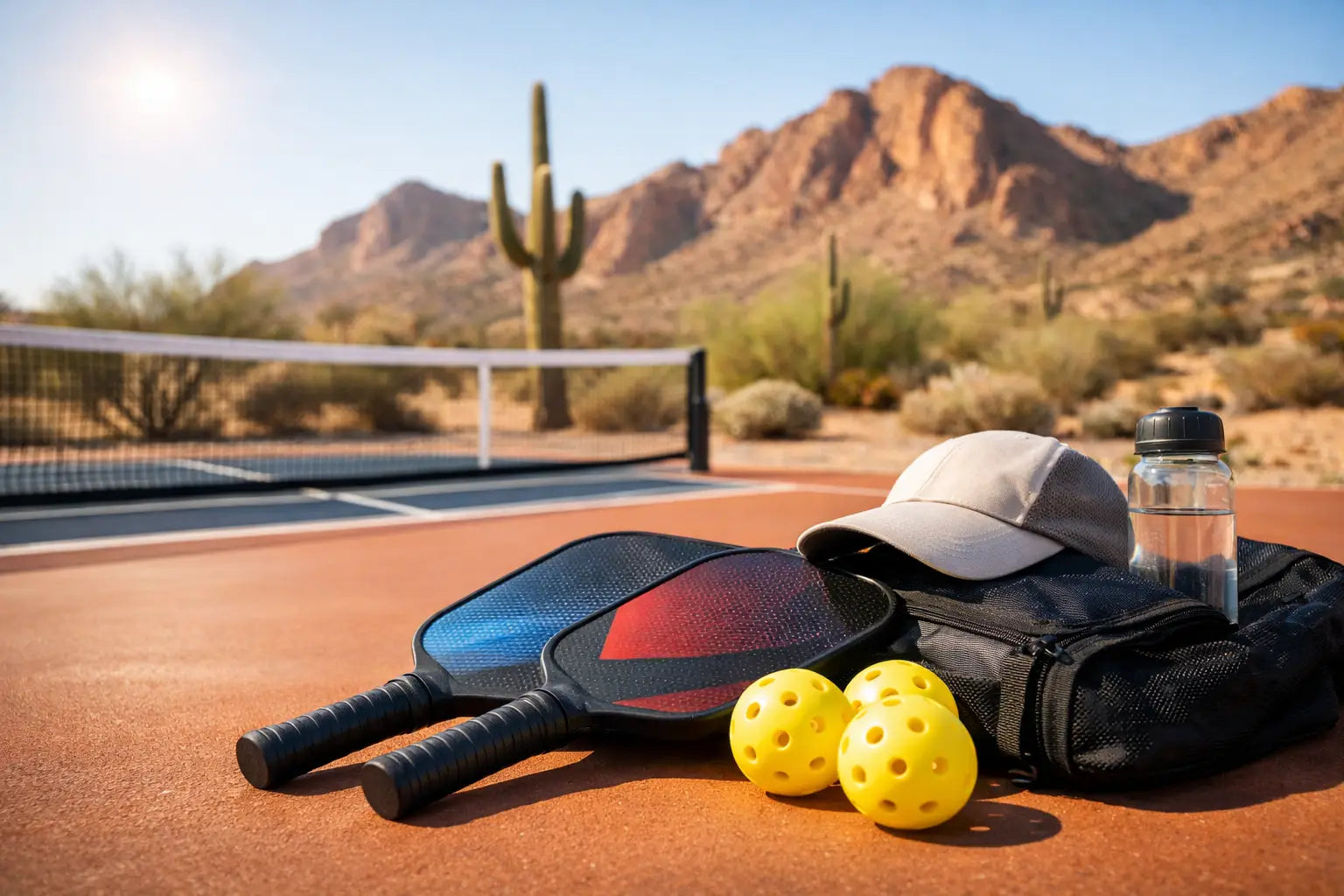
If you play pickleball in Arizona or anywhere else the heat hits hard, a standard pickleball equipment guide misses the point. Desert play changes what works. Paddle feel shifts in the sun, outdoor balls crack faster, shoes bake on hot courts, and even your grip can fail when sweat and dust show up at the same time.
That means your setup should be built for conditions, not just for the catalog description. The right gear helps you keep control, stay comfortable longer, and avoid replacing equipment every few weeks because it could not handle heat, rough surfaces, or constant outdoor use.
What a pickleball equipment guide should cover
For desert players, the basics are still the basics: paddle, balls, shoes, and a bag to carry it all. But the details matter more outdoors. You are not shopping for a climate-controlled indoor court. You are shopping for sun exposure, hot concrete, wind, grit, and long drives to the court.
A good pickleball equipment guide should help you match gear to how and where you play. If you mostly play early mornings on public outdoor courts, your needs are different from someone splitting time between indoor rec centers and backyard games. The best setup is not always the most expensive one. It is the one that stays dependable in your conditions.
Start with the paddle
Your paddle does most of the work, so it is the first place to spend carefully. Beginners often do fine with a balanced paddle in the midweight range, usually around 7.8 to 8.3 ounces. That weight gives you enough stability for blocks and returns without feeling sluggish at the kitchen line.
Lighter paddles are quicker in hand and easier on the arm, but they can feel less solid against hard shots. Heavier paddles add power and stability, though they can wear you down during long outdoor sessions. If you already deal with elbow or wrist pain, chasing power with extra weight is usually the wrong move.
Paddle face material matters too. Graphite and carbon fiber faces tend to offer a controlled, responsive feel that many players like for outdoor play. Fiberglass often gives a little more pop, which can help newer players generate depth, but it may feel less controlled when the court speeds up. The core, often polymer honeycomb, helps with feel and forgiveness. For most recreational players, a polymer core is the safest bet.
Grip size is easy to overlook and hard to ignore once it is wrong. A grip that is too small can lead to over-squeezing. Too large and you lose touch and wrist action. In hot weather, sweat makes this worse. If you are between sizes, many players prefer slightly smaller and build up with an overgrip.
Grip and edge protection are not small details
In desert conditions, grip choice is part of your core setup, not an accessory. Dry-feel grips work well for some players, but if your hands sweat heavily, a tacky overgrip or moisture-managing grip wrap can make a bigger difference than changing paddles.
Expect to replace overgrips more often if you play outside year-round. Sun, sweat, and dust wear them down fast. Keep extras in your bag. It is a cheap fix for a problem that can ruin a match.
Edge guards matter too, especially on rough public courts. If you scrape a paddle reaching for a low ball, that outer protection takes the hit. Edgeless paddles can look clean and play well, but they may not be the best match for players who are hard on gear or regularly play on gritty surfaces.
Choose the right balls for outdoor courts
Outdoor pickleballs are built differently from indoor balls for a reason. They are harder, have smaller holes, and hold up better in wind and rougher court surfaces. If you play outside, use outdoor balls. Indoor balls outdoors wear out quickly and usually feel wrong off the paddle.
Not all outdoor balls hold up the same in heat. Some get too lively when temperatures climb. Others crack sooner after repeated hard hits on hot courts. If you live in a hot climate, it makes sense to test a few proven outdoor options and stick with the one that gives you the best balance of durability and consistent bounce.
This is one of those areas where buying in bulk often makes sense. Outdoor balls are consumable gear. If you play often, you are going to lose them, crack them, or wear them down. There is no reason to treat them like lifetime equipment.
Shoes matter more than most players think
A lot of players start out wearing running shoes. That usually works until they have to stop hard, cut laterally, or deal with a rough outdoor court. Pickleball puts side-to-side stress on your feet and ankles. Court shoes or tennis shoes with proper lateral support are the better call.
For hot-weather play, breathable uppers help, but there is a trade-off. The lightest, most ventilated shoe may not last as long on abrasive court surfaces. If you play several times a week, durability matters just as much as airflow. Look for a reinforced toe area, a stable base, and an outsole built for outdoor courts.
Fit is not optional. In the desert, feet can swell in the heat, especially during longer sessions. A shoe that feels just right in the house can feel tight after an hour on sun-baked pavement. You want secure heel hold and enough room in the forefoot without slop.
Bags and carry setups for real conditions
A basic sling bag may be enough if you play one quick game after work. It is usually not enough if you are driving out, carrying extra balls, water, towels, sunglasses, tape, and backup grips. Heat-ready play means bringing more support gear.
Look for a bag with separate compartments, durable zippers, and enough structure to keep gear from getting crushed in the back of a truck or SUV. A dedicated paddle compartment helps, but so does simple organization. You do not want to dig through sunscreen, towels, and half-used ball tubes trying to find your spare grip.
Lighter bags are easier to carry, but thin materials can break down faster under hard use and constant sun exposure. If your gear spends time in a vehicle, tougher fabric and solid stitching are worth paying for.
The extras that actually earn space in your bag
A lot of pickleball add-ons are easy to skip. A few are not. In desert conditions, water, a cooling towel, a hat, and sunglasses are part of your play kit. They are not fashion pieces. They help you stay on the court and keep your eyes on the ball.
A small towel for your hands and face is useful every session. So is a spare shirt if you are playing through peak heat. Athletic tape or a simple brace can help if you are managing a minor hand, wrist, or elbow issue, though it should not replace better technique or a better paddle fit.
Portable shade is worth thinking about too if your local courts offer none. That matters less for quick doubles sessions and more for tournament days, clinics, or family play when you are parked at the court for hours.
Gear choices by player type
New players should keep it simple. A midweight paddle with a forgiving sweet spot, a few outdoor balls, and court shoes with real lateral support will cover most needs. There is no need to buy the most aggressive spin paddle on the market before your footwork and contact point are consistent.
Intermediate players usually benefit from refining feel rather than adding gimmicks. This is where paddle shape, grip build, and shoe durability start to matter more. If you know you play a control-heavy game at the kitchen, choose for touch and reset ability. If you rely on drives and hard serves, you may want a little more pop, but not at the cost of consistency.
Frequent outdoor players need to think in terms of replacement cycles. Balls, grips, shoes, and even hats wear down fast in heat. Arizona Desert Gear customers already understand this from any hard-use outdoor setup: dependable equipment is not just about buying tough gear once. It is also about replacing the parts that take the beating before they become a problem.
Avoid the common buying mistakes
The biggest mistake is buying by hype instead of use case. A high-end paddle will not fix poor footwork or bad positioning. A bargain paddle may be fine for casual use, but if the grip slips and the face feels inconsistent in heat, it stops being a bargain.
The next mistake is underestimating shoes. If your footing is unstable, everything else gets worse. After that comes storage. Leaving balls and paddles in a hot car day after day can shorten their life, even if they seem fine at first.
One more thing: not every player needs the same setup. Age, strength, play style, injury history, and court surface all change the right answer. If you are shopping smart, you are looking for reliable performance, not someone else’s exact loadout.
The best pickleball setup is the one that keeps working when the court is hot, the wind picks up, and the session runs longer than planned. Buy for the conditions you actually play in, and your gear will stop being something you think about and start being something you trust.

