

Cart
0
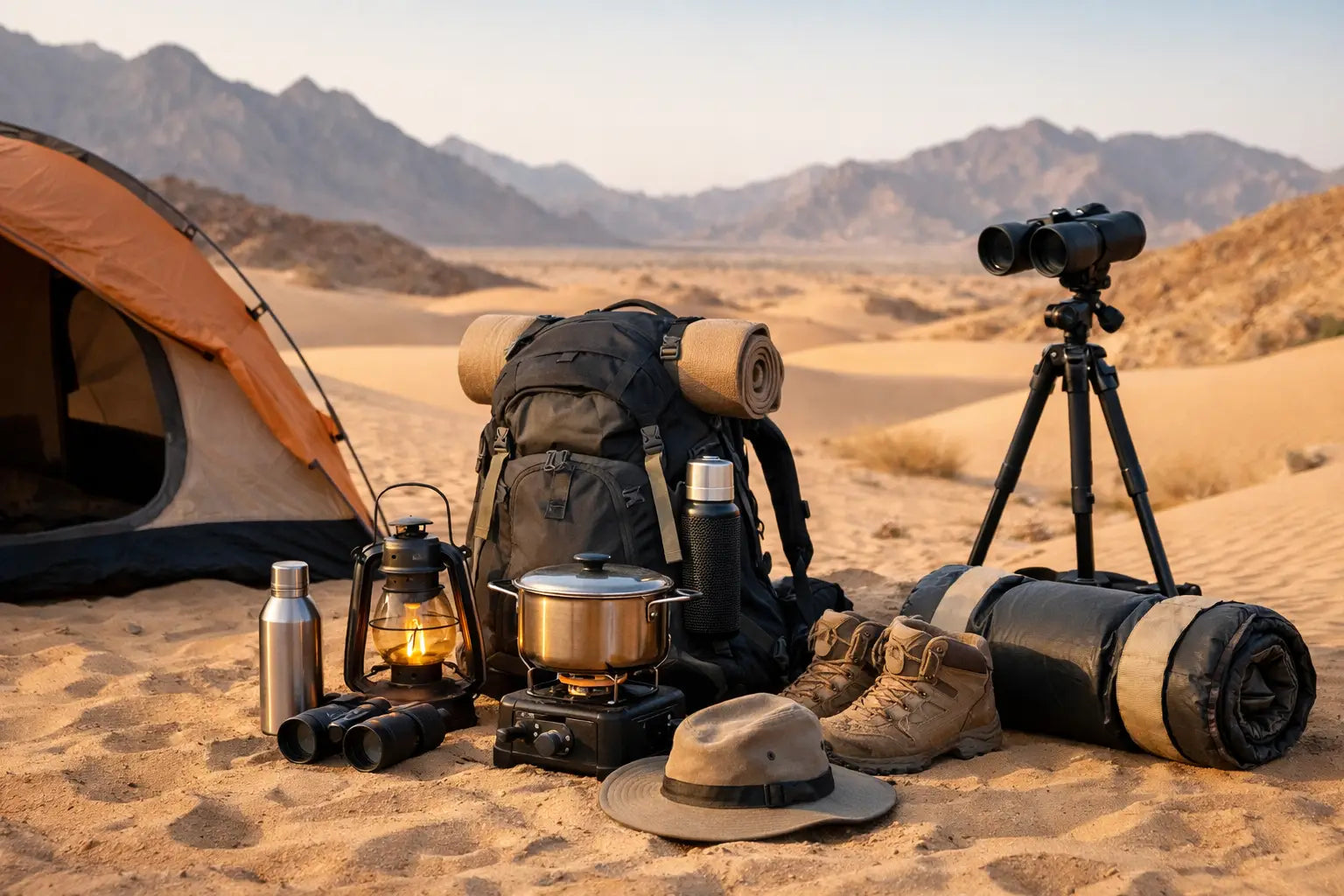
A desert camp can go sideways fast when your gear is built for forests, fair weather, or crowded campgrounds. The best desert camping gear is gear that handles heat, sun exposure, blowing dust, sharp ground, and long gaps between services. In the Southwest, that usually matters more than shaving a few ounces or chasing extras you do not need.
Desert camping is hard on equipment in a very specific way. Daytime heat stresses plastics, adhesives, batteries, and electronics. Fine dust works into zippers, lantern switches, coolers, and sleeping gear. Rocky ground tears up thin tent floors and lightweight pads. Then the temperature drops after sunset, and a setup that felt comfortable at 4 p.m. can feel underbuilt by 2 a.m.
That is why smart packing starts with function, not marketing. If you are camping in Arizona, southern Utah, New Mexico, west Texas, or the California deserts, your kit should be chosen around water security, shade, airflow, dust control, and durability on abrasive ground.
What the best desert camping gear needs to do
Desert gear is not just regular camping gear in a tan color. It needs to survive UV exposure, repeated heat cycles, and rough handling on dirt tracks and rock. Materials matter. Heavy-duty fabrics, aluminum poles, strong zippers, and containers that seal well usually outperform lightweight options designed for mild climates.
The other big factor is recovery margin. In the desert, small failures become bigger problems because there is less cover, less water, and often less cell service. A weak lantern, a leaking jug, or a bad sleeping pad is more than an inconvenience when you are miles from pavement. Good gear gives you room to recover from mistakes, weather shifts, and longer-than-planned days.
Shelter that works in heat and wind
A desert shelter has two jobs that sometimes compete with each other. It needs airflow during the day, but it also needs enough structure to handle gusty evening wind and dust. That is why many campers do better with a sturdy tent plus a separate shade system instead of relying on one piece of gear to do everything.
For your tent, prioritize strong pole architecture, real ventilation, and a floor that can handle gravel and hardpack. Mesh-heavy tents can feel cooler in the evening, but if the wind kicks up, they also let in more dust. A tent with controlled venting and a full rainfly often gives you better flexibility. If your usual camp is exposed and windy, a low-profile tent can outperform taller cabin-style models even if it feels less roomy.
Shade is where a lot of camps either get smarter or suffer. A dedicated canopy, awning, or tarp setup is often one of the best investments you can make for desert use. The trade-off is obvious - more comfort, but also more setup time and more exposure to wind damage if it is not anchored correctly. In open country, use solid stakes, guylines, and weight where needed. Cheap canopies fail fast in desert gusts.
Water storage matters more than almost anything
You can improvise around a lot of gear problems. Water is not one of them. In desert camping, your storage system needs to be durable, easy to monitor, and simple to access without wasting supply.
Rigid water containers are often the safer choice for vehicle-based desert camps because they resist punctures and stack well. Collapsible containers save space, but they are usually better as backup capacity than primary storage in rough conditions. Spigots should be protected, seals should be tight, and every container should be tested before a trip, not at camp.
It also helps to split your water across more than one container. That way one leak or cracked fitting does not take out your full supply. For longer trips, mark drinking water separately from wash water. It sounds basic, but it prevents bad decisions late in the day when people are tired and running low.
Sleep systems for hot days and cold nights
One of the biggest mistakes in desert camping is packing for the afternoon and forgetting the overnight low. Hot, dry regions can cool off fast after sunset, especially at elevation. The best desert camping gear for sleep is gear that can handle both ends of that swing.
A sleeping pad matters as much as your bag, sometimes more. On rough desert ground, it protects against punctures, adds comfort on hard surfaces, and creates a barrier between you and temperature loss through the ground. Closed-cell foam pads are tough and reliable, while insulated air pads offer better comfort but come with more failure points. If you camp often in rocky areas, durability may be the smarter choice.
For bags or quilts, do not assume summer means minimal insulation. A lightweight bag may be fine in lowland heat, but if your trip includes high desert nights, wind, or shoulder season weather, you need more range. Layering helps. A light sleep system paired with a liner, blanket, or extra insulated layer gives you options without forcing a one-temperature setup.
Cooking and cooling without fragile gear
Desert cooking setups should be simple, stable, and easy to clean. Dust gets into everything, so complicated camp kitchens lose their appeal fast. A dependable single-burner or two-burner stove with straightforward controls usually makes more sense than a delicate system with extra parts to clog or break.
Fuel planning matters in the heat too. Store fuel correctly, keep it shaded, and never leave it baking in a sealed vehicle longer than necessary. The same goes for food storage. Hard-sided coolers and dust-resistant bins hold up better than soft storage in rough use. Soft coolers can work for day trips, but for multi-day desert camping, structure and insulation usually win.
Block ice often lasts longer than cubes, and pre-chilling your cooler before loading helps more than most people realize. If you are trying to stretch ice life, reduce empty air space and keep the cooler out of direct sun. Better cooling is often about habits, not just the cooler itself.
Lighting, power, and electronics in desert conditions
Good desert lighting is less about brightness and more about reliability. Headlamps and lanterns should have solid battery life, simple controls, and housings that can handle dust. Rechargeable units are convenient, but only if your power setup is dependable. On remote trips, many campers still prefer a mix of rechargeable lighting and replaceable-battery backup.
Power banks, solar panels, and vehicle charging systems can all work, but each has trade-offs. Solar is useful in the desert because sunlight is abundant, but charging speed drops if your panel placement is poor or dust builds up on the surface. Vehicle charging is easy until you overuse it and risk draining a starting battery. A dedicated power station gives you flexibility, but it adds bulk and cost.
If electronics matter for navigation, communication, or work, protect them from heat first. Do not leave phones, battery packs, GPS units, or tablets on a dash or exposed table. Shade and airflow matter. Heat kills performance long before total failure.
Recovery, repair, and camp readiness
A desert camp kit should always include basic repair capability. That means tent patch material, extra stakes, cordage, tape, a multitool, and spare batteries at minimum. For vehicle-supported trips, expand that to include tire repair, air support, recovery gear, and extra fluids based on route and distance.
This is also where footwear and camp seating deserve a mention. Cheap sandals and weak camp chairs do not last long on rock, thorny ground, and uneven surfaces. Gear that feels slightly overbuilt at home usually feels about right after two windy days in the desert.
For people shopping with regional conditions in mind, Arizona Desert Gear has the right idea - choose products around actual terrain, not generic camping categories. That approach saves money over time because the right gear lasts longer and fails less often where failure matters.
How to choose the best desert camping gear for your setup
The right loadout depends on how you camp. If you are vehicle-based or overlanding, lean into stronger shelter, larger water storage, better cooling, and more recovery equipment. If you are packing gear into a more remote site on foot, weight starts to matter more, so every item has to earn its place.
It also depends on season and elevation. Lower desert trips in late spring need serious heat management and aggressive water planning. High desert trips can demand warmer sleep gear and more wind-ready shelter even when daytime temperatures look mild on paper.
The best buying rule is simple: fix the weak points first. Upgrade the gear that protects water, shelter, sleep, and shade before spending money on convenience items. In desert country, the reliable basics are what make the trip work.
If you are building your camp one piece at a time, start with gear that can take sun, dust, wind, and rough ground without complaint. That is usually the gear you keep using, season after season, when the easy options have already worn out.

