

Cart
0
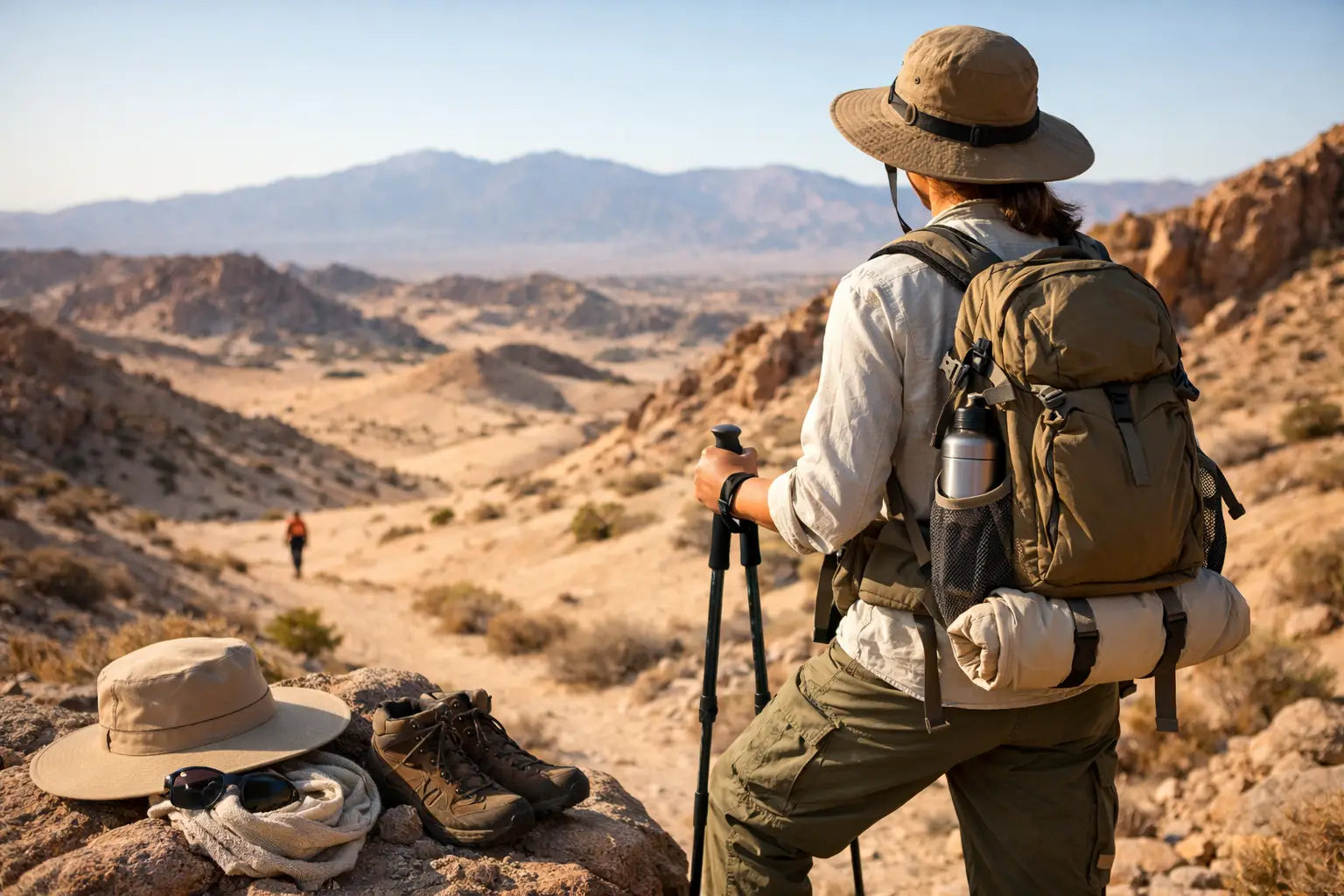
A lot of hikers overdress for the sun and underdress for the desert. That sounds backwards until you're an hour into a wash, sweating through a cotton shirt, sand in your shoes, and getting baked by reflected heat off the rock. If you're figuring out what to wear in desert hiking, the right answer is not less clothing. It's better clothing.
Desert hiking puts you in a rough mix of direct sun, dry air, sharp ground, wind, and big temperature swings. What works on a shaded forest trail often fails fast out here. Your clothing needs to manage heat without leaving your skin exposed, and it needs to hold up when the trail turns to rock, cactus-lined singletrack, or loose sand.
What to Wear in Desert Hiking Conditions
Start with a long-sleeve sun shirt. For most desert hikes, this is the workhorse layer. A good one is lightweight, breathable, and built to dry fast. Long sleeves sound hotter, but in direct desert sun they usually feel better than a short-sleeve shirt once the sun gets high. They reduce sun exposure, slow moisture loss, and save you from cooking your shoulders and forearms.
Fabric matters more than style. Skip cotton. It holds sweat, dries slowly, and gets heavy and uncomfortable fast. Synthetic performance fabrics and lightweight merino blends are a better fit. Synthetics usually dry faster and take abuse well. Merino can manage odor better, but in some hot-weather setups it may feel warmer or dry a bit slower. If you're doing short day hikes, either can work. For repeated use in hard heat, many hikers lean synthetic.
Your pants or shorts depend on terrain, sun exposure, and how much brush you're pushing through. In open desert with strong sun, lightweight hiking pants are often the better call. They protect your legs from UV, scrub, and sharp rock without forcing you into a heavy layer. Look for a relaxed fit, some venting if possible, and fabric that doesn't cling when you sweat.
Shorts can work if the trail is clear and you know what you're walking into. They feel cooler early on, but they leave skin open to sunburn, scratches, and abrasive rock. If you prefer shorts, pair them with a higher level of sunscreen discipline and expect more skin exposure. In rougher country, pants are usually the smarter tool.
The Best Desert Hiking Clothing Setup
The best setup is usually light coverage from head to ankle, with room for airflow. That means a breathable long-sleeve shirt, lightweight hiking pants, moisture-wicking underwear, quality socks, and a hat that gives real shade. Not a fashion cap. Real shade.
A wide-brim hat is hard to beat in open desert. It covers your face, ears, and neck in a way a standard baseball cap does not. If you prefer a cap for fit or movement, add a neck gaiter or sun hood. The trade-off is simple: brimmed hats give more protection, while caps can feel more secure in wind and technical movement. Pick based on the terrain and how exposed the route will be.
A neck gaiter earns its place in the desert. It helps with sun, wind, dust, and heat management. You can wear it loose for neck coverage, pull it up when the trail gets dusty, or soak it with water for temporary cooling. In dry heat, small comfort gains matter.
Sunglasses are not optional. Bright desert light puts serious strain on your eyes, especially around pale rock, sand, and open ground that kicks glare back up at you. Go with lenses that stay put when you're sweating and frames that don't create hot spots under a hat.
What to wear on your feet
Footwear is where a lot of desert hikers make bad compromises. Heavy boots can feel stable, but in extreme heat they may run hotter than you need, especially on well-traveled trails. Lightweight hiking shoes or trail runners are often a strong choice for dry desert routes because they breathe better and reduce fatigue.
That said, it depends on the ground. If you're carrying weight, moving through rocky terrain, or dealing with off-trail sections, a more supportive boot may still be worth it. If the route is firm, dry, and relatively established, a lighter shoe can make a lot of sense. There is no one answer for every trail.
Whatever you wear, traction matters. So does protection around the toe. Desert trails chew up flimsy footwear fast.
Your socks should be moisture-wicking and fitted well enough to reduce friction. Merino blends are popular for a reason, but synthetic hiking socks also perform well in heat. Avoid thick socks unless conditions call for them. Most desert hikers do better with light or mid-light cushioning.
Gaiters can be worth adding if you're hiking in sandy washes, scree, or cactus-heavy terrain. They help keep debris out of your shoes, which cuts down on hot spots and constant stops to empty sand.
Layers for Desert Weather That Changes Fast
People think desert means hot all day, every day. That's only half true. Morning starts can be cold, especially at elevation or in shoulder seasons, and temperatures can drop fast once the sun disappears. What to wear in desert hiking is not just about surviving midday heat. It's also about handling the swing.
Bring a light insulating layer if there's any chance of a cool start or late finish. A lightweight fleece or compact insulated jacket works well depending on season and elevation. Keep it packable. You want enough warmth to cover the change, not a bulky layer that turns your pack into dead weight.
A light shell can also make sense if wind is in the forecast. Desert wind strips comfort fast, and it can turn a manageable temperature into a miserable one. Breathability still matters here. You do not want to trap sweat just because the breeze picked up.
What Not to Wear in the Desert
Cotton is the obvious one to avoid, but it's not the only problem. Heavy dark clothing can absorb and hold heat. Tight non-breathable layers trap sweat and limit airflow. Cheap hats with poor coverage leave your neck and ears exposed. Low-quality socks create friction. Casual gym clothes may feel fine in the parking lot and fail hard once you're exposed for hours.
This is also not the place for brand-new footwear on a long route. The desert is hard on feet, and small fit issues get bigger once heat, grit, and mileage pile on. Wear tested gear, not guesses.
Fit, Color, and Coverage Matter More Than You Think
Loose to athletic-fit clothing usually performs better than skin-tight layers in desert heat. You want airflow and freedom to move, but not so much extra fabric that it snags on brush or feels sloppy under a pack. A clean, functional fit wins.
Lighter colors are usually a better choice for sun-heavy conditions because they reflect more heat and make salt buildup less punishing to wear. That doesn't mean you need to avoid every dark color, but if you're building a desert kit from scratch, lighter shades are a smart place to start.
Coverage is where many people adjust after their first serious desert hike. Exposed skin feels cooler right up until it doesn't. Once your skin starts taking direct sun for hours, full but breathable coverage often feels better, not worse.
Dress for the Hike, Not the Trailhead
The biggest mistake is choosing clothes based on how you feel while standing still. A cool morning at the trailhead can trick you into starting too heavy. Midday heat can fool you into thinking less coverage is always better. Desert clothing needs to work once you're moving, sweating, and fully exposed.
That usually means starting slightly cool, wearing breathable layers, and relying on coverage instead of bare skin for protection. It also means matching your setup to the route. A short sunrise loop near town is different from a long exposed hike in rough country. Mileage, elevation, sun angle, wind, and terrain all change the answer.
For most hikers in the Southwest, a dependable desert kit looks pretty simple: sun hoodie or lightweight long-sleeve shirt, light hiking pants, quality socks, breathable trail shoes or boots that match the terrain, a real sun hat, sunglasses, and a neck gaiter. It's not flashy. It works.
Arizona Desert Gear is built around that same idea. In the desert, good gear should do its job without needing excuses.
Wear clothing that protects you from the sun, handles sweat, and keeps moving when the trail gets rough. If your setup does those three things well, you're already ahead of most people at the trailhead.

