

Cart
0
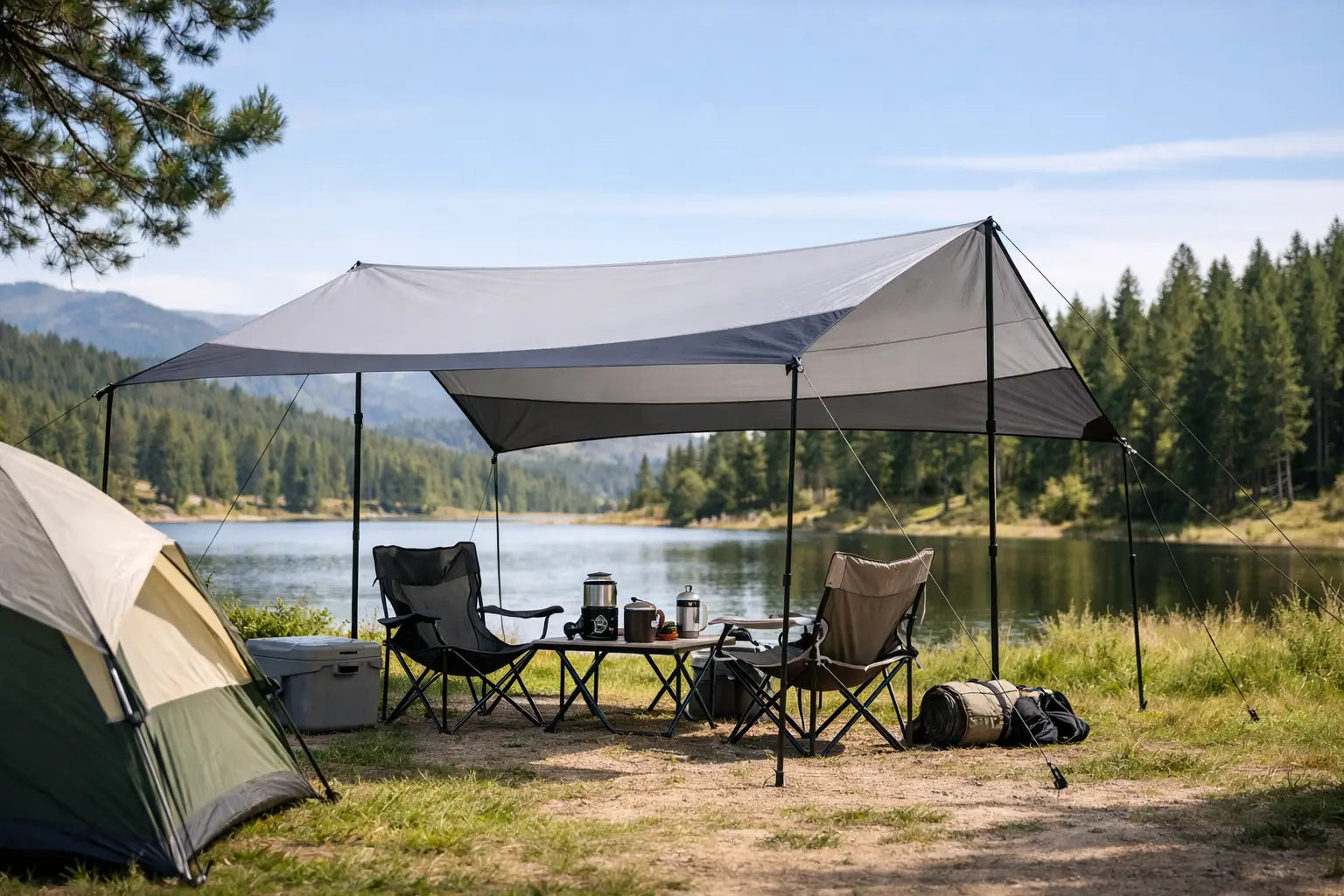
By 10 a.m. in Arizona, a good campsite can turn into a frying pan. That is why portable shade for camping is not a comfort item in the Southwest - it is part of your basic setup. If you spend time overlanding, camping on open desert ground, or setting up near trailheads and wash areas, the right shade can mean the difference between a usable camp and one you abandon by noon.
Shade sounds simple until you actually need it to perform. A lot of shelter setups look fine in a backyard or at a tailgate, then start folding, flapping, or trapping heat once they hit hard sun, gusty wind, and rocky ground. In desert conditions, portability matters, but so do stability, fabric quality, footprint, and how fast you can get the thing deployed when the sun is already on you.
What portable shade for camping needs to do
In mild climates, shade can be casual. In the desert, it has a job to do. It needs to reduce direct sun exposure, create enough usable space for sitting or cooking, and stay standing when the weather stops being cooperative.
That means the best portable shade for camping is not always the lightest or cheapest option. A compact shelter that packs small but fails in afternoon wind is not saving you anything. A huge canopy with thin legs and weak anchor points may look appealing online, but it becomes a liability when the ground is uneven or the wind shifts.
The real goal is simple: carry something you can actually use, set up quickly, and trust for the conditions you camp in most often.
The main types of camping shade setups
There is no single best option for every camp. Your vehicle, group size, terrain, and trip length all matter.
Pop-up canopies
Pop-up canopies are the obvious choice because they are fast and familiar. If you are camping from a truck, SUV, or trailer and have room to transport one, they give you immediate overhead coverage with enough space for chairs, coolers, and a cooking table.
The trade-off is wind. Most pop-up canopies need serious anchoring in desert country. Factory stakes are usually weak, and lightweight frames can twist if they are not tied down properly. They also tend to be bulkier than other options, which matters if cargo space is tight.
For basecamp setups, range days, and vehicle-supported camping, they still make sense. Just do not treat them like a self-supporting solution. In the Southwest, every canopy needs reinforcement.
Tarp and pole systems
A tarp with poles, guylines, and solid stakes gives you flexibility that a fixed canopy cannot. You can pitch it high for airflow, angle it low against late sun, or adapt it to awkward terrain. It also packs down smaller than most pop-up shelters.
This style works well for campers who know how to rig a shelter and do not mind spending a few extra minutes on setup. It is not as foolproof for beginners, and a bad pitch can leave you with poor coverage or a noisy mess in the wind. But when done right, it is one of the most capable shade systems for dry, open country.
Vehicle-mounted awnings
Vehicle awnings are popular for overlanding because they deploy fast and stay attached to the rig. That is a real advantage when you want quick shade during lunch stops, shooting sessions, or one-night camps. They also keep your shelter tied to your main platform, which can simplify camp layout.
The downside is coverage area and dependence on vehicle position. If your rig is parked at the wrong angle, your shade may not help much with afternoon sun. Some awnings also need legs and tie-downs once wind picks up, so they are not completely hands-off.
Still, for mobile campers who move often, awnings are one of the most practical options available.
Shade sails and minimalist shelters
These can work for ultralight-minded campers or for backup coverage, but they are usually less forgiving in exposed desert camps. They rely heavily on good anchor points or smart rigging, and many open campsites do not offer natural supports. If you are heading into treeless terrain, minimalist shade only works if your anchoring system is dialed in.
Desert conditions change the buying decision
A lot of camping advice is written for forests, lakes, and mild weather. That is not the same environment.
In Arizona and across the Southwest, sun angle, reflected heat, and wind exposure all hit harder. Open ground radiates heat back up at you. Thin fabric can glow with heat even when it technically blocks light. Darker materials may absorb more heat, while poor ventilation can make a shelter feel stagnant underneath.
That is why material and structure matter more than marketing claims. Look for fabrics with real UV resistance, not just water resistance. Check whether the frame or poles can handle repeated setup on rough ground. Pay attention to anchor points, guyline attachment, and whether replacement parts are available.
A shade system that performs well in the desert is not just portable. It is field-usable.
How to choose the right portable shade for camping
Start with how you actually camp, not how gear photos look.
If you drive to camp and stay put for a full weekend, a sturdier canopy or larger awning setup is usually worth the space it takes up. If you move camp often, faster deployment becomes more important than maximum coverage. If you camp solo, carrying a giant shelter that needs two people to manage gets old fast.
Think about your typical camp routine. Do you need shade mainly for sitting and cooling down? For cooking? For protecting kids, dogs, or sensitive gear? Different needs change the footprint you should be looking for.
Then consider the ground. Desert camps are rarely ideal. You may be staking into caliche, gravel, rocky wash edges, or packed dirt. A shelter that depends on flimsy stakes or perfect soil is a poor match for this terrain. Better anchors, stronger guylines, and adjustable setup options matter more here than in softer, greener camp zones.
Weight and packed size still count, but they should be balanced against durability. There is always a trade-off. Lighter gear is easier to haul and faster to handle. Heavier gear often stands up better to repeated abuse. For most vehicle-based campers, reliability should win that argument.
Setup matters as much as the shelter
Even good shade fails when it is set up badly. The best canopy in camp will struggle if it is half-anchored on exposed ground in afternoon gusts.
Set your shelter with the sun path in mind. Overhead coverage at noon does not always help much at 4 p.m. if the sun is coming in low from the side. Angle matters. Orientation matters. In wide-open camps, moving a vehicle or changing shelter direction can make a bigger difference than buying a larger model.
Airflow matters too. A fully enclosed or low-vented shelter can trap heat underneath, especially when the ground is already hot. Better shade is not just about blocking sun. It is about creating usable, cooler space.
And always overbuild your anchor system. In desert country, standard stakes are often the weak link. Use stronger stakes, more secure tie-down points, and extra guylines when conditions call for it. Shade that survives the day is the only shade that counts.
Common mistakes campers make
The first mistake is buying for convenience alone. Fast setup is useful, but not if the shelter cannot handle the environment.
The second is underestimating wind. Desert campers know that a calm morning can turn into a rough afternoon with little warning. If your shade system only works in perfect conditions, it does not really work.
The third is choosing too little coverage. A tiny patch of shade may help for a quick break, but it is not enough for camp life if you are cooking, sorting gear, or trying to stay out of peak sun for hours.
The last mistake is assuming any camping shelter is desert-ready. Plenty of general-purpose gear is built for occasional summer use, not repeated exposure to harsh UV, abrasive dust, and dry wind. That gap shows up fast in the field.
What makes a shade system worth carrying
A good shade setup earns its place every trip. It packs in a way that fits your vehicle or loadout, goes up without a fight, and handles real-world use without becoming another problem to manage.
For Southwestern campers, that usually means choosing function over gimmicks. Stronger hardware beats fancy add-ons. Better anchoring beats bigger promises. Practical coverage beats clever design that only works in ideal conditions.
At Arizona Desert Gear, that kind of thinking matters because desert gear has to do more than look the part. If your portable shade for camping cannot handle heat, dust, hard ground, and changing wind, it is just extra cargo.
Pick a setup that matches your terrain, your vehicle, and the way you actually camp. When the sun is hammering the ground and there is no natural cover for miles, dependable shade stops being an accessory and starts being part of staying out longer.

