

Cart
0
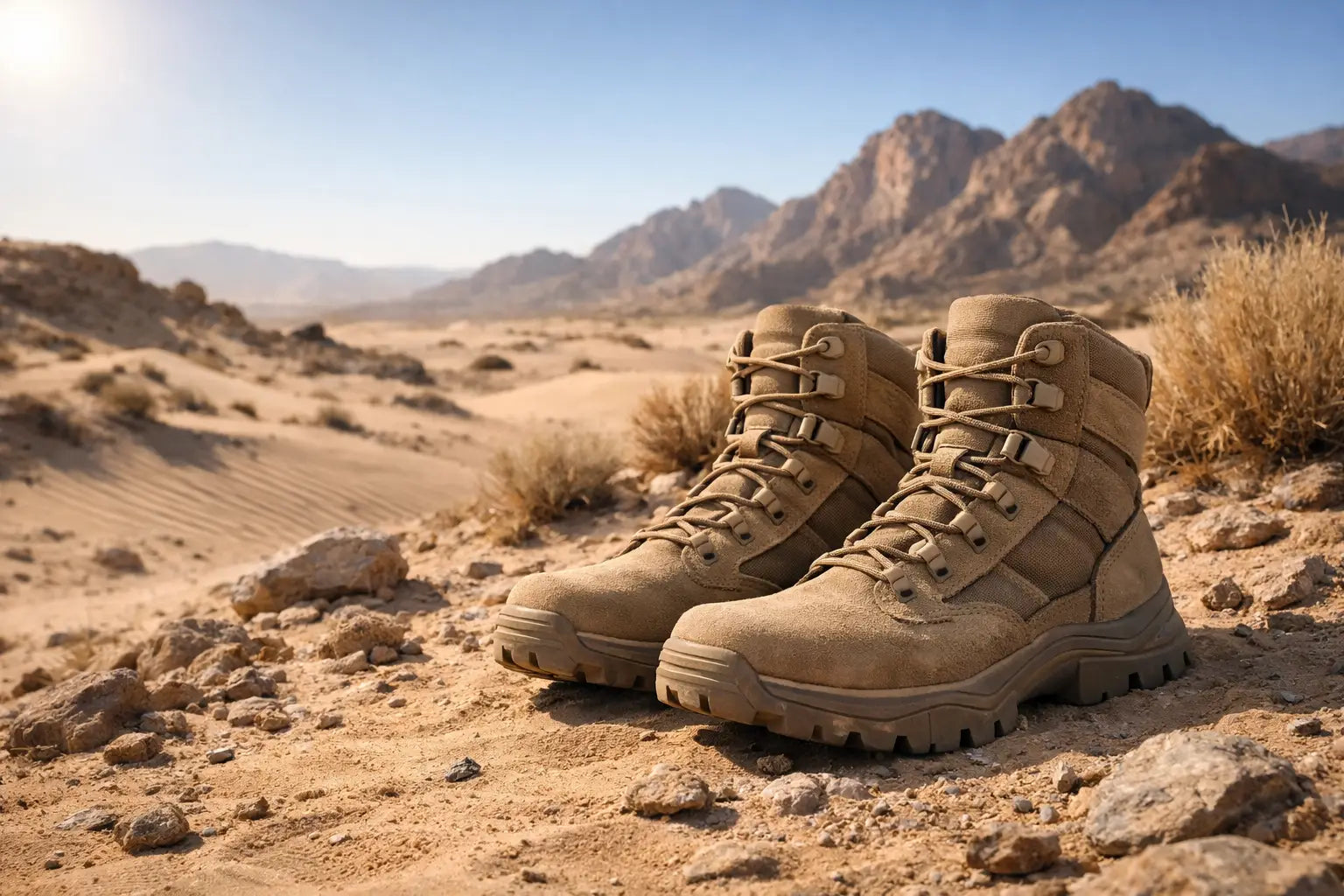
Step onto desert ground in the wrong boots and you will know it fast. Hot sand, sharp rock, loose gravel, cactus spines, and long dry miles expose weak soles, poor fit, and bad ventilation in a hurry. If you are looking for the best boots for desert terrain, the right answer is not the heaviest boot on the shelf. It is the one built for heat, traction, dust, and all-day movement without beating up your feet.
Desert travel is hard on footwear in a different way than mud, snow, or forest trails. You are dealing with high surface temperatures, abrasive grit, and terrain that changes every few steps. One stretch may be packed dirt, the next may be angular rock, loose sand, or a wash filled with rounded stone. Boots that feel solid in a store can turn into hot, stiff anchors once the temperature climbs.
What makes the best boots for desert terrain
The best desert boots balance four things: breathability, support, grip, and durability. Miss one, and the whole system starts to fail. A boot that breathes well but has a weak outsole will get sketchy on rock. A boot with aggressive support but poor ventilation can leave your feet overheated and blistered by midday.
Breathability matters because heat buildup wears you down. In desert conditions, waterproof linings often work against you unless you are crossing wet ground or dealing with unusual weather. Most people moving through hot, dry country are better served by non-waterproof boots with breathable uppers. That gives sweat a way out and helps your feet regulate temperature better over long hours.
Support is the next piece. Desert terrain is uneven and deceptive. Loose rock shifts underfoot, and hardpack can punish your joints over distance. A good desert boot should stabilize your foot without feeling like a stiff mountaineering boot. For hiking, range use, overlanding, and general field movement, moderate ankle support and a stable midsole usually hit the sweet spot.
Grip is not just about deep lugs. In desert country, outsole compound matters as much as tread pattern. You need traction on dry rock, dusty slopes, and mixed surfaces where fine sand sits on hard ground like ball bearings. A sole that sheds debris and keeps contact on rock is worth more than one with oversized lugs meant for wet mud.
Durability is where materials and construction show their value. Fine dust gets everywhere. Abrasive sand chews stitching, wears down linings, and works into flex points. That is why desert-ready boots need strong toe protection, tough upper materials, and solid sole attachment. Lightweight is good, but not if it means the boot is done after one hard season.
Material choices that actually work in the desert
For most users, suede and synthetic blends make more sense than full-grain leather. Suede handles abrasion well, breaks in faster, and usually vents better when paired with nylon panels. Synthetic materials also dry faster and keep weight down. That matters when every step sinks slightly into sand or climbs over rock.
Full-grain leather still has a place, especially for riders, workers, or anyone who puts a premium on toughness and structure. The trade-off is heat and drying time. In extreme summer conditions, heavy leather can feel like too much boot unless your use case demands it.
Mesh panels help with airflow, but there is a limit. Too much open mesh invites dust and grit, which can become its own comfort problem. The best setups usually use breathable but tightly woven fabric in lower-impact zones, with reinforced suede or synthetic overlays where the boot takes abuse.
As for waterproof membranes, this is where buyers often get it wrong. In the desert, waterproof usually means less ventilation. Unless your route includes snowmelt, creek crossings, or monsoon-season mud, a non-waterproof boot is often the better call. Hot feet, trapped moisture, and friction are a bad mix.
Best boots for desert terrain by use case
Not every desert boot should do the same job. A day hiker in southern Arizona, a range shooter on gravel flats, and an overlander spending hours in and out of a vehicle all put different stress on their boots.
Hiking and trail use
For hiking, the best choice is usually a lightweight to midweight boot with breathable uppers, a stable platform, and decent forefoot flex. You want enough structure to protect you on rock without turning every mile into a fight. A protective toe cap helps more than many buyers expect, especially on downhill sections filled with loose stone.
Look for a boot that feels secure in the heel and midfoot but does not crush the toes when your feet swell in the heat. That swelling is normal in desert travel, and a boot that fits too snug in the morning can become a problem by afternoon.
Overlanding and off-road travel
If you spend a lot of time driving, setting camp, spotting lines, and walking short rough sections, comfort and versatility matter more than maximum support. A lighter boot with a lower break-in burden makes sense here. You still need grip on rock and dirt, but you probably do not need a stiff shank built for carrying a heavy pack all day.
This is where many people do well with a tactical-style desert boot or a light hikers' boot. Easy on and off, solid underfoot feel, and good ventilation go a long way when your day alternates between pedals, camp chores, and rough ground.
Range, tactical, and utility use
For range use or tactical applications, speed and stability usually take priority. A boot in this category should stay planted during lateral movement, handle abrasive ground, and keep debris out. Gusseted tongues, secure lacing, and durable toe and heel reinforcement matter here.
Some tactical boots are very light, but light alone is not enough. In the desert, outsole durability and upper abrasion resistance separate the good ones from the disposable ones. If you train often on gravel, hardpack, and sharp rock, lean toward models with proven sole wear and stronger overlays.
Fit matters more than brand hype
A great boot on paper can still fail if the fit is wrong. In desert conditions, bad fit gets worse as the day heats up. Your foot expands, socks get damp, and friction builds. That is how hotspots turn into blisters before you are halfway back to the truck.
The heel should stay locked without slipping on climbs. The midfoot should feel secure, not squeezed. Up front, your toes need room to spread and move without hitting the end on descents. If you are between sizes, try boots on later in the day when your feet are slightly swollen. That gives you a more honest fit for real use.
Sock choice matters too. A quality merino blend or technical synthetic sock helps manage heat and friction better than basic cotton. A breathable boot paired with a bad sock still performs badly. The system works together.
What to avoid in desert boots
The first thing to avoid is buying for appearance alone. Desert-colored boots are not automatically desert-ready. Some are built for uniform standards or casual wear and do not hold up well on rough ground.
You should also be cautious with overly soft soles. They may feel great at first, but sharp rock and long hardpack miles can beat your feet up if there is not enough underfoot protection. On the other side, a very stiff boot can feel secure but become tiring and hot for everyday desert use. There is a middle ground, and that is usually where the best performers live.
Another common mistake is overestimating how much boot you need. If your typical day is camp setup, light trail walking, and vehicle travel, a heavy-duty mountain boot is probably overkill. More weight, more heat, and longer break-in are not advantages if the terrain does not demand them.
How long should desert boots last?
That depends on use, terrain, and construction. Desert miles are abrasive, so outsole wear often shows up before upper failure. If you are on rock constantly, expect tread to wear faster than it would on forest soil. If you are in and out of vehicles, around camp, or walking moderate distances, a quality boot should still give you solid service over time.
The better question is whether the boot keeps performing as it ages. Once support breaks down, heel slip increases, or the outsole loses bite on rock, it stops being the right tool for the job. Dusty environments do not forgive worn-out footwear.
Choosing the right pair for your terrain
If your desert use is mostly hiking, prioritize grip, breathability, and a stable midsole. If it is overlanding and camp movement, lean toward lighter weight and comfort with enough protection for rocky ground. If it is tactical or utility use, focus on secure fit, abrasion resistance, and outsole durability.
At Arizona Desert Gear, that is the standard worth using for any boot choice. Buy for the miles you actually do, not the fantasy version of them. The desert is honest terrain. The right boots should be too.
A good pair will not make the heat disappear or the rocks softer, but it will let you move with fewer distractions and more confidence. That is what matters when the ground is hot, the route is long, and turning back is not always convenient.

