

Cart
0
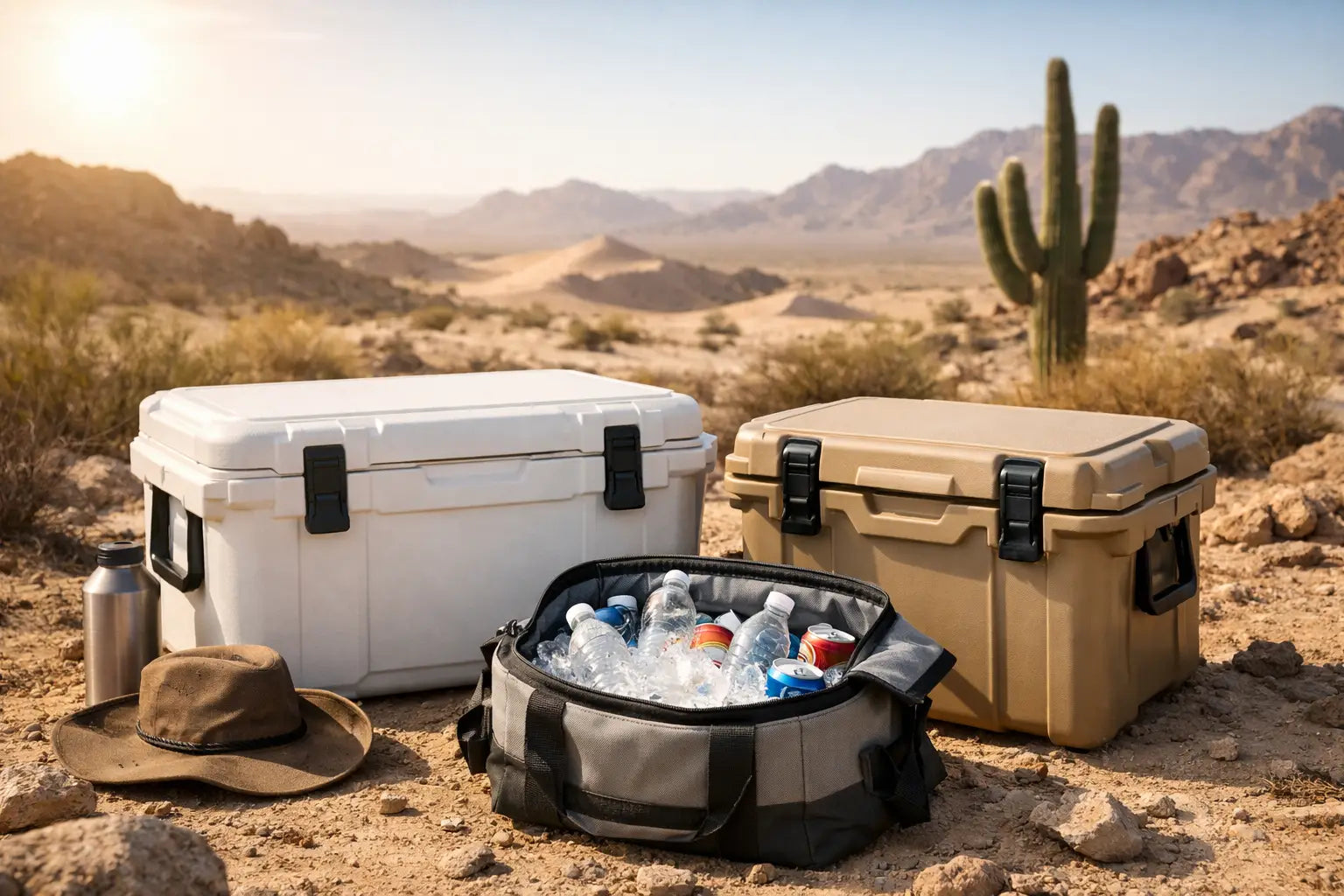
By noon in the Sonoran Desert, a cheap cooler stops being a convenience and starts becoming a problem. Melted ice, warm drinks, and spoiled food hit fast when your gear is sitting in triple-digit heat, bouncing in the bed of a truck, or baking at camp with no shade in sight. If you are looking for the best cooler for desert heat, you need to shop for insulation performance, build quality, and real use conditions - not just capacity and price.
What makes the best cooler for desert heat different
Desert heat exposes every weak point in a cooler. Thin walls lose cold fast. Poor lid seals let hot air in every time the cooler shifts or gets opened. Weak latches and hinges fail sooner when plastic gets hammered by sun and rough transport. In mild climates, you can get away with a basic cooler for a day trip. In Arizona, Nevada, New Mexico, or West Texas, that same cooler can be a bad call by lunchtime.
The best cooler for desert heat is usually one that keeps internal temperature stable even when ambient temperatures are brutal. That means thick insulation, a tight gasket, solid latches, and enough structural strength to handle off-road travel, tailgate use, range days, and camp duty. It also means picking a cooler that matches how you actually use it. Bigger is not always better, and heavier is not always practical.
Hard cooler or soft cooler in desert conditions
For most desert use, a hard cooler is the safer choice. It holds cold longer, handles abuse better, and does a better job protecting food and ice during extended heat exposure. If you are camping for a weekend, keeping meat safe, or storing ice far from town, hard-sided construction matters.
That said, soft coolers still have a place. They work well for short drives, day trips, range sessions, and situations where portability matters more than multiday ice retention. A good soft cooler with quality insulation can handle a few hours in extreme heat, especially if you pre-chill it and keep it out of direct sun. It just is not the tool for a three-day overland route in July.
If your cooler will spend serious time in the truck, on the trail, or at a base camp, hard coolers win on durability and retention. If you need something lighter and easier to carry from cab to trailhead, a soft cooler can still be the right pick - just keep expectations realistic.
Insulation matters more than almost anything else
When people ask what cooler keeps ice the longest, they usually focus on brand names. In practice, insulation thickness and seal quality do more of the heavy lifting than marketing claims. Rotomolded hard coolers are popular for a reason. They typically have thicker insulated walls and a more durable body than low-cost injection-molded coolers.
That does not mean every rotomolded cooler is automatically worth the money. Some are excellent. Some are heavy and overpriced. The real test is whether the cooler holds cold in direct heat, whether the lid seals consistently, and whether it stays shut tight while being moved around.
Look closely at the gasket around the lid. In desert conditions, a bad seal wastes ice fast. The lid should close firmly without play, and the latches should hold pressure evenly. If the lid flexes or the latches feel flimsy in the store, that problem will not improve after a few dusty trips.
Size is a performance decision, not just a storage decision
A lot of buyers oversize their cooler. It sounds smart until you realize a bigger cooler takes more ice, weighs a lot more, and may spend half the trip with excess warm air inside if it is not packed full. Empty space works against you in high heat.
For a solo day trip, a compact cooler is often the better performer because it is easier to pre-chill, easier to keep full, and easier to move into shade. For two people on a full-day outing or overnight run, a mid-size cooler usually makes more sense. Large coolers are best when you truly need bulk storage for a group or longer stay.
The right size depends on your use. Drinks-only coolers perform better when they stay closed except for quick access. Food coolers should be organized so you are not standing there with the lid open while cold air dumps out into 108-degree air.
Features that actually matter in the desert
A lot of cooler features sound useful until you are dealing with dust, heat, and rough roads. Focus on the basics that improve field performance.
Strong latches matter because they keep the seal tight. Durable hinges matter because lid failure in the field is not a small issue. Drain plugs matter because melted ice turns into a mess fast, and you want something that is easy to open, easy to clean, and not likely to leak. Non-slip feet help in truck beds and on hard ground. Tie-down points matter if your cooler rides in a UTV, trailer, or overland setup.
Wheels are a mixed bag. They help if you are moving a loaded cooler across pavement or packed ground, but they also add parts that can fail and usually make less sense on rocky terrain. If you regularly haul gear over rough desert ground, sturdy side handles may be more useful than wheels.
Built-in cup holders, rulers, trays, and extras are fine if they do not compromise insulation or durability. They should never be the reason you choose one cooler over another.
How to pack a cooler so it survives desert heat
Even the best cooler for desert heat will underperform if you load it badly. Start by pre-chilling the cooler before the trip. If you put cold food and ice into a hot cooler that has been sitting in the garage, you are burning through ice before you even leave home.
Use block ice when possible, especially for longer trips. It melts more slowly than cubes. A mix of block ice and cubed ice works well because the blocks last while the cubes fill gaps. Keep drinks in a separate cooler if you can. Opening the main cooler every 20 minutes is one of the fastest ways to lose retention.
Pack cold items tightly. Air space speeds warming. Put the items you need least at the bottom and the most-used items near the top. If you can keep the cooler shaded and off hot metal surfaces, do it. A cooler riding in direct sun on a black truck bed is fighting a losing battle no matter how premium it is.
Price vs performance in real-world use
You do not always need the most expensive cooler on the market. But in true desert conditions, the cheapest option often costs more in the long run through poor performance and short lifespan. The question is not whether premium coolers are expensive. They are. The real question is whether your use justifies the upgrade.
If you need a cooler for occasional short trips and it stays inside an air-conditioned vehicle most of the time, a solid mid-range model may be enough. If you are running remote trails, camping in exposed heat, hunting, fishing, or hauling food where failure matters, paying for stronger insulation and better construction usually makes sense.
There is also a middle ground that gets overlooked. Some mid-tier hard coolers deliver very good retention and decent durability without the premium price tag of top-shelf brands. For many buyers, that is the smart zone - especially if you need dependable performance but do not need expedition-grade gear every weekend.
What to look for before you buy
The best buying decision usually comes down to five things: insulation quality, seal quality, size, durability, and how the cooler will travel. A cooler that performs well at a lakeside picnic may not be the right fit for a dusty off-road route outside Yuma.
Think about where it will ride, how often it will be opened, and whether you need one-day refreshment storage or multiday cold retention. If the cooler will sit in sun for hours, build quality matters more. If you carry it often, weight matters more. If you are storing food instead of just drinks, organization matters more.
That is why there is no single best answer for everyone. The best cooler for desert heat is the one that matches your actual loadout, trip length, and exposure level without wasting space, ice, or money. At Arizona Desert Gear, that kind of use-case fit is what separates gear that works from gear that just looks the part.
A better cooler helps, but smart use matters too
A high-end cooler will not beat bad habits. Leaving it open too long, loading it with warm drinks, or letting it bake in direct sun will cut performance fast. On the other hand, a well-built cooler that is packed right, pre-chilled, and kept shaded can hold up far better than most people expect, even in serious summer heat.
If your trips regularly put gear through desert punishment, buy for your environment, not for a catalog photo. Cold retention is not just about comfort out here. Sometimes it is food safety, trip reliability, and one less thing failing when you are hours from the nearest store. Pick the cooler that fits the heat you actually deal with, and the rest of the day gets easier.

