

Cart
0
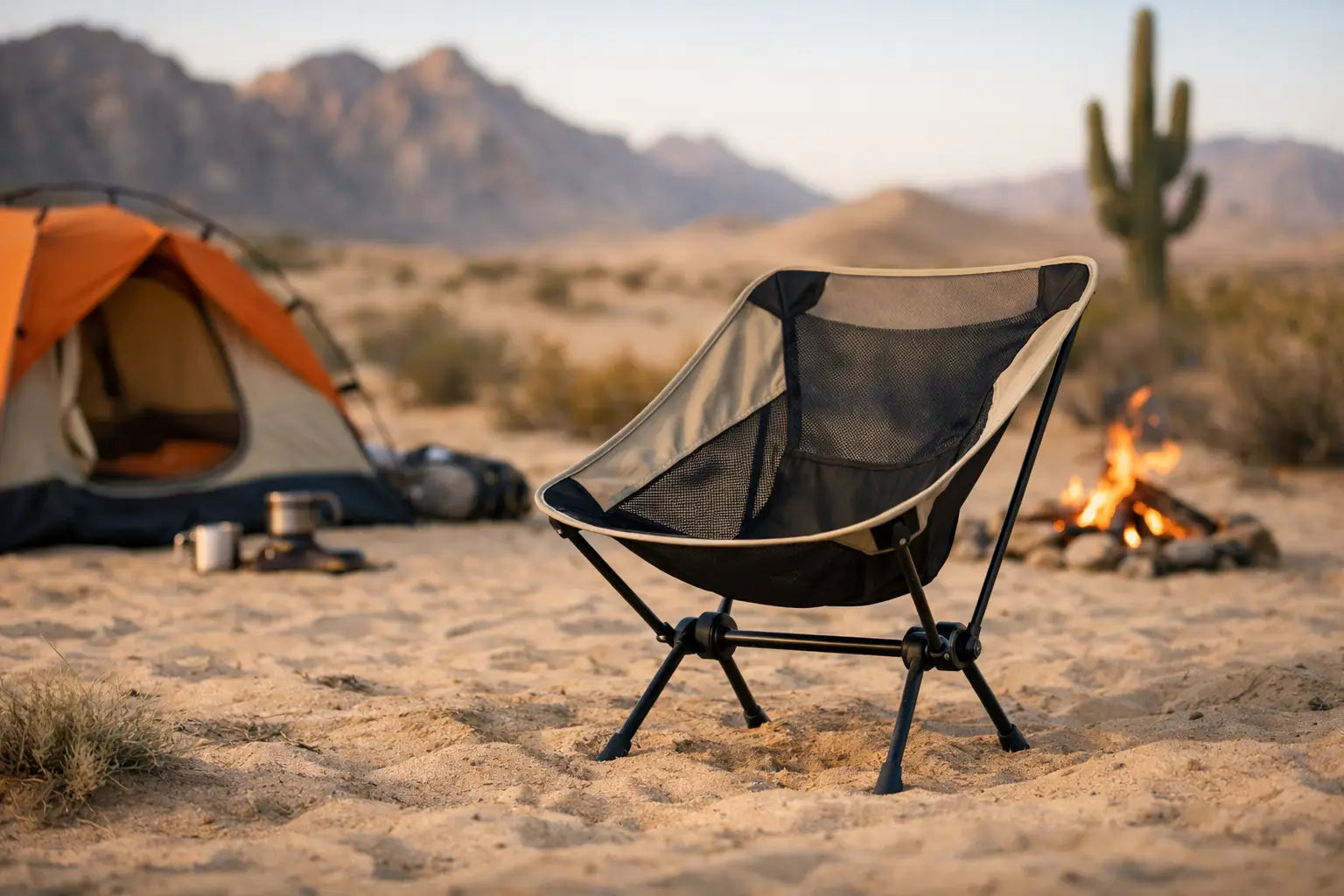
When the sun is still hanging over camp and the ground is throwing heat back at you, a bad chair gets exposed fast. A lightweight desert camping chair has to do more than fold small and shave ounces. It needs to stay stable in loose soil, handle hard use, and sit comfortably after a long day on the trail, at the range, or out by the fire ring.
What makes a lightweight desert camping chair different
Plenty of camp chairs work fine in mild conditions, but desert use changes the priorities. Heat, dust, sharp ground, and constant sun wear out weak materials faster than most people expect. The chair that feels acceptable in a grassy campground can turn into a hassle when its feet sink into sand, the fabric traps heat, or the frame starts flexing on uneven terrain.
That is why the best desert chair is not always the lightest one on paper. In this environment, low weight has to be balanced against real-world stability and material strength. If a chair saves a pound but struggles on rocky wash edges or soft camp pads, it is not doing its job.
A good desert-ready chair usually gets a few basics right. It packs small enough to bring without debate, uses fabric that can breathe in the heat, and has a frame that does not feel delicate when you sit down hard after a long day. It also needs feet or a base design that can manage loose ground better than narrow, pointed contact points.
How to choose a lightweight desert camping chair
The first thing to look at is where and how you actually camp. If you are overlanding and storage space matters more than every last ounce, a slightly heavier chair with a stronger frame can be the better call. If you are hiking into camp or carrying gear away from the vehicle, packed size and total weight start moving higher on the list.
Seat height matters more in the desert than many buyers realize. Low-slung chairs can feel stable, and they often pack down well, but getting out of them on uneven ground is not always fun, especially after a long day in boots. A chair that sits a little higher can be easier on knees and more practical around a cooking setup or fire pit. The trade-off is that taller chairs may feel less planted in wind or softer ground if the frame is narrow.
Back support is another place where use case matters. For quick stops, glassing breaks, or range sessions, a compact chair with minimal structure may be enough. For longer evenings at camp, more back support is worth carrying. In the desert, comfort is not a luxury item. If you are spending hours outside in the heat, bad support wears you down faster.
Materials that hold up in heat and dust
Frame material usually comes down to aluminum versus steel. Aluminum is the common choice for a lightweight desert camping chair because it keeps weight down and resists rust. For most users, that is the right starting point. The question is not just whether the frame is aluminum, but whether it feels stout at the joints, hubs, and leg sections.
Steel can make sense if durability matters more than portability, but it adds weight fast and can become less pleasant to handle after sitting in direct sun. In desert conditions, excess weight adds up, especially when you are already hauling water, recovery gear, or shooting equipment.
Fabric deserves just as much attention. Tight, heavy fabric may feel durable, but if it traps heat and holds dust, it becomes a poor fit for hot weather. Mesh panels can improve airflow, which matters in Arizona and across the Southwest, but they need to be placed wisely. Too much open mesh can reduce support or become a weak point over time. A solid main body with breathable panels is often the best middle ground.
Look closely at stitching and stress points. Desert grit finds its way into everything, and repeated folding with dust in the hinges and seams can expose cheap construction. Reinforced corners and clean stitching are not flashy features, but they matter more than cup holder gimmicks.
Stability on sand, gravel, and hardpack
This is where a lot of chairs fall short. A lightweight chair can look great in a product photo and still be a pain on real desert ground. Narrow feet are a common problem. On soft sand or decomposed granite, they dig in fast. Once that happens, the chair sits unevenly and feels less secure every time you shift your weight.
Wider feet or a frame design that spreads load more evenly will usually perform better. Some chairs stay stable because of geometry more than foot size. A broader stance and lower center of gravity can help a lot, especially when the surface is mixed and uneven.
Rocky ground creates a different problem. Here, a super-flexible frame can feel twitchy because not all four contact points settle the same way. A chair with decent frame rigidity tends to feel more predictable. It may not sound like a big difference, but after a few hours in camp, predictable matters.
If you regularly camp in washes, open desert flats, or dispersed sites with no level pad, stability should rank near the top of your list. A chair that packs a little larger but stays planted is often the smarter buy.
Packed size vs real comfort
There is always a trade-off between portability and comfort. Very compact chairs are easy to stash in a truck, UTV, or pack, but they usually get there by trimming seat width, back height, or frame structure. That may be fine if your chair is for short breaks. It is less fine if it is your main seat for cooking, eating, and winding down at camp.
A useful way to think about it is this: if you are sitting for ten minutes at a time, go smaller. If you are sitting for two hours at a time, give comfort more weight in the decision. Desert trips often involve both, so many buyers end up happiest with a middle-ground chair that still packs down reasonably but does not feel stripped down.
Storage space changes the equation too. Full-size folding chairs are convenient but bulky. Hub-style and collapsible-frame chairs usually win on packed size. For vehicle-based travel, that compact footprint can matter just as much as total weight, especially when your cargo area is already filled with coolers, water cans, tools, and shelter.
Features worth paying for and features you can skip
A few extras are genuinely useful. Ventilated fabric, a carry bag that does not rip after one season, and a seat shape that supports your legs without pinching are all worth having. A small side pocket can be handy for gloves, a headlamp, or a phone, especially when you do not want gear dropped into dust.
On the other hand, not every added feature helps in desert conditions. Oversized cup holders sound nice until they collect sand and sag. Heavy padded armrests can trap heat and add bulk without giving much back. Recline functions are nice when well built, but on ultralight chairs they can introduce more failure points.
Simple usually lasts longer. That is not a rule without exceptions, but it is a good one to keep in mind when comparing chairs built for actual use versus chairs built to look feature-rich on a product page.
Who should buy which kind of chair
If you are an overlander or truck camper, your best option is usually a compact but sturdy chair with a moderate seat height, breathable fabric, and a frame that favors stability over absolute minimum weight. You have room to carry something better, so there is no need to chase the smallest model if it gives up too much comfort.
If you hike into camp, glass from ridgelines, or want a chair that can live in a day pack or go-bag, weight and packed size matter more. In that case, accept that you may lose some seat height and back support. The right compromise is a chair light enough to bring every time, because the chair left at home does not help.
For range use or long days at events in open sun, look for airflow and a seat height that lets you stand up easily. This is one of those situations where a slightly larger chair can earn its keep. Long static use exposes discomfort quickly.
For buyers in the Southwest who want gear chosen for actual hot-weather conditions, brands like Arizona Desert Gear make the most sense when they focus on that use case instead of treating desert travel like an afterthought. That regional fit matters.
How to make your chair last longer in the desert
Even a well-built chair benefits from basic care. Shake out dust before folding it up. Do not leave it baking in full sun for days if you can avoid it. Check hubs, joints, and feet once in a while, especially after rocky camps or windy conditions where the chair got dragged or tipped.
If the chair comes with a carry bag, use it. Dust and abrasion during transport wear gear out just as surely as use in camp. A few minutes of care can add a full season or two, particularly in harsh environments where fabric and moving parts take a beating.
The right chair is the one you do not have to think about once camp is set. It opens easily, sits level enough, stays comfortable in the heat, and handles the ground under it without acting fragile. In the desert, that kind of reliability is worth more than chasing the lightest number on the tag.

