

Cart
0
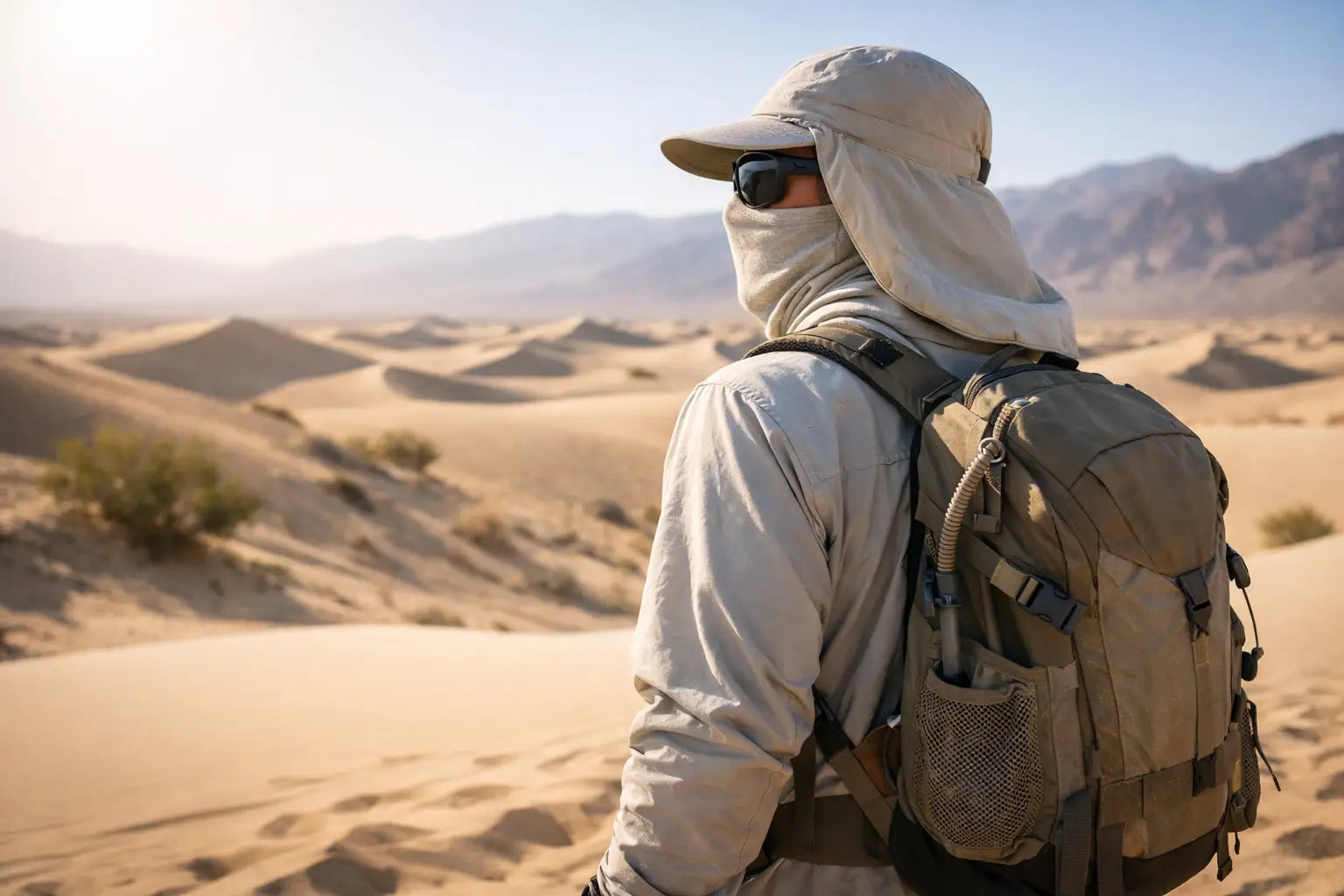
By 10 a.m. in the desert, bad clothing choices start costing you. Sun protection clothing for desert conditions is not about looking covered up. It is about staying cooler, reducing burn risk, managing sweat, and keeping your body working when the ground is throwing heat back at you.
A lot of people still assume less fabric means less heat. In dry country, that can backfire fast. Exposed skin takes direct sun, sweat evaporates too quickly, and you end up feeling hotter, not cooler. The right desert clothing blocks radiation, moves moisture, breathes well, and gives you enough coverage to stay out longer without getting cooked.
What sun protection clothing for desert really needs to do
Desert sun is different from a warm afternoon at the lake. You are dealing with intense UV exposure, reflected light off sand and rock, low humidity, and often very little natural shade. That means clothing has to do more than just cover skin.
Good desert gear should shield you from UV, allow airflow, dry reasonably fast, and keep working when you add dust, sweat, and long hours of wear. It also needs to hold up under a pack, seatbelt, chest rig, or repeated movement in rough terrain. If the shirt feels great for twenty minutes but turns into a sticky mess by noon, it is not desert-ready.
This is where trade-offs matter. The lightest fabric is not always the best if it becomes transparent in bright sun or tears easily. The toughest fabric is not always the best if it traps heat. In the desert, balance matters more than marketing claims.
Fabric matters more than most people think
Start with fabric before you worry about style. Material choice decides how a shirt or pair of pants will feel after hours in direct exposure.
Synthetic performance fabrics are common for a reason. Good polyester and nylon blends can wick sweat, dry fast, and stay lighter during hard use. They also tend to be durable and easy to maintain. For hiking, range days, and off-road travel, they are often the most practical option.
That said, not every synthetic works well in extreme heat. Some fabrics feel slick and breathable in the store, then cling to your skin once you start sweating. Others hold odor fast or trap more heat than expected. A looser weave or a built-in venting design usually matters as much as the fabric label itself.
Natural fibers can still make sense, but you need to pick carefully. Cotton feels familiar, but in serious heat it can become heavy with sweat and dry slowly. In a dry climate, some people like lightweight cotton for casual wear around camp or town, but for active use it is usually not the best performer. Merino blends can work well for temperature regulation and odor control, though they tend to cost more and may not be the first choice for rough abrasion.
If you see a UPF rating, pay attention. UPF 30 is decent. UPF 50 or 50+ gives stronger protection. Still, UPF is only part of the picture. A high rating does not help much if the cut is too tight, the collar is too low, or the sleeves ride up every time you reach for something.
Fit should be loose enough to work, not baggy enough to get in the way
One of the biggest mistakes with sun protection clothing for desert use is going too tight. Tight clothing sits directly on the skin, shows sweat fast, and reduces the cooling effect you get from airflow between fabric and body. A little room helps.
That does not mean oversized is automatically better. Too much extra fabric can snag on gear, bunch under pack straps, and become irritating during long walks or climbs. The sweet spot is an athletic but relaxed fit that lets air move and lets you bend, drive, crouch, and shoulder gear without constant adjustment.
Long sleeves are usually the better call. In desert conditions, a lightweight long-sleeve shirt often feels cooler over time than a T-shirt because it blocks direct sun from hammering your arms. The same goes for pants versus shorts when you are spending hours outside. Full coverage also cuts down on dust, brush contact, and sun fatigue.
The most useful features are simple
Desert clothing does not need gimmicks. It needs features that solve real problems.
A high collar helps protect the neck, which burns fast and gets missed often. Button fronts or deep zip necks help dump heat when you stop moving. Mesh-lined vents can work well, especially across the back or under the arms, if they do not compromise durability. Thumb loops can help keep sleeves in place, though not everyone wants them for all-day wear.
For pants, articulated knees, gusseted crotches, and secure pocket layouts matter more than extra bulk. You want enough utility to carry what you need, but not so many heavy layers and flaps that the pants turn into an oven. If you are in and out of a vehicle, seated for long stretches, or moving over rock, comfort and mobility matter just as much as sun coverage.
Color choice is not just about appearance
Color affects heat gain, but not always in the simplistic way people assume. Lighter colors generally reflect more sunlight and can feel cooler in direct exposure. Khaki, tan, light gray, and muted sand tones are popular for a reason. They also fit desert terrain and show less salt staining than very dark colors.
Still, fabric construction matters too. A dark shirt with excellent venting can outperform a light shirt with poor breathability. If you run tactical gear or spend time around brush, some medium earth tones may hide dust and wear better than very pale colors. White can feel cool, but it tends to show dirt fast and may become semi-transparent in thinner fabrics.
For most people, the practical middle ground is a light or medium earth tone in a proven hot-weather fabric.
Shirts, pants, and head coverage should work as a system
The best desert setup is not one hero item. It is a complete system.
A solid long-sleeve sun shirt handles your upper body, but if your neck, ears, and face are still taking full exposure, you are leaving major gaps. A wide-brim hat is hard to beat for broad coverage, especially during long stationary periods or slow travel. A cap works better with some vehicles, packs, or hearing protection, but you may need a neck gaiter or sun hood to make up the difference.
Pants should be lightweight but tough enough for kneeling, scrambling, and brush contact. If the fabric is too thin, UV protection and durability can suffer. If it is too heavy, you will feel every degree by midday. Convertible pants can be useful for mixed conditions, but the zippers and seams sometimes create pressure points or reduce comfort under long wear.
Neck gaiters are one of the most underrated pieces in a desert kit. They protect the neck, lower face, and even scalp if worn under a cap. They also help with dust when the wind picks up or the trail gets loose.
When different desert activities call for different clothing
Not every desert day looks the same, and clothing should match the job.
For hiking and trail walking, breathability and low weight usually come first. You are generating heat, so airflow matters. For overlanding or off-road travel, you may spend long hours exposed around camp, during recovery work, or while setting up gear. In that case, durability and comfort while moving between vehicle and ground matter just as much.
For range use or tactical training, your clothing has to work with belts, carriers, slings, and repeated movement. Sun protection still matters, but so does avoiding bunching, hot spots, and friction under load. If a shirt rides up under a plate carrier or a collar collapses and exposes your neck, the problem shows up quickly.
Casual desert wear is its own category. If you are doing light work around property, walking town, or spending time at camp, comfort may outweigh technical features. Just do not confuse casual comfort with all-day field performance.
Common buying mistakes
The first mistake is buying for temperature alone instead of sun load. Desert heat is not just about air temperature. Direct radiation changes how your body feels and how hard it has to work.
The second mistake is trusting thin fabric without checking coverage or UPF. Thin can be good, but only when the material is built for exposure. The third is assuming one outfit works for every use. A shirt that is great for a morning hike may not be your best option for vehicle recovery, range work, or hauling gear around camp.
The fourth mistake is ignoring head and neck protection. People spend money on shirts and pants, then go out with a basic cap and no neck coverage. That is leaving one of the highest-exposure areas vulnerable.
How to choose gear that will actually get worn
The best piece of sun gear is the one you will keep on when it is hot, dusty, and uncomfortable. That means it needs to feel good enough in real conditions, not just on a product page.
Look for breathable long sleeves, a practical UPF rating, enough room to move, and construction that fits your use. Think about pack straps, seat time, dust, sweat, and whether you will be active or mostly stationary. Arizona Desert Gear customers usually know this already - gear that looks good but fails by noon is just dead weight.
If you spend real time in the desert, treat clothing as part of your heat management plan, not an afterthought. Good coverage, good fabric, and the right fit buy you more than comfort. They buy you time outside without paying for it later.

