

Cart
0
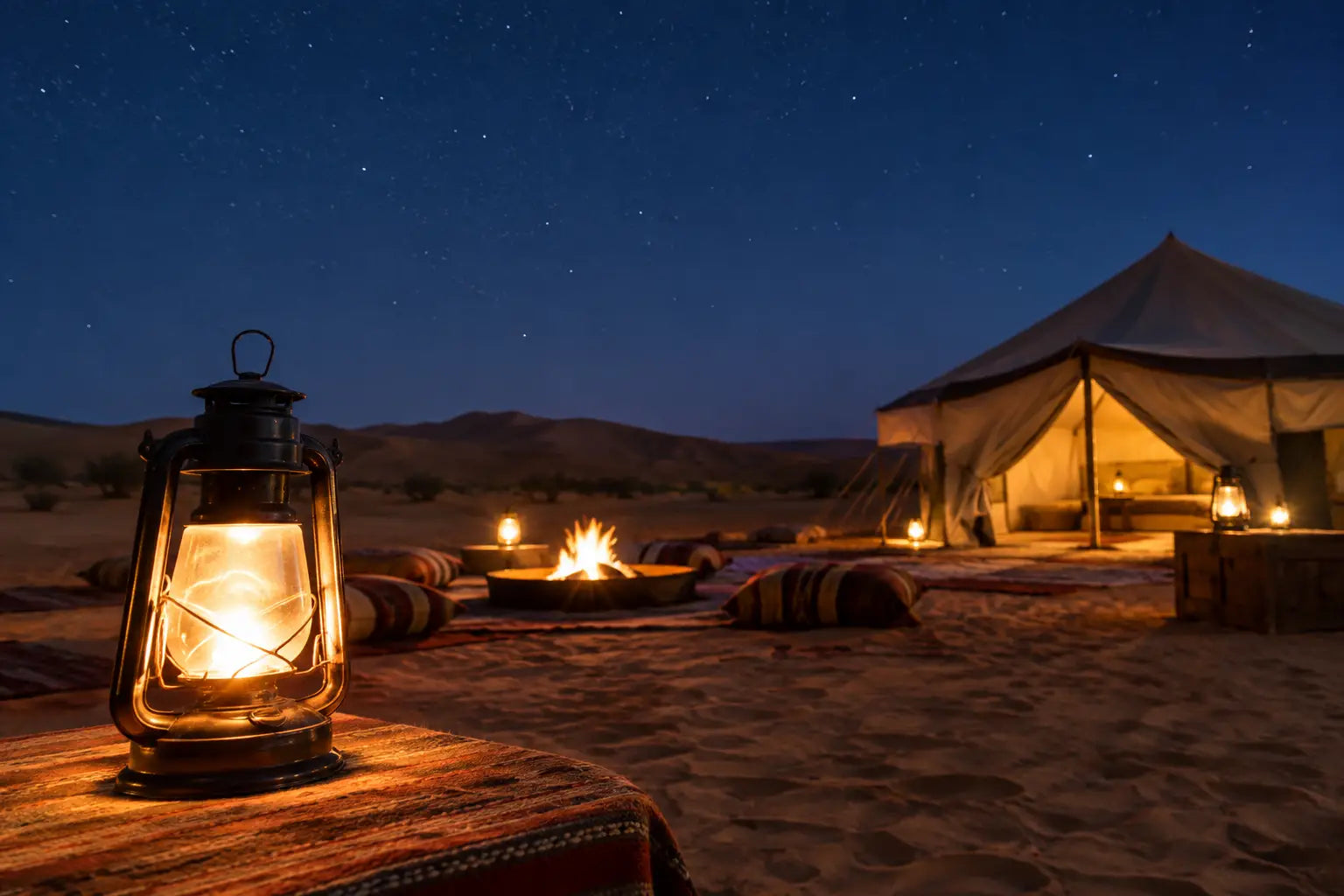
A desert camp can look calm after sunset, but the ground around it is still full of tent stakes, loose rock, cactus, washouts, and gear you need to find without waking everyone up. The best desert camp lighting is not the brightest light you can buy. It is a dependable system that gives you useful light where you need it, preserves night vision, and keeps working through dust, wind, heat, and long hours away from pavement.
For most Arizona and Southwest camps, one light is rarely enough. A good setup combines a hands-free personal light, a controlled camp light, and a backup that does not depend on your vehicle battery. Choose equipment based on what you actually do after dark: cooking, setting up a rooftop tent, working around an off-road rig, walking to a restroom, or keeping camp safe during a late-night windstorm.
What Makes the Best Desert Camp Lighting Different
Desert conditions punish weak gear in ways a backyard campout does not. Fine dust works into switches and charging ports. Wind can knock over tall lanterns and blow lightweight string lights into brush. Summer heat can shorten battery life when lights are stored in a vehicle all day, while winter desert nights can get cold enough to reduce runtime.
Brightness matters, but usable beam control matters more. A 1,000-lumen lantern can make a small camp feel like a work site, create hard shadows, attract bugs, and ruin the night vision of everyone nearby. A dimmable lantern set low, paired with a headlamp for task work, usually does more for camp comfort than one oversized floodlight.
Look for lights with solid housings, protected charging ports, dependable controls, and realistic runtime ratings. An IP rating can help indicate dust and water resistance, but it is not a guarantee that a light will survive every hard-use situation. Keep dust caps closed, wipe down charging connections, and avoid leaving lithium battery-powered lights baking on a dashboard.
Build a Four-Zone Lighting Setup
The most effective approach is to light specific zones instead of blasting the entire campsite. This reduces glare, saves power, and lets everyone move around camp without turning night into daylight.
- Personal zone: A headlamp for walking, setup, repairs, and hands-free cooking.
- Task zone: Focused light at the camp kitchen, recovery gear area, or tailgate work surface.
- Living zone: A low-output lantern or diffused light around chairs, tables, and the tent entrance.
- Safety zone: Small marker lights for guy lines, tent stakes, cooler corners, and the path back to camp.
Start With a Headlamp You Will Actually Wear
A headlamp is the foundation of desert camp lighting because it travels with you. It is the light you use when a strap loosens on the tent, a cooking tool rolls under the truck, or you need to make a quick walk beyond the fire ring.
Choose one with multiple brightness levels and a low mode that is genuinely low. Around 5 to 30 lumens is often enough for reading a map, finding clothing in a tent, or walking carefully on a clear path. A medium mode in the 100 to 300 lumen range handles most cooking, camp setup, and gear sorting. Higher output is useful for scanning terrain or handling a repair, but it should not be your default setting.
A red-light mode can be useful, especially around other campers or when you want to maintain dark adaptation. It is not magic, and it will not help you see every hazard. Use it for close-range tasks, then switch to controlled white light when footing, wildlife, or vehicle work requires better color detail.
Rechargeable headlamps are convenient, but bring a power plan. If your trip runs more than a night or two, carry a charged battery bank, a spare removable battery if your model accepts one, or a backup headlamp using common replaceable batteries. A second simple headlamp is cheap insurance in remote country.
Use a Dimmable Lantern for Camp Life
A lantern earns its place when you need light that does not follow your head. It is better for a table, camp kitchen, tent interior, or the area under an awning. The key is diffusion and dimming. Bare LEDs can be harsh enough to make it hard to see beyond the immediate pool of light.
For most camps, a lantern with a warm or neutral color setting is easier on the eyes than a cold blue-white beam. Warm light is especially useful around camp chairs and meal prep. Neutral white can be better when you need to distinguish colors while sorting tools, reading maps, or checking a first-aid kit.
Hang the lantern low enough to light the surface you are using, not high enough to glare into every face at camp. Under an awning, place it toward the outer edge and point or shade it downward. Inside a tent, use the lowest setting that lets you organize gear. High output inside reflective tent fabric is uncomfortable and wastes battery.
Lighting for Your Truck, Trailer, or Overland Rig
Vehicle-mounted lights are useful, but they need discipline. Rock lights, awning lights, cargo lights, and work lights can make setup easier after dark, particularly when you arrive late or need to air down, secure gear, or inspect a trail repair.
Use mounted lighting for setup and specific work, then shut it down or dim it once camp is established. Powerful vehicle lights can spill far beyond your site, disturb nearby campers, and draw unwanted attention in dispersed areas. They can also create enough glare that you lose sight of what is outside their beam.
Avoid running bright accessories from a starter battery for long periods. A dedicated auxiliary battery, portable power station, or properly managed dual-battery system gives you more margin. If you use USB-powered lights, calculate your actual runtime instead of assuming a power bank will last all weekend. Cold nights, aging batteries, and high-output settings all reduce usable capacity.
Cargo-area lighting is worth prioritizing. A low, diffused light inside a truck bed, rear hatch, or drawer system helps you find food, tools, recovery gear, and layers without aiming a headlamp into every bin. Red or amber marker lights near open doors, trailer steps, and hitch areas can also prevent painful shin-level mistakes.
Manage Wind, Dust, and Bugs
Desert wind changes how camp lighting should be placed. Avoid tall, narrow lanterns on lightweight tables where a gust can send them into dirt or onto a stove. Use stable bases, magnetic mounts only on secure metal surfaces, or hanging points that cannot swing into fabric or brush.
Dust is another reason to keep your system simple. Lights with recessed buttons, covered USB ports, and easy-to-clean housings are more practical than complicated units with exposed controls. Store electronics in a small zippered pouch or hard case during travel, especially if they ride in an open bed, side-by-side, or dusty cargo area.
Bugs are part of the trade-off. Bright white lights attract more insects, but turning every light off is not realistic when you are cooking or moving around camp. Keep the brightest light away from where people sit and eat. Set a lantern a short distance from the main gathering area if bugs are heavy, and keep personal lights aimed down rather than sweeping them across camp.
Choose Battery Power With a Backup Plan
Battery type should match your trip length and resupply options. Rechargeable USB-C lights are convenient for weekend camps and vehicle-supported travel. Replaceable AA or AAA battery lights can be easier to support on longer trips because spare batteries are simple to carry and widely available. Some serious users carry both: rechargeable primary lights and a compact battery-powered backup.
Before leaving, charge every light and power bank, then test the switch, charging cable, and low mode. Pack cables that fit your actual equipment. This sounds basic, but a pile of USB-C gear does not help if the cable stayed in the garage or the vehicle outlet fails.
Do not judge runtime by the highest lumen claim on the package. Check how long the light runs at the level you expect to use. A lantern that lasts two hours on turbo but 40 hours on low may be an excellent camp light, as long as low output is sufficient for your site.
Keep Light Where It Belongs
Good camp lighting is also good camp etiquette. Aim lights down, dim them when people are relaxing, and avoid shining beams into neighboring sites, roads, or distant ridgelines. In dispersed camping areas, controlled light keeps your camp lower profile while still letting you work safely.
If you are near a trail or road, mark low hazards around your own site without creating a runway. Small amber lights at tent stakes, steps, and vehicle corners are enough. Save high-output beams for actual navigation, recovery work, or a situation where you need to identify a real hazard.
The right desert lighting setup should disappear into the routine: headlamp on when you move, lantern low while you cook, marker lights protecting the spots that bite back in the dark. Build that system before the trip, and your camp stays safer, quieter, and ready for whatever the desert does after sunset.

