

Cart
0
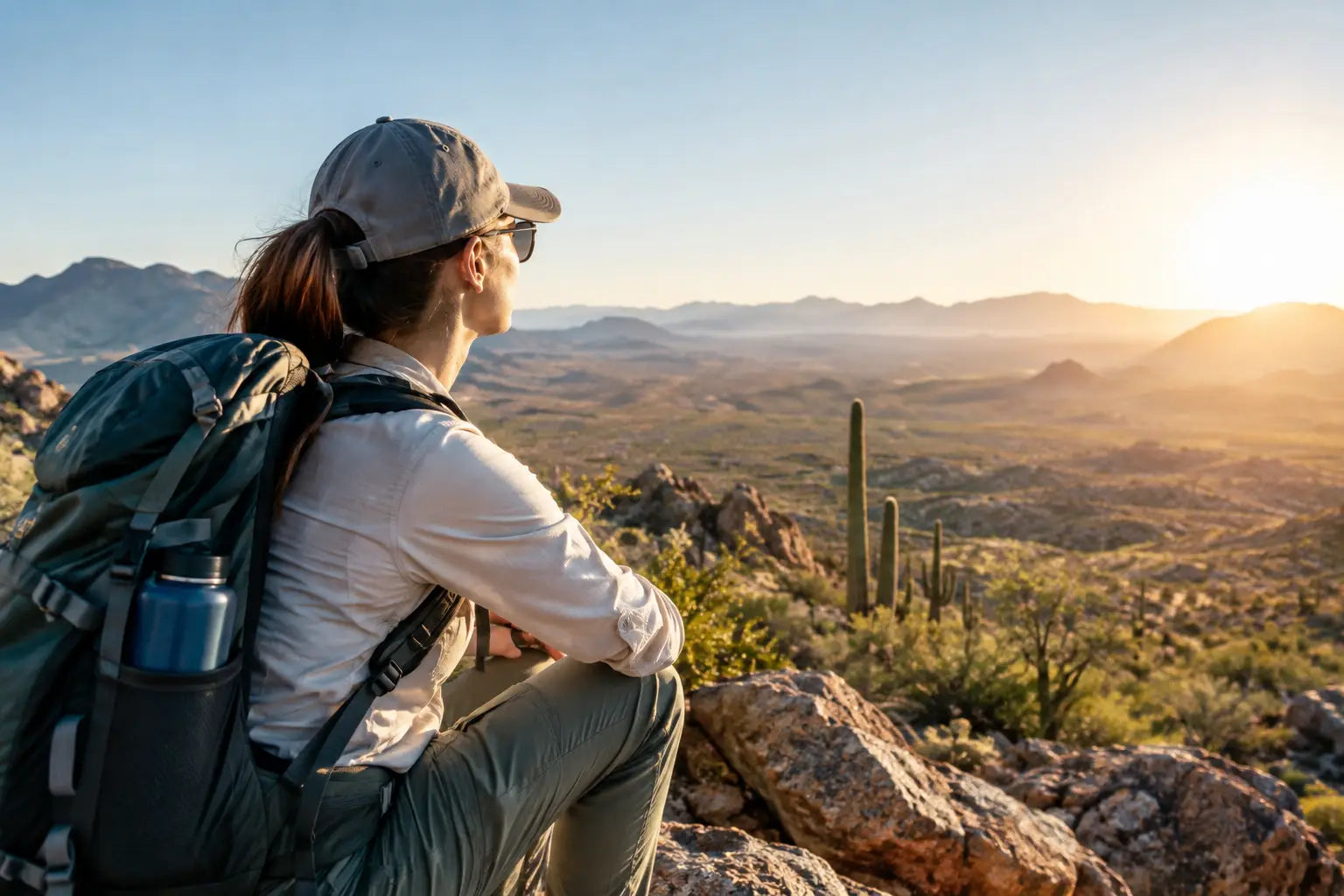
A breakdown in the Arizona backcountry can turn serious before the sun reaches its highest point. A missed turn, flat tire, dead battery, or wrong trail can leave you exposed to heat, wind, and miles of empty ground. This desert survival guide is built around the decisions that matter most: stay found, protect your water, reduce heat exposure, and make it easier for rescuers to locate you.
Desert country punishes small mistakes. Temperatures can climb fast, shade may be scarce, and cell service often disappears where dirt roads and trails get interesting. The right gear helps, but sound judgment is what keeps a routine trip from becoming an emergency.
Start With a Plan That Keeps You Findable
The best survival move happens before you leave pavement. Tell a reliable person where you are going, which route you expect to take, who is with you, and when you plan to return. Give them a clear point when they should call for help if you have not checked in. “Somewhere near the mountains” is not a plan. A trailhead name, route number, waypoint, and vehicle description are useful information.
Carry navigation that does not depend entirely on your phone. A paper map, compass, downloaded offline maps, and a fully charged power bank cover different failure points. For remote travel, a satellite communicator or personal locator beacon adds a level of safety that a cell phone cannot provide. Know how your device works before the trip, including its emergency function.
Check weather and road conditions, but do not treat a clear forecast as a guarantee. Desert storms can build quickly, and rain miles away can send water through a normally dry wash. Avoid parking or camping in washes, narrow drainages, and low crossings when storms are possible.
Water Comes Before Comfort
In desert conditions, water is not just for drinking when you feel thirsty. It supports decision-making, temperature control, and physical performance. By the time intense thirst, headache, weakness, or dizziness show up, you may already be behind.
How much to carry depends on temperature, distance, activity level, vehicle support, and the reliability of your route. For a short, well-planned outing, carry more than you expect to use. For off-road travel, bring a separate emergency reserve that is not touched during normal stops. Keep water in more than one container so a leak, damaged jug, or forgotten bottle does not wipe out your entire supply.
Store water out of direct sun when possible. Insulated bottles help make drinking more tolerable, but do not mistake cold water for extra capacity. A durable water container, protected from punctures and secured in the vehicle, matters more than a fancy bottle.
Electrolyte mixes can be useful during prolonged sweating, especially during physical work or long hikes. They are not a substitute for water, and overusing them without enough plain water can create other problems. Eat regular salty food during extended activity if your situation allows, drink consistently, and slow your pace before heat stress forces the issue.
Do not count on finding water in the desert. Springs may be seasonal, tanks may be dry, and a blue line on a map is not a promise. If you find a natural source, treat it as contaminated until properly filtered and purified. In a true emergency, collected rainwater may be valuable, but it should still be treated when equipment and time allow.
Know the Difference Between Heat Exhaustion and Heat Stroke
Heat exhaustion can include heavy sweating, nausea, cramps, headache, fatigue, dizziness, and cool or clammy skin. Stop activity, get into shade, loosen clothing, cool the body, and drink water if the person is awake and able to swallow.
Heat stroke is a medical emergency. Warning signs can include confusion, altered behavior, fainting, seizures, very hot skin, or loss of coordination. Call 911 or activate emergency communications immediately. Move the person into shade and cool them aggressively with water, wet clothing, airflow, ice packs if available, or any safe cooling method. Do not wait to see whether they “walk it off.”
A Desert Survival Guide to Heat Management
The desert does not require you to look tough. It requires you to manage exposure. Plan demanding travel, recovery work, hiking, and camp setup for early morning or late afternoon when possible. Midday is the time to reduce effort, inspect gear, rest in shade, and avoid burning through water.
Wear loose, durable layers that block sun without trapping heat. A long-sleeve shirt, wide-brim hat, neck covering, sunglasses, and sunscreen protect more effectively than a short-sleeve shirt and determination. Light colors can reduce heat absorption, but fit, coverage, and fabric durability matter too. In brushy terrain or around vehicles, clothing still needs to resist abrasion.
Shade is equipment. In a vehicle, use a reflective windshield shade and keep a tarp, awning, or compact shelter available. On foot, a lightweight tarp or emergency shelter can reduce direct solar load, though it must be anchored safely against wind. Even limited shade can lower strain when you are waiting for help.
Avoid using alcohol before or during desert travel. It contributes to dehydration, slows judgment, and makes it easier to overlook early warning signs. Be careful with energy drinks and heavy caffeine use as well. They do not replace hydration, food, or sleep.
If Your Vehicle Breaks Down, Stay With It
For most off-road and remote-road breakdowns, your vehicle is your best shelter, signal, and landmark. It is larger than a person, easier to spot from the air, and likely to contain water, shade, tools, and communication equipment. Walking out in extreme heat can quickly turn a manageable problem into a search-and-rescue event.
Pull as far off the travel lane as safely possible. Put on hazard lights if the battery allows, raise the hood if you need assistance, and make the vehicle visible with a bright panel, flag, or reflective material. If you have a satellite communicator, send your location and situation early. Do not wait until your water is nearly gone or conditions become critical.
Run the engine only with care. Never idle in a closed space or where exhaust could enter the cabin. Fuel, mechanical condition, temperature, and the risk of overheating all matter. If the vehicle is safe, use it as shade with windows positioned for airflow. A tarp tied beside the vehicle can expand shaded space without trapping you in a hot cabin.
Stay close unless you have confirmed that help, water, or a safe road is very near and conditions make travel reasonable. Leaving a vehicle without a clear route, adequate water, navigation, and a communicated plan is one of the most dangerous decisions in desert travel.
Build a Gear Kit Around Real Failure Points
A useful desert kit is not about carrying every gadget. It addresses the problems that are likely to stop you: heat, dehydration, navigation failure, vehicle trouble, injuries, and delayed rescue.
For day trips, start with extra water, sun protection, a first-aid kit, navigation backups, a headlamp, fire-starting tools where allowed, a whistle, a signal mirror, a charged phone, a power bank, and a communication device suited to your route. Add food that tolerates heat and can be eaten without much water.
For vehicles and overland travel, expand the kit with a full-size spare tire in usable condition, tire repair supplies, air compressor, recovery gear matched to the vehicle, basic tools, work gloves, jumper pack, extra fuel only when safely stored, and a fire extinguisher. A shovel can be useful in sand, but know where underground utilities, cultural sites, and protected terrain may make digging inappropriate.
Choose gear that handles sun and dust. Cheap plastic can become brittle, adhesives can fail, batteries can drain faster in heat, and poorly sealed electronics can suffer after a long day on washboard roads. Test gear at home, then inspect it after rough travel. Reliability is earned before the trip, not during a breakdown.
Treat Desert Wildlife and Terrain With Respect
Most wildlife wants distance, not conflict. Watch where you place hands and feet, especially around rocks, woodpiles, brush, and vehicle tires. Use a light after dark. Do not reach into spaces you cannot see, and do not try to handle snakes, scorpions, or other animals.
Footing changes fast in desert terrain. Loose rock, crusted soil, steep washes, cactus spines, and slick rock can turn a simple walk into an injury. Wear footwear with real support and traction, carry blister care, and slow down when fatigue starts affecting balance. An ankle injury becomes far more serious when you are several miles from shade or a road.
Signal Early, Not Desperately
A whistle, signal mirror, bright fabric, flashlight, and vehicle-sized visual marker all have a place. Three whistle blasts or three flashes are widely recognized distress patterns. During daylight, a mirror can carry much farther than shouting. At night, a headlamp or flashlight can be seen at a distance, especially when used to signal in a deliberate pattern.
If you need rescue, give your location, number of people, medical issues, available water, vehicle description, and current conditions. Conserve battery by sending clear, complete messages instead of a stream of partial updates. Arizona Desert Gear customers know that dependable field equipment matters, but a practiced communication plan is what turns gear into a real advantage.
The desert rewards preparation, but it also rewards restraint. Turn around when weather shifts, take the longer route if it is safer, and call for help while you still have water, shade, and clear thinking. Getting home on your own schedule is never worth gambling with the margin that keeps an uncomfortable day from becoming a dangerous one.

