

Cart
0
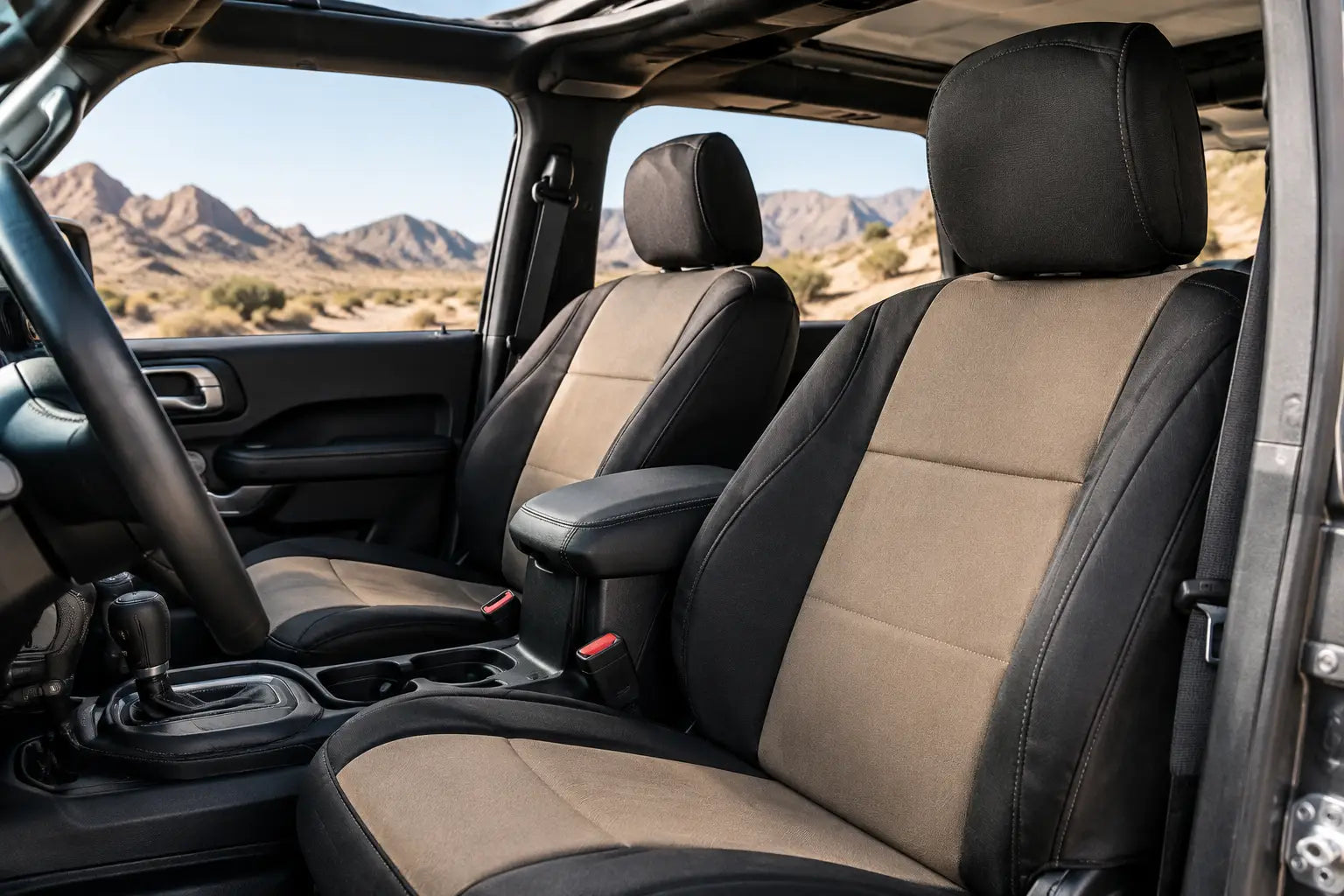
A desert trail can turn a clean cab into a dust bowl before lunch. Add sweat, wet recovery straps, muddy boots after monsoon season, and a dog climbing in and out, and factory upholstery takes a beating. The best seat covers offroad drivers can buy are not just cosmetic upgrades. They are working gear that protects the seat, stays put over rough terrain, and can handle Arizona sun without becoming another weak point in the rig.
For Southwest use, the right cover depends on how you use the vehicle. A daily-driven Tacoma needs different material than a dedicated trail Jeep. A side-by-side used around ranch property has different needs again. Start with the environment and the job, then choose the cover that fits both.
What Offroad Seat Covers Need to Handle
Desert travel creates a specific kind of wear. Fine dust works into seams and fabric texture. UV exposure dries out lesser materials. Heat builds inside a closed vehicle, especially in dark cabins with large glass areas. Then there is the physical abuse: recovery gear, tools, camp bins, holstered equipment, knee braces, climbing harnesses, pets, and passengers dropping into the cab after a long hike.
A good offroad seat cover should handle that abuse without shifting, bunching, tearing, or blocking seat functions. It should also be practical to clean. If removing a cover requires an hour of fighting straps and headrests, it is less likely to get cleaned when it needs it.
Fit is the foundation. A loose universal cover may cost less upfront, but it can slide across the seat cushion, interfere with access to controls, and create pressure points on longer drives. For a vehicle that sees washboard roads and technical trails, vehicle-specific or semi-custom covers are usually the better investment.
Best Seat Covers Offroad Drivers Should Consider
There is no single best material for every rig. The strongest choice comes down to your climate, whether the vehicle is open or enclosed, how often it is used, and how much comfort matters on the highway.
Heavy-duty canvas for hard use
Canvas and canvas-style polyester blends are a strong fit for trucks, SUVs, and Jeeps that see regular work. They resist abrasion well, stand up to dog claws and tool belts, and usually brush clean without much trouble. A quality canvas cover also looks appropriate in a trail rig instead of trying to imitate luxury upholstery.
The trade-off is heat and texture. Heavy canvas can feel warm in direct sun and may be stiff until it breaks in. Look for UV-treated fabric and a finish that does not turn slick when you are sweaty or wearing dusty clothing. For Arizona trucks that spend weekends on forest roads, desert two-tracks, and camp runs, canvas is often the practical default.
Neoprene and wetsuit-style covers for wet, active use
Neoprene covers are popular because they fit closely, cushion the seat, and resist water. They work well for drivers who mix offroad travel with fishing, boating, kayaking, or frequent monsoon-season mud. The tight fit also helps keep the cover from moving around on rough terrain.
The drawback is desert heat. Neoprene can hold warmth, especially on black or dark-colored seats parked in full sun. It may also feel less breathable than woven fabric during long summer drives. If water protection is the priority, neoprene earns its place. If your rig mostly sees dry dust and triple-digit temperatures, canvas or a breathable synthetic may be more comfortable.
Cordura-style synthetics for abrasion resistance
High-denier synthetic fabrics are a good middle ground. They are generally lighter than traditional canvas, dry quickly, and resist scuffs from everyday gear. Many have a tight weave that sheds dust better than softer fabrics, making them useful for vehicles that alternate between commuting, range days, camping, and trail use.
Quality matters here. Thin polyester covers can look similar in a product photo but may stretch, fade, or split at high-contact points. Check for reinforced seams, substantial backing, and straps that anchor beneath the seat rather than relying only on elastic edges.
Leatherette for easy cleanup
Leatherette or vinyl-style covers make sense for some desert rigs, particularly work vehicles, hunting trucks, and side-by-sides where cleanup matters more than breathability. Dust, spilled drinks, sunscreen, and mud wipe off quickly. They can also offer good protection against stains that would soak into cloth.
The downside is obvious in Arizona: dark, non-breathable vinyl can get hot fast. A lighter color, perforated center panel, or combination design with fabric seating surfaces can help. Avoid cheap vinyl that gets brittle after prolonged UV exposure. If it feels thin before installation, it will not improve after a summer outside.
Prioritize Vehicle-Specific Fit
A cover is only as good as its fit around the details. Modern seats can include side airbags, power controls, lumbar switches, integrated headrests, armrests, seatback pockets, and split-folding rear sections. Generic covers often leave these features awkward to use or covered completely.
For front seats, confirm that the cover is designed for side-airbag-equipped seats if your vehicle has them. The airbag seam must be purpose-built for deployment. Do not cut, modify, or force a standard cover around an airbag area. Saving a few dollars is not worth compromising a safety system.
For rear seats, check how the seat folds and whether the cover preserves access to child-seat anchors, center armrests, and under-seat storage. In an overland build, the rear seat may still carry passengers one weekend and sleeping gear the next. Covers should work with the vehicle, not turn basic functions into a hassle.
Features That Matter on Desert Trails
Look beyond material names. The small construction details determine whether a cover survives real use.
Strong attachment points matter more than decorative stitching. Buckle straps, reinforced hook-and-loop closures, and seat-bottom anchors help prevent the cover from creeping forward when you climb in and out repeatedly. Double-stitched seams are useful around outer bolsters, where drivers rub against the seat every time they enter the cab.
UV resistance is another requirement, not a bonus. Desert sunlight fades fabric and weakens thread long before a cover looks completely worn out. Covers rated or treated for UV exposure are worth seeking out, especially for open-top vehicles, side-by-sides, and rigs parked outdoors.
Choose pockets carefully. Seatback storage is useful for maps, recovery gloves, flashlights, first-aid items, and trail permits, but oversized hanging pockets can snag gear or kick around behind the seat. A few well-placed, flat pockets are more useful than a cluttered organizer built into the cover.
Color has a practical side too. Black hides grime but absorbs heat. Tan, gray, and earth-tone covers tend to stay more comfortable in sun while still hiding desert dust better than light gray or white. For a Southwest vehicle, lighter neutral shades usually make more sense than a black interior upgrade that becomes untouchable at noon.
Match the Cover to How You Use the Rig
A daily driver that occasionally runs desert trails benefits from a fitted synthetic or canvas-blend cover with a clean look and easy access to factory functions. You want protection without making every commute feel like you are sitting on a tarp.
A dedicated offroad truck or Jeep can favor heavier canvas, Cordura-style fabric, and maximum coverage. Comfort still matters, but durability, secure fit, and easy cleanup take priority. If doors come off or the top stays open, use covers designed for extended UV exposure and consider adding seat protection whenever the vehicle is parked.
For side-by-sides, water resistance and dust shedding move higher on the list. These machines are exposed to the elements more often, and their seats can take a direct hit from mud, rain, sweat, and fine sand. Covers should fit tightly enough that they do not flap or collect debris beneath them.
For family overlanding vehicles, balance toughness with passenger comfort. Breathable materials, easy-clean surfaces, and rear-seat access matter more than extreme abrasion resistance alone. The right setup lets kids, dogs, coolers, and camp gear ride along without turning the interior into a permanent cleanup project.
Installation and Care Keep Covers Working
Install covers with the seats fully adjusted and take time to route every strap correctly. Loose straps under the seat can snag wiring or interfere with power-seat movement. After the first few drives, recheck tension. New covers often settle into place, and a quick adjustment can prevent rubbing or bunching.
For regular desert dust, vacuum the seats and use a soft brush at seams before wiping down the surface. Follow the material-specific cleaning instructions rather than soaking every cover with household cleaner. Harsh chemicals can strip water-resistant coatings and dry out vinyl surfaces.
If a cover gets wet after a storm, creek crossing, or gear spill, let it dry thoroughly before sealing up the vehicle. Trapped moisture can create odor and mildew underneath, even in a dry climate. Remove the cover periodically to inspect the factory upholstery, clear out grit, and make sure straps have not worn against seat components.
Arizona Desert Gear customers know that desert equipment earns its keep through repeated use, not showroom appearance. Choose seat covers that fit your vehicle, match your real conditions, and make cleanup easier after a hard day outside. The best cover is the one still doing its job after the dust settles, the sun beats down, and the trail gets rough again.

