

Cart
0
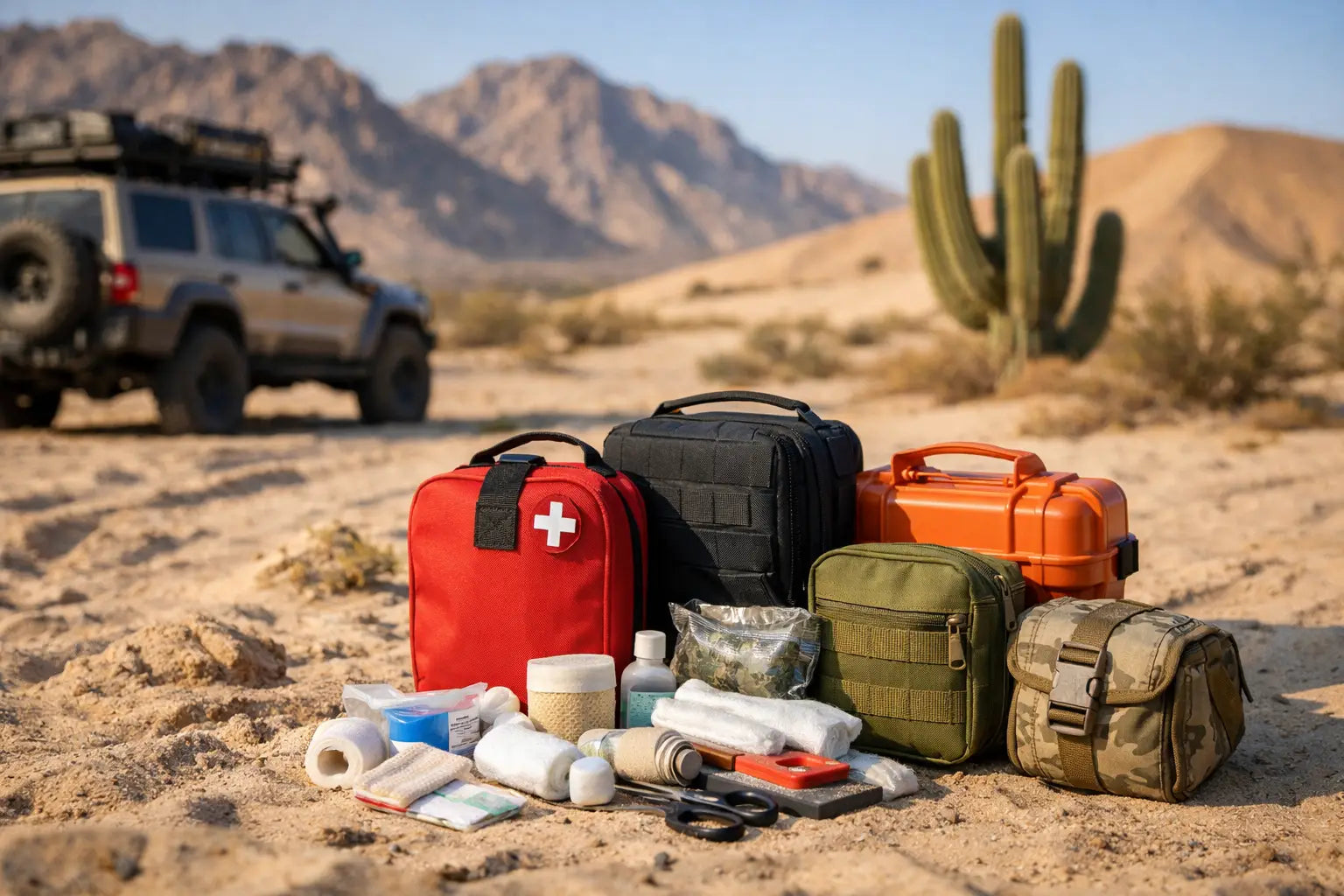
A flat tire is inconvenient. A deep cut, rollover injury, heat emergency, or snakebite miles from cell service is a different kind of problem. The best off road first aid kits are built for the gap between an incident and professional care - and that gap can be long on Arizona two-tracks, desert trails, and remote forest roads.
A basic drugstore kit is better than nothing, but it is rarely enough for off-road travel. It may handle a scraped knuckle or blister, yet it usually lacks the bleeding-control tools, burn supplies, irrigation capacity, and organization needed when terrain, heat, and distance work against you. The right kit depends on how you travel, how many people ride with you, and whether you know how to use trauma gear.
What Makes the Best Off Road First Aid Kits Different
Off-road kits need to survive more than a weekend in the trunk. They get exposed to heat, dust, vibration, and gear being piled on top of them. A useful kit should have a tough case or pouch, clear internal organization, and supplies that can be reached without dumping everything into the dirt.
More importantly, it needs to match the likely injuries. Desert travel adds dehydration, heat illness, cactus spines, burns from hot metal or camp stoves, eye irritation from dust, and lacerations from recovery gear, sharp rock, or broken vehicle parts. Remote routes also raise the stakes of fractures and serious bleeding because help may be an hour or more away.
Do not confuse a well-stocked kit with medical training. A tourniquet, chest seal, and pressure dressing are worthwhile additions, but they are most effective when the people carrying them have practiced with them. Take a reputable first aid and bleeding-control course, then build your kit around the skills you can use under pressure.
7 Best Off Road First Aid Kit Setups
There is no single kit that fits every rig and every route. These seven setups cover the most common off-road use cases, from a day run outside town to an overland trip far from services.
1. The Vehicle Trauma Kit
For most 4x4s, UTVs, and overland rigs, a dedicated trauma kit is the first kit to buy. It should include at least a quality tourniquet, compressed gauze, hemostatic gauze if you are trained to use it, pressure dressings, chest seals, trauma shears, gloves, and a permanent marker for documenting care.
Keep this kit accessible from the driver’s seat, passenger seat, or an exterior-mounted location that can be reached after a crash. It should not be buried beneath a cooler, recovery boards, and camping bins. A red pouch with a clearly marked exterior is easier for another person to find when you are the one injured.
2. The General Off-Road Medical Kit
A trauma kit handles life-threatening injuries. A general kit handles the problems that can turn a good trip into a miserable one: cuts, blisters, sprains, splinters, insect stings, headaches, and minor burns.
Look for assorted adhesive bandages, sterile gauze pads, rolled gauze, medical tape, antiseptic wipes, antibiotic ointment, burn gel or burn dressings, tweezers, irrigation supplies, elastic wrap, a triangular bandage, and over-the-counter medications appropriate for your group. Add any personal prescriptions separately and protect them from extreme heat.
This is the kit that gets used most often, so buy one with room to restock. Cheap all-in-one kits often contain many small bandages and very little gauze, tape, or wound-cleaning capability. That balance does not hold up well on the trail.
3. The Heat and Hydration Add-On Kit
In the Southwest, heat illness deserves its own plan. A first aid pouch cannot replace water capacity, shade, route planning, or turning around early, but it can support quick action when someone starts showing signs of heat exhaustion.
Carry oral rehydration packets, cooling towels, instant cold packs, electrolyte drink mix, a thermometer, and a written reference card for heat illness symptoms. Store extra water in the vehicle, not just in personal bottles. If someone is confused, collapses, has a seizure, or has hot skin with altered behavior, treat it as a medical emergency and begin active cooling while getting help.
The trade-off is space. For a short trail run, hydration supplies may fit in a small add-on pouch. For desert camping or multi-day overlanding, water storage and shade equipment matter far more than adding another handful of bandages.
4. The Compact IFAK for Each Rider
An individual first aid kit, commonly called an IFAK, is a compact trauma-focused pouch carried on a person rather than stored in the vehicle. It makes sense for dirt bike riders, ATV riders, hikers leaving camp, and anyone who may get separated from the rig.
A practical IFAK is not a miniature pharmacy. Keep it focused: tourniquet, gloves, compressed gauze, pressure dressing, chest seals, trauma shears, and a small emergency blanket. It should fit securely on a belt, pack, MOLLE panel, or chest rig without becoming so bulky that it gets left behind.
Each rider carrying an IFAK improves response time, but it also creates a maintenance job. Inspect every pouch regularly and make sure everyone knows where their gear is mounted.
5. The Family and Group Camp Kit
A larger family kit earns its place when children, older adults, pets, or multiple vehicles are involved. This setup should combine general first aid supplies with enough duplicates to treat more than one person at a time.
Include extra gloves, gauze, adhesive bandages, wound-cleaning supplies, elastic wraps, cold packs, oral rehydration packets, antihistamines, and age-appropriate medications. A splinting option is useful, whether that means a dedicated flexible splint or materials you know how to improvise with. Add a simple notepad with emergency contacts, allergies, medications, and the coordinates or route information for your destination.
Do not assume one small kit can cover six people for several days. Group size changes the math quickly, especially with water, electrolyte supplies, and basic wound care.
6. The Recovery and Workshop Kit
Winching, repairing a broken part, setting up camp, and cooking around a fire create their own injury risks. A recovery and workshop kit should emphasize hand injuries, eye protection, burns, and minor cuts.
Useful additions include sterile eye wash, eye pads, burn dressings, finger bandages, tweezers, heavy-duty tape, irrigation syringes, and extra gloves. Eye wash is especially valuable in dusty country, but it is not a substitute for sealed safety glasses when using grinders, cutting tools, or working under a vehicle.
Keep this kit near your tool roll or recovery gear. That placement makes it available where many trail-side injuries happen, while your main trauma kit remains protected and ready for a serious emergency.
7. The Remote Expedition Kit
For routes with limited access, no reliable service, or overnight travel far from pavement, choose a larger, modular kit. It should include trauma supplies, general wound care, splinting materials, irrigation, heat-management supplies, and enough consumables for the full group and trip length.
Organization matters most here. Separate modules for bleeding, wounds, medications, burns, and heat response let you find what you need without opening every pouch. Use labeled waterproof bags inside a dust-resistant case, and store the case where it will not bake in direct sun all day.
A remote kit should also be part of a wider emergency system: reliable communications, navigation, recovery gear, extra water, shelter, and a travel plan shared with someone off-route. Medical supplies alone cannot solve a remote emergency.
Features Worth Paying For
The best kit is one you can open, understand, and use quickly. Prioritize a durable zipper or case, labeled compartments, quality sterile packaging, and a layout that keeps critical items visible. In desert conditions, a water-resistant exterior and dust-resistant closure are more useful than a hard case that is too bulky to bring.
Avoid kits that advertise a huge item count but rely on dozens of tiny adhesive strips to inflate the number. One quality pressure dressing, a real tourniquet, and several packs of gauze can be far more valuable than 100 light-duty bandages.
Check the contents before buying. Some kits include a tourniquet-shaped item that is not a proven, purpose-built model. Others include medications that may not be suitable for every traveler. Build around trusted medical components, and keep personal medications in their original labeled containers whenever possible.
Where to Keep a First Aid Kit in an Off-Road Vehicle
Accessibility beats convenience. Your primary trauma kit should be reachable from the front seats or from outside the vehicle if doors are jammed. A second general medical kit can live in a cargo drawer, seat-back organizer, or labeled storage bin.
Heat is a real concern in Arizona. Avoid leaving medications, adhesive products, and electrolyte supplies in a rig that sits in full sun for weeks. Rotate consumables, inspect packaging for swelling or damage, and replace anything that has expired, melted, become contaminated, or been used.
Arizona Desert Gear customers tend to build their vehicles around self-reliance, and first aid deserves the same attention as recovery gear. Buy for the routes you actually run, carry enough water to support the plan, and put your most critical medical supplies where a shaken-up passenger can reach them fast.

