

Cart
0
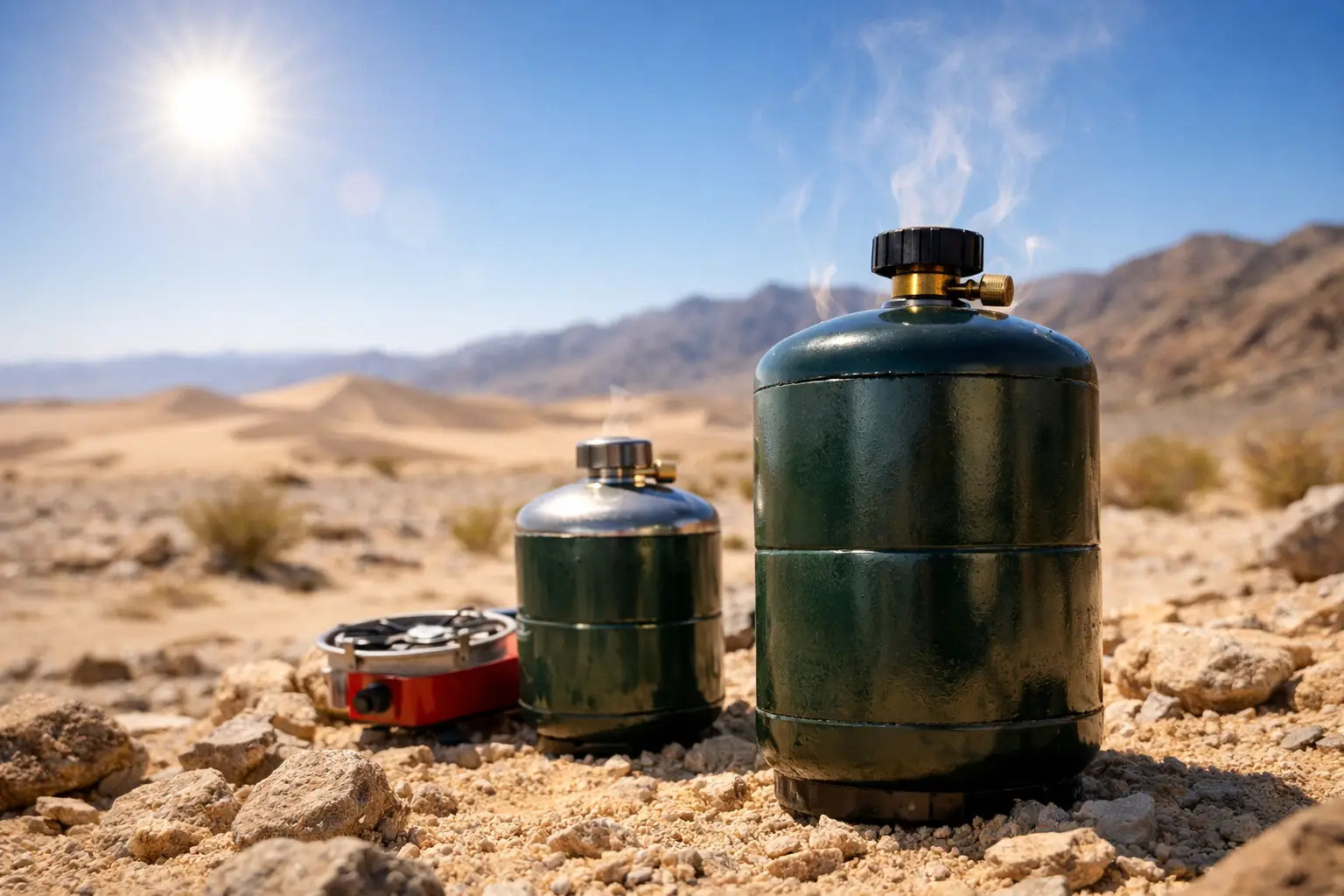
A one-pound propane canister left on the floor of a closed pickup cab can go from ordinary camp fuel to a serious problem before lunch. In Arizona, summer sun, dark vehicle interiors, and reflected heat off rock or pavement can push temperatures far beyond the air temperature. So, can propane canisters overheat? Yes. They can become dangerously hot, build internal pressure, and, in the wrong conditions, vent or fail.
Propane is dependable fuel for camp stoves, lanterns, heaters, and compact cooking setups. The canister itself is designed to contain pressurized fuel, not sit in a sealed vehicle or direct desert sun all day. Smart handling is not complicated, but it needs to be part of your normal loadout routine.
Why Propane Canisters Overheat
Propane expands as it gets warmer. Inside a canister, that expansion raises pressure. A properly made, undamaged canister has a wide safety margin during normal use, but extreme heat narrows that margin fast.
The biggest mistake is judging the canister by the weather report. A 105-degree day is already hard on gear, but a canister inside a locked SUV, truck bed box, rooftop storage case, or enclosed trailer can be exposed to far higher temperatures. Direct sun on the cylinder adds more heat, especially when it is sitting against black plastic, metal, or hot pavement.
Vehicle storage is the most common avoidable risk. Even if the canister does not rupture, heat can damage the valve seal, increase the chance of a leak, or leave you with questionable fuel when you need to cook a meal miles from pavement. The hazard rises further when a leak collects in an enclosed space. Propane is heavier than air, so escaping gas can settle low in a vehicle, tent vestibule, trailer compartment, or storage tote.
Do not assume shade solves every problem. Shade is better than direct sunlight, but a canister left in an enclosed, unventilated space can still overheat when ambient temperatures stay high for hours.
Can Propane Canisters Overheat During Normal Camp Use?
They can get warm during use, but a canister should not become too hot to handle or sit beside a major heat source. The risk is usually not the stove itself when it is assembled and operated according to its instructions. The risk comes from poor placement, wind screens used incorrectly, oversized cookware trapping heat, or using a stove on surfaces that reflect heat back toward the fuel cylinder.
A compact stove needs open air around both the burner and canister. Keep the cylinder upright when the appliance calls for it, set it on stable ground, and position it away from a fire ring, grill, vehicle exhaust, or sun-baked metal table. Do not use an improvised enclosure to block wind unless the stove manufacturer specifically allows it. Wind protection that wraps around the stove can trap heat around the canister.
This matters on desert trips because wind is common, and so is the temptation to shield the flame with whatever is available. A folding windscreen placed too close to a fuel canister can turn a simple coffee setup into a heat-management issue. Move the cooking area into a naturally sheltered spot instead, or use equipment designed for windy conditions.
Signs a Propane Canister Is Too Hot or Damaged
Treat any canister with visible damage or unusual behavior as out of service. Do not try to use up the fuel just because the cylinder is partly full.
Watch for these warning signs:
- The canister is painfully hot to touch, swollen, deeply dented, rusted, or has a damaged valve.
- You smell the distinctive odor added to propane, hear hissing, or see frost forming around the valve when it should not be there.
- The stove flame burns erratically after you have checked the appliance connection and burner.
- The canister has been exposed to a vehicle interior, fire, or direct summer sun long enough that you cannot confidently assess its condition.
If you smell propane, do not light a match, start a vehicle, operate switches, or plug in electronics nearby. Keep people away, eliminate ignition sources if you can do so safely, and move away from the area. If a cylinder is leaking, venting, or involved in a fire, call emergency services. Do not attempt to repair the valve or cool a burning cylinder yourself.
Store Propane for Desert Conditions, Not Convenience
The best storage method is boring, simple, and effective: keep canisters cool, upright, protected from damage, and away from enclosed living spaces and ignition sources. Convenience storage inside the truck is not desert-ready storage.
For day trips, pack only the fuel you expect to use plus a reasonable backup. Store the canisters in a ventilated area that stays out of direct sun. A dedicated exterior compartment can work well if it is designed for fuel storage and does not trap heat. Avoid sealed plastic bins, glove boxes, center consoles, enclosed cargo spaces, and hard cases left in the sun.
At home, store propane outside in a dry, shaded, well-ventilated location. Keep it away from doors, windows, dryer vents, open flames, electrical equipment, and areas where children or pets can knock it over. Do not store cylinders in a basement, garage, shed with no ventilation, or inside the house.
Check the label on every canister. Manufacturers specify storage limits and handling instructions for a reason. If the stated maximum storage temperature is lower than the conditions you expect in a locked vehicle, the answer is straightforward: do not leave it there.
Transporting Propane Without Turning Your Rig Into a Hot Box
Transport fuel as close to departure time as practical. If you stop for supplies, food, or trail permits, do not leave a truck loaded with propane sitting in full sun for hours. Take the canisters out and place them in a safe shaded location when possible, or plan errands before loading fuel.
Keep canisters secured so they cannot roll, strike other gear, or have their valves damaged on rough roads. An upright position is preferred when practical. Separate fuel from batteries, tools, cooking gear, and anything that could puncture or crush the cylinder during off-road travel.
Do not carry propane in the passenger area if you have a safer exterior option. If your vehicle setup forces you to use an interior cargo area for a short trip, keep the space ventilated, minimize time in the vehicle, and unload the canisters immediately when you arrive. Never leave them in the vehicle overnight or while parked at a trailhead in summer heat.
What to Do With a Hot Canister
If a canister is hot but not leaking, do not panic and do not handle it more than necessary. Keep ignition sources away and allow it to cool naturally in a shaded, open, well-ventilated area if it is safe to move. Do not toss it into a cooler, cover it tightly, puncture it, or submerge it in water. Sudden temperature changes and rough handling are not a fix.
If it is too hot to safely move, has a strong propane odor, is venting, or is near a vehicle or structure, back away and contact emergency services. The right call is to create distance, not to improvise a rescue with gloves, water, or a tarp.
Once cooled, inspect the canister carefully. A cylinder that was severely overheated, damaged, or suspected of leaking should not go back into your camp kit. Follow local hazardous-waste or propane-cylinder disposal guidance. Do not throw a damaged or partially full propane canister into household trash or a campfire.
Build Fuel Checks Into Your Pre-Trip Routine
Before heading out, inspect each canister for dents, corrosion, valve damage, and expired or questionable condition. Carry only compatible appliances and check seals and connections before lighting. After cooking, turn off the appliance, let it cool, and disconnect or store it according to the manufacturer’s directions.
Desert travel rewards simple systems that work every time. Keep propane out of direct sun, out of closed vehicles, away from open flame, and secured from trail damage. A canister that stays cool and protected is one less problem to solve when the heat is already working against you.

