

Cart
0
Table of Contents
- Best Weather Resistant Camping Tents 2026: Quick Comparison
- Best Waterproof Camping Tents for Rain and Wind
- Camping Tent Waterproof Rating: What the Numbers Actually Mean
- Best Tents for Heavy Rain and Wind: Stability and Safe Setup
- How to Set Up a Tent in Windy Weather
- Condensation, Durability, and Long-Term Weather Protection
- Which Weather Resistant Tent Should You Pick?
- Frequently Asked Questions
Last Updated: October 19, 2026
Best Weather Resistant Camping Tents 2026: Quick Comparison
Finding the best weather resistant camping tents in 2026 starts with one hard truth: a tent's rainfly number matters less than how the whole shelter handles wind, seams, and condensation together. At Arizona Desert Gear, we sell tents built for desert wind and sudden storms, so we judge them on real construction, not marketing. This guide compares our own lineup by waterproof rating, pole material, and packed weight.
| Tent | Price | Waterproof Rating | Packed Weight | Best For |
|---|---|---|---|---|
| Outdoor Camping Tent | $204.52 | PU2000 fly / PU4000 floor | 1.6 kg | Backpacking, all-season |
| Couple Outdoor Camping Fishing Tent | $132.44 | 2000-3000mm | Not listed | Couples, four-season |
| Desert Fox Double Aluminum Tent | $119.41 | Waterproof double-wall | 2.4 kg | Wind stability, snow skirt |
| Windproof Rainproof Outdoor Tent | $57.73 | Rainproof double | Not listed | Budget car camping |
| Double-Layer Aluminum Pole Tent | $124.05 | Double-wall Oxford | Not listed | Two-person weekend trips |
| Automatic Quick Open Tent | $140.36 | 1000-1500mm fly | 3.5-4.5 kg | Fast setup, family |
| Multi-Person Automatic Tent | $147.80 | Oxford cloth | Not listed | Groups, car camping |
| Camping Tent | $45.53 | Not listed | Not listed | Entry-level 2-4 person |
| Automatic Pop-Up Tent | $95.05 | Not listed | Not listed | Quick solo trips |
| Wholesale Automatic Tent | $91.43 | Not listed | Not listed | Cold-weather quick setup |
Best Waterproof Camping Tents for Rain and Wind
Our top pick for rain and wind is the Outdoor Camping Tent at $204.52. It pairs a PU2000 fly with a PU4000 floor, the highest floor rating in our lineup, and weighs just 1.6 kg packed. That combination rarely appears at this weight.


The Couple Outdoor Camping Fishing Tent ($132.44) is the four-season option, with a 2000-3000mm external rating and an aluminum alloy frame. For a couple camping through wet shoulder seasons, it is the safer bet.
Pro Tip
A PU4000 floor rating matters more than most buyers realize. Ground water wicks up through a thin floor long before rain soaks through the fly, especially on multi-day trips where you sleep on damp ground.
Camping Tent Waterproof Rating: What the Numbers Actually Mean
A camping tent waterproof rating is a hydrostatic head measurement: how tall a column of water a fabric can hold before water pushes through. The test is simple in principle, clamp fabric over a tube, fill it with water, and watch for the first drop, but the number on the tag tells you less than most buyers assume. A 2000mm fly and a 2000mm floor are not equivalent in the field, because rain hits the fly at an angle while ground water presses the floor from below for hours.
Here is how the ratings in our lineup translate to real conditions:
- 1000-1500mm: light rain and quick showers; fine for fair-weather trips and overnighters where you can dry the tent the next morning
- 2000mm: steady rain, three-season camping; the practical minimum for a fly you trust on a wet weekend
- 3000mm: heavy rain and extended wet weather; appropriate when you expect hours of sustained precipitation
- 4000mm: standing water, snow contact, and multi-day storms; the rating we recommend for floors on trips where you sleep on saturated ground
Three mechanisms decide whether that number holds up in camp. First, seam construction: every stitch line is a pinhole, so taped or welded seams matter as much as the coating. A 3000mm fly with untaped seams leaks faster than a 2000mm fly with taped ones. Second, coating type and age: polyurethane coatings degrade with UV exposure and packed-wet storage, so a tent that sat wet in a garage for a season may test well below its label. Third, floor vs. fly weighting: ground water wicks through a thin floor long before rain soaks the fly, which is why we weight floor ratings more heavily than fly ratings in our picks.
A practical buying framework: treat the fly rating as your rain ceiling and the floor rating as your ground-water ceiling, then discount both by one tier if the seams are not taped or the tent is more than a few seasons old. According to outdoor industry waterproofing standards, coatings above 1500mm are considered rain-ready for recreational camping, but that is a floor, not a target. For three-season use, aim for a 2000mm-plus fly and a 3000mm-plus floor; for cold, wet, or multi-day trips, step up to 3000mm fly and 4000mm floor.
Best Tents for Heavy Rain and Wind: Stability and Safe Setup
For heavy rain and wind, stability comes down to pole material, pole geometry, and how you anchor the shelter, in that order. The Desert Fox Double Aluminum Camping Tent ($119.41) uses aluminum poles and a double-wall build with a snow skirt, which sheds wind and blocks driven rain at the base. At 2.4 kg, it stays packable. Aluminum poles flex and recover under gusts; fiberglass, used in the Automatic Quick Open Tent ($140.36), is heavier and can splinter in extreme wind. If you camp where storms roll in fast, aluminum is the better investment.
Pole geometry matters as much as material. A dome with crossed poles distributes gust loads across four or more anchor points, while a single-hoop or tunnel design relies on guy lines to stay upright. More crossing points generally mean more stability per ounce, but they also mean more setup steps in bad weather. Match the design to your worst expected gust, not your average trip.
Guy lines are where most wind failures actually start. Run them at a low angle, roughly 45 degrees from the tent body to the stake, so the load pulls along the ground rather than lifting the stake. Use two stakes per line where soil is loose, and tension lines before the storm arrives, not during it. Stake placement follows the same logic: the upwind corners carry the most load, so seat those stakes deepest and check them first when the wind picks up.
Campsite orientation is the free variable most campers ignore. Pitch the narrow end of the tent into the prevailing wind, use terrain, a rock, a vehicle, a dense shrub line, as a windbreak, and avoid exposed ridges and open saddles where gusts accelerate. If you must camp exposed, dig or build a low windbreak on the upwind side and keep the tent profile as low as the design allows.
Watch Out
Never pitch a tall tent broadside to strong wind. A high-profile shelter catches gusts like a sail, and stakes pull free first. Angle the narrow end into the wind and add guy lines before the storm arrives. The National Weather Service wind safety guidance recommends securing loose gear and shelter before gusts exceed 30 mph, since sudden bursts cause most tent failures.
Practical limits: no three-season tent is designed for sustained winds above roughly 40 mph, and a tent pitched on saturated ground can lose stake hold even in moderate gusts. If a storm is forecast to exceed those limits, move to hard shelter or a vehicle rather than testing the tent. For the tents above, the aluminum-framed Desert Fox is the pick for exposed, gusty sites; the Couple Outdoor Camping Fishing Tent ($132.44) is the better choice for wet, windy shoulder seasons where you want a four-season fly and a stronger frame.
Windproof Rainproof Outdoor Camping Tent →
How to Set Up a Tent in Windy Weather
Setting up in wind takes a specific order. Stake the upwind corner first, keep the tent low until the frame is complete, and add guy lines before you tension the body.
- Lay the footprint and stake the two upwind corners.
- Assemble the poles and thread them while the tent lies flat.
- Raise the frame with the narrow end facing the wind.
- Stake the remaining corners, then tension guy lines at a low angle.
- Attach the rainfly and secure every clip before the first gust.
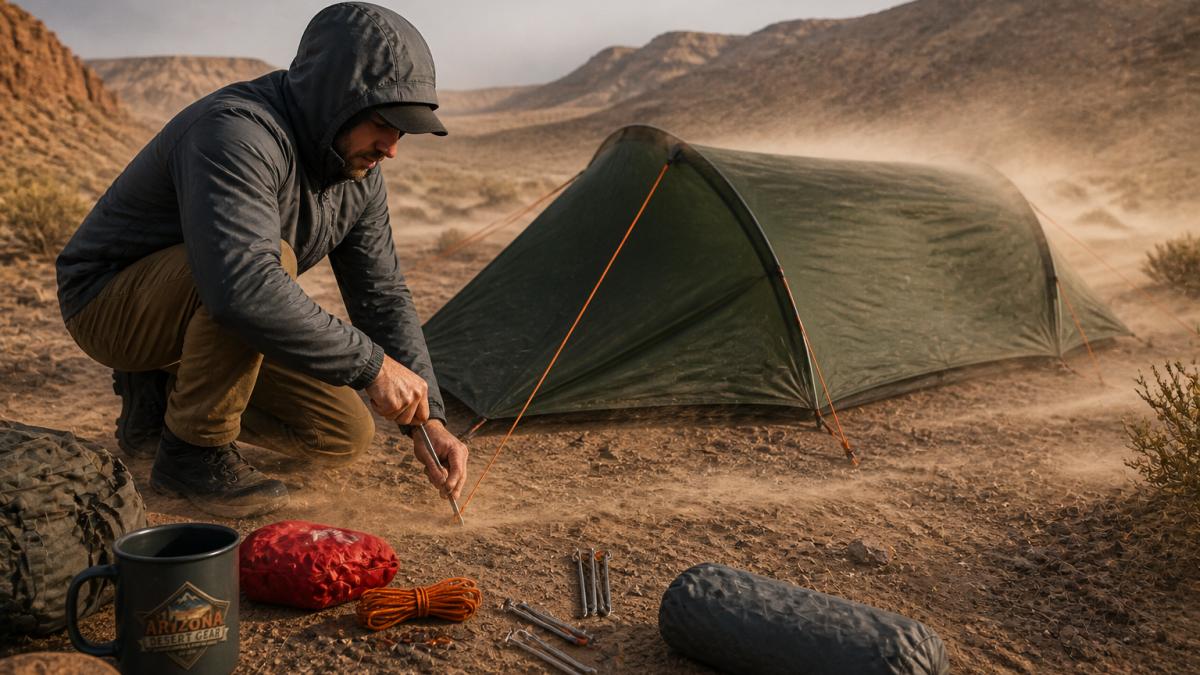
The National Weather Service wind safety guidance recommends securing loose gear and shelter before gusts exceed 30 mph, since sudden bursts cause most tent failures.
Condensation, Durability, and Long-Term Weather Protection
Condensation is the weather problem most campers blame on leaks. Moisture from your breath collects on the inside of a cold fly and drips, even in a perfectly waterproof tent. Double-wall designs like the Desert Fox and Double-Layer Aluminum Pole Tent ($124.05) separate the inner from the fly, letting vapor escape before it pools.
Durability follows the fabric. The Outdoor Camping Tent uses 210T tear-resistant plaid fabric and 210D Oxford ground cloth, materials that resist abrasion on rocky ground. Re-seal seams yearly and store tents dry; a packed-wet tent grows mildew that breaks down coatings fast.
Key Takeaway
Ventilation beats extra waterproofing for comfort. A tent that breathes well with a high-rated floor outperforms a sealed shelter that traps moisture inside.
Which Weather Resistant Tent Should You Pick?
Match the tent to your worst expected condition, not your average trip. Backpackers covering distance should choose the Outdoor Camping Tent for its 1.6 kg weight and PU4000 floor. Couples camping through wet seasons get the most from the Couple Outdoor Camping Fishing Tent. Wind-exposed desert and ridge camping favors the aluminum-framed Desert Fox. Budget car campers can start with the Windproof Rainproof Outdoor Camping Tent at $57.73 and upgrade as trips get longer.

Our American Camping Association trip-planning resources note that matching shelter to season prevents most gear failures. Every tent above ships free within the USA and carries our 30-day return policy, so you can test the fit before a big trip.
Frequently Asked Questions
What makes a camping tent weather-resistant?
Three things decide it: the waterproof coating on the fly and floor, how the poles and guy lines handle wind, and how well the tent vents moisture. A tent with a PU2000 fly, aluminum poles, and a full-coverage rainfly will outperform a cheaper tent with a thin single-wall design in real storms. Look for taped seams, a bathtub floor, and enough guy-out points to lock the frame down before you trust it in bad weather.
How waterproof should a camping tent be?
For three-season camping, a fly rating of 1,500mm to 3,000mm handles most rain. The Couple Outdoor Camping Fishing Tent sits in that range at 2000mm to 3000mm. For heavy, sustained rain or winter use, aim for 3,000mm or higher. Floor ratings should meet or beat the fly, since ground water is often the bigger threat. Anything under 1,000mm is fair-weather gear only.
Can a three-season tent handle cold weather?
A three-season tent can handle cold nights if it blocks wind and manages condensation, but it is not built for heavy snow loads. The Outdoor Camping Tent lists all-season use, and the Couple Outdoor Camping Fishing Tent is rated for four seasons. For freezing trips, prioritize a double-wall design, a full rainfly, and strong aluminum poles. Add a warmer sleeping bag rather than expecting the tent alone to keep you warm.
How do you keep a tent dry during heavy rain?
Set up on high ground with the door facing away from the wind, stake out the rainfly tight so it never touches the inner wall, and seal or check seams before the trip. Keep gear off the floor against the walls, since contact pulls moisture through. Ventilate when the rain pauses to clear condensation. A footprint or ground tarp under the floor adds a second barrier against pooled water.
What is the difference between a waterproof tent and a weather-resistant tent?
Waterproof means the fabric and seams block liquid water up to a stated rating, usually measured in millimeters. Weather-resistant is broader: it covers rain plus wind stability, UV resistance, and condensation control. A tent can be waterproof but still fail in wind if the poles are weak. The best weather resistant tents combine a waterproof rating with a strong frame, guy-out points, and ventilation that works in wet conditions.
The right tent turns a stormy night from a risk into a memory. Arizona Desert Gear builds shelters for exactly that: wind, rain, and harsh ground, backed by free US shipping, a 30-day return policy, and a 4.98 average rating from 213 reviews. Olivia B. put it simply: the tent "provided excellent comfort, weather protection, durability, and reliability." Get started with Arizona Desert Gear and camp through the weather instead of around it.

