

Cart
0
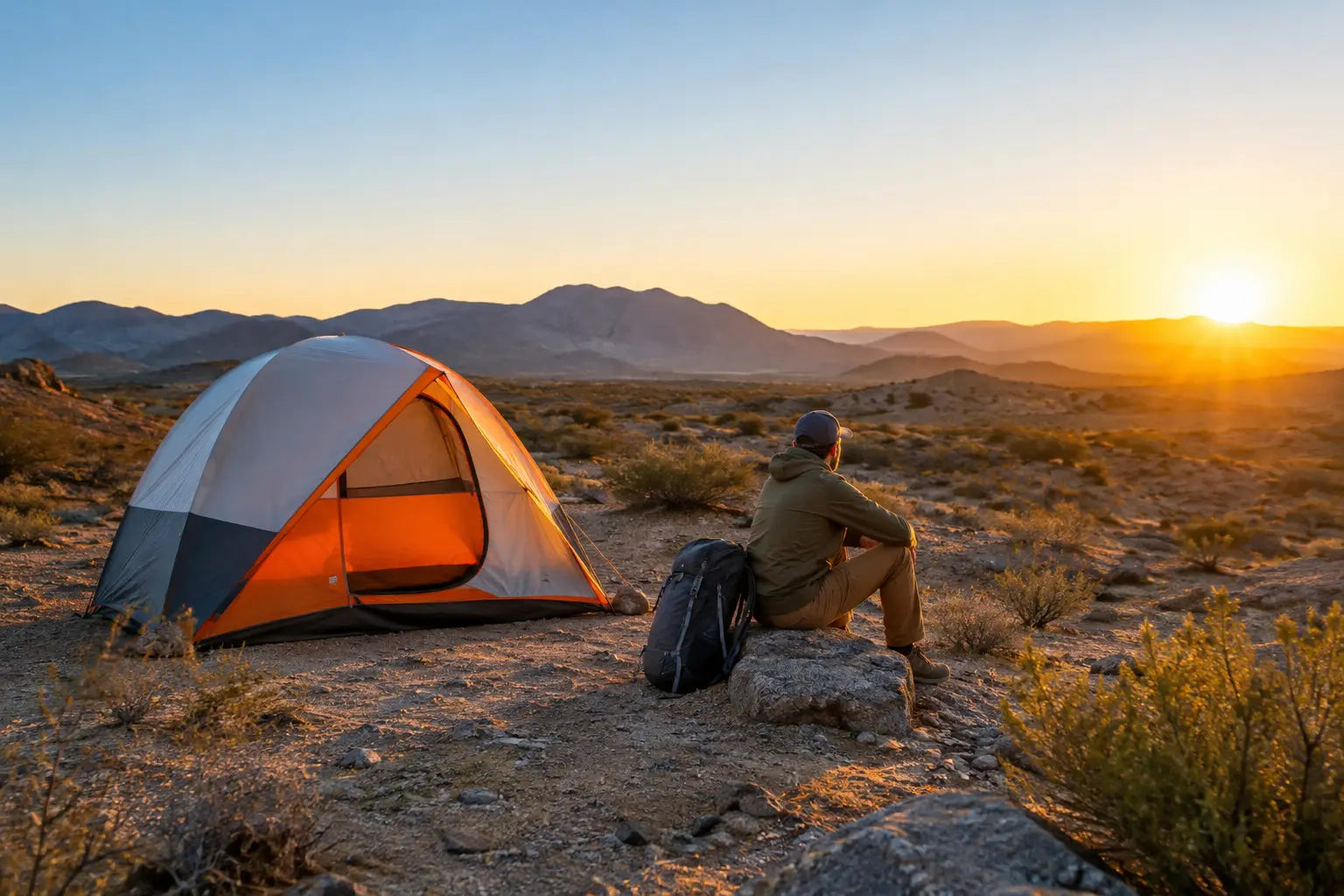
A good desert campsite can feel obvious when you roll into it: level ground, open views, room to park. That first impression can get people into trouble. This desert campsite selection guide is built for the details that matter after the sun goes down, the wind comes up, or a storm drops rain miles away and sends water through the wash beside camp.
In the Southwest, a campsite is not just where you sleep. It is your heat shelter, windbreak, vehicle recovery point, cooking area, and base for the next day's travel. Choose it with the same attention you give tires, water capacity, and navigation.
Start With Legal Access and Local Conditions
Before looking for a flat spot, confirm that you can camp there. Public land rules vary by agency, season, fire restrictions, and local closures. Dispersed camping may be allowed in one area and prohibited a few miles down the road. Some routes require permits, and established campgrounds may have designated-site rules or vehicle-length limits.
Do not assume an existing fire ring means the site is legal or currently open. It may be left over from a previous user, and it does not override a closure, a seasonal restriction, or a posted boundary. Check local conditions before leaving pavement, especially after severe weather, during fire season, or when traveling near military land, tribal land, wildlife areas, or protected desert habitat.
Road access deserves the same scrutiny. A site that is easy to reach on dry hardpack can become a long recovery job after rain. Study the route, know your vehicle's clearance and traction limits, and avoid driving off established routes simply to reach a more private spot. The desert keeps tire tracks for a long time.
Avoid Washes, Drainages, and Low Ground
The biggest campsite mistake in the desert is camping in a wash because it looks flat, sheltered, and conveniently cleared of brush. A dry wash is still a drainage channel. Flash floods can arrive quickly, even under clear skies at your location, because the storm may be miles away in higher terrain.
Look for signs of water movement: smooth scoured sand, debris caught in brush, fresh silt, exposed roots, or a narrow channel with steep banks. If you see them, move out of the drainage and onto higher, stable ground. Do not park across a wash or block a drainage route. Water needs room to move, and so do other travelers who may depend on that trail.
Low spots between rises can also collect cold air and water. They may look protected from wind, but a basin can turn uncomfortable after dark and muddy after a storm. Slightly elevated ground with a clear exit route is usually the better choice.
Read the Ground Before You Set Up
Level ground matters, but perfectly flat is not always best. A gentle slope that lets rain drain away can be more useful than a dead-flat depression. Park and pitch your shelter so your head is uphill, then make sure no runoff path crosses beneath your sleeping area.
Check the surface with boots, not just your eyes. Desert soil can be loose powder, hard caliche, sharp rock, thorn-covered sand, or crust that collapses under a loaded vehicle. Soft sand can sink a heavy truck, trailer, or rooftop-tent rig fast, particularly when the day warms and the surface loosens. Hard-packed ground may make tent stakes difficult, so carry appropriate stakes, a mallet, and a backup anchoring plan.
Avoid setting up directly under dead limbs, unstable rock faces, or steep loose slopes. Desert wind and temperature swings work on rock and wood year-round. A shaded spot beneath a large tree can be welcome, but inspect it first for dead branches and ant activity before making it your sleeping area.
Keep an eye on desert plants as well. Do not clear vegetation to make camp. Mature cacti, cryptobiotic soil, and low desert shrubs recover slowly from damage. Choose an already durable surface whenever possible: established pads, bare mineral soil where permitted, or previously used sites that are still legal and safe.
Plan for Sun Before You Plan for the View
A west-facing campsite may give you a great sunset, but it can also turn your vehicle, tent, and cooler into heat storage until late evening. In hot months, afternoon shade is more valuable than a wide-open view. A rock outcrop, mesquite, or hill can help, provided it does not place you beneath falling hazards or inside a drainage.
Think about where the sun will be when you are cooking, packing, and breaking camp. Morning sun can be useful in cool weather, while summer campers may want to delay direct exposure as long as possible. Your setup changes with the season. A site that works well in January can be punishing in July.
Do not rely on a tent alone for heat management. Tents trap heat and offer limited shade during the day. Set up a shade structure early, secure it for gusts, and position chairs, food, and water where they are protected from direct sun. In windy country, low-profile shelters and strong anchor points are usually better than tall, lightly staked canopies.
Treat Wind as a Site-Selection Problem
Desert wind can turn a comfortable camp into a dust-blasted mess within minutes. Before committing to a site, look at nearby vegetation and terrain. Bent brush, wind-carved soil, and sand piled on one side of rocks tell you which direction the prevailing wind favors.
Use natural terrain for protection without crowding hazards. The lee side of a low rise can reduce wind, but do not camp at the base of a loose cliff or in a narrow chute that funnels gusts. Keep the vehicle positioned as a practical windbreak when conditions allow, while leaving enough room to open doors, access recovery gear, and depart without backing through your shelter.
Secure loose gear before dark. Camp chairs, sleeping pads, trash, maps, and lightweight cookware are easy to lose in blowing sand. Dust also works into zippers, optics, firearms, stoves, and electrical connections. Keep sensitive equipment in sealed cases or bags and close up the vehicle when wind starts building.
Build Your Camp Around Water, Food, and Fire Safety
Water should stay shaded, accessible, and separate from fuel or chemical containers. Do not count on finding water at the campsite unless you have verified a dependable source and have the means to treat it. Desert travel requires a reserve for drinking, cooking, basic cleanup, and unexpected delays. If a route turns bad or a vehicle gets stuck, your water plan becomes your safety plan.
Keep food contained and your camp clean. Coyotes, rodents, ravens, and insects learn quickly around popular campsites. Small crumbs and unsecured trash create problems for the next group as well as your own. Pack out everything, including food scraps.
Fire may be restricted or simply impractical. High wind, dry vegetation, and seasonal fire danger can make a campfire the wrong call even when it is technically allowed. Use a stove for cooking, keep it on a stable surface away from dry grass and brush, and have water or an extinguisher within reach. Never leave it unattended.
Choose a Site That Lets You Leave
The right campsite has a clean departure plan. Park facing out when possible, especially on narrow tracks, sandy ground, or areas with limited turnaround space. Avoid backing a trailer or loaded vehicle into terrain you have not walked. What was easy to descend in daylight may be difficult to climb after rain, darkness, or a change in traction.
Keep recovery gear accessible instead of buried under camp boxes. If you need traction boards, a shovel, tire gauge, or air compressor, you should be able to reach them without tearing down the entire campsite. Cell coverage may be unreliable, so let someone know your route and expected return before you head into remote country.
For overnight stops, give yourself enough distance from other groups to preserve privacy and safety, but not so much that you are forced onto fragile terrain or down an unproven trail. Remote does not need to mean reckless.
A Quick Desert Campsite Check Before Unloading
Before the first chair comes out, walk the site and confirm these basics:
- The site is legal, open, and reachable by your vehicle in current conditions.
- You are out of washes, drainage channels, flood-prone basins, and loose rockfall zones.
- Your shelter has stable ground, usable shade, and a plan for wind.
- Your vehicle has a clear exit route and does not block the trail or drainage.
- Water, food, fuel, and recovery gear are protected, organized, and easy to access.

