

Cart
0
Table of Contents
- What to Look For When You Buy Rugged Hiking Gear Online in 2026
- Rugged Footwear: Non Slip Military Hiking Boots Built for Trail and Desert
- Durable Hiking Backpacks: 70L and 20-35L Options Compared
- Weather-Resistant Hiking Jackets and Apparel for Arid and Cold Conditions
- Backpacking Tents for All Weather: What Actually Holds Up
- Essential Hiking Gear Checklist: Poles, Lights, and Survival Tools
- Total Cost of Ownership: Pricing, Warranty, and Returns Compared
- Conclusion: How to Buy Rugged Hiking Gear Online With Confidence
- Frequently Asked Questions
Last Updated: October 16, 2026
What to Look For When You Buy Rugged Hiking Gear Online in 2026
When you buy rugged hiking gear online in 2026, the difference between gear that lasts a decade and gear that fails on the first trip comes down to a handful of measurable specs.
Rugged hiking gear is outdoor equipment built to survive repeated exposure to rock, sand, heat, cold, and moisture without losing structural integrity. The category covers footwear, backpacks, jackets, tents, and the small tools that keep a trip running.
Measurable Specs That Separate Durable Gear From Disposable Gear
Most shopping guides tell you to look for "quality." That advice is useless in a product listing. Check these instead:
- Sole and outsole material: Rubber outsoles with deep lugs grip better on loose scree and slickrock than foam or shallow treads.
- Fabric denier and coating: Higher-denier polyester and nylon resist abrasion; water-repellent coatings and taped seams decide whether rain soaks through.
- Hardware and stitching: Metal buckles, reinforced bar-tack stitching, and double-stitched stress points outlast plastic fittings.
Pro Tip
Check the size chart before ordering footwear. Many hiking boots are sized on Asian lasts, which run smaller than standard US sizing, so going up a half or full size is common for a comfortable fit with thick socks.
Rugged Footwear: Non Slip Military Hiking Boots Built for Trail and Desert
Footwear is where cheap gear fails first. A boot that loses its tread or soaks through mid-hike ruins a trip, and no backpack or jacket can compensate.

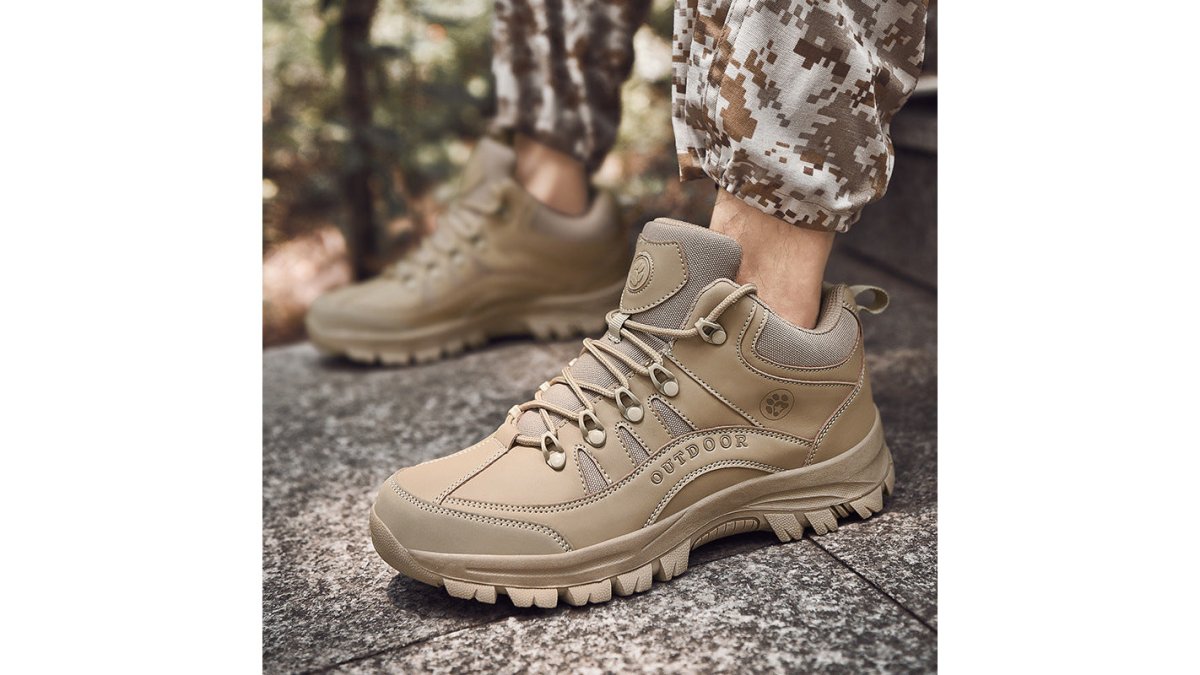
Our pick for most hikers is the Non Slip Wear Resistant Military Hiking Boots Outdoor Shoes at $35.57.
Sizing runs small, so check the chart and size up if you are between sizes. That single step prevents the most common return reason we see.
Watch Out
Buying boots without checking the size chart is the fastest way to end up with blisters. Order the wrong size and you either ship them back or hike in boots that rub, and both outcomes waste a trip.
Durable Hiking Backpacks: 70L and 20-35L Options Compared
Capacity is the first decision, not brand. Choose the 70L for multi-day trips and the 20-35L for day hikes.
For expeditions, the 70L Large Capacity Hiking Outdoor Sports Backpack ($47.58) carries 65+5 liters in high-quality polyester rated breathable, waterproof, wear-resistant, and load-reducing.

For day trips, the Outdoor Sports Hiking Backpack Large Capacity Water Repellent ($17.29) offers 20-35 liters in nylon with a curved shoulder strap system.
| Backpack | Capacity | Material | Best For | Price |
|---|---|---|---|---|
| 70L Large Capacity Hiking Backpack | 65+5L | Polyester | Multi-day backpacking | $47.58 |
| Outdoor Sports Water Repellent Backpack | 20-35L | Nylon | Day hikes, overlanding | $17.29 |
Weather-Resistant Hiking Jackets and Apparel for Arid and Cold Conditions
Desert heat and mountain cold demand different things from a shell, and the wrong jacket leaves you soaked in sweat or shivering. The fix is a three-layer system where each piece has a measurable job.
The Three-Layer System, With Specs That Matter
Base layer (next to skin). Merino wool or a synthetic like polyester or nylon moves sweat off your skin. Avoid cotton: it holds water, loses insulation when wet, and dries slowly.
Mid-layer (insulation). Fleece, down, or synthetic fill traps warmth. Down has the best warmth-to-weight ratio but loses loft when wet; synthetic fill keeps insulating when damp, which matters in variable desert and alpine weather.
Shell (weather protection). This is where the numbers get useful.
Fit and Sizing Across Body Types
A shell that is too tight compresses your mid-layer and kills its loft; one that is too loose flaps and lets cold air circulate. Look for a cut with room to layer underneath without restricting arm swing. Sleeve length should reach the base of your thumb when your arm is extended, and the hem should stay below your waist when you reach overhead.
Arid vs. Cold: What Changes
For arid trips, prioritize breathability over maximum waterproofing. A 10,000 mm shell with high breathability beats a 20,000 mm shell that traps sweat, because trapped sweat chills you faster than light rain. For cold and wet trips, invert the priority: higher waterproof ratings, taped seams, and pit vents.
Non Slip Wear Resistant Military Hiking Boots Outdoor Shoes →
Pro Tip
Check the size chart before ordering any shell. Measure your chest at the widest point and your sleeve from the shoulder seam to the wrist, then compare against the brand's chart in inches. Going one size up is common if you plan to layer a thick mid-layer underneath.
Key Takeaway
Match the shell to the trip, not to the brand. Read the waterproof rating in mm H₂O and the breathability rating in g/m²/24h, confirm taped seams and covered zippers, and size for the layers you will actually wear.
Backpacking Tents for All Weather: What Actually Holds Up
Condensation, not rain, ruins most desert tent trips. A tent that traps moisture leaves your sleeping bag damp by morning, and that repeats every night of a multi-day trip. The fix is a tent whose ventilation and materials match the conditions you camp in.
Measurable Criteria to Compare Tents
Most roundups compare tents on price and capacity. Here is what actually predicts durability:
- Floor denier and hydrostatic head. Floor fabric is measured in denier (D), higher numbers mean thicker, more abrasion-resistant fabric. A 20D floor is light but punctures easily on rock; a 40D-70D floor handles boots and rough ground. Waterproofness is measured in millimeters of hydrostatic head (mm HH); a common benchmark is 1,200-1,500 mm for a three-season tent floor and 3,000 mm or more for sustained wet conditions.
- Rainfly coverage and material. A full-coverage rainfly that reaches near the ground blocks wind-driven rain. Check the rainfly's denier and coating, a silicone or polyurethane coating on ripstop nylon or polyester is standard.
- Pole material and count. Aluminum poles (often 7000- or 7001-series alloy) bend rather than shatter; fiberglass is heavier and more prone to splintering. More poles generally mean a stronger, heavier structure, a trade-off you choose based on whether you prioritize weight or storm resistance.
Double-Wall vs. Single-Wall
Double-wall designs separate the inner sleeping space from the outer shell, reducing condensation by keeping body moisture away from the cold fly. Single-wall tents are lighter and faster to pitch but need strong ventilation to avoid internal rain. For desert and high-altitude trips with hard temperature swings, a double-wall tent with adjustable vents is the safer default.
Fit, Sizing, and Accessibility
Tent capacity ratings assume you sleep shoulder-to-shoulder with no gear. A two-person tent fits one person plus a pack; a three-person tent fits two. Check floor dimensions in inches and peak height, a low peak forces tall campers to crouch, and a short floor presses your sleeping bag against the wall where condensation collects. Look for a door on each side if two people will use it.
Pro Tip
Pitch the tent once at home before your trip. Set it up, lie inside with your sleeping bag and pad, and confirm you have room to move without touching the walls. A tent that fits in the listing photo may not fit you.
Key Takeaway
Compare tents on floor denier, hydrostatic head in mm, pole material, and vent count, not on capacity alone. A double-wall design with adjustable cross-ventilation handles desert condensation and mountain wind better than a sealed single-wall tent of the same weight.
Essential Hiking Gear Checklist: Poles, Lights, and Survival Tools
The small items are the ones you notice only when they are missing. Our pre-trip checklist:
- Trekking poles: The Four-Section Telescopic Lightweight Trekking Pole ($18.19) collapses to 52 cm and extends to 110 cm, made from Aluminum 7075 for a strong weight-to-strength ratio. Four sections pack small enough for a daypack.
- Lighting and navigation: The Rechargeable Waterproof Long Range Camping Compass Flashlight ($31.14) combines a light, an emergency signal, and a compass in one aluminum-alloy body with an IPx6 dustproof and waterproof rating. It recharges over USB and ships with a battery, cable, spare waterproof rings, and a warranty card.
- First-aid kit: Bandages, blister treatment, antiseptic, and any personal medication.
- Water and filtration: Carry more than you think you need, plus a filter or purification tablets.
Pro Tip
Charge the flashlight fully before you leave and pack the spare waterproof rings. A light that dies on night two is the most common gear failure on multi-day trips, and it is entirely preventable.
Total Cost of Ownership: Pricing, Warranty, and Returns Compared
Cheap gear is expensive when you replace it every season. Total cost of ownership is purchase price plus replacements, repairs, and shipping, divided by the trips the gear survives.

| Item | Price | Best For |
|---|---|---|
| Military Hiking Boots | $35.57 | Trail and desert hiking |
| 70L Hiking Backpack | $47.58 | Multi-day backpacking |
| 20-35L Water Repellent Backpack | $17.29 | Day hikes |
| Telescopic Trekking Pole | $18.19 | Stability on descents |
| Compass Flashlight | $31.14 | Navigation and lighting |
Every order ships free within the USA, and the 30-day return policy lets you test fit and function before committing. That lowers the real cost of ownership, because you are not stuck with gear that does not work for your terrain.
Conclusion: How to Buy Rugged Hiking Gear Online With Confidence
The hardest part of gear shopping is trusting a listing you cannot hold in your hands. Check materials, sizes, and return terms before you buy, and the guesswork drops sharply. Our customers say it best: Olivia B. noted that her sleeping bag and tent delivered "excellent comfort, weather protection, durability, and reliability," while Sophia C. reported her jacket and hiking poles "performed perfectly outdoors." With free shipping across the USA, a 30-day return window, and a 4.98 average rating from 213 reviews, we make it easy to gear up without risk.
Frequently Asked Questions
What rugged hiking gear should I buy for a multi-day trip?
For multi-day trips, prioritize footwear, a durable hiking backpack, weather-resistant layers, and a reliable tent. Start with non slip military hiking boots at $35.57 for traction on loose rock and sand. Add a 70L backpack at $47.58 for multi-day capacity. Round it out with a trekking pole at $18.19 and a rechargeable compass flashlight at $31.14. This core kit covers shelter, load carrying, and navigation without overspending on gear you may not need.
How do I choose a durable hiking backpack?
Match capacity to trip length first. A 20-35L water-repellent backpack at $17.29 suits day hikes, while a 70L option at $47.58 handles multi-day expeditions. Check material and construction: high quality polyester and nylon with wear-resistant and load-reducing features hold up better on abrasive desert rock. Look for breathable back panels and curved shoulder straps for comfort under load. Read the spec list carefully rather than trusting the word durable on its own.
What features should I look for in a weather-resistant hiking jacket?
Focus on waterproofing, breathability, and seam construction. A jacket that blocks wind and rain but traps sweat will leave you soaked from the inside, which matters in desert temperature swings. Check for sealed seams, adjustable hoods, and pit vents. Layer it over moisture-wicking base layers so the jacket handles rain while the base layer manages sweat. For winter trips, confirm the jacket fits over an insulating mid-layer without restricting arm movement.
How can I tell if hiking gear is built to last?
Look for specific materials and construction details rather than marketing claims. Aluminum 7075 in trekking poles, rubber soles on boots, and high quality polyester in backpacks signal real durability. Check for reinforced stitching at stress points, sealed seams on tents, and replaceable components. Warranty terms and return policies also reveal how much confidence a seller has in their gear. Arizona Desert Gear offers a 30-day return policy, which lets you test fit and function before committing.
What is the best tent for hiking in changing weather?
For changing weather, prioritize ventilation and waterproofing together. Condensation builds when warm air trapped inside meets cool tent walls, so look for tents with mesh panels and adjustable vents. A rainfly that extends to the ground blocks wind-driven rain. For desert trips with temperature swings from hot days to cold nights, a three-season tent with strong ventilation handles both. Test pitch the tent at home before your trip so you know how it performs before conditions get rough.
Buying rugged hiking gear online in 2026 comes down to matching specs to your terrain, not chasing the lowest price. Arizona Desert Gear stocks durable backpacks, weather-resistant outerwear, reliable tents, and essential tools built for harsh conditions, all backed by free US shipping and a 30-day return policy. Explore the full range and get equipped for your next wilderness trip with gear that holds up.

