

Cart
0
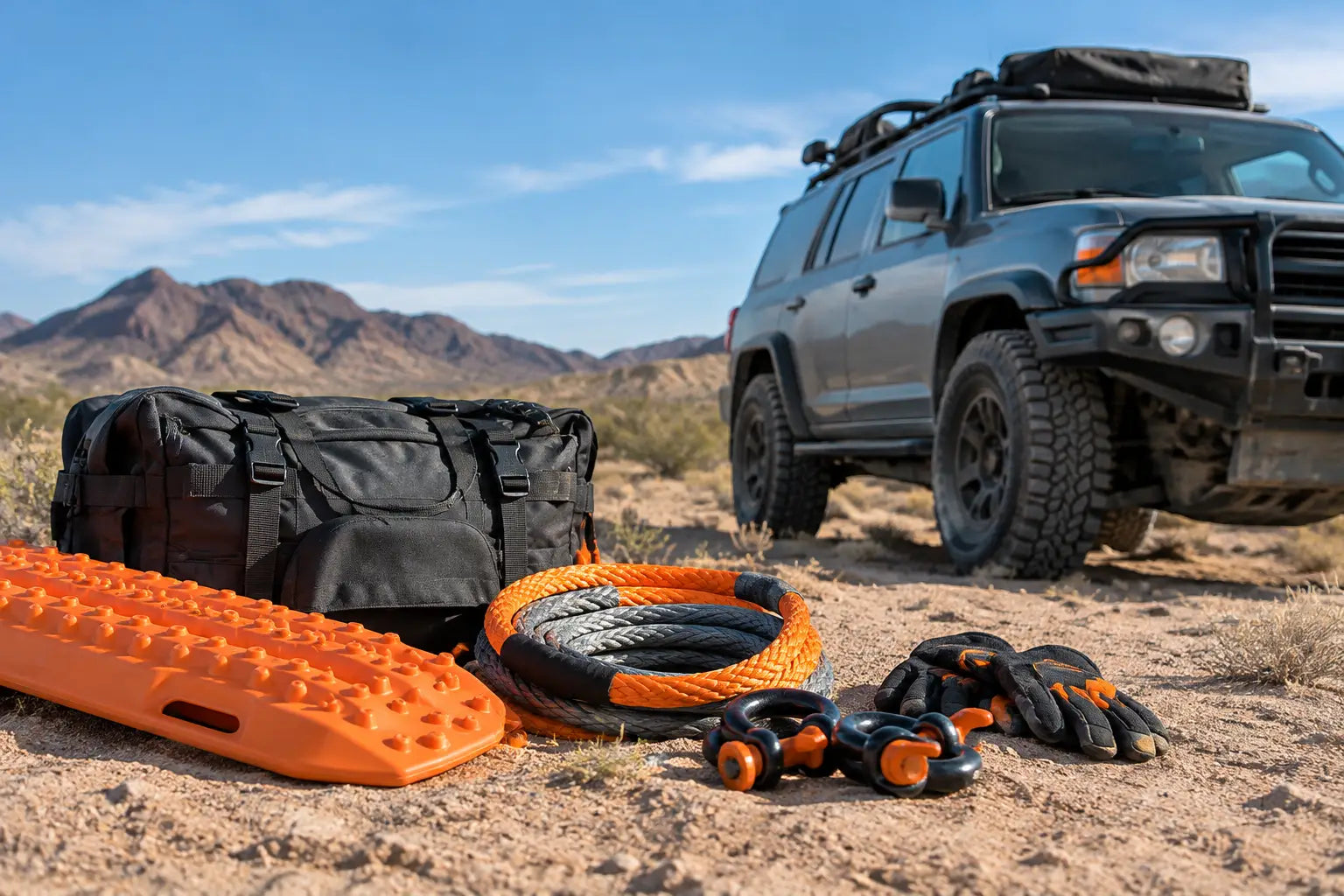
A stuck vehicle in the Sonoran Desert is not a minor inconvenience. Loose sand, sharp rock, extreme heat, and long distances between paved roads can turn a simple loss of traction into a serious situation fast. Proper offroad recovery starts before the tires spin. It means carrying the right equipment, knowing where your vehicle is strong enough to pull from, and recognizing when a recovery attempt is creating more risk than it solves.
Desert travel rewards preparation. A recovery kit that works for a muddy forest trail may not be enough for a hot, remote Arizona two-track where sun exposure, soft sand, and limited water change the equation. The goal is not to own the most gear. The goal is to carry dependable gear that matches your vehicle, terrain, and travel plan.
Assess the Situation Before You Pull
The first recovery tool is judgment. Stop applying throttle once the vehicle is clearly stuck. Spinning tires dig holes, bury axles, overheat transmissions, and can damage sidewalls on buried rocks. Step out, look at all four tires, and identify why traction was lost.
In desert sand, the vehicle may be high-centered or simply resting in ruts created by wheelspin. On rocky terrain, a differential, skid plate, or crossmember may be hung up. On a steep trail, the main problem may be vehicle position rather than traction. A rollover risk, a washed-out trail edge, or a recovery line angled toward a drop-off changes the plan completely.
Before anyone hooks up a strap or winch line, check for people near the recovery zone. Keep bystanders well clear of the line, attachment points, and path of the vehicle. A failed shackle, strap, or recovery point can become dangerous without warning. Never pull from a trailer ball, bumper sheet metal, suspension component, or any point not designed and rated for recovery loads.
Heat also affects the decision. If the driver has been working in direct sun, take a few minutes to drink water, cool down, and think through the pull. Fatigue and dehydration lead to rushed decisions, and rushed decisions are where recovery mistakes happen.
Essential Offroad Recovery Gear
Recovery equipment should be selected as a system. Every component needs to be compatible with the vehicle weight and the type of pull being attempted. A strong strap does not make an unsafe attachment point safe.
A useful desert recovery kit should include these core items:
- Rated front and rear recovery points installed on the vehicle
- A recovery strap or kinetic recovery rope matched to vehicle size
- Soft shackles or rated screw-pin shackles sized for the gear being used
- Traction boards for sand, loose dirt, snow, and shallow washouts
- A winch with a rated line, plus tree saver strap and recovery damper when appropriate
- Work gloves, a shovel, tire pressure gauge, air compressor, and tire repair supplies
A compact shovel earns its place in every rig. It is slower than pulling with another vehicle, but digging may be the safest option when no solid anchor point exists, the vehicle is lightly stuck, or the terrain leaves little room to maneuver. In deep sand, removing packed material from under the frame and in front of the tires can make the difference.
Tire pressure is another major factor. Lowering pressure increases the tire's footprint and can help it float over soft sand rather than cut into it. The correct pressure depends on tire construction, vehicle weight, load, and terrain. Do not guess at an extreme low number. Carry a quality gauge and compressor so you can air down for the trail and reinflate before returning to pavement.
Offroad Recovery Methods That Fit the Terrain
Start with the lightest recovery method that can reasonably work. A controlled self-recovery is generally better than immediately using a high-load snatch pull or winch extraction.
For a vehicle stuck in sand, first reduce resistance. Dig out around the tires and under the vehicle if it is high-centered. Straighten the wheels, place traction boards, and try backing out along the tracks you arrived on. Smooth, steady throttle is more useful than speed. If the vehicle begins moving, keep momentum without spinning the tires and stop once you reach firm ground.
If another vehicle is available, use a recovery strap or kinetic rope only between rated recovery points. The pulling vehicle should be on stable ground with a clear route, ideally in line with the stuck vehicle. A standard recovery strap is used for a controlled, steady pull. A kinetic rope stretches under load and can provide a gradual energy transfer for a vehicle stuck in soft sand or mud. That stretch is useful, but it also raises the forces involved. It is not the right tool for every recovery.
Communication matters. Agree on hand signals or radio commands before either vehicle moves. The stuck vehicle's driver should know whether to apply light throttle, steer straight, or stay off the brakes. The recovery vehicle should pull slowly until the line is tensioned, then apply only the force needed. Hard jerks, sudden direction changes, and pulling at sharp angles put unnecessary load on every component.
If the vehicle is buried to the frame, wedged on rocks, or stuck on a slope, consider whether a professional recovery is the safer call. There is no pride in damaging a vehicle, injuring someone, or turning a recoverable situation into an overnight emergency.
Winching Requires a Different Level of Care
A winch provides controlled pulling power when no second vehicle is available, but it demands disciplined setup. Inspect the winch line for damage, confirm the anchor is solid, and use a line angle as straight as possible. A tree saver strap protects a living tree and provides a proper attachment point when a suitable tree is available. In open desert, natural anchors can be scarce, so do not assume a winch alone solves every problem.
Use a rated recovery point, not a random bumper opening. Keep hands away from the fairlead and winch drum while operating the line. A recovery damper placed on the line can help reduce line movement if a component fails. Follow the winch manufacturer's instructions for line handling, duty cycle, and remote operation.
Winching is slow by design. Stop periodically to inspect the line, check the anchor, and prevent overheating. If the vehicle is dragging sideways, binding against an obstacle, or pulling toward a hazard, stop and reset the rigging. More throttle or more winch power will not correct a bad recovery angle.
Desert-Specific Recovery Planning
Arizona trails can shift from hardpack to deep sand within a few miles. Monsoon washouts, dry creek beds, loose decomposed granite, and sharp volcanic rock all demand different decisions. Build your recovery kit around where you actually drive, not a generic social media checklist.
For frequent sand travel, traction boards, a shovel, air tools, and a kinetic rope are practical priorities. For rocky routes, protection for vulnerable underbody components, a capable jack base, tire repair gear, and a winch may matter more. If you travel alone, self-recovery tools and a reliable communication plan become more important because a second vehicle may not be nearby.
At Arizona Desert Gear, the useful standard is simple: gear should handle heat, dust, abrasion, and repeated field use without becoming dead weight in the cargo area. Store straps and ropes clean and dry after use. Sand and grit wear fibers over time, while sun exposure can shorten the life of gear left unsecured in an open bed.
Know When to Stop and Get Help
Some recoveries should not be attempted on the trail. Call for help if there is an injury, a vehicle is unstable, a rollover is possible, the recovery point is damaged, or the only available anchor is questionable. The same applies if fuel, water, daylight, or weather conditions are becoming a concern.
Carry more water than you expect to need, tell someone your route and return time, and use a communication device suited to areas without cell coverage. A recovery plan is also a survival plan when the temperature is climbing and the nearest highway is hours away.
The best offroad recovery is usually the one that stays controlled, slow, and uneventful. Pack gear you understand, inspect it before every trip, and give yourself permission to stop when the terrain demands more than a quick pull.

