

Cart
0
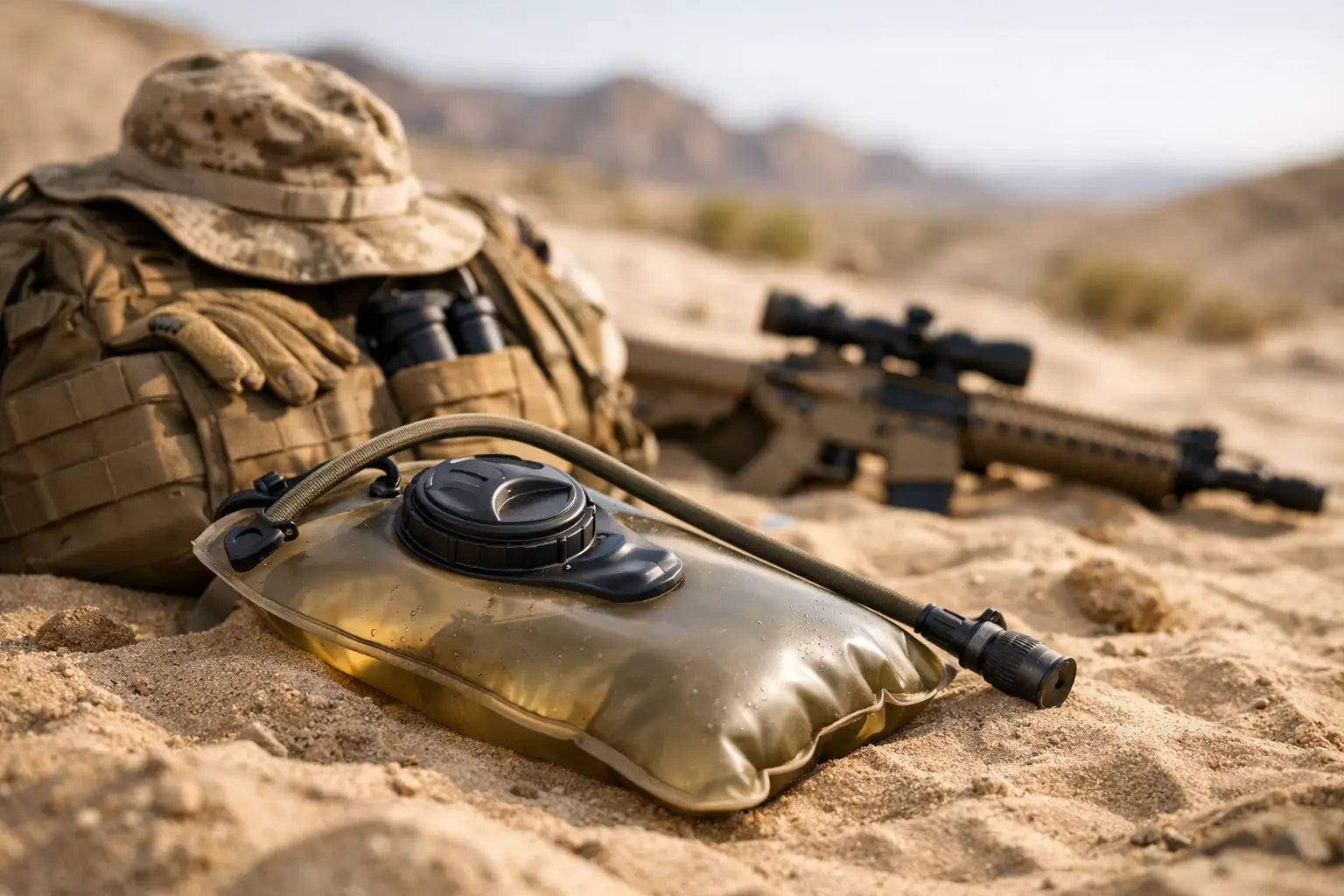
A hydration bladder can look like a simple piece of kit until you are miles down a trail, strapped into an off-road seat, or working a range line under an Arizona sun that has turned every exposed surface hot. This hydration bladder review focuses on the details that matter in dry country: reliable water delivery, resistance to leaks, practical capacity, and whether the system stays usable after heat, dust, and hard miles.
For desert use, the best bladder is not always the biggest or most feature-heavy option. It is the one that fits your pack, keeps the hose where you can reach it, does not leave a plastic taste in your water, and can be cleaned before the next trip. A bladder failure is more than an inconvenience when the nearest refill point is back at the trailhead.
What a Hydration Bladder Must Handle in the Desert
Heat changes the standard for hydration gear. Water stored against a sun-heated pack will warm quickly, especially in a dark pack left in a truck or parked at camp. No bladder can keep water cold indefinitely without insulation, but a good system should remain functional when the water is warm. The reservoir material should not soften excessively, impart a heavy taste, or develop weak points at seams and ports.
Dust matters just as much. A bite valve dragged across a tailgate, set in decomposed granite, or left hanging outside a pack can collect grit fast. A valve cover is a small feature with real value for off-road travel, range days, and hiking through dry washes. It is not mandatory for every user, but it is worth having if your drinking tube spends much of its time outside the pack.
Capacity is the next decision. A 1.5-liter bladder works for short hikes, dog walks, or as a backup water source in a vehicle. A 2-liter reservoir is the practical middle ground for most day hikes and range sessions. A 3-liter bladder makes more sense for longer trail days, bike rides, or remote overland travel where refills are uncertain. The trade-off is weight: three liters of water adds about 6.6 pounds before you count the pack, food, tools, and other gear.
Hydration Bladder Review: The Features Worth Paying For
The strongest reservoirs tend to share a few functional traits. Look past cosmetic colors and focus on the parts that receive stress every time you fill, drink, pack, and clean the system.
A wide fill opening
A wide-mouth opening makes filling easier from a jug, sink, or camp container. More importantly, it makes the bladder easier to inspect and dry. Narrow openings can work, but they turn cleaning into a chore and make it harder to see residue or mildew before it becomes a problem.
Slide-top closures are common because they give a broad access point and seal securely when properly seated. Screw-cap systems can also work well, particularly when the cap is tethered so it cannot disappear in sand or dirt. Whichever style you choose, check that the closure can be operated with wet hands and that it does not require excessive force to seal.
Durable seams and a reinforced hose port
Most failures happen at connection points, not in the middle of the reservoir. Inspect the welded seams around the bladder edges and the fitting where the drinking tube connects. A quick-disconnect hose is useful because it lets you remove the reservoir from a pack without threading the entire hose back through the shoulder strap.
That convenience comes with one caution: every extra connector is another potential leak point. For a minimalist day pack, a fixed hose is perfectly serviceable. For a larger pack used for overlanding, hunting, or all-day hiking, a dependable quick-disconnect is usually worth it.
A bite valve that does not fight you
A good bite valve should deliver water with a firm squeeze and a steady pull, not require you to clamp down like you are trying to start a siphon. High flow is valuable during hot-weather exertion, when small, frequent drinks are easier than stopping to work at a stubborn valve.
A shutoff switch adds insurance against accidental leaks in a loaded pack. It is especially useful for vehicle travel, where vibration and shifting gear can press against the valve. Test the switch before relying on it. A lock that is too stiff is frustrating, while one that moves too easily may not stay closed.
Hose routing and retention
The hose should reach your mouth without pulling tight, but excess tube can snag on brush, steering wheels, chest rigs, or door hardware. Many packs include elastic retainers or magnetic clips to keep the valve near your sternum. Those features are useful only if they hold under movement.
For desert travel, route the hose so it stays protected from direct sun when possible. This will not make warm water cold, but it can slow heat buildup. It also reduces the chance of the tube catching on mesquite, rock, or vehicle hardware.
Insulation Helps, but It Has Limits
An insulated sleeve or insulated hose cover is useful in Arizona heat, particularly for water sitting in a parked vehicle or exposed on an open trail. It buys time. It does not turn a hydration bladder into a cooler.
The most effective approach is simple: fill the reservoir with cold water, add ice when the bladder material allows it, keep the pack out of direct sun, and refill whenever reliable water is available. If you need cold water for an entire day, carry an insulated bottle as a separate reserve. Bladders are built for convenient drinking on the move, while bottles handle temperature control better.
Do not freeze a full bladder unless the manufacturer specifically allows it. Expanding ice can stress seams, fittings, and closures. A few ice cubes added to water are different from freezing the reservoir solid overnight.
Cleaning Is Part of the Review
A hydration bladder that is difficult to clean will eventually become a hydration bladder you avoid using. That is a bad outcome for gear meant to keep you drinking in hot conditions.
After each trip, empty the reservoir and rinse it with clean water. For routine cleaning, use warm water and a bladder-safe cleaning tablet or mild soap, then rinse thoroughly. Clean the hose and bite valve too. Water left in the tube is where odor and buildup often start.
Drying matters as much as washing. Open the reservoir fully and hang it upside down, or use a drying rack that keeps the sides apart. Leave the cap or slide closure off until it is completely dry. If you cannot dry it right away during travel, at least drain it and clean it as soon as you return home.
Avoid storing a wet bladder in a hot truck, closed pack, or garage bin. Heat accelerates the kind of growth and odor that turns a good reservoir into disposable gear.
Fit Matters More Than Brand Hype
Before buying, confirm that the bladder matches your pack's reservoir sleeve and hanger system. A 3-liter bladder may technically fit inside a compact day pack but can crowd out the gear you need. A tall reservoir may also kink at the bottom if the sleeve is too short.
For tactical packs and chest-rig setups, check hose routing on both shoulders and make sure the bite valve can be secured away from slings, radios, or shoulder straps. For off-road use, consider whether you can refill the bladder from the water containers you already carry. A wide-mouth opening is much easier to manage from a camp jug than a narrow fill port.
Arizona Desert Gear customers should also think in layers of water, not one reservoir. A hydration bladder is an accessible drinking source, not your entire emergency plan. Carry backup water in durable containers, especially when traveling remote roads, running long trails, or heading out during peak summer heat.
The Right Choice Depends on Your Use
For a short hike or range session, a 2-liter bladder with a dependable bite valve and easy cleaning access is usually enough. For a full day in the backcountry, a 3-liter model with a protected hose, shutoff valve, and wide fill opening earns its space. For overlanding, choose a bladder that works with your pack but keep bulk water stored separately in tougher containers.
Do not buy based on capacity alone. A smaller reservoir you clean regularly and refill without hassle is more useful than a large one that tastes off, leaks at the connector, or never fits your pack correctly. In desert country, water gear should be simple enough to use every time and tough enough that you do not have to think about it when the temperature climbs.
