

Cart
0
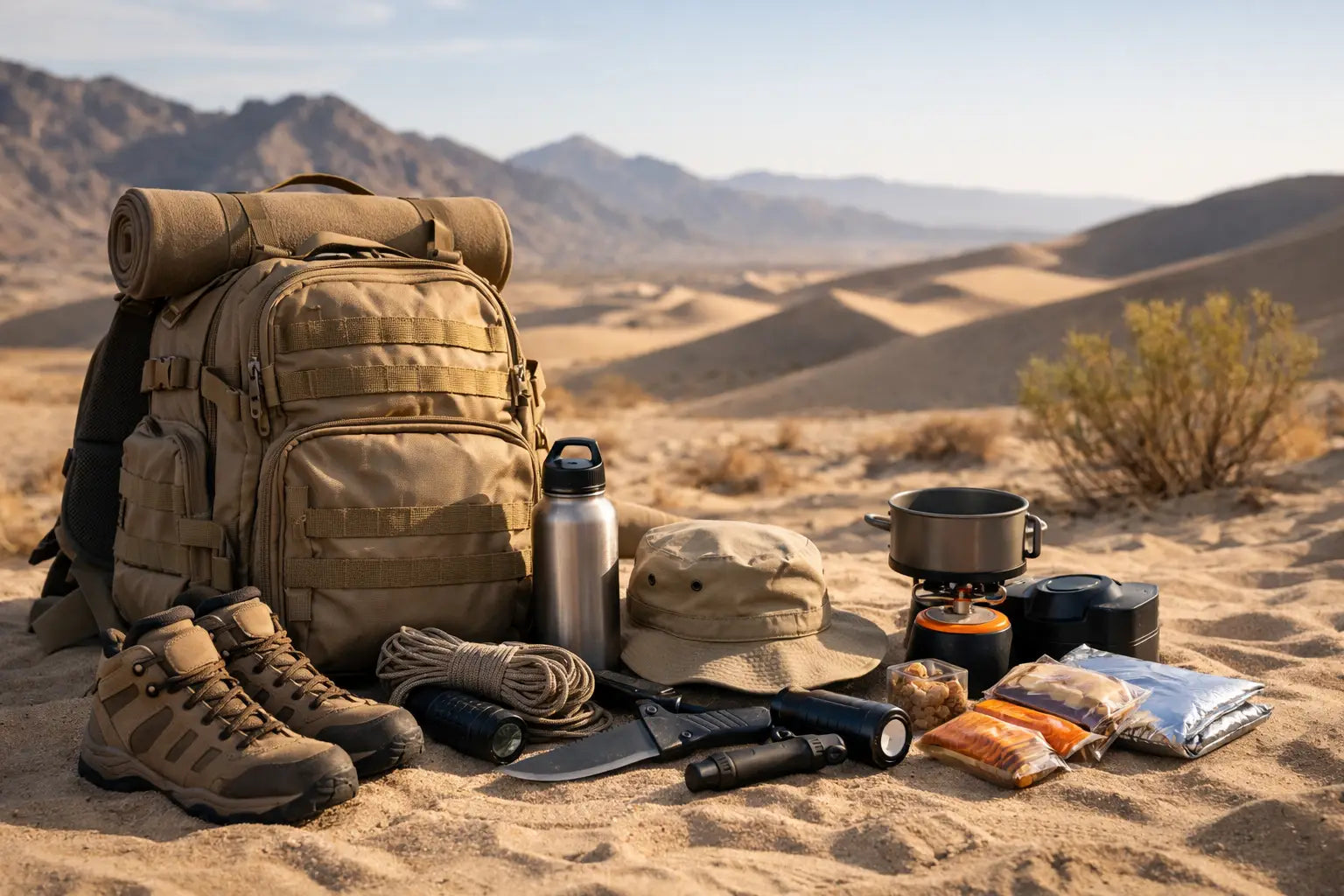
A bug out bag built for pine forest weather can fail fast in open desert. Heat strips water, sun punishes weak materials, and distance gets serious when shade, cell service, and easy resupply are nowhere around. That is why desert bug out bag essentials need a different standard - less filler, more water planning, tougher gear, and a setup that still works when everything is hot, dusty, and miles from help.
What changes in a desert bug out bag
Most bug out bag advice starts with a general three-day formula. In the desert, that baseline still matters, but the priorities shift. Water becomes the center of the whole loadout. Sun protection is no longer a comfort item. Footwear and navigation matter more because getting turned around in flat, exposed country burns time, energy, and water fast.
Weight is the constant trade-off. You cannot carry everything, and in desert travel every extra pound works against you. The right approach is not to pack more gear. It is to pack gear that solves desert-specific problems without adding bulk you cannot sustain on foot.
Desert bug out bag essentials start with water
If one category deserves more space and more thought than anything else, it is water. In hot, dry conditions, your water plan has to account for drinking, short-term delays, and the fact that many map-marked sources are unreliable or dry.
A good desert setup usually means carrying water in more than one container type. A rigid bottle gives you durability and easy access. A hydration bladder helps you drink consistently while moving. Collapsible reserve containers make sense when you need extra capacity without permanent bulk. Redundancy matters here because one puncture or leak can turn into a real problem.
Water treatment still belongs in the bag, but it should not create false confidence. Filters are useful if you know you may encounter cattle tanks, seeps, or questionable surface water. Chemical treatment tablets are small and worth carrying as backup. But in true desert country, treatment tools do not replace carrying enough water in the first place. They are insurance, not the plan.
Electrolytes also earn their place. In dry heat, people often focus on thirst and miss how quickly sweat loss affects performance. A compact supply of electrolyte packets or tablets can help maintain function when the temperature is high and the miles are not optional.
Shelter means shade first, warmth second
People hear "desert" and think only about heat, but exposure works both ways. Days can be brutally hot, and nights can drop hard depending on season and elevation. Your shelter system needs to handle both without taking over the bag.
For many desert scenarios, lightweight shade is the first priority. A compact tarp, sun shelter material, or emergency bivy that reflects heat can make a major difference during peak sun. If movement during the hottest hours becomes unsafe, being able to create shade buys time and protects your water supply by reducing exertion.
Insulation still matters, just not in the same way it might in colder, wetter environments. A packable layer for cool nights, wind, or sudden weather shifts belongs in the bag. The key is choosing pieces that perform without trapping heat when the sun is up. Breathable, light-colored clothing with long sleeves often does more for real desert survival than bulky outerwear.
Clothing and footwear can make or break the bag
Desert travel is hard on feet, and a bug out bag is only useful if you can keep moving. That makes socks, footwear, and clothing part of the core survival system, not an afterthought.
Boots or trail footwear should already be broken in and matched to the terrain you actually cross. Deep sand, loose rock, thorny washes, and hardpack all punish gear differently. Some people prefer heavier boots for ankle support and abrasion resistance. Others move better in lighter trail models that reduce fatigue. It depends on your route, your pace, and what your feet can handle over distance.
Extra socks are one of the smartest low-bulk additions you can make. Dry feet reduce friction, help manage heat, and matter just as much in the desert as they do anywhere else. Gaiters are worth considering too, especially where sand, gravel, cactus spines, and fine dust work their way into footwear.
For clothing, coverage beats bare skin. Long sleeves, durable pants, a brimmed hat, and eye protection are practical desert choices. They help with sun, brush, windblown grit, and temperature swings. Materials should dry quickly and hold up to repeated abrasion.
Navigation and signaling need old-school backup
The desert has a way of making familiar ground look the same in every direction. Trails fade. Road markers disappear. Batteries die. Your navigation setup needs layers.
A paper map and compass still belong in a serious bag, even if you also carry GPS or use a phone app. Electronics are useful, but dust, heat, impact, and dead batteries are all common failure points. If you rely on a device, protect it from heat and keep power backup realistic. A small battery bank can help, but it should support a plan, not replace basic land navigation.
Signaling tools matter more than many people think. A whistle carries farther than your voice and costs almost nothing in weight. A signal mirror is small and effective in open country with line of sight. A compact light with spare batteries helps after dark, but daytime signaling is often just as important in wide desert terrain.
Fire, light, and power in harsh heat
Fire starting stays on the list, but its role in the desert is more limited than many generic checklists suggest. You may need it for warmth, signaling, or morale in an overnight stop, but in extreme heat it is rarely your first tool. Carry a simple, reliable ignition setup like a lighter backed up by waterproof matches or a ferro rod, but do not overbuild this category at the expense of water or shade.
Lighting should be hands-free if possible. A dependable headlamp makes camp tasks, navigation checks, and repairs easier. Choose gear that handles heat and rough transport well. Cheap lights tend to fail when dust gets in or battery contacts take a beating.
Power storage is another area where desert conditions matter. Excessive heat can degrade battery performance and shorten lifespan. Keep electronics out of direct sun when possible, and do not count on every device performing normally after hours inside a hot vehicle.
Medical and repair gear should match desert problems
A desert-focused first aid kit should cover the basics, but it also needs to account for blisters, cuts, dehydration risk, sun exposure, and minor injuries caused by rock, cactus, wire, or vehicle-related tasks. Moleskin or blister treatment, bandages that hold in sweat, pain relief, and rehydration support all make sense.
Tweezers for spines and splinters are more useful than people expect. So is basic wound cleaning. In dry country, a small issue can get worse fast if it limits your ability to walk.
Repair items deserve space too. Gear failure in the desert is often caused by abrasion, broken straps, punctures, or dust intrusion. A few feet of tape, zip ties, cordage, and a compact multi-tool can keep critical gear usable. If you travel with off-road or range gear in mind, your repair loadout may need to lean harder into those use cases.
Food should support movement, not weigh you down
A desert bug out bag does not need a camp pantry. Food matters, but it sits behind water, shelter, navigation, and medical needs. The best choices are compact, shelf-stable, and easy to eat under stress.
Heat-tolerant snacks and simple calorie-dense foods are usually better than anything that melts, spoils easily, or requires a full cook setup. You want food that survives vehicle storage, rough handling, and hot conditions without becoming useless. If a stove creates more bulk than benefit for your situation, skip it.
Pack selection and load discipline
The bag itself should handle abrasion, dust, and repeated exposure to rough terrain. Tough fabric, dependable zippers, practical organization, and a comfortable carry system matter more than trendy features. External attachment points can be useful, but too much gear hanging off the outside catches brush and adds noise.
Keep the load as lean as your environment allows. A desert bag overloaded with "just in case" items becomes slower, hotter, and harder to carry when it counts. Every item should answer a real need. Arizona Desert Gear customers already know the difference between gear that looks prepared and gear that actually performs when the heat gets serious.
Build for your route, not somebody else's checklist
The right desert bug out bag essentials depend on whether you are leaving a vehicle, crossing open public land, moving through backroads, or planning around short-duration evacuation in desert suburbs. Distances, season, elevation, and access to known water all change what belongs in the bag.
A bag built for southern Arizona in summer will not look exactly like one built for higher desert country in winter. That is the point. Good preparedness is specific. If your kit is honest about your terrain, your pace, and your likely problems, it has a much better chance of doing its job when the road ends and the sun is still high.

