

Cart
0
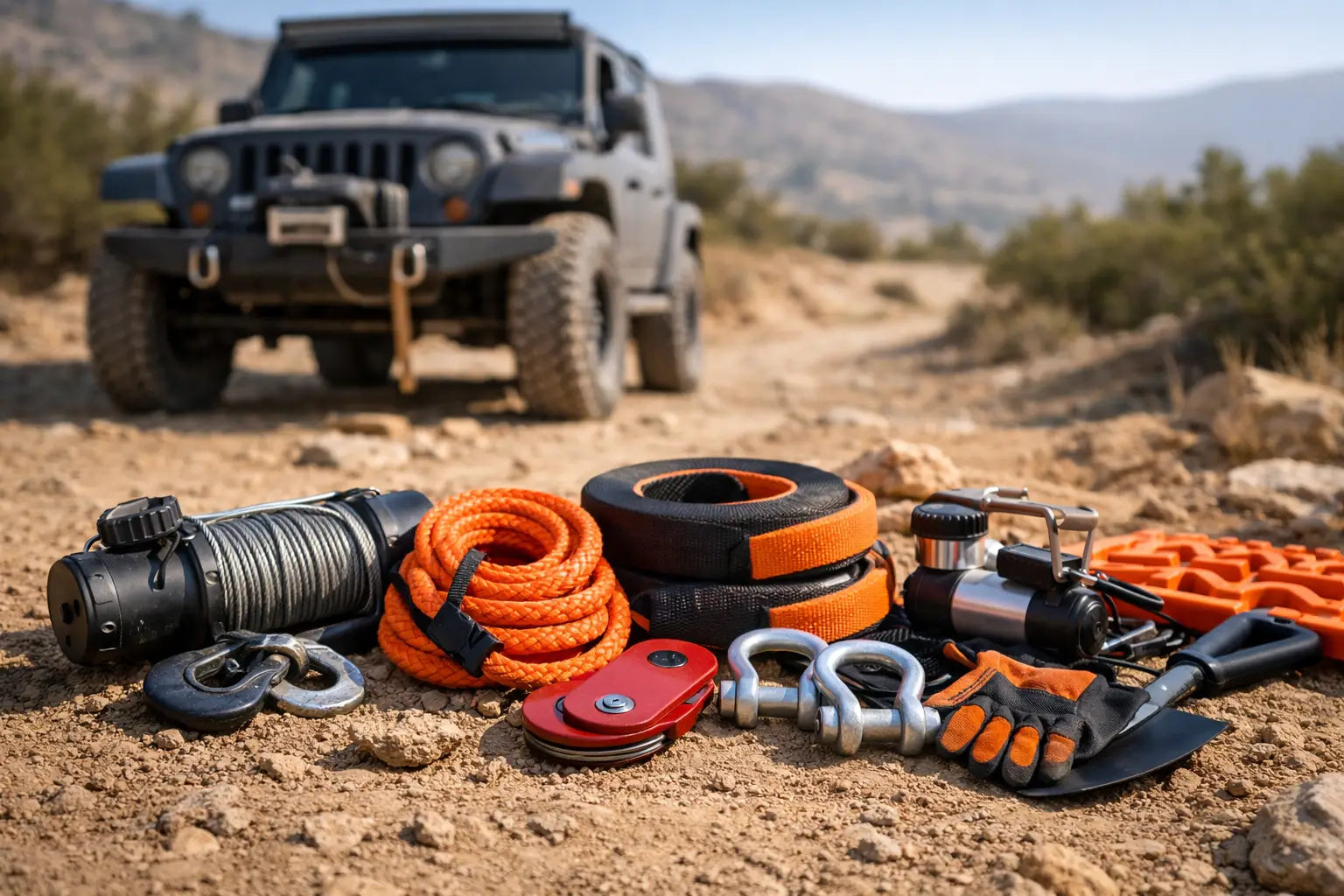
A stuck rig in deep sand is not the time to realize your recovery kit is missing one small part that makes the whole system work. A solid off road recovery gear checklist keeps you moving, protects your vehicle, and cuts down on bad decisions when the heat is up and daylight is dropping.
In the Southwest, recovery gear has to do more than look good in a cargo area. It needs to handle abrasive dust, hard sun, high temperatures, and the kind of remote travel where there may not be another vehicle around for hours. That changes what belongs in your kit and what can stay on the shelf.
What an off road recovery gear checklist should cover
A useful kit is built around the recoveries you are most likely to face. For most drivers, that means sand, loose gravel, mud after storms, ruts, rocks, and the occasional tire issue that turns into a bigger problem. The goal is not to carry every tool ever made. The goal is to cover self-recovery first, assisted recovery second, and field fixes that keep a simple problem from becoming a long walk.
Start by thinking in layers. First, you need traction and tire support. Second, you need safe pull points and the gear to connect them. Third, you need air, tools, and basic repair items. If you travel solo in remote desert country, your list should lean heavier on self-recovery than someone who always wheels with a group.
Core off road recovery gear checklist
Recovery boards are near the top for a reason. In sand and loose terrain, they often solve the problem without shock loading your vehicle or relying on another driver. They are simple, fast to deploy, and useful even when you only need to get a few feet of forward motion. In desert travel, they also pull double duty as a base under a jack in soft ground.
A recovery strap or kinetic rope belongs in most kits, but they are not the same tool. A static recovery strap is better for controlled pulling and certain winching setups. A kinetic rope stores energy and is designed to help extract a stuck vehicle with a smooth tug from another vehicle. If you choose one first, think about who you travel with and what kind of recoveries you actually do. For many off-road drivers, a kinetic rope is more useful in sand, but only when both vehicles have proper rated recovery points.
Soft shackles or rated metal shackles are the connectors that make the rest of the system work. Soft shackles are lighter, easier to store, and generally safer if something goes wrong because they do not turn into heavy projectiles the same way metal hardware can. Metal shackles still have their place, especially around sharp edges or high-abrasion contact points. A smart kit often includes both.
A shovel is basic, but it earns its place every time. Sand recovery usually starts with digging, not pulling. Clearing packed sand from in front of tires, differentials, and skid plates can save a lot of strain on your drivetrain and recovery gear. A compact shovel is easier to pack, but a longer handled shovel is easier to use when you are tired and the ground is hot.
An air compressor and tire deflator matter more than many new drivers expect. Airing down increases your tire footprint and is one of the most effective ways to avoid getting stuck in sand to begin with. After the recovery, you need to air back up for pavement or higher-speed dirt roads. A dependable compressor is not an accessory. In desert travel, it is part of the recovery system.
A tire repair kit also belongs in the core group. Sharp rock, mesquite thorns, and debris can turn a routine line choice into a flat. A plug kit can save the day when a puncture is in the tread area and the tire is otherwise serviceable. It is not a fix for every tire problem, but it covers a common one.
Work gloves, a recovery damper, and a storage bag round out the essentials. Gloves protect your hands from cable burrs, heat, sharp hardware, and abrasion. A damper can help reduce risk during line recoveries. A dedicated bag or case keeps the kit clean, organized, and fast to access when you need it.
Winch gear if your vehicle is equipped
If you run a winch, your checklist needs a few extra pieces. A tree saver strap protects anchor points and gives you more setup options. A snatch block can change pull direction or increase mechanical advantage, though it adds complexity and should be used correctly. A winch line damper, line gloves, and a solid understanding of your rated points are non-negotiable.
Winches are excellent tools, but they are not magic. In soft desert sand with no solid anchor, a winch may not help unless you have a land anchor option, another vehicle, or terrain features that can be used safely. That is one reason recovery boards and tire pressure management still matter even on a built rig.
Vehicle-specific items people forget
The most overlooked recovery item is often the recovery point itself. Before you pack ropes and shackles, confirm your vehicle has rated front and rear recovery points. Factory tie-down points are not always recovery points. That distinction matters. If your recovery setup depends on aftermarket points, check hardware condition and mounting regularly.
A bottle jack or farm jack can help in some situations, but jacks are terrain-dependent. In soft sand, they need a stable base. In high heat, rushing a jack-based recovery is a good way to create a second problem. Carry one that fits your vehicle, your tire size, and the ground conditions you actually travel in.
Wheel chocks are small, easy to ignore, and useful on uneven ground. So are a lug wrench that actually fits your setup and a breaker bar if your wheels are torqued tight. If you have changed wheels, tires, suspension, or bumpers, revisit your kit. Modifications often change what tools and clearances you need.
Desert conditions change the checklist
An off road recovery gear checklist for Arizona, Nevada, New Mexico, or Southern California should account for heat and distance. Water is not technically recovery gear, but a recovery delay in triple-digit temperatures can turn into a medical issue fast. Extra drinking water, shade, and a basic first aid kit are part of responsible planning.
Dust is another factor. Fine desert dust gets into zippers, compressor fittings, recovery board mounts, and winch components. Keep gear bagged or boxed, and inspect it after trips. UV exposure also breaks down cheaper materials over time. Straps, ropes, and soft shackles should be stored out of direct sun when not in use.
This is where curated, desert-ready gear matters. A bargain compressor that overheats, a strap with questionable labeling, or a storage box that cracks in the heat is not a savings if it fails twenty miles from cell service.
How to build your kit without overpacking
It is easy to turn a recovery kit into a pile of gear you rarely use. Keep it tied to your vehicle, terrain, and trip style. A lightly modified SUV used for desert camping needs a different setup than a locked truck on 35s running rocky trails every weekend.
If you are just getting started, build around five priorities: traction boards, a shovel, an air compressor, a tire repair kit, and rated connection gear matched to your vehicle. That setup handles a lot of common situations. Add winch accessories if you have a winch. Add more advanced gear only when you know why you need it.
Weight and storage matter too. Heavy gear mounted poorly becomes its own hazard. Keep the kit secure, accessible, and separated from daily cargo. The best recovery gear is the gear you can reach quickly without unpacking half the vehicle in blowing sand.
Recovery gear is only half the job
The right tools help, but technique prevents most problems. Air down early. Walk questionable sections. Dig before you pull. Use rated gear only. Avoid improvised setups. If you are not sure a recovery point or method is safe, stop and reassess.
Practice also matters. Use your compressor before the trip. Learn how your boards fit under the tires. Check that your shackles, hitch receiver, and recovery points all work together. Small mistakes get bigger when the vehicle is buried to the frame and the sun is dropping.
For drivers who spend real time in desert country, that is the standard. Gear should be dependable, matched to the terrain, and packed with a clear purpose. Arizona Desert Gear is built around that same idea - equipment that makes sense for heat, dust, distance, and the kind of rough ground that exposes weak links fast.
A good recovery kit does not need to be oversized or complicated. It just needs to be complete, compatible with your vehicle, and ready before the tires start digging.

