

Cart
0
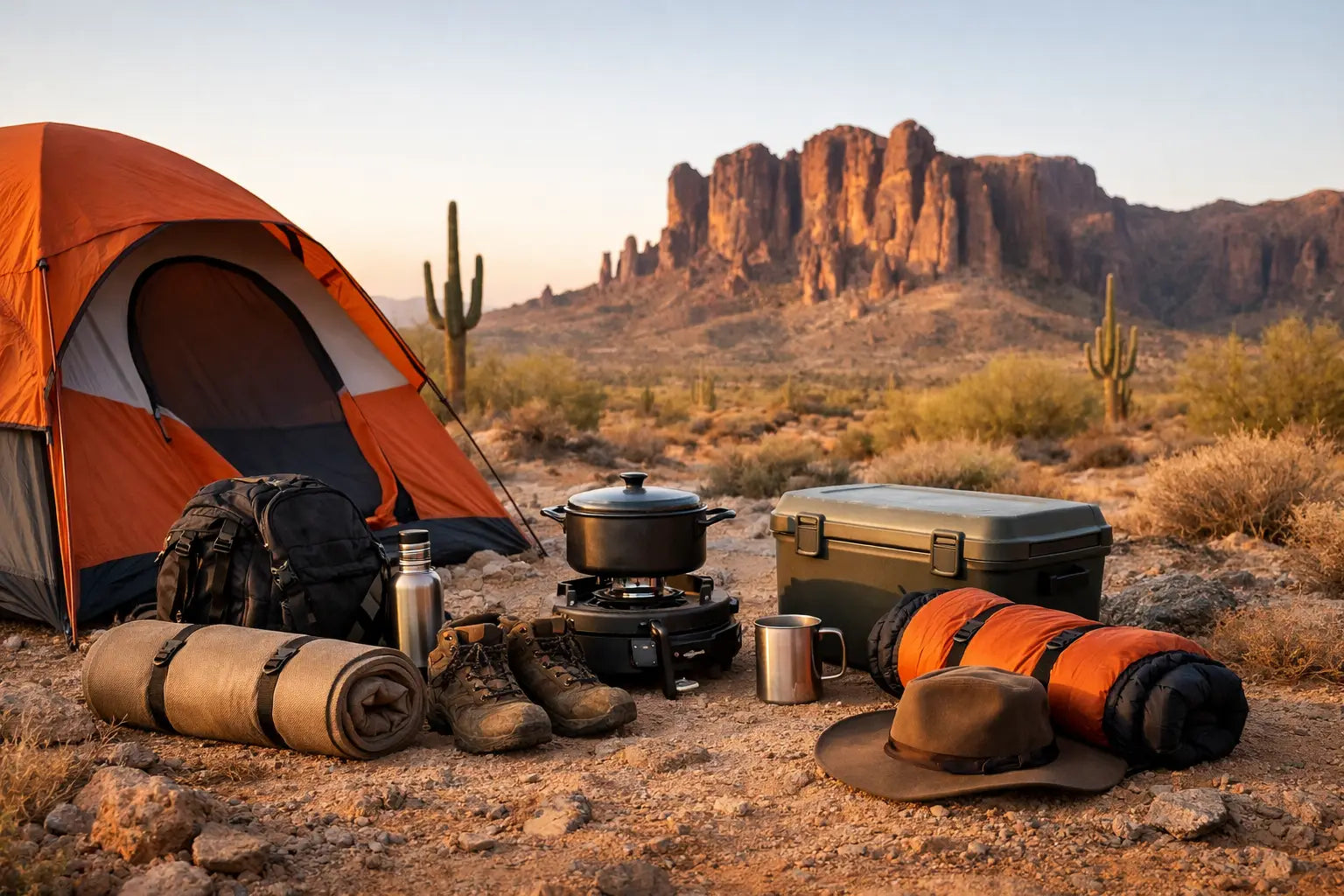
A desert campsite can look calm at sunset and turn punishing before breakfast. The ground holds heat long after dark, wind drives dust through loose zippers, and a short wrong turn can put you miles from water or cell service. Desert camping is not about carrying more gear than everyone else. It is about bringing equipment that still works when the temperature climbs, the terrain fights back, and the nearest paved road is well behind you.
For Arizona campers, overlanders, hunters, and off-road travelers, the priority is simple: build a setup around heat management, water capacity, reliable shelter, and self-recovery. A bargain tent, a single water bottle, and a phone map may be enough at a developed campground in mild weather. They are not a serious plan for remote Sonoran, Mojave, or high-desert travel.
Start Desert Camping With Water Planning
Water is the first hard limit in the desert. You need it for drinking, cooking, basic cleanup, first aid, and vehicle trouble. Hot, dry air can pull moisture from you fast, especially when you are hiking, loading gear, setting camp, or fixing a tire in direct sun.
Plan for at least one gallon per person per day as a starting point, then increase that amount for hot weather, physical work, dogs, or remote travel. That baseline is not excessive in Arizona summer conditions. It is a minimum planning number, not a guarantee that you will be comfortable.
Carry water in more than one container. A large vehicle-mounted container is useful, but it should not be your only source. Split your supply between durable jugs, insulated bottles, and a day-use hydration system. If one container cracks, leaks, or gets left at camp, you still have water available.
Do not count on finding natural water or treating it on the fly. Seasonal tanks, stock ponds, and desert washes can be dry, contaminated, or inaccessible. A filter and purification backup are smart additions, but stored water remains the dependable option. Keep it shaded inside the vehicle whenever possible. Water left in direct sun becomes unpleasant quickly, and plastic containers degrade faster under constant UV exposure.
Shelter Must Handle Sun, Wind, and Dust
A desert tent needs more than a rainfly. It needs strong stakes, reinforced guy-out points, durable zippers, and enough ventilation to reduce trapped heat. Summer storms can arrive hard and fast, bringing gusts that flatten weak poles or send light tents rolling across open ground.
Choose your camp location carefully before you start driving stakes. Avoid dry washes, low spots, and narrow drainages, even if they look like convenient level ground. Flash flooding can move through desert country well after rain has stopped where you are standing. Look for firm, elevated ground with a clear view of approaching weather, while staying out of exposed ridgelines when wind is building.
A shade structure often earns more use than the tent itself. A properly anchored awning, tarp, or canopy creates a place to cook, organize equipment, and get out of the sun during the hours when a tent is too hot to occupy. Standard lightweight canopy stakes are often useless in packed desert soil. Carry heavy-duty stakes, a mallet, extra cordage, and sandbags or weight options for rocky ground where staking is limited.
There is a trade-off here. Large shade setups provide better coverage but take longer to deploy and can become a liability in high wind. For quick overnight stops, a smaller, lower-profile shelter may be the smarter choice. Set it up with the wind direction in mind, and never leave it unsecured while you drive away from camp.
Sleep Systems for Big Temperature Swings
Desert nights are not always hot. Lower elevations can stay warm in summer, but higher desert areas may drop sharply after sunset. Spring, fall, and winter trips can bring cold ground and freezing overnight temperatures.
Use a sleeping pad with real insulation value, not just a thin foam layer meant for comfort. The ground can pull heat from your body even when the air feels manageable. Match your sleeping bag or quilt to the expected overnight low, not the daytime forecast, and keep a dry layer of clothing reserved for sleep.
Cot systems work well for vehicle-based desert camping because they lift you off uneven ground and improve airflow. They also take up more room and are not ideal for every tent. If your setup is compact, a quality insulated pad and a low-profile pillow are usually the better use of space.
Clothing Is Part of Your Safety Plan
Desert clothing should protect you from the sun without locking in heat. Loose, lightweight long sleeves, durable work pants, a brimmed hat, and UV-rated eyewear give you more usable protection than a tank top and repeated sunscreen application alone.
Synthetic and merino layers each have a place. Lightweight synthetic fabric dries quickly and holds up well during sweaty work, while merino can stay more comfortable across changing temperatures and resist odor on multi-day trips. Cotton has limits. It is comfortable in dry heat when you are near camp, but once it gets soaked with sweat or water and temperatures fall, it can become a problem.
Footwear depends on the route. Supportive boots make sense for rough hiking, loose rock, cactus country, and off-trail work. Trail shoes may be better for a maintained camp area or lighter travel. Either way, bring spare socks. Dust, sweat, and grit create blisters faster than most campers expect.
Do not forget gloves. A tough pair protects your hands when handling hot recovery gear, moving firewood, working around sharp rock, or setting up in thorny brush. Leather gloves are a dependable camp option, while mechanic-style gloves offer better dexterity for repairs and vehicle work.
Vehicle Readiness Matters in Remote Desert Country
Your vehicle is part of your desert camping shelter system, water plan, navigation plan, and exit strategy. Before leaving pavement, check tire condition, tire pressure, coolant, oil, battery health, and fuel range. Desert heat exposes weak cooling systems and worn tires quickly.
Carry a full-size spare in usable condition, along with the tools needed to install it on uneven ground. A compact air compressor, tire repair kit, traction boards, recovery strap, rated shackles, and a shovel can turn a manageable delay into a self-recovery instead of a long walk for help. Use recovery gear only with properly rated recovery points. A trailer hitch ball is not a recovery point and can fail violently under load.
Fuel planning deserves the same discipline as water planning. Map your route, identify realistic fuel stops, and account for slow off-road travel, idling, detours, and air conditioning use. If you are traveling into remote areas, carry extra fuel in an approved container and secure it outside the passenger area.
A satellite communicator or other two-way emergency device is a worthwhile piece of kit beyond cell range. Download offline maps before departure, then carry a paper map as backup. Electronics fail, batteries die, and a phone dropped in sand or water is not a navigation plan.
Build a Camp Kitchen That Does Not Create Problems
Simple camp meals are usually the right call in hot, dusty conditions. A reliable stove, enough fuel, a windscreen used safely, and a compact cook kit are more practical than hauling a complicated kitchen into the backcountry. Keep food in sealed containers. Desert rodents, insects, ravens, and coyotes will investigate anything left open.
Coolers need shade, insulation, and a realistic ice plan. Opening the lid every few minutes drains cold air fast. Separate drinks from food if your space allows, and pre-chill everything before loading. For longer trips, a powered cooler can reduce dependence on melting ice, but it adds power demands. That means a battery system, charging method, and backup plan need to be part of the decision.
Fire restrictions change often in the Southwest. Never assume a campfire is allowed because a fire ring is present. Use a stove when restrictions are active, keep ignition sources controlled, and pack out all trash. Burned cans, food packaging, and bottle caps do not belong in a fire pit.
Respect the Ground You Camp On
Desert terrain recovers slowly. Stay on established roads and durable surfaces, avoid crushing cryptobiotic soil in applicable areas, and do not cut new paths around obstacles. A few tire tracks can become a permanent scar when the ground receives little rain and heavy use.
Set camp away from water sources, historic sites, and fragile vegetation. Do not move rocks, disturb petroglyphs, or collect artifacts. If you bring a dog, manage it closely around wildlife, thorns, and extreme heat. Hot ground can burn paws before you realize how severe the surface temperature has become.
The best desert camps are the ones you leave without a trace and can safely return from under your own power. Pack equipment that earns its space, check conditions before you roll out, and give yourself more water, shade, and daylight than you think you need.

