

Cart
0
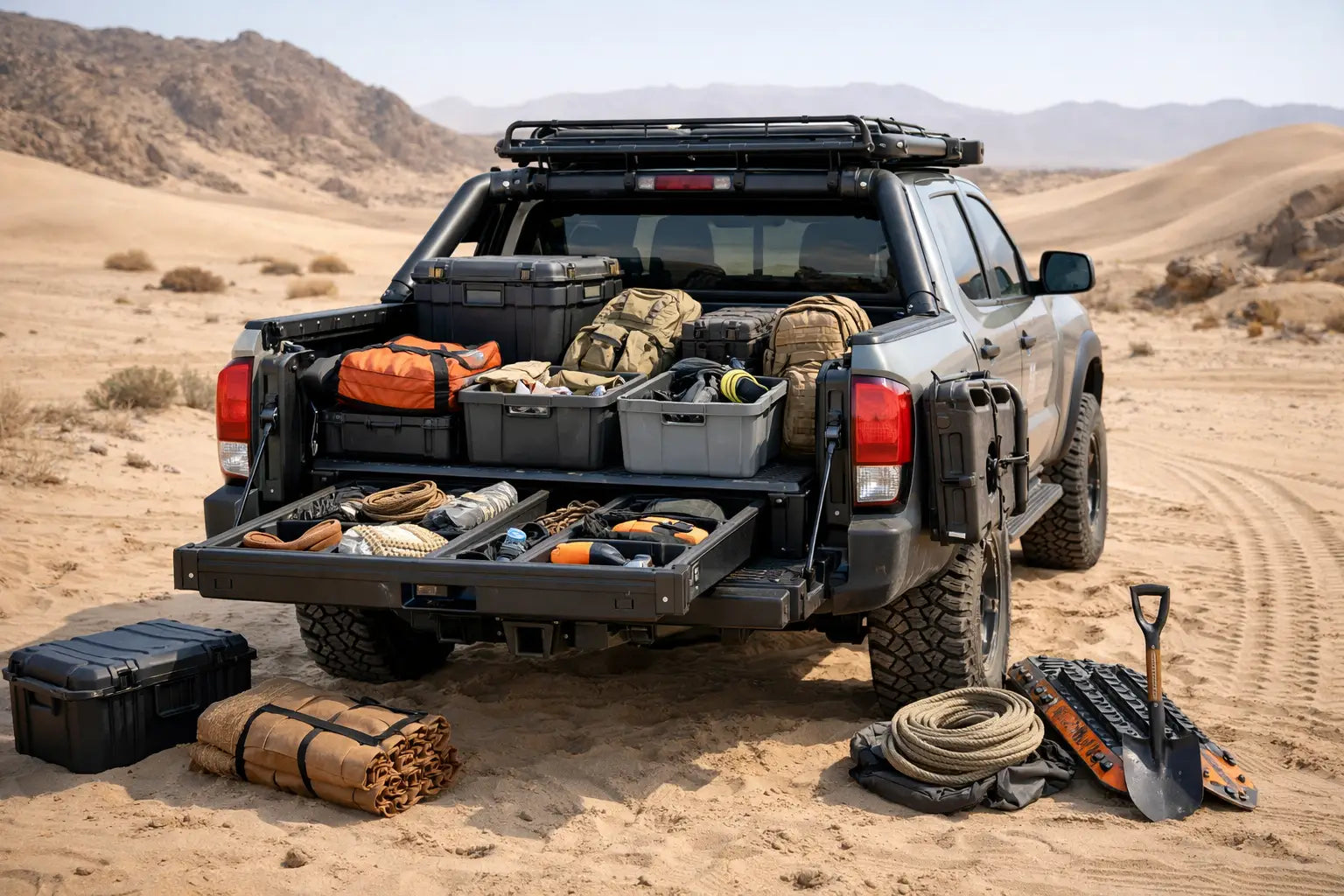
A loose shovel, a rolling water jug, and a recovery strap buried under camping gear are not minor annoyances when you are miles down a washboard road. They cost time, create noise, and can turn a manageable problem into a bad day. This desert truck organization guide is built around one standard: every critical item should be protected, secured, and reachable without unloading half the truck.
Desert travel puts more strain on a truck setup than a quick run to a local trailhead. Heat weakens adhesives and plastics. Fine dust gets into zippers, latches, and electrical connections. Rough terrain shifts unsecured cargo. Build your storage system for those conditions first, then adjust it to your vehicle, bed length, cab space, and how often you travel remote routes.
Start With Access, Not Storage Space
The biggest mistake in truck organization is filling every available space before deciding what needs to be reached first. A truck bed can hold plenty of gear, but capacity is useless if the water, medical kit, or recovery equipment is trapped beneath chairs and sleeping bags.
Divide your load into three access levels. Immediate-access gear stays in the cab or just inside the tailgate: drinking water, a first-aid kit, navigation tools, headlamps, gloves, a fire extinguisher, and communication equipment. Quick-access gear belongs in the rear bed area or a drawer: recovery straps, shackles, a tire repair kit, air hose, tools, and a compact shovel. Camp and comfort equipment can ride farther forward or lower in the load, since it is usually needed after you stop.
This layout is not fixed. A day trip near Phoenix may call for more immediate water and less camp equipment. A multi-day overland route may put recovery gear higher on the priority list. The point is to assign locations based on urgency, not on which item happens to fit.
Build a Desert Truck Organization System Around Zones
A dependable truck setup uses zones that stay consistent from trip to trip. You should be able to tell someone where the tire tools are without opening bins and searching.
The cab zone
Keep the cab focused on survival, communication, and items that cannot tolerate extreme bed temperatures. Store a dedicated water supply, paper maps, phone charging gear, a flashlight, sunglasses, sun protection, and essential medication here. A small organizer behind or under the rear seat works well for items that must stay clean and close.
Do not turn the cab into a catch-all. Loose gear can interfere with pedals, become a projectile on rough roads, or block access to a fire extinguisher. If you carry a firearm or other sensitive equipment, use a properly secured storage solution and follow all applicable laws. A simple rule applies: the driver should be able to reach critical supplies without taking attention off the road for long.
The recovery zone
Recovery equipment earns its own location because it is often needed when conditions are already working against you. Keep soft shackles, straps, a kinetic rope, gloves, traction boards, and tire tools together in a durable bag, drawer, or clearly marked bin near the tailgate.
Avoid storing wet straps in sealed containers for long periods. Dust is expected in the desert, but trapped moisture can lead to odor, mildew, and damaged fibers. Air out and inspect recovery gear after use, then repack it dry. Heavy equipment should sit low and close to the truck's centerline whenever possible, reducing the chance of cargo shift and helping keep handling predictable.
The water and food zone
Water should be one of the easiest supplies to check and replenish. Use secured containers rather than loose gallon jugs that can split or roll around in the bed. Keep drinking water separate from utility water used for cleanup, cooling, or washing gear. That separation prevents a dirty hose, container, or rinse bucket from compromising your primary supply.
Food storage depends on the season. In Arizona heat, a cooler needs shade, insulation, and a secure position where it will not slide every time the trail tilts. Dry food belongs in sealed containers that keep out dust and discourage pests at camp. Do not count on a truck bed tonneau cover alone to keep food cool or clean.
The camp zone
Tents, sleep systems, chairs, cooking gear, and clothing can occupy the deeper storage areas. Group items by task rather than by shape. For example, keep the stove, fuel, utensils, and cleaning supplies together, even if separate containers would pack slightly tighter. Setup is faster when camp equipment comes out in working groups.
Use soft bags for bulky, lightweight items such as bedding and jackets. Use hard cases or reinforced bins for stoves, cookware, and fragile electronics. The best choice depends on how you use the truck: hard cases provide better dust and impact protection, while soft storage conforms to awkward spaces and weighs less.
Secure Every Load for Washboard Roads
Organization without restraint is just a neat pile waiting to come apart. Desert roads can rattle cargo for hours, and a sudden rut can launch an unsecured cooler or tool bag into a tailgate.
Use factory tie-down points, bed rails, cargo bars, or a properly installed rack system. Ratchet straps work well for large, heavy items, but avoid cranking them so tight that they crack plastic containers or damage gear. Cam straps are often better for lighter loads and faster adjustments. Add non-slip mats under bins and coolers to reduce movement and protect the bed.
Check straps at the first fuel stop and again after long rough sections. Webbing can loosen as loads settle, especially after a temperature change or a sustained washboard road. Secure the loose ends too. A strap flapping against paint or metal all day can cause unnecessary wear.
Choose Containers That Handle Heat and Dust
Clear bins make it easy to see what is inside, but direct sun can degrade inexpensive plastic and expose contents to heat. Opaque, heavy-duty bins generally hold up better for bed storage. Look for strong lids, reinforced handles, and a shape that stacks without sliding. Dust-resistant gaskets are useful, though no container should be treated as permanently sealed after hard use.
Label containers on more than one side. A label on the lid disappears the moment another bin is stacked on top. Use simple names such as RECOVERY, TOOLS, COOK, MEDICAL, or CAMP. This matters when a friend needs to find something or when you are working after dark.
For smaller items, pouches are more useful than a bin full of loose parts. Put spare fuses, hose fittings, batteries, cordage, and repair supplies in labeled pouches inside a larger tool case. That keeps small essentials from migrating across the truck after every trip.
Keep Tools and Spares Separate From General Gear
A desert-ready tool kit is not the same as a household toolbox thrown behind the seat. Carry tools that fit your vehicle and the jobs you can realistically handle: tire plug tools, a pressure gauge, compressor fittings, common sockets, pliers, screwdrivers, electrical repair items, spare fuses, and fluids appropriate for your truck.
Keep these items together in a dedicated case. Mixing greasy tools with food, clothing, or recovery straps creates a mess and makes urgent repairs slower. If you carry spare parts such as belts, hoses, or sensors, protect them from crushing and label them with the vehicle they fit. A spare that cannot be identified on the trail is not much help.
Before each trip, inspect your kit instead of assuming last season's loadout is ready. Replace used tire plugs, dead batteries, expired medical items, and damaged gloves. Heat is especially hard on adhesives, battery-powered devices, and cheap zippered bags.
Make Cleanup Part of the System
Desert dust gets everywhere. The goal is not to prevent every grain of it, but to keep dirty gear from contaminating the gear you need clean. Carry a small brush, microfiber towels, trash bags, and a designated dirty-gear bag for muddy recovery straps, boots, or wet clothing.
At the end of a trip, remove trash, shake out floor mats, wipe down container seals, and inspect bed tie-downs. This is also the right time to restock water and return anything that was borrowed from the truck. A loadout only stays useful when reset is routine, not a project delayed until the next departure.
Arizona Desert Gear customers know that desert preparation is usually decided before the tires hit dirt. Set up your truck so water is easy to grab, recovery gear is easy to reach, and every heavy item stays put. When the trail gets rough, a disciplined loadout gives you one less problem to solve.

