

Cart
0
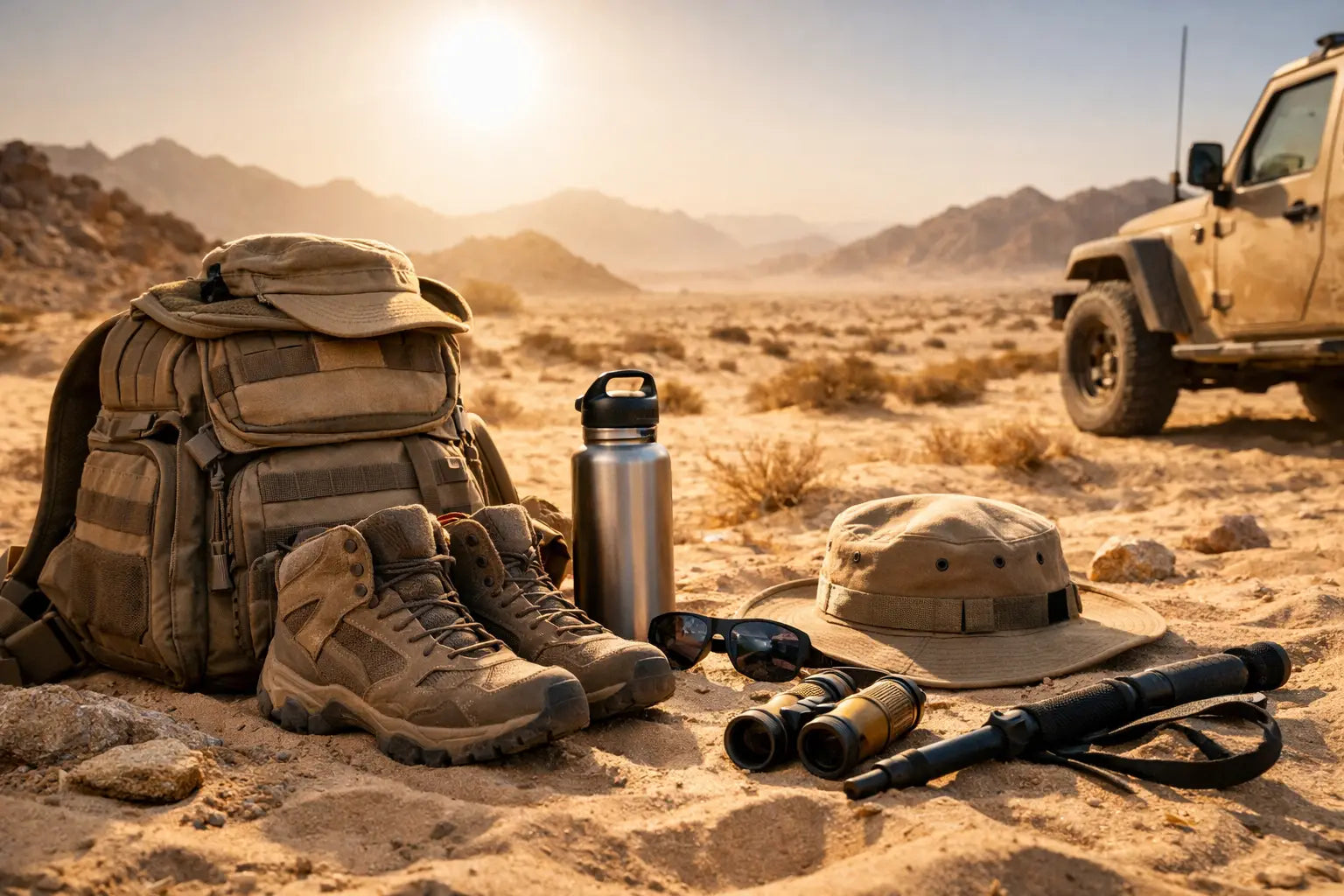
A cheap cooler fails fast at 110 degrees. So does a black backpack with weak stitching, a cotton shirt that stays wet, and a flashlight that quits after one dusty weekend. Good desert gear is not about looking the part. It is about staying functional when heat, sun, dust, and rough ground start exposing weak points.
In the Southwest, gear gets tested hard. Adhesives soften, plastics get brittle, batteries drain faster, and comfort turns into a real performance issue. If you spend time off-road, at the range, on trail, or setting up camp in open country, your gear choices need to match the environment. Desert conditions punish general-purpose equipment. The right setup is usually simpler, tougher, and more heat-aware than what works in milder climates.
What desert gear has to do differently
Desert gear has one job above all else - keep working when the environment is working against it. That means heat tolerance matters just as much as durability. A pack can be built from strong material and still be wrong for the desert if it traps heat against your back or uses hardware that gets too hot to handle. A shelter can be rugged and still be a poor choice if it turns into an oven by noon.
Sun exposure is a constant problem, not a side issue. Fabrics fade, coatings break down, and rubber parts age faster under hard UV. Dust is just as serious. Fine grit gets into zippers, optics, electronics, and moving parts. Then there is terrain. Sharp rock, thorny brush, and uneven ground wear gear from the outside while heat wears it from within.
That is why desert-ready equipment usually favors straightforward construction, proven materials, and fewer failure points. Extra features can be useful, but only if they hold up. In harsh country, complexity often means more things to snag, clog, crack, or stop working.
Desert gear for clothing and personal carry
The first gear decision is what rides on your body. In the desert, clothing is equipment. It affects hydration, energy, sun exposure, and how long you can stay effective.
Lightweight long sleeves often beat short sleeves. That sounds backward until you spend hours under direct sun. Full coverage reduces sunburn, slows moisture loss, and keeps skin from taking the full hit of UV and abrasive brush. The best shirts for desert use are breathable, quick-drying, and cut for movement. Cotton can feel fine at first, but once it gets wet from sweat it tends to stay heavy and slow to dry. Synthetic blends and performance fabrics usually make more sense, though some people prefer natural fibers in certain conditions. It depends on activity level and how much airflow you can count on.
Pants should strike a balance between breathability and abrasion resistance. Ultra-light fabric feels good in camp but can get torn up quickly around rock and cactus. Heavier tactical-style pants offer more protection, though they can run hot if the cut is too bulky or ventilation is poor. A desert-capable pair needs usable pockets, enough flex to move comfortably, and fabric that does not fall apart after repeated sun exposure.
Boots matter for more than traction. In desert terrain, hot ground, loose gravel, and long dry miles put pressure on fit and support. Waterproof boots are not always the best call here. They can trap heat when breathability would help more. On the other hand, if your route includes water crossings, mud, or winter conditions, full ventilation may not be ideal either. For many users, a sturdy boot with solid outsole grip, toe protection, and reasonable airflow is the better middle ground.
A dependable hat, good eye protection, and gloves finish the personal kit. These are easy to overlook until the sun is high and every exposed surface starts to matter.
Packs, pouches, and loadout choices
A desert pack should carry weight without becoming a heat trap. That usually means paying attention to back panel design, strap comfort, and how the pack rides when you are moving over uneven ground. Big storage numbers on paper do not mean much if the pack shifts, rubs, or cooks your back after a mile.
Material matters, but layout matters too. Tough nylon, reinforced stitching, and quality zippers go a long way, especially when dust is part of the routine. Just do not confuse more compartments with better design. In desert conditions, overbuilt organization can slow access and add failure points. A clean main compartment, a few smart external pockets, and attachment points that actually serve a purpose are usually more useful than a pack covered in extras.
The same logic applies to pouches and chest rigs. If you are carrying tools, medical gear, range gear, or recovery equipment, retention and access come first. Gear that rattles, snags, or requires two hands and patience to use is not helping you. Simple closures and strong mounting systems usually beat complicated setups in dusty, high-heat environments.
Shelter and camp gear in the desert
Camp gear that works in the woods can struggle in open desert. Shade is not optional. It is one of the few tools that changes the environment around you in a meaningful way.
A good shelter setup should be quick to deploy, stable in wind, and capable of creating real shade instead of just symbolic cover. Fabric color and material make a difference. Darker materials can hold more heat. Flimsy poles and bargain tie-outs tend to fail when afternoon wind picks up. In desert use, simpler shade systems with solid anchor points often outperform feature-heavy shelters that were designed with milder conditions in mind.
Sleeping gear needs the same kind of realism. People often assume desert nights are always warm, but that depends on season, elevation, and location. Some areas stay hot long after sunset. Others drop fast once the sun is gone. A sleep system should handle that swing without taking up too much space in the vehicle or pack. Over-insulating can be just as miserable as under-preparing.
Cots, pads, and camp chairs also take more abuse than buyers expect. Heat, dust, and repeated loading in and out of vehicles expose weak hardware fast. This is one area where better construction pays for itself.
Tools, lighting, and power
Desert equipment needs to stay useful after being bounced around, coated in dust, and left in heat. That is especially true for tools, lights, and power accessories.
Flashlights and headlamps should have straightforward controls, solid sealing, and dependable battery performance. Fancy interface options are less impressive when you are trying to operate them with dusty hands at night. Rechargeable systems are convenient, but they are only as reliable as your charging plan. For remote travel, some users prefer a mix of rechargeable gear and backup battery-powered options. That way one power problem does not take down the entire setup.
Knives, multitools, and recovery tools should be chosen for actual use, not for catalog appeal. Corrosion is less of a concern in dry country than grit and wear, but steel choice and handle design still matter. A good tool should be easy to grip when your hands are sweaty, dirty, or gloved. If it looks great but becomes slippery or awkward in the field, it is the wrong tool.
Portable power stations, battery packs, and vehicle charging accessories can make desert travel easier, but heat is hard on electronics. Storage location matters. Leaving sensitive gear in direct sun or inside an overheated cab shortens lifespan and hurts performance. Even good equipment needs basic heat management.
Water, cooling, and the gear people underestimate
The most important desert gear is often the least exciting. Water storage, filtration, insulation, and cooling accessories do more for comfort and safety than a lot of expensive add-ons.
Hydration packs are useful for movement, but they are not always enough on their own. Larger water containers in the vehicle or at camp provide margin, and margin matters in remote country. Insulated bottles, coolers that actually hold temperature, and storage systems that are easy to secure all earn their place quickly in the desert.
Cooling towels, neck gaiters, and simple shade accessories can sound minor until the day turns brutal. So can seat covers, steering wheel covers, and storage organizers that keep critical items from baking in direct sun. None of this is glamorous. All of it is practical.
How to judge desert gear before you buy
The best way to evaluate gear for desert use is to ask what fails first. Is it the fabric, the zipper, the battery, the fit, the coating, or the way the item handles heat buildup? That question gets you further than marketing language.
Look for materials with a track record in hard use, hardware that feels substantial, and designs that solve a real problem. Be cautious with products that add features without improving function. Also be honest about your use case. A day-hike setup is not the same as an overland loadout, and range gear is not automatically ideal for camping. Good curation matters because the desert exposes mismatches fast.
That is where a specialist approach helps. Arizona Desert Gear is built around equipment that makes sense for Southwestern conditions, not generic shelf filler meant to work everywhere and excel nowhere.
If your gear has to ride in a truck all week, handle open sun, and still perform when the ground is hot and the wind starts carrying dust, buy for that reality. The desert is not forgiving, but it is predictable. It tells you exactly what kind of equipment it respects.

