

Cart
0
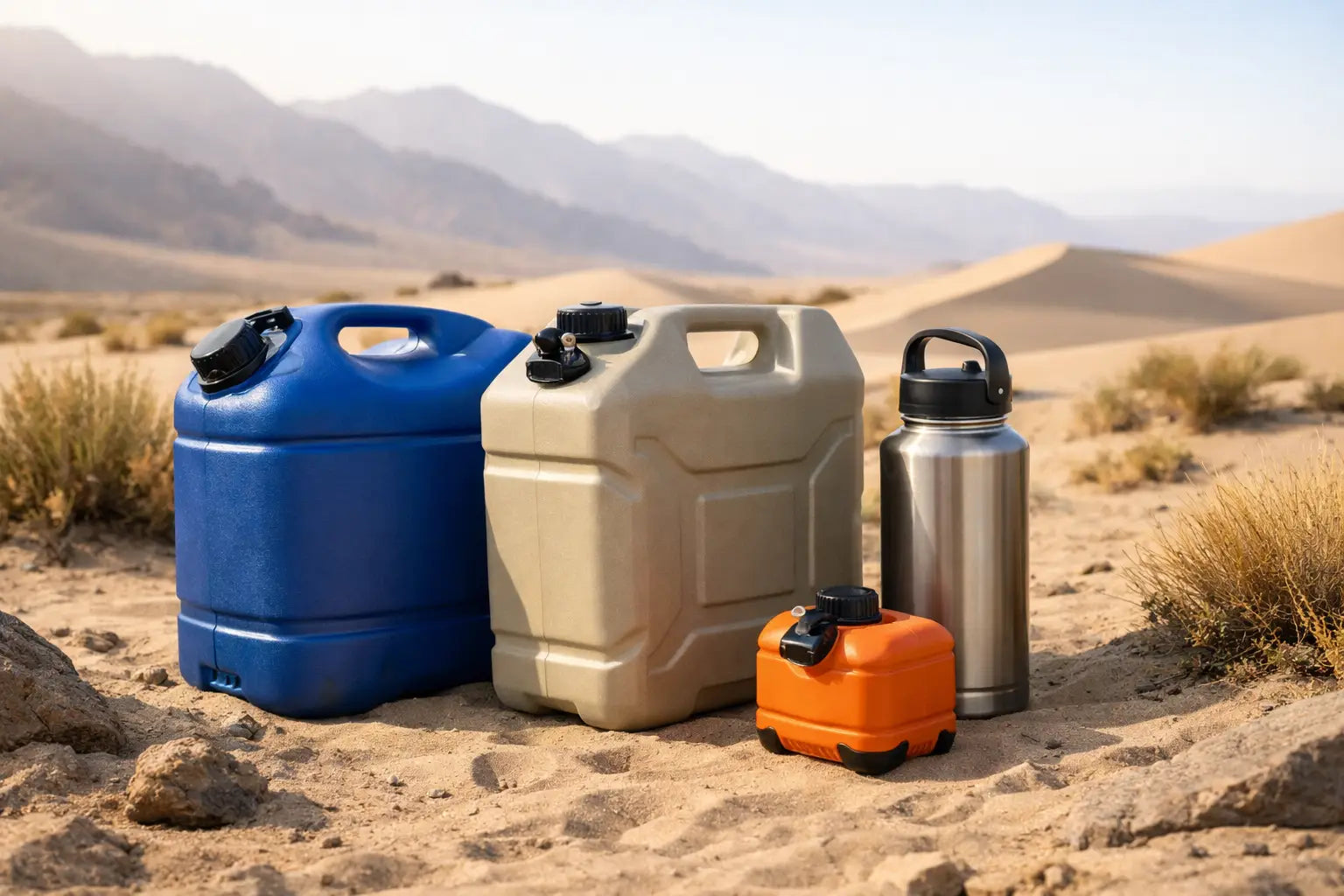
A cheap water jug usually fails at the worst possible time - halfway down a wash road, strapped in the back of a hot truck, or sitting in direct Arizona sun until the plastic warps and the spout starts leaking. That is exactly why choosing the best portable water containers matters more in desert country than it does on a mild weekend at the lake.
Out here, water storage is not a convenience item. It is core gear. Whether you are overlanding, camping, working a remote range, or building out an emergency vehicle kit, the right container has to handle heat, dust, vibration, and repeated use without becoming a problem of its own. The wrong one wastes space, leaks into your cargo area, or makes it harder to ration water when conditions get ugly.
What makes the best portable water containers different
Not every container labeled for outdoor use is built for desert travel. In hot, rugged conditions, the best options do a few things well. They stay sealed when bounced around off-road, they resist cracking under heat stress, and they pour without turning a refill stop into a mess.
Material matters first. Thick BPA-free plastic is common because it keeps weight reasonable and holds up well if the container is built properly. Softer collapsible models save space, but they are usually better as backup storage than primary water supply in rough terrain. Metal sounds tough, but for drinking water it can add unnecessary weight, transfer heat fast, and become less practical for larger capacities.
Shape matters too. A tall round jug may work fine at a campground, but in a vehicle it wastes usable space and shifts more easily. Lower-profile rectangular containers tend to stack better, ride more securely, and fit cargo systems with less wasted room. Wide-mouth designs are easier to clean and refill, while narrow spouts can make controlled pouring easier. You usually do not get both in the same opening, so some of the best designs separate fill and dispense functions.
Best portable water containers by use case
The right pick depends on how you travel and how often you need to move water by hand.
For overlanding and off-road travel
Rigid, stackable water containers are usually the strongest choice. They handle vibration better than bargain jugs, fit more cleanly into truck beds and cargo drawers, and are easier to secure with straps. If you are carrying several days of water, a rectangular 3- to 7-gallon container often gives the best balance between capacity and manageability.
Go too large and you create another problem. A full 7-gallon container weighs more than 58 pounds, which is fine if it stays mounted, but less ideal if you need to lift it out for camp use. For many off-road setups, two medium containers work better than one oversized one. If one fails, you do not lose your entire supply.
For base camp and group use
A larger rigid container with a reliable spigot makes sense when the water mostly stays in one place. Camp cooking, dish washing, and hand cleaning all go smoother when you can set a container on a tailgate or camp table and dispense water without lifting and tipping the whole thing every time.
This is where convenience features matter, but only if they are durable. Spigots are useful, but they are also common failure points. Look for recessed or protected spouts rather than flimsy protruding parts that can snap off in transport.
For hiking, scouting, and short movement on foot
Portable means something different when you are carrying the load yourself. In that case, hard-sided containers are less useful than hydration reservoirs or smaller canteens and bottles. If the goal is mobile access rather than bulk transport, the best portable water containers are the ones that fit your pack, ride quietly, and let you drink without stopping.
That said, a compact collapsible container still has value in camp. It can serve as a lightweight backup vessel for hauling water from a source or expanding storage once you stop moving.
For emergency vehicle kits
Stored water for roadside breakdowns or emergency desert travel needs a different standard. Long-term reliability matters more than daily convenience. Rigid food-grade containers with secure caps and a shape that will not roll around the cargo area are the safer choice.
Avoid thin disposable gallon jugs for this role. They degrade faster, especially in heat, and they are much more likely to split or leak over time. If a container is going to live in your vehicle, it needs to be built for that environment.
Features worth paying for
The best portable water containers are not always the most expensive ones, but there are a few features that earn their keep fast in the field.
A true food-grade build is non-negotiable. Water picks up taste from low-quality materials, especially when containers sit in heat. A durable body with reinforced corners also matters because corners and molded handles are where cheaper containers tend to fail first.
Integrated handles are another big one. A full container gets awkward fast, and poor handle placement makes pouring harder than it should be. Dual-handle designs are often easier to control, especially on larger models.
Opaque or low-light-transmission walls can help reduce algae growth if the container is exposed to sunlight repeatedly. This does not replace proper cleaning, but it helps. Venting also deserves attention. A container that glugs and surges while pouring wastes water and patience, while a vented design gives you a steadier stream.
Where people get it wrong
A lot of buyers choose based on capacity alone. More gallons sounds better until you have to lift the thing, secure it, clean it, or fit it around your other gear. Desert travel is all about usable systems. A container you can actually manage is better than one that looks impressive and stays half-used because it is a hassle.
Another mistake is assuming one container should do every job. The container you want mounted in a vehicle is not always the same one you want next to a camp kitchen or in a day pack. In practice, many people are better off with a layered setup: one main transport container, one smaller dispensing container, and one personal carry option.
People also overlook maintenance. Even the best container gets nasty if it is never cleaned or dried properly. Wide-mouth access helps here. If you cannot get a brush inside, long-term use becomes less practical.
How to choose the best portable water containers for desert conditions
Start with your actual use, not the marketing label. Ask how the container will ride, how often it will be moved, and whether it is for storage, dispensing, or carrying on foot.
If it lives in a truck or SUV, prioritize rigid construction, secure sealing, and a shape that straps down well. If it supports camp use, focus more on spout quality and ease of dispensing. If weight and packability matter, accept that collapsible containers trade some durability for space savings.
Then consider heat exposure. In the Southwest, containers sit in direct sun, enclosed vehicles, and dusty cargo areas. That means better materials and stronger seals are worth the money. Gear that performs fine in mild climates can fail early here.
Finally, think in terms of redundancy. Water is too critical to trust to one bargain container with one weak cap. Separate storage across multiple containers reduces risk and gives you more flexibility with load placement and daily use.
Capacity guidelines that make sense
For solo day trips by vehicle, a few gallons may be enough if the trip is short and conditions are predictable. For longer remote runs, multi-day camps, or two-person travel, total carried capacity climbs quickly. Drinking water is only part of the equation. You may also need water for cooking, cleaning, and basic hygiene.
That is why medium-size containers are often the sweet spot. They carry enough to matter but stay manageable when full. Several 3- to 5-gallon containers usually create a more flexible setup than one giant tank unless your vehicle build is specifically designed around fixed storage.
A practical setup that works
For most desert users, the most dependable system is simple: one or two rigid main containers secured in the vehicle, plus a smaller easy-pour container for camp use or short movement away from the vehicle. That setup covers storage, access, and backup without overcomplicating things.
Arizona Desert Gear customers usually are not looking for gimmicks. They want equipment that works in the heat, rides hard without leaking, and still does its job on the second, tenth, and fiftieth trip. That is the right standard to use here.
When you are deciding between options, do not ask which one looks the toughest on a product page. Ask which one you would trust after six hours on washboard roads in triple-digit heat. That answer will usually point you to the right container.

