

Cart
0
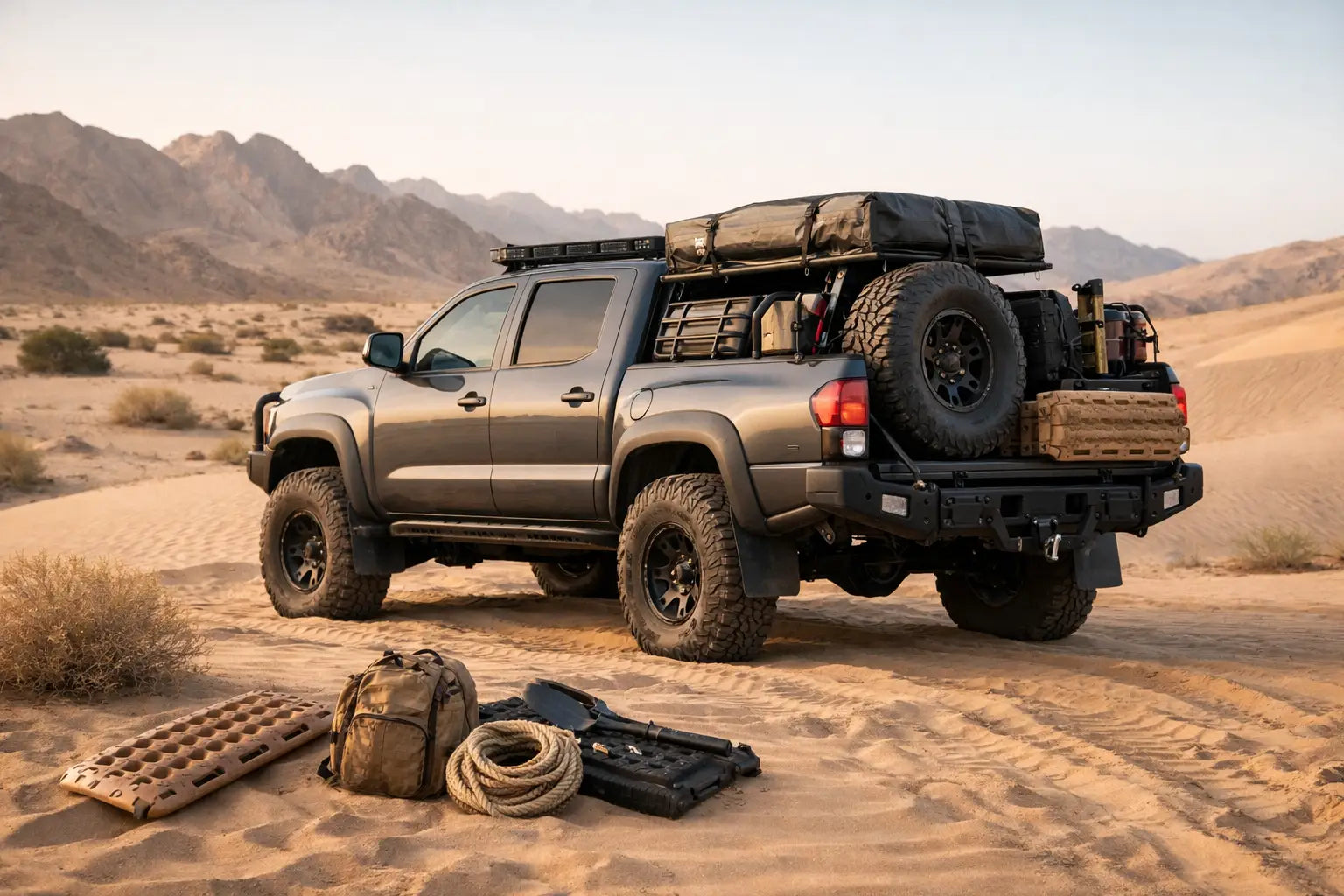
A bad truck setup usually shows itself 20 miles past pavement. The cooler shifts, recovery gear is buried under camp gear, water is harder to reach than it should be, and the first thing you need is always at the bottom. If you are figuring out how to build truck loadout plans for desert travel, range use, or off-road weekends, the goal is not to pack more. The goal is to make your truck work harder, stay organized, and keep critical gear ready when heat, distance, and rough terrain start testing your setup.
What a good truck loadout actually does
A solid loadout is built around access, weight control, and reliability. In desert conditions, that matters more than looking clean in a parking lot. Heat exposes cheap plastics, loose straps, weak adhesives, and poor storage choices fast. Dust finds every gap. Washboard roads shake everything loose. If your gear only works when the truck is sitting still in mild weather, it is not a good loadout.
The right setup should let you reach water, first aid, tools, and recovery gear without unloading half the bed. It should keep heavy items low and secured. It should also match how you actually use the truck. A weekend camping rig, a range-day setup, and a truck built for remote overland travel will overlap, but they should not be packed the same way.
Start with your actual use case before you build truck loadout storage
Before buying boxes, racks, or seat organizers, define what the truck needs to do most often. That sounds obvious, but this is where a lot of people waste money. They build for a once-a-year trip and live with that compromise every other weekend.
If your truck is mainly used for desert day trips, quick access matters more than sleeping platforms or full camp kitchen storage. If you run remote trails for long distances, extra water, fuel planning, recovery tools, and redundancy move up the list. If the truck also sees work duty or family use, permanent storage may need to stay modular.
A good way to think about it is by frequency and consequence. Pack the gear you use often where you can reach it fast. Pack the gear that matters in an emergency where it stays protected and easy to identify. Everything else gets organized around those two layers.
Build around the essentials first
When people ask how to build truck loadout setups properly, the answer starts with core categories, not accessories. In the Southwest, those categories are water, recovery, tools, medical, shelter from sun, and communication or navigation support.
Water should never be an afterthought. In desert travel, it is not just about drinking. You may need water for basic cleanup, minor vehicle issues, or helping someone else on the trail. That does not mean throwing random bottles behind the seat. Use containers that can handle heat and movement, and store them so they will not split, leak, or roll.
Recovery gear needs to be easy to grab when the truck is stuck in sand, on a shelf road, or buried in loose gravel. A recovery strap, shackles, traction aids, gloves, and a shovel do no good under coolers and sleeping bags. Keep that gear together, ideally near the tailgate or another fast-access point.
Tools should cover realistic field fixes, not every repair possible in a garage. Think tire work, battery issues, loose hardware, hose clamps, and basic hand tools matched to your vehicle. Medical gear should be visible, protected from damage, and known to everyone riding in the truck. In desert conditions, shade matters too. A compact tarp, shelter, or fast-deploy cover can make a major difference during a breakdown or long stop.
Weight placement matters more than most people think
The fastest way to make a truck feel worse off-road is to load it high, load it unevenly, or load it with too much unnecessary gear. A proper loadout keeps dense items low and centered as much as possible. Water, tools, jacks, spare parts, and ammo are all heavier than they look once they add up.
Keep the heaviest items near the cab side of the bed or low on the vehicle floor if stored inside the cab. Lighter bulk items like sleeping bags, clothing, and camp chairs can ride higher or farther back. This helps ride quality, reduces shifting, and keeps the truck more predictable on uneven ground.
There is always a trade-off here. Bed racks, rooftop storage, and high-mounted cargo can free up room, but they raise weight and expose gear to more heat, sun, and dust. For some trucks, that trade-off is worth it. For others, especially those doing more technical off-road driving, keeping gear low is the better move.
Use storage that controls dust, heat, and wasted space
Desert trucks need more than generic bins. You want storage that seals well enough to limit dust, holds up under heat, and does not turn basic access into a chore. Hard cases, soft organizers with structure, drawer systems, and segmented bins all have a place. The right choice depends on how often you need the gear and how permanent you want the setup to be.
Drawer systems are excellent for organization and security, but they add weight and cost. They make sense if your truck is dedicated to travel, overlanding, or regular off-road use. Hard bins are more flexible and easier to move in and out, which works better for mixed-use trucks. Seat-back organizers and cab storage help keep navigation tools, handheld lights, batteries, gloves, and admin items where they belong instead of rolling around loose.
Whatever system you choose, avoid dead space and avoid stacking random gear just because it fits. A clean loadout is not about appearance. It is about being able to find what you need while tired, dusty, or working in the dark.
Set up zones so gear is where you expect it
One of the simplest ways to build truck loadout systems that actually work is to create fixed zones. Keep recovery gear in one area, medical gear in another, hydration in another, and camp or comfort gear separate from critical equipment. That way, you are not mentally sorting through the whole truck every time you stop.
The cab should hold immediate-access items: navigation, communications, flashlights, knives or multi-tools where legal and appropriate, chargers, maps, sunglasses, and basic first-line gear. Behind the seat or rear cab area can hold medical supplies, extra water, and a compact tool kit. The bed should handle larger equipment, recovery gear, camp storage, and bulk supplies.
Consistency matters more than perfection. If the med kit always rides in the same location and the air system always goes back in the same case, you waste less time and make fewer mistakes under stress.
Plan for the desert, not just the drive
A truck loadout for Arizona or the wider Southwest has to account for long sun exposure, fine dust, and heat soak. Electronics left in direct sun can fail. Cheap straps become brittle. Adhesives let go. Plastic latches crack when they have been baking for weeks.
This is why material choice matters. Look for gear with proven resistance to heat, abrasion, and UV exposure. It is one of the reasons buyers in this region tend to move away from mass-market storage and start choosing tougher field-ready gear. Arizona Desert Gear is built around that exact reality.
You should also think about what happens when the truck is parked, not just moving. If food, batteries, med supplies, or optics are stored in the vehicle full-time, they will take a beating in summer. Some items need to be rotated out between trips. Others need insulated storage or a spot inside the cab away from direct exposure.
Test the setup before you trust it
No truck loadout is right the first time. After your first few runs, weak points will show up quickly. Maybe the shovel mount rattles loose. Maybe your jack is harder to reach than expected. Maybe your water storage works fine for a day trip but not for a full weekend.
That is normal. A good setup gets refined through use. Start with one trip where you pay attention to what you touched, what shifted, and what stayed buried the whole time. If you never used an item and it is not emergency gear, it may not deserve a permanent spot. If you needed something twice and had to dig for it both times, move it.
This process also keeps you from overbuilding. Plenty of trucks end up carrying gear for hypothetical problems while neglecting the simple items used every trip.
Keep it lean enough to live with
The best truck loadout is the one you will maintain. If it takes an hour to repack after every trip, things start getting skipped. If every errand requires unloading heavy cases, the system becomes a burden. Build for repeat use, not just one photo-ready setup.
That usually means choosing durable organizers, securing everything properly, and resisting the urge to carry every piece of gear you own. Bring what supports the mission, the terrain, and the season. Leave the rest in the garage until it earns its place.
A truck built for desert use should feel ready, not overloaded. When your gear is secure, your essentials are easy to reach, and your setup matches the way you actually travel, the whole truck works better. That is the point - not more stuff, just the right stuff in the right place.

