

Cart
0
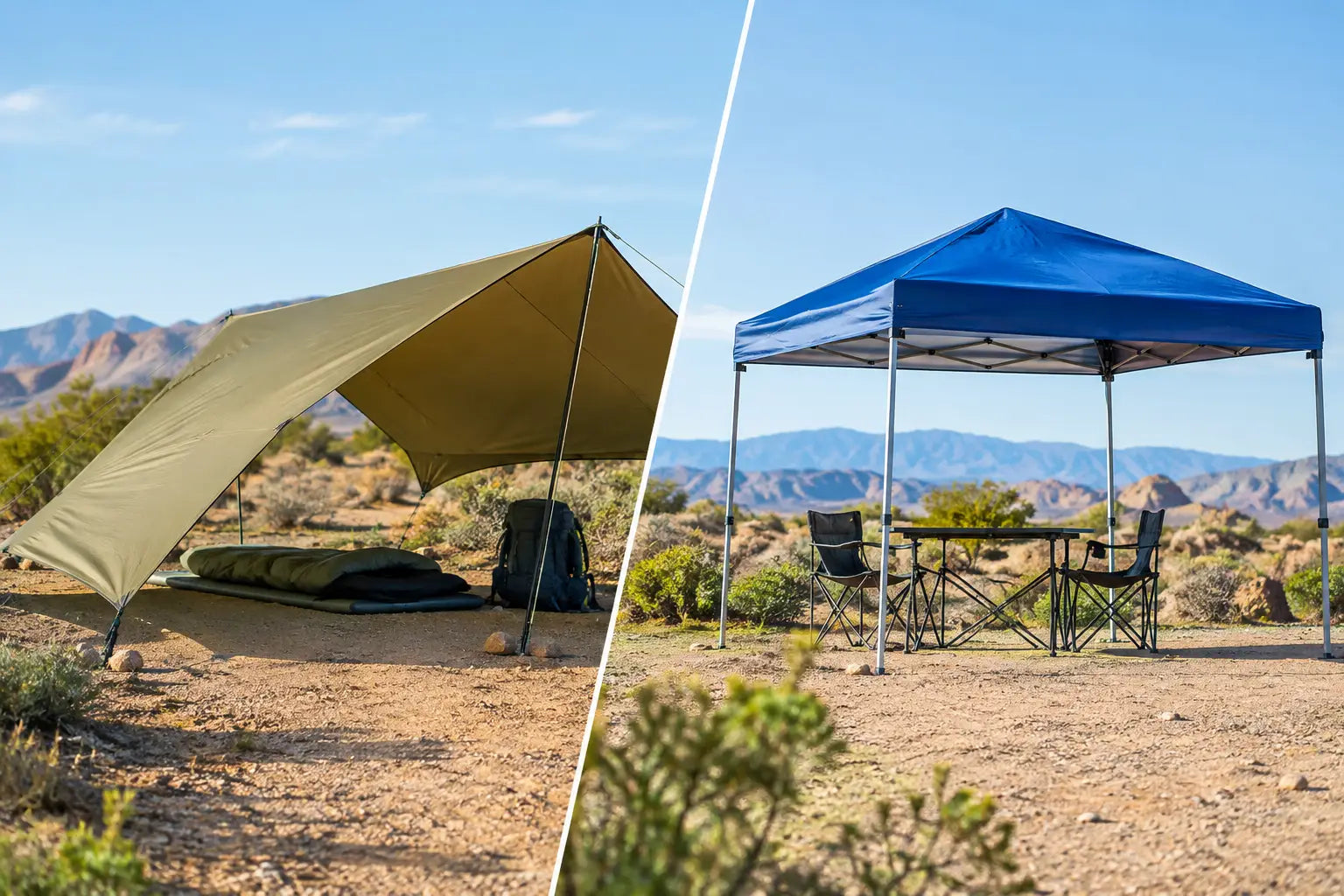
A patch of shade can change a desert stop from manageable to miserable fast. When the temperature climbs, there is no small difference between cover that holds steady through the afternoon and cover that turns into a sail at the first gust. In the desert tarp shelter vs canopy decision, the right answer depends less on what looks better at camp and more on how you travel, where you park, and what the wind is doing.
For overlanders, range users, dispersed campers, and anyone working outside in Arizona heat, both options have a place. A tarp shelter gives you flexibility and a lower pack weight. A canopy delivers quick, predictable shade with fewer setup decisions. Neither is automatically tougher. The weak point is usually the setup, the anchors, or the user expecting one piece of gear to handle conditions it was not built for.
Desert Tarp Shelter vs Canopy: The Fast Answer
Choose a tarp shelter when pack space matters, your camp sites vary, and you are comfortable working with knots, poles, and guy lines. A quality tarp can attach to a vehicle, trees where available, trekking poles, dedicated tarp poles, or a combination of all four. It can become a lean-to, a low windbreak, a rain fly, or an open shade wing.
Choose a canopy when you need broad, level shade fast. Pop-up canopies work well for base camps, day trips, pit areas, family gatherings, and range days where the vehicle stays in one place. They are easy to understand, quick to deploy with two people, and useful for setting up chairs, coolers, tables, and gear bins under one roof.
The trade-off is straightforward. Tarps require more fieldcraft but adapt better to uneven ground and wind-aware setups. Canopies are simpler and more comfortable for a stationary camp, but they take up more vehicle space and need serious anchoring in exposed country.
When a Tarp Shelter Earns Its Keep
A desert tarp is not just a lightweight replacement for a tent rain fly. In the right hands, it is one of the most useful pieces of cover you can carry. It packs down small, often weighs far less than a framed canopy, and can be shaped around the terrain instead of forcing the terrain to fit the shelter.
That matters on rocky washes, uneven desert camps, narrow trailheads, and remote stops where there is no level, cleared pad. A tarp can run from a roof rack to two poles, creating a sloped shade wall beside the vehicle. It can be pitched low on the windward side and higher on the shaded side, limiting gusts while still giving you room to sit. During a brief rainstorm, it can shed water instead of pooling it across a flat roof.
Tarp shelters also make sense for hikers, hunters, motorcycle travelers, and off-roaders trying to keep gear weight under control. A tarp, cordage, stakes, and poles can serve several purposes without filling the cargo area with one bulky item.
The catch is that a tarp asks more from you. You need to understand tension, knot security, line angles, and site selection. A loosely pitched tarp flaps itself apart. A tarp set too high catches wind. A tarp pitched flat can collect rainwater and sag. Practice at home before depending on one at a remote camp.
Build for Shade, Not Just Overhead Cover
For desert use, coverage shape matters as much as square footage. The sun is rarely straight overhead for long, especially in the morning and late afternoon. A flat tarp above a table may look good at noon and provide almost nothing when the light comes in low from the west.
Set one edge lower when practical, or angle the tarp to block the direction of the harshest sun. A rectangular tarp is usually easier to configure for vehicle-side shade, while a square tarp offers more pitching options. Look for reinforced tie-out points, UV-resistant fabric, and enough line attachment points to adjust the pitch without improvising weak connections.
Light-colored fabric can feel noticeably cooler beneath it because it reflects more heat, though it may show dust and stains quickly. Darker materials hide grime but absorb more heat. No tarp fabric makes desert sun harmless, so add water, airflow, and a shaded rest schedule to the plan.
When a Canopy Is the Better Tool
A canopy is built for the camp that stays put. If you arrive Friday, leave Sunday, and want a dependable common area for people and equipment, a framed canopy is hard to beat. Open it, anchor it correctly, and you have instant usable space without working out ridgelines and pole geometry.
This makes canopies a strong choice for car camping, trailhead staging, shooting events, swap meets, pit support, and group trips. The rigid frame supports a broad, mostly level roof, so chairs, camp kitchens, and coolers fit naturally underneath. Sidewalls can provide additional low-angle sun protection, but they also increase wind load. Use them selectively, not automatically.
A canopy is also easier for new campers. There is less technique involved, fewer cordage decisions, and a clearer setup routine. That convenience is worth the added bulk if your vehicle has room and the trip calls for a comfortable, organized camp.
The weak point is wind. Lightweight pop-up frames are not designed to be ignored in a desert gust front. A canopy can bend, walk across camp, or become airborne fast when it is left unanchored. Even a sturdy frame needs proper tie-downs at every leg and guy lines at the upper corners when conditions call for them.
Do not treat small sandbags as a complete anchoring system on their own. In firm desert soil, use strong stakes or screw-in anchors where ground conditions allow. On hardpan, rock, or pavement, use substantial weight at each leg and add guy lines to secure anchor points. If wind builds beyond what the shelter can safely handle, lower it or take it down. Protecting expensive gear is better than gambling on a frame in a squall.
Anchoring on Desert Ground
Desert ground is rarely cooperative. Loose sand may not hold a standard tent stake. Hard caliche can reject it entirely. Rocky soil can hide a large rock two inches below the surface. Bring anchoring options that match the country instead of assuming a basic stake bag will cover every camp.
For tarps, longer stakes, sturdy cordage, tensioners, and a few backup connection methods are worth carrying. Rocks can help secure a guy line when buried or used as deadman anchors, but do not simply drape cord over a sharp rock and expect it to hold. Protect the line from abrasion and keep the load direction low and controlled.
For canopies, use rated tie-down straps rather than thin utility cord. Avoid tying to brittle desert brush, cactus, or vehicle parts not designed for side loads. A roof rack or purpose-built awning mount can be a sound attachment point. A door hinge, mirror, or plastic trim piece is not.
Check your shelter after the first 10 to 15 minutes. Fabric stretches in heat, knots settle, and wind direction can shift. Retension before a loose panel starts snapping in the breeze.
Shade Quality, Ventilation, and Camp Layout
A larger roof is not always cooler. Low roofs trap warm air, especially when all sides are blocked. High, open-sided coverage often feels better in dry heat because hot air can move away. A tarp gives you more control over this balance. A canopy gives you more consistent usable floor space.
Set either shelter with airflow in mind. Keep the cooking area near the edge rather than deep under the roof, and never use fuel-burning stoves in an enclosed shelter. Place coolers out of direct sun, but leave space around them so people are not constantly opening them from the hottest side of camp.
If you are camping beside a vehicle, use the vehicle as part of the shade plan. The truck, SUV, or trailer can block one direction of sun and reduce the amount of fabric you need to deploy. Just remember that vehicles also radiate stored heat after a long drive. A little separation can make the shaded area more comfortable.
Match the Shelter to the Trip
A compact tarp setup is usually the smarter choice for moving camps, technical trails, hunting trips, and solo travel. It saves cargo room, handles irregular sites, and can be pitched low when weather turns. Carry the skills and hardware to use it well.
A canopy makes more sense for a destination camp, a large group, or any situation where fast, broad shade is the priority. Buy one with a frame strong enough for repeated use, a UV-resistant top, replaceable parts if possible, and a realistic packed size for your vehicle.
For many desert regulars, the best answer is not choosing one forever. Keep a tarp in the vehicle for flexible backup cover, wind protection, or unexpected stops. Bring the canopy when the plan calls for a real base camp. Arizona Desert Gear customers know the terrain does not reward one-size-fits-all packing.
Before you leave, set your shelter up once in the driveway, inspect the fabric and hardware, and pack anchors that match the ground you expect. When the afternoon sun and desert wind arrive at the same time, that preparation is what keeps shade from becoming another problem to solve.

