

Cart
0
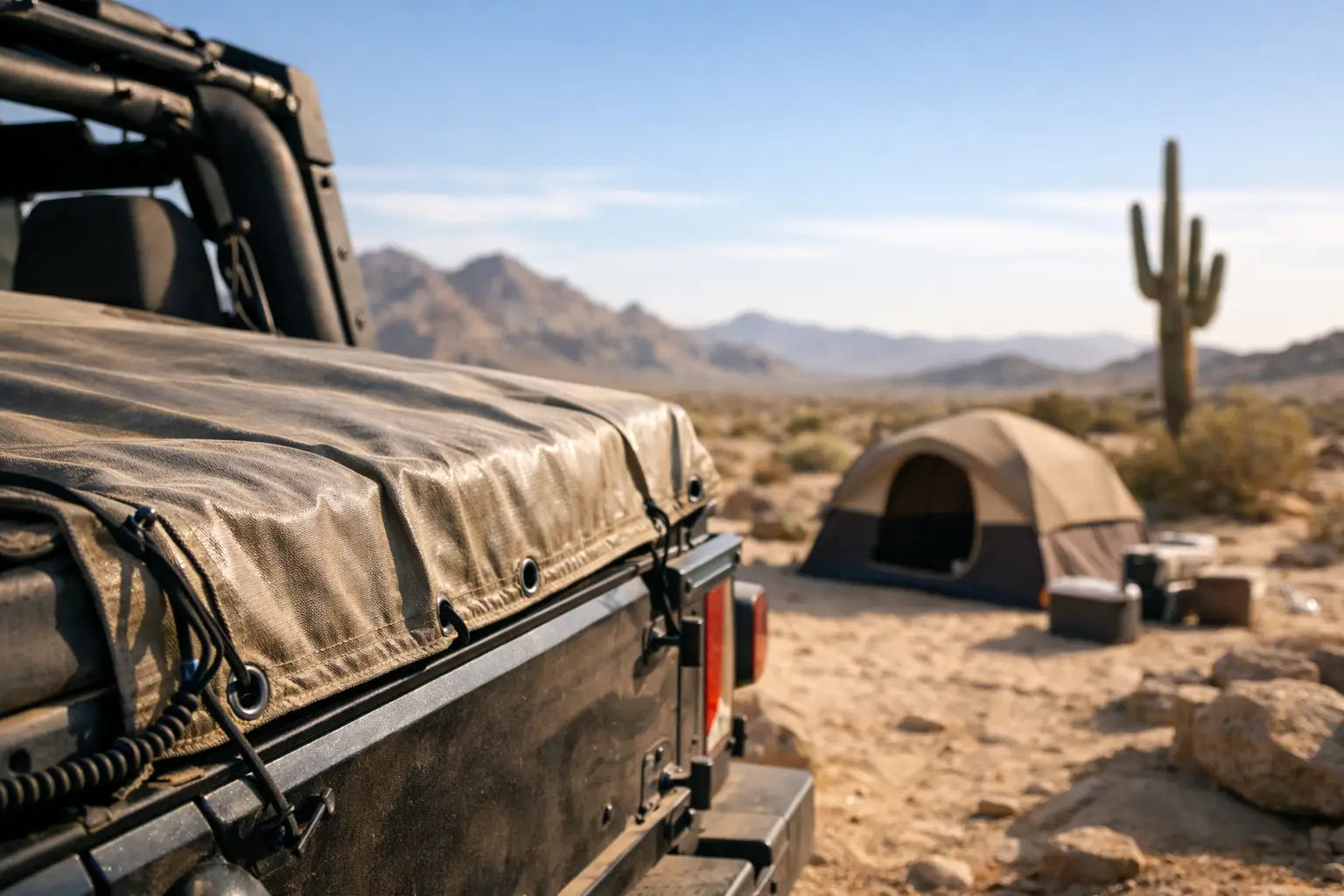
Midday desert sun will expose a bad tarp fast. Cheap fabric gets brittle, weak grommets pull out, dark colors trap heat, and oversized tarps turn into sails when the wind picks up. If you are figuring out how to choose desert tarps, the right answer starts with where and how you actually use them.
A tarp in Arizona or anywhere in the Southwest is not just a generic sheet of material. It might be your shade roof at camp, your gear cover during an off-road stop, your ground barrier on abrasive rock, or your emergency shelter when conditions turn rough. Those jobs sound similar, but they put very different demands on fabric, coatings, weight, and tie-down points.
How to Choose Desert Tarps for Real Use
The biggest mistake is buying by size alone. In desert conditions, a tarp has to handle UV exposure, heat, wind, dust, and sharp ground. If it fails in any one of those categories, the low price stops looking like a bargain.
Start with the use case. A tarp for overhead shade should block sun well, stay stable in wind, and avoid turning your camp into a heat trap. A ground tarp needs abrasion resistance more than reflectivity. A truck-bed or gear-cover tarp needs secure tie-down options and enough structure to avoid flapping itself apart on the drive.
That means the best desert tarp is not one specific model or material. It depends on whether you need shade, protection, concealment, transport coverage, or a lightweight emergency option you can pack small.
Match the Tarp to the Job
For camp shade, look for a tarp that balances coverage with manageable weight. Bigger sounds better until you are trying to keep it tight in shifting wind on hard-packed ground. In most desert camps, a properly tensioned mid-size tarp is more useful than a massive sheet you cannot anchor well.
For ground cover, thickness matters more than appearance. Sand is not always soft, and desert camps often mean gravel, thorny brush, and rough surfaces that wear through light material. If the tarp will sit under a cot, gear table, or recovery tools, choose something built to take abrasion.
For vehicle or cargo coverage, edge strength matters a lot. Desert wind works the perimeter first. Weak hems and low-grade grommets usually fail before the fabric does. A good cargo tarp needs reinforced edges and enough tie-down points to spread tension instead of forcing all the load onto a few corners.
For emergency shelter, weight and packability matter more. You may accept less durability if the tarp lives in a pack or truck kit and only comes out when needed. Just do not confuse emergency lightness with all-purpose toughness.
Material Matters More Than Marketing
When people ask how to choose desert tarps, material is usually the most important part of the answer. Marketing terms can make different tarps sound similar, but in field use the differences show up fast.
Polyethylene tarps are common, affordable, and useful for general coverage. They resist water well and can work for short-term camp or cargo needs, but quality varies a lot. In strong UV and repeated heat cycles, cheap poly tarps tend to degrade, crack, or delaminate. If you go this route, heavier-grade construction is worth paying for.
Canvas tarps are strong, quiet in the wind, and naturally suited to abrasion-heavy use. They can be a solid choice for ground cover, gear staging, and some camp applications. The trade-off is weight, bulk, and water retention. In dry climates that may not be a dealbreaker, but canvas is not ideal if you want something compact and easy to deploy fast.
Ripstop synthetic tarps, often made from polyester or nylon blends with coatings, make sense when packability and strength-to-weight ratio matter. These are often better for mobile camps, emergency kits, and overhead shelter setups where you want less bulk. Just pay attention to denier, coating quality, and reinforced anchor points, because a lightweight tarp without structural support features can fail under desert wind.
If sun exposure is constant, UV resistance should be a real feature, not an afterthought. The desert punishes fabric every day, even when the tarp is stored in the bed of a truck between trips.
Color Affects Heat and Usefulness
Color is not cosmetic in the desert. Lighter colors usually reflect more sunlight and help keep shaded space cooler underneath. If your main goal is camp comfort, that matters.
Darker tarps may be useful for concealment, low-profile setups, or specific tactical applications, but they generally absorb more heat. That does not always make them wrong. It just means you should choose them for a reason, not because they looked good on a product page.
Reflective or light-toned tarps often make more sense for shade structures, while darker heavy-duty tarps may be better for gear coverage or certain field uses where thermal comfort under the tarp is less important.
Size, Shape, and Weight Trade Offs
A tarp that is too small limits your setup options. A tarp that is too big becomes hard to pitch, harder to secure, and more vulnerable to wind loading. Desert users should think beyond square footage and consider how the tarp will actually be mounted.
Rectangular tarps are the most versatile for camp and vehicle use. They give you more pitch options than square tarps and usually fit better over cots, tables, truck beds, or side awning style setups. Square tarps can work, but they are less flexible in tighter layouts.
Weight matters if you hike with it, but less so if it lives in a vehicle. That sounds obvious, yet it changes what counts as a good purchase. A heavy-duty tarp may be exactly right for overlanding and range use, while a backpack setup needs something lighter even if it gives up some lifespan.
There is also a setup trade-off. Bigger tarps need more line, more anchor points, and more open space. In rocky desert sites, suitable anchor positions are not always where you want them.
The Hardware Tells You a Lot
A desert tarp is only as useful as its tie-down system. Fabric gets most of the attention, but corners, grommets, webbing loops, stitching, and reinforced patches often determine whether the tarp survives repeated use.
Look closely at perimeter reinforcement. Folded and stitched hems, reinforced corners, and multiple tie-out points are all signs the tarp was built for tension. If all the load goes through thin corner grommets, failure is only a matter of time.
Webbing loops are often better than grommets for some setups because they handle stress more flexibly. Grommets can still be useful, especially for fast lashing, but they need reinforcement around them. In the desert, wind shock loads are real, especially on shade tarps that get hit by sudden gusts.
If you plan to set up on hard ground, remember the tarp is only one part of the system. Stakes, guy lines, poles, and anchor methods matter just as much. A good tarp with a weak tie-down plan is still a weak shelter.
Water Resistance Still Counts in Dry Country
It is easy to focus only on sun and heat, but desert weather can turn quickly. Monsoon storms, sudden runoff, and blowing rain make water resistance worth having even if most of your trips stay dry.
That does not mean every desert tarp has to be fully waterproof. For overhead shade, breathable fabric may be more comfortable in hot conditions. For gear protection, though, a water-resistant or waterproof coating is a practical advantage.
Just be honest about priorities. If the tarp is mainly for sun shelter, airflow may matter more than total rain protection. If it covers recovery gear, ammo cans, tools, or camp storage, water resistance becomes much more valuable.
Avoid the Most Common Buying Mistakes
The first mistake is buying the cheapest tarp available and expecting it to last in high UV conditions. The second is buying too large without thinking through wind management. The third is ignoring edge construction and tie-down quality.
Another common problem is choosing a tarp that solves one issue while creating another. A super heavy tarp may be durable but so bulky it rarely leaves the garage. An ultralight tarp may pack small but be too fragile for repeated use on rough desert ground. Practical gear works because it gets used, not because it looks impressive on paper.
For most desert users, the best buy is a tarp matched to a clear job with enough durability margin for the environment. That usually means paying attention to UV resistance, reinforced anchor points, realistic sizing, and material weight suited to your setup style.
Arizona Desert Gear customers usually know this already from boots, packs, and recovery equipment - desert conditions punish generic gear. Tarps are no different.
When you choose one, think less about broad claims and more about failure points. What happens after three weekends in full sun, one windy wash camp, and a rough pack-out over rock and dust? If the tarp still sounds like the right tool after that, you are probably looking in the right direction.
The best desert tarp is the one you can trust when the sun is brutal, the wind shifts, and heading back to town is not an option.

