

Cart
0
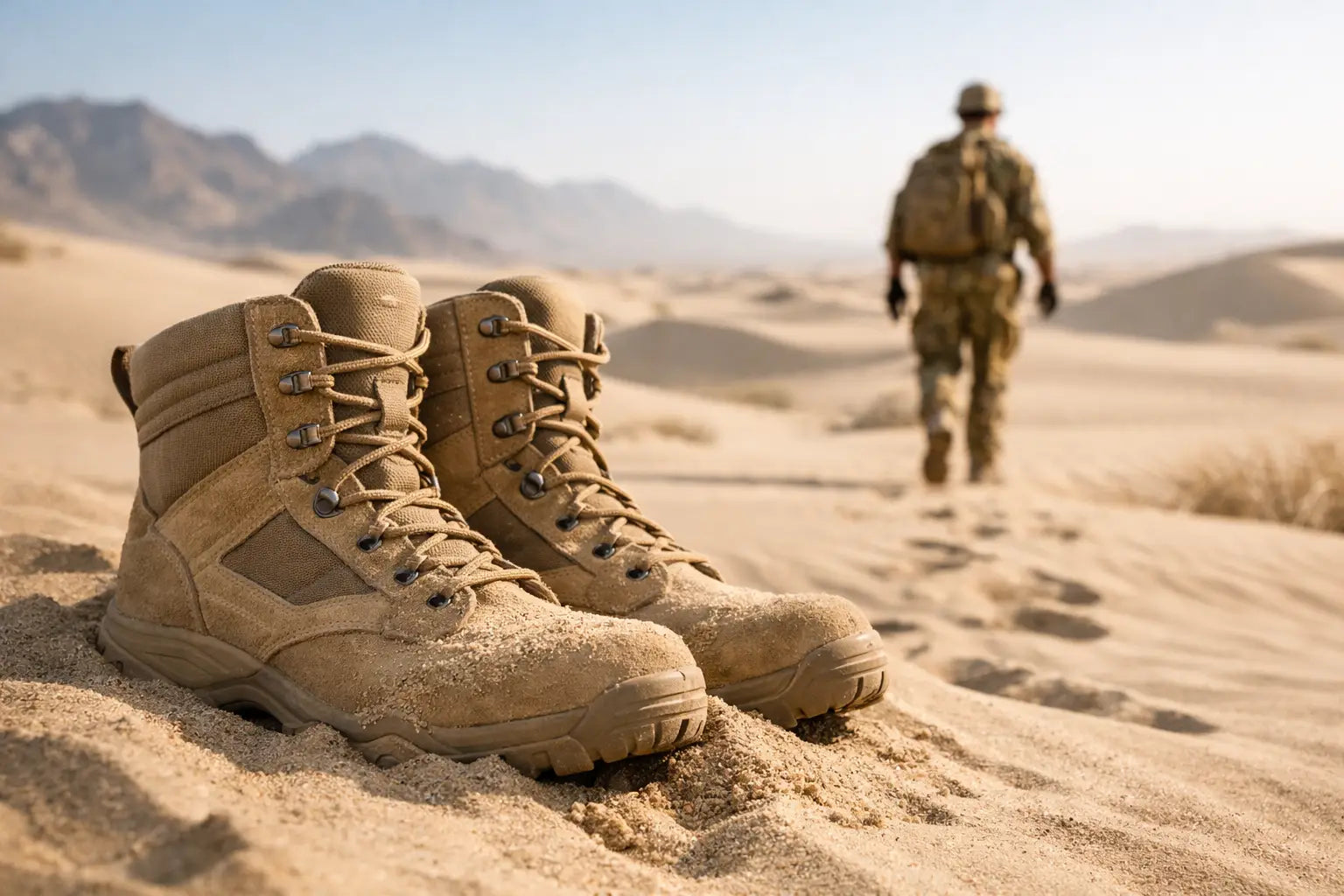
Loose sand can turn a dependable pair of boots into a hot, heavy problem fast. If you are asking what boots work in sand, look beyond aggressive tread and military styling. The right pair keeps sand out, stays stable when the ground gives way, handles brutal surface heat, and does not leave your feet wrecked after a long walk from camp, the truck, or the trailhead.
For Arizona desert use, the best answer is usually a lightweight-to-midweight boot with a secure fit, breathable upper, supportive midsole, and an outsole designed to flex and shed debris. But terrain and mission matter. The boot that works for a short range day may not be the right call for a loaded overland hike through deep washes.
What Boots Work in Sand? Start With the Sand Itself
Not all sand behaves the same. Fine dune sand moves under every step and quickly gets inside low-cut footwear. Sandy two-track roads may be packed hard in the morning, then turn loose and powdery where tires have churned them up. Desert washes often mix sand with sharp rock, gravel, thorny brush, and hard-baked clay.
That mix is why a purpose-built desert boot is often a better choice than a soft beach shoe or a heavy cold-weather hiking boot. You need enough support to deal with uneven ground, but not so much boot that you are hauling extra weight and heat with every step.
A mid-height boot is the practical middle ground for most desert users. It adds ankle coverage, helps limit sand entry, and gives more protection from brush and loose rock than a trail shoe. A full-height tactical or combat-style boot can work well for range use, field work, and off-road travel, especially when ankle protection is a priority. For long hikes in very deep, loose sand, however, a lighter boot may save energy.
Fit Matters More Than Extra Tread
Deep lugs look tough, but they do not solve the main problem with sand. Loose sand has little to grip. A boot stays useful because it fits securely, flexes naturally, and gives your foot a stable platform while the surface shifts underneath it.
Choose a boot with a snug heel pocket and enough room in the toe box for your toes to spread. Your feet swell in desert heat, so a fit that feels perfect in an air-conditioned house can become painfully tight several miles into the day. There should be enough length to avoid toe impact on descents, but not so much space that your heel lifts with every step.
Heel lift is more than an annoyance. It creates hot spots, blisters, and a sloppy stride that gets worse in loose ground. Lace the boot firmly through the ankle, then walk up and down an incline before committing to it. If your heel moves, try a different lacing method or a different boot. Do not expect sand to make a marginal fit better.
A Stable Midsole Beats a Stiff, Heavy Boot
A supportive midsole reduces foot fatigue when sand collapses beneath you. Look for cushioning that absorbs impact without feeling overly soft or unstable. A boot that is too flexible can make your arches and calves work overtime. One that is excessively stiff can feel clumsy on uneven washes and rocky ledges.
For most day hikes, camp setups, and desert travel, moderate stiffness is the useful target. If you carry heavier loads, work in rough country, or spend long days on foot, move toward a more supportive hiking or tactical boot with a firmer shank and better ankle structure.
Choose Uppers That Handle Heat and Dust
Desert boots need to breathe, but they also need to survive abrasion. Synthetic fabric panels paired with leather or durable synthetic reinforcements are usually a strong combination. They are lighter than all-leather boots, dry faster after sweat or an unexpected crossing, and hold up well against brush and sharp ground.
Full-grain leather has its place. It offers serious durability and protection, particularly for work, riding, and rugged terrain. The trade-off is heat and drying time. A thick leather boot can feel like an oven during Arizona summer conditions unless it is built with ventilation in mind.
Mesh panels improve airflow, but open mesh also lets in fine dust and sand. That does not make mesh a bad choice. It simply means the boot needs to be paired with the right socks and, in loose conditions, gaiters. Fine dust gets everywhere eventually. Your goal is to slow it down and prevent it from grinding against your skin all day.
Waterproof Membranes Are Not Always the Best Call
Waterproof boots sound useful until the temperature climbs. In dry, hot sand, a waterproof membrane can trap heat and sweat. If water gets over the collar, it also takes longer to dry. For most hot-weather desert travel, a breathable non-waterproof boot is the more comfortable option.
Waterproofing earns its place when your route includes cold weather, frequent creek crossings, rain, snow, or wet brush. It can also make sense for winter desert trips, when early mornings are cold and wet ground is more common. Match the boot to the season instead of treating waterproofing as an automatic upgrade.
Outsoles for Sand Need Balance
Look for a rubber outsole with widely spaced, moderately deep lugs. This pattern gives you usable traction on hardpack, rocky slopes, and loose gravel while allowing sand and mud to release. The outsole should have a broad, stable contact area rather than tall, narrow lugs meant only for soft mud.
Very aggressive mud lugs can feel unstable on hard desert surfaces and wear quickly on rock. Flat, smooth soles may feel comfortable around camp but provide too little bite once you hit a steep sandy bank or loose trail. A versatile hiking or tactical outsole is usually the better desert choice because the Southwest rarely gives you only one surface for long.
Pay attention to the toe and heel. A protective toe cap is valuable around rock and vehicle gear, while a defined heel brake helps on sandy descents. Neither feature needs to be oversized. Useful desert gear is built for steady performance, not unnecessary bulk.
Keep Sand Out With Gaiters and the Right Socks
Even the best boots cannot fully stop sand from entering through the collar. Low-profile desert gaiters are one of the simplest upgrades for hiking dunes, dry washes, and open trails with fine grit. They seal around the ankle and attach near the laces, reducing the amount of debris that works into your boot.
Wear moisture-wicking socks made from merino wool, synthetic blends, or a combination of both. Avoid cotton. Cotton holds sweat, bunches up, and creates friction when sand gets inside. A medium-cushion sock works well for most boots, but make sure your boot is fitted while wearing the socks you will actually use.
If you feel grit building up, stop and empty your boots early. Continuing to walk with sand under your heel or around your toes can turn a minor irritation into a blister that ends the day. Carry a spare pair of socks in your vehicle or pack, especially during hot-weather trips.
Match the Boot to Your Desert Job
For casual camp use, light trail walking, and driving, a lightweight mid-height hiking boot with a breathable upper is often enough. It provides protection when you step out onto hot gravel or loose ground without feeling excessive behind the wheel.
For range days, field use, and off-road recovery work, a durable tactical-style boot can make sense. Prioritize ankle support, toe protection, abrasion resistance, and a sole that remains stable around rocks, pedals, and uneven ground. Avoid choosing based on appearance alone. A boot that looks tactical but uses poor foam, weak stitching, or slick rubber will fail when the terrain gets real.
For longer hikes and loaded travel, use a hiking boot with a stable midsole, dependable heel lock, and room for heat-related foot swelling. Add gaiters when you expect fine sand. For deep dune travel, keep weight down. Every extra ounce on your foot costs energy when you are climbing loose slopes.
At Arizona Desert Gear, the best boot choice always comes back to the conditions you will actually face: heat, distance, load weight, sand depth, and the rock waiting underneath it.
Break new boots in before a remote trip, not on it. Wear them on local walks, test them with your normal socks, and learn where they rub before the desert makes that lesson expensive. A boot that fits your feet, vents heat, and stays planted across changing ground will carry you farther than the heaviest pair on the shelf.

