

Cart
0
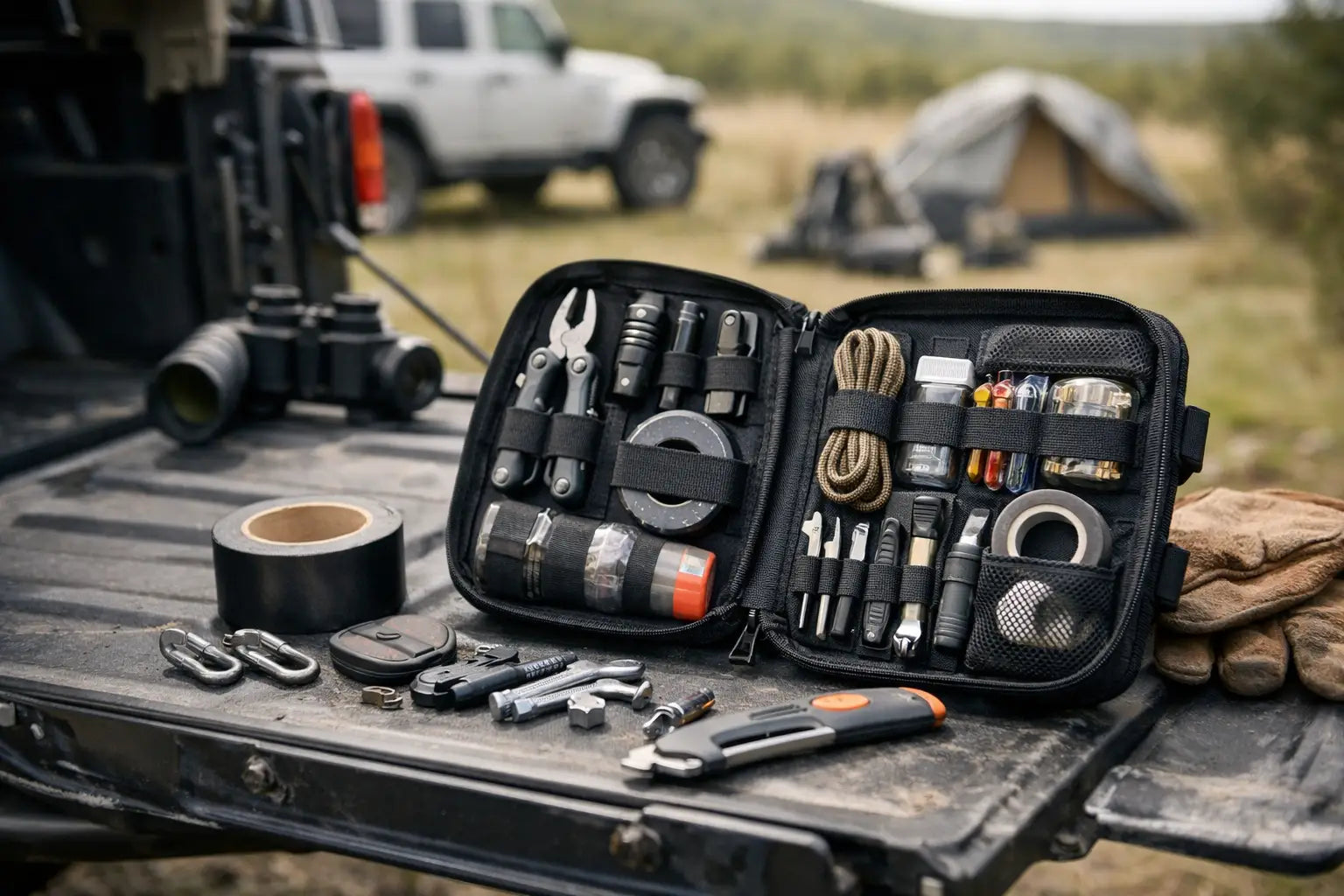
A busted strap, a loose battery terminal, a torn hose, or a split boot lace usually starts as a minor problem. Out in the desert, small problems get expensive fast. That is why field repair kits matter. They buy you time, keep you moving, and help you turn a trail fix into a safe return instead of a long walk or a tow.
In Arizona and across the Southwest, your kit has to do more than cover basic repairs. Heat softens adhesives, dust gets into threads and connectors, and long distances punish weak fixes. A field repair kit that works in mild conditions may come up short when the sun is high and the ground is rough. If your gear is built for desert use, your repair kit should be too.
What field repair kits are really for
A good field repair kit is not a toolbox shrunk down into a pouch. It is a focused set of parts and tools chosen to solve likely failures in the field. The goal is simple - restore enough function to finish the day, get back to camp, or make it safely to pavement.
That means your kit should match your actual use. A hiker needs something different than an overland driver. A range bag repair setup differs from what makes sense on a multi-day camp trip. There is overlap, but trying to build one universal kit usually leads to dead weight and missing essentials.
The better approach is to think in systems. What has to keep working for your trip to continue? On foot, that may be footwear, water carry, packs, and lighting. In a vehicle, it may be tires, hoses, electrical connections, cargo retention, and recovery gear. Once you think that way, the contents become clearer.
Building field repair kits for desert conditions
Desert travel changes the math. Materials fail differently in extreme heat than they do in cooler, wetter regions. Cheap plastic gets brittle. Tape adhesive can turn gummy. Rubber parts crack sooner. Fine dust works into moving parts, closures, and contacts.
That is why field repair kits for this environment should lean toward mechanical fixes over temporary stick-on solutions whenever possible. Tape still has value, but a clamp, tie, buckle, or wire fix often holds up better under heat and vibration. When you do carry adhesives or sealants, they should be fresh, stored well, and treated as limited-life items.
Size matters too. A repair kit buried in a large tote is less useful than one you can reach in a minute. Most people are better off with a layered setup: a compact core kit always on hand, then activity-specific add-ons in the vehicle or loadout. That keeps the essentials close without turning every bag into a hardware bin.
What belongs in a practical field repair kit
The core of most field repair kits is simple. You need cutting, fastening, binding, patching, and basic adjustment capability. For many users, that starts with a multitool, a small fixed set of driver bits, sturdy zip ties in more than one size, electrical tape, a few feet of wire, duct tape wrapped flat, and spare batteries for mission-critical electronics.
From there, your kit should branch into the items that fail on your specific gear. For packs and clothing, that might mean repair tape for fabric, spare buckles, cordage, safety pins, and a sewing repair option. For vehicles, it can mean fuses, hose clamps, tire plug gear, valve cores, electrical connectors, and a way to reinflate a tire. For camp systems, think fuel line parts, stove maintenance items, lantern mantles or ignition backups, and extra O-rings.
The part many people miss is hardware. A few nuts, bolts, washers, split rings, and clips in common sizes can save a trip. So can spare straps and retention parts. In rough country, vibration loosens things. Sun and abrasion wear them down. The fix is often not complicated, but only if you have the right small part when it happens.
The trade-off between a lean kit and a complete one
There is no perfect kit size. Too small, and you cannot solve much. Too big, and you stop carrying it or waste time digging through it. The right balance depends on distance, remoteness, and consequences.
If you are doing short day trips near town, a lighter kit makes sense. If you are running remote trails, crossing long stretches with weak cell coverage, or camping far from services, your kit should grow. Not because more gear is always better, but because the cost of a preventable failure is higher.
Weight matters more on foot than in a truck, but even vehicle-based kits need discipline. Keep tools matched to your equipment. If every major fastener on your rack, lighting, or recovery setup uses the same few sizes, carry those tools and not six extras you never touch. Standardizing hardware across your gear pays off every time you pack.
Field repair kits for common desert use cases
Hiking and day-use kits
For hikers, the priority is mobility and water carry. If a pack strap fails, a reservoir leaks, or footwear starts coming apart, the problem can turn serious quickly in heat. A compact kit with tape, cord, needle and thread, blister care, a backup water container, and a few retention items covers a lot without adding much bulk.
Lighting deserves a place here too. If your hike runs long, a dead headlamp becomes a repair problem as much as a battery problem. A fresh spare battery or a second light is often the smarter fix than trying to nurse failing gear.
Overlanding and off-road kits
Vehicle-based field repair kits should focus on the failures most likely to stop movement or create a safety issue. Tire repair is at the top of the list. So are basic electrical fixes, fluid line containment, and securing loose cargo or damaged mounts.
This is where quality matters most. A stripped driver, weak pliers, or bargain tire tools can make a bad situation worse. In harsh heat and dust, you want tools that work the first time. Arizona Desert Gear customers usually already understand this point - buying the cheapest option once often means buying the right one later.
Camp and general outdoor kits
At camp, failures are usually less dramatic but still disruptive. Broken chair hardware, tent pole damage, stove problems, torn fabric, and missing fasteners all show up eventually. A camp-focused repair kit should support comfort and shelter first, then convenience items second. If wind picks up and your shelter system is compromised, that becomes the priority fast.
What to leave out
A lot of field repair kits get bloated with duplicate tools, gimmick survival items, or specialty gear for failures that are unlikely. If you have never used an item in training, tested it at home, or matched it to a real piece of gear, think twice before giving it space.
Liquids and chemicals are another area to watch. Glue, threadlocker, sealants, and similar products can be useful, but they degrade. In vehicle heat, they degrade faster. If you carry them, rotate them often and do not assume last year's tube is still ready.
Also avoid building a kit around wishful thinking. If a repair would require a shop-level fix, your field kit should focus on stabilization, not fantasy. The point is to restore function long enough to exit safely, not rebuild major components on the side of a trail.
Maintenance matters as much as contents
Even well-built field repair kits fail if they are ignored. Tape dries out. Batteries drain. Rubber parts age. Metal tools rust if they have been exposed to sweat or moisture and then sealed away. Every season, lay your kit out and check each item.
Use that check to clean dust out, replace consumables, and remove what no longer matches your setup. If you changed packs, switched tire sizes, or upgraded your camp system, your repair kit should change too. A repair kit is not something you finish once. It is part of the rest of your gear maintenance.
It also helps to test your fixes before you need them. Practice using your tire plug kit. Replace a buckle at home. Learn which tape actually sticks to your water container or shelter fabric. That kind of familiarity saves time when conditions are hot, hands are dirty, and daylight is running out.
Choosing better field repair kits from the start
The best kits are built around failures you can predict. Start by asking what has broken on your gear before, what would stop the trip cold, and what can realistically be fixed on the spot. Then pack for those problems first.
Buy better small tools than you think you need. Protect heat-sensitive items. Organize your kit so the critical pieces are easy to reach. Keep it compact enough that it always goes with you, but complete enough that it solves the problems your environment creates.
In the desert, self-reliance is not about carrying everything. It is about carrying the right things, in working order, for the place you are actually going. A smart field repair kit does exactly that - and when the trip throws you a problem, that is the gear you will be glad you packed.

