

Cart
0
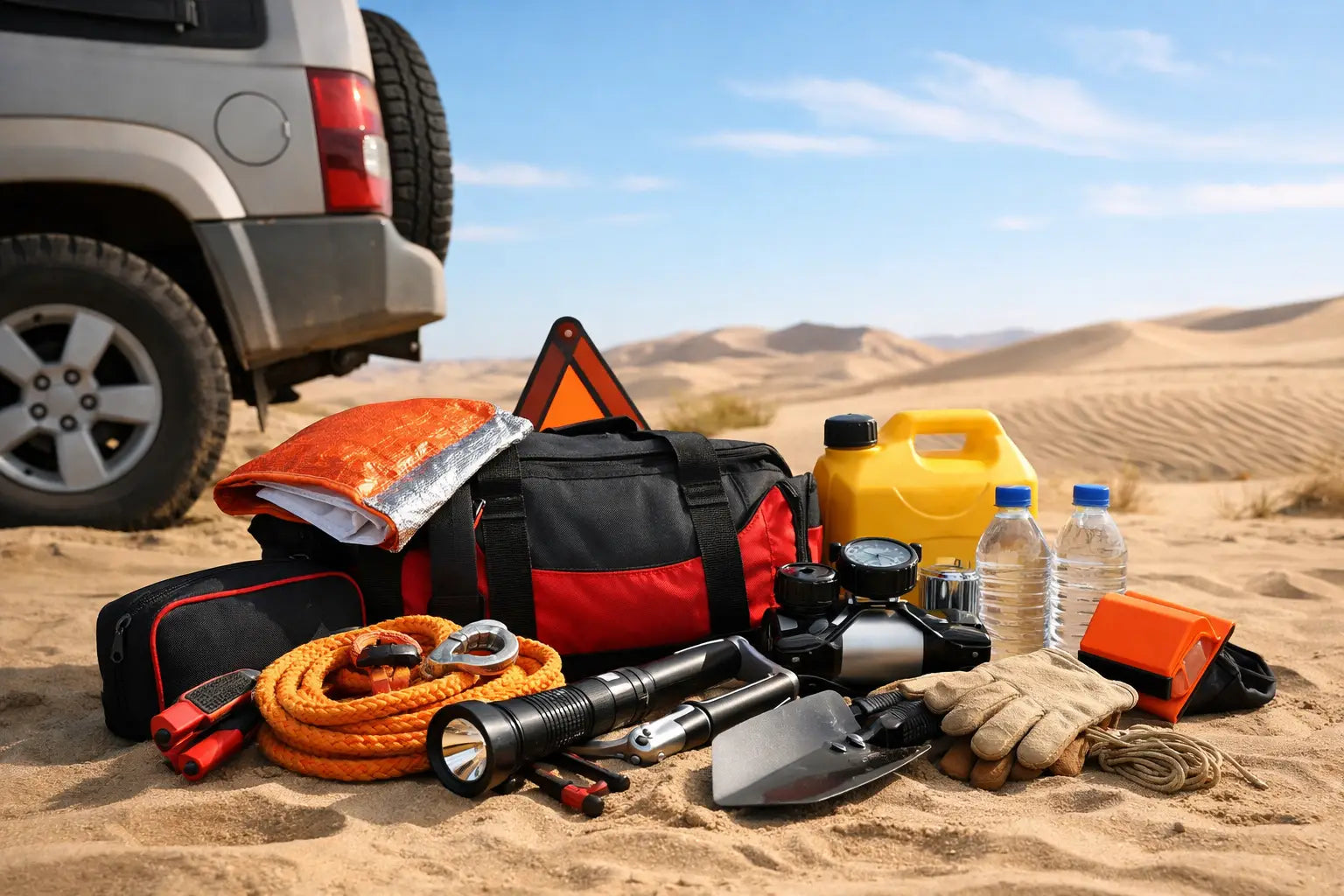
A breakdown in the desert gets serious fast. A flat tire on a back road outside cell range is one problem. Add triple-digit heat, no shade, soft sand, and a long wait for help, and that problem changes shape. A proper vehicle emergency kit for desert travel is not just a box of random supplies - it is a heat-specific setup built to keep you moving, visible, hydrated, and able to handle a bad stop in rough country.
A lot of drivers carry a generic roadside kit and call it good. That works better on a city freeway than on a two-track in Arizona, Nevada, New Mexico, or West Texas. Desert travel puts different demands on your gear. Plastics get brittle, batteries cook, adhesives fail, and small mistakes turn into long hours in direct sun. Your kit needs to match the environment, not a catalog photo.
What makes a vehicle emergency kit for desert use different
The main difference is time and exposure. In the desert, getting stranded is rarely just a mechanical issue. It becomes a heat management problem, a water problem, and sometimes a navigation problem if you leave the vehicle or lose power.
That changes what matters most. Water outranks convenience items. Shade matters more than comfort. Tire repair and air management matter more than cosmetic tools. Equipment also has to survive inside a hot vehicle. If a piece of gear cannot handle summer cabin temps, it does not belong in your permanent kit.
There is also a trade-off between packing light and packing enough. If you mostly drive maintained roads near town, your kit can stay compact. If you run forest roads, desert trails, or long highway stretches with spotty service, your margin for error gets thinner. In those conditions, your emergency kit should look a lot closer to a self-recovery and sustainment setup.
Start with the supplies that keep you alive
Water is the first priority, and there is no shortcut around that. For desert travel, keep enough water in the vehicle for drinking and basic cooling needs, not just a single bottle in a door pocket. Exact quantity depends on trip length, passenger count, and remoteness, but the baseline should feel excessive rather than optimistic. Heat, exertion, and delays can burn through a small stash fast.
Storage matters almost as much as volume. Cheap containers can leak, split, or deform in extreme heat. Use durable water storage designed for vehicle carry, and check it regularly. If you rotate food and batteries, rotate water too.
Shade is the next priority. A reflective tarp, compact vehicle awning, emergency bivvy, or even a durable sun shelter can make a major difference during a long stop. Sitting inside a dead vehicle with no AC can become dangerous. Being able to create shade outside the vehicle gives you a safer place to wait if conditions allow.
A first aid kit should be more than a few bandages. In desert conditions, it needs to cover cuts, burns, blisters, sprains, and basic wound care. Add electrolyte packets if you spend serious time off pavement. They are not a replacement for water, but they can help when heat and sweat are part of the problem.
Recovery gear matters more than people think
A vehicle that is mechanically fine can still be stuck for hours in sand, gravel, or washouts. That is why a desert-focused emergency kit should include recovery tools, not just survival supplies.
A good shovel earns its space quickly in soft terrain. So do traction boards if you drive in sand often. A recovery strap, rated shackles, and gloves are practical if you travel with another vehicle or have solid recovery points and know how to use them. If you drive solo, traction aids and a shovel become even more important.
Tire support is non-negotiable. That means a real spare in usable condition, not blind faith in a can of sealant. It also means a tire plug kit, a quality portable air compressor, a pressure gauge, and the tools needed to access and change the wheel on your specific vehicle. Test your jack at home. On uneven or soft desert ground, that cheap factory setup may not work the way you expect.
This is one place where cheap gear usually shows itself. Weak compressors overheat. Low-grade tire tools round off fasteners. Flimsy gloves tear at the wrong time. Desert use punishes gear, so it pays to carry tools meant for actual field use.
Power, signaling, and communications
Dead battery, no signal, and sunset coming on is a bad combination. Your emergency kit should account for power loss and limited communication.
Start with a jump starter rated for your engine size. Heat can shorten battery life, and a self-contained jump pack is easier than hoping another vehicle comes along. Keep charging cables that fit your devices, and consider a 12V charger or power bank that can handle real use instead of just topping off a phone once.
Lighting matters too. Pack a dependable flashlight or headlamp with fresh batteries, and avoid relying on a tiny glovebox light. Night repairs, signaling, and even checking under the vehicle are much easier with proper light. A second light source is smart backup.
For signaling, carry a high-visibility panel, reflective triangles, or emergency strobes if you travel highways or open desert roads. In daylight, visibility can be harder than people expect. A disabled vehicle can blend into dust, rock, and glare.
Communication depends on where you go. If your trips stay close to populated areas, a charged phone may be enough. If you run remote country, it may not be. A satellite communicator, GMRS radio, or other off-grid communication tool can be worth the space. It depends on your route, but in deep desert, redundancy is not overkill.
Heat-ready tools and vehicle essentials
The right tools are the ones that still work after riding in a hot truck all summer. Start with a basic hand-tool roll that fits your vehicle: pliers, screwdrivers, sockets, adjustable wrench, knife, tape, zip ties, and a few spare fuses. These are not glamorous items, but they solve a lot of small failures before they become trip-ending problems.
Fluids deserve attention. Extra engine oil, coolant if your vehicle uses it, and washer fluid can all help, but store them carefully and inspect them often. Not every driver needs a full fluid loadout for every trip, especially on short local runs. Still, for older vehicles or long remote routes, carrying the basics is a smart move.
A fire extinguisher belongs in the vehicle, period. Hot engines, dry brush, electrical faults, and fuel systems are not a combination to take lightly in the desert. Mount it securely where you can reach it quickly.
Dust is another factor people underestimate. A few shop towels, a bandanna or dust mask, and protective eyewear can help when wind kicks up or repairs get gritty. They do not take much room, and they are useful more often than expected.
How to pack a vehicle emergency kit for desert conditions
A good kit is organized by use, not by whatever happened to fit in a tote. If you need medical supplies, you should not have to dig through straps and hand tools to find them. If you need tire gear, it should be in one place and easy to reach on the side of the road.
Use durable storage that can handle dust, vibration, and heat. Hard cases work well for delicate items. Soft pouches work for grouped tools and first aid. Clear labeling helps, especially if someone else may need to find gear in a hurry.
Placement matters. Keep the most urgent items accessible without unloading the whole vehicle. Water, first aid, lighting, and communications should be easy to reach. Recovery gear can ride deeper, but not buried under camping bins if you are likely to get stuck before camp.
Check your kit on a schedule. Heat and time wear things out even when you do not use them. Batteries lose charge. Water supplies get forgotten. Rubber and plastic parts degrade. A desert emergency kit is not a one-time purchase. It is a system you maintain.
What people often leave out
The small items are usually the ones missed. Work gloves, a hat, sunscreen, and a compact blanket or bivvy do not look like vehicle gear until you are stuck in open sun. The same goes for a paper map of your area. Electronics are useful until they are not.
Food is worth carrying if your routes are remote, but keep it realistic. Shelf-stable snacks with heat tolerance are better than items that melt or spoil. This is not about packing a pantry. It is about buying time if a delay turns into an all-day problem.
Footwear is another blind spot. If you drive in lightweight shoes or sandals, stash a pair of sturdy boots in the vehicle. Walking even a short distance over hot rock, thorny ground, or broken terrain is a different job than stepping out at a gas station.
Arizona Desert Gear customers already know the pattern: gear that works in mild climates often falls short in the Southwest. A desert kit should be built with that reality in mind from the start.
The best emergency kit is the one you can trust when the road stops cooperating. Build it for heat, keep it organized, and check it before the desert checks it for you.

