

Cart
0
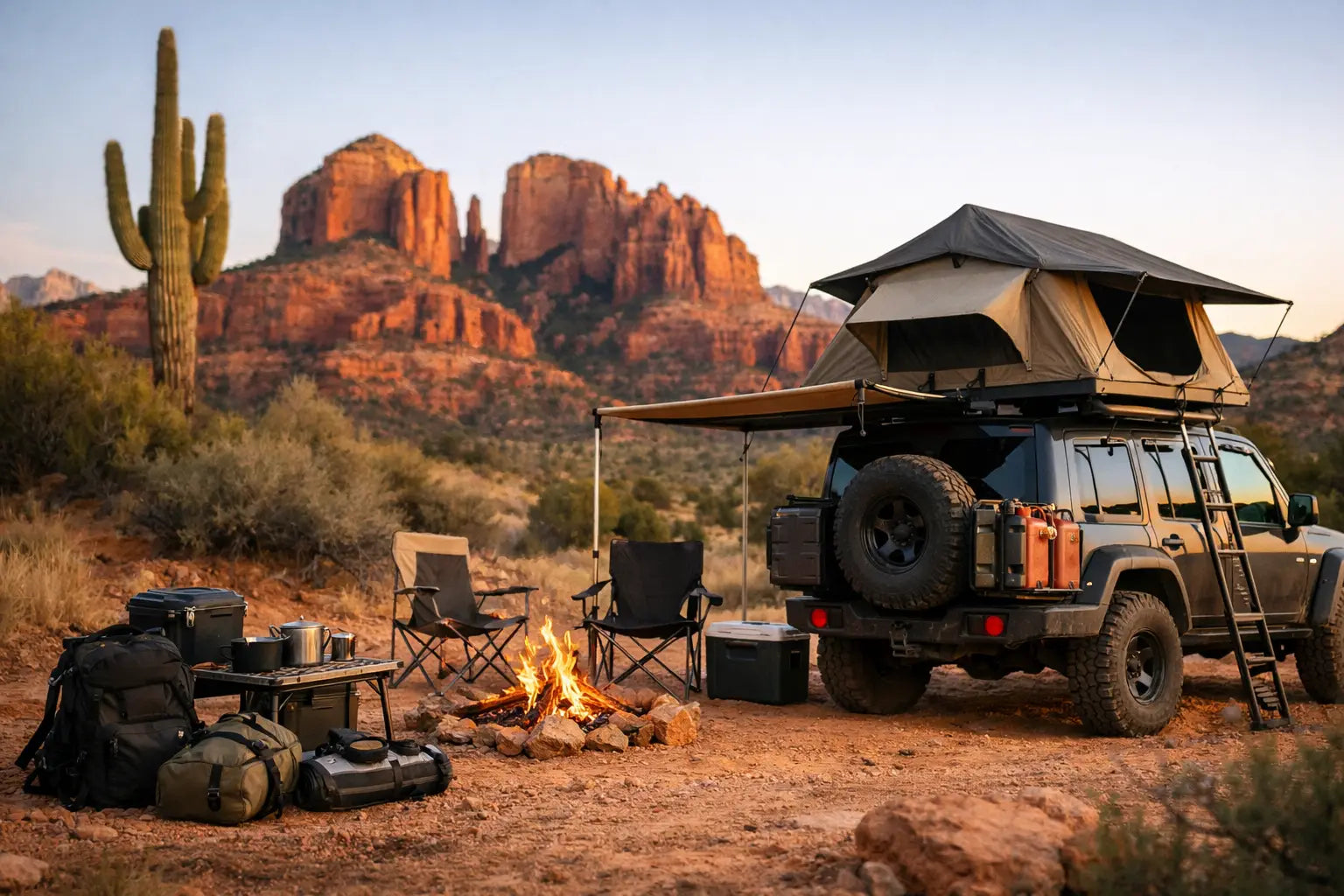
Flat tires at noon, no shade for miles, and a cooler that stopped being useful two hours ago - that is when an arizona overland essentials guide stops being a nice idea and starts being a real checklist. Arizona does not forgive weak gear, poor planning, or casual packing. If your setup cannot handle heat, dust, sharp rock, and long stretches without services, it is not ready.
This is not about loading your rig with every accessory on the market. Good desert travel comes down to a smaller number of gear decisions that actually hold up in Southwestern conditions. The right essentials help you stay mobile, hydrated, organized, and able to handle the most common problems without turning a simple trail day into a recovery job.
What this Arizona overland essentials guide gets right
A lot of general overland advice is built around forests, mild weather, and easy access to water. Arizona is different. Heat changes how you store food, how you manage water, how electronics perform, and how long you can safely stay outside working on a vehicle.
That means your gear should be selected for the environment first. Sun exposure matters. Dust sealing matters. Material quality matters. A cheap zipper, weak plastic latch, or bargain recovery strap might survive a weekend somewhere else. In Arizona, those weak points show up fast.
The trade-off is simple. Desert-ready gear often costs more and weighs more, but it usually lasts longer and fails less often when you actually need it. That is a good trade in remote country.
Water and heat management come first
If you are building your kit in the wrong order, fix that first. Water is not one item on a packing list. In Arizona overlanding, it is the system that keeps everything else possible.
Carry more water than you think you need, and separate it by use. Drinking water should be easy to reach from the cab or a quick-stop camp position. Utility water for washing, cleanup, or emergency cooling should be stored separately so you do not burn through your safe supply early.
Rigid containers work well for durability, but they take up fixed space. Soft storage saves room when empty, but not every soft container handles abrasion or long-term heat exposure equally well. It depends on your rig, trip length, and how often you rotate supplies. For frequent Arizona use, durability usually wins.
Heat management also means shade, not just hydration. A compact tarp, awning, or fast-deploy shelter can make a major difference when you are changing a tire, cooking, or waiting out the hottest part of the day. Clothing matters too. Breathable long sleeves, sun gloves, a real hat, and eye protection do more for desert comfort than another gadget in the cargo area.
Tires, air, and recovery gear are not optional
Arizona terrain is hard on tires. Sharp rock, ledges, loose climbs, and washboard roads all punish weak sidewalls and poor pressure management. A full-size spare is the bare minimum. If your spare is worn out, undersized, or buried under packed cargo, it is not doing its job.
A capable air system belongs in any serious desert travel setup. Airing down improves traction and ride quality, especially on rough roads and sand, but you need a reliable compressor to air back up for pavement. Cheap compressors often fail from heat or slow down enough to become a liability. That may be acceptable for occasional use close to town. It is not a great bet for remote travel.
Recovery gear should match your vehicle weight and actual terrain. A recovery strap, kinetic rope, shackles, traction boards, gloves, and a shovel cover a lot of common problems. If you wheel alone or travel in less-trafficked areas, traction boards and a shovel move higher on the priority list. If you run with a group, shared tools can reduce redundancy, but every vehicle should still have basic self-recovery capability.
Do not overbuild for internet points. Winches, jack upgrades, and full recovery kits are useful, but only if you know how to use them and your mounting points are correct. Practical gear beats decorative gear every time.
Power, lighting, and communications
Desert travel exposes weaknesses in electrical systems quickly. Cheap battery packs overheat. Loose wiring fills with dust. Lights that looked fine in a garage test fail after repeated vibration and washboard miles.
Start with dependable basics. You need a way to charge navigation devices, phones, and radios without draining your starting battery. That might mean a dual-battery setup, a power station, or a simpler charging plan based on short trips. There is no single right answer. The right answer is the one that supports your trip length and power draw without adding failure points you do not need.
Lighting should cover two jobs: driving and camp use. Trail lighting needs to be durable and mounted properly. Camp lighting should be lower draw, easy to position, and not so bright that it ruins night vision or annoys everyone around you. Dusty camps and night repairs are where solid work lights earn their place.
Communications depend on where you go. In some Arizona routes, cell service drops early and does not come back. A radio setup can help vehicle-to-vehicle coordination, but for remote travel, emergency communication matters more than convenience. If you spend time far from main roads, build that into your planning instead of assuming your phone will carry you.
Storage matters more than most people think
A bad storage setup wastes time, creates noise, and turns simple stops into a full unload. In desert conditions, it also exposes gear to more dust and heat every time you go digging for one item.
Good overland storage is less about packing more and more about packing with purpose. Recovery gear should be fast to reach. First aid should never be buried. Water, shade gear, and tools for likely failures should be accessible without unpacking camp. Food storage should keep dust out and heat impact down as much as possible.
Hard cases, drawer systems, and sealed bins all have a place, but weight adds up fast. Heavy-duty organization helps on longer trips and repeated use. On lighter weekend runs, a simpler bin system may do the job without costing cargo capacity. The key is consistency. If everybody in the vehicle knows where the med kit, tire tools, and headlamps are, you move faster when it matters.
Camp gear should earn its space
Arizona overland camping is not about bringing your whole garage into the backcountry. Every item should justify its footprint.
Sleep systems need to match season and elevation. Desert nights can swing hard, especially outside the hotter months. A setup that feels fine in Phoenix may not cut it at higher elevation. The same goes for shelter. Ground tents work well for many travelers, but dust, rock, and setup time are real considerations. Rooftop tents offer speed and elevation off rough ground, but they add weight and change vehicle handling. There is no universal winner.
Cooking gear should be simple, stable, and easy to clean. Wind, dust, and limited water all change how camp kitchens perform. Two-burner systems, compact tables, and durable cookware usually beat complicated kitchen builds for most users. Keep your meal plan realistic. If cleanup is a hassle, your setup is too complex.
Cooling is another place where Arizona changes the math. Soft coolers can work for day trips, but for multi-day travel in high heat, insulation quality and ice retention matter a lot more. If you run refrigeration, make sure your power setup actually supports it in summer conditions.
Navigation, tools, and field repair basics
Routes change. Washes shift. Roads that looked fine on a map can become slow, rough, or blocked. Navigation gear should not rely on one screen or one app.
Carry a reliable primary navigation method and a backup. Downloaded maps help, but so does knowing your route before you leave pavement. In Arizona, a wrong turn can mean hours of extra fuel use and daylight loss.
Your tool kit should be based on your vehicle, not a generic list. At minimum, carry the tools needed for tire changes, battery issues, loose hardware, hose clamps, and basic fastener work. Add fluids, fuses, tape, zip ties, spare valve stems, and a tire repair kit. These are not glamorous items, but they solve real problems.
If your rig has known weak points, pack for them. Older trucks, heavily modified vehicles, and budget builds usually need a more specific repair plan. That is not a knock on any platform. It is just honest preparation.
The gear you wear counts too
People spend thousands on vehicle upgrades and then head out in cheap footwear and a cotton shirt. That makes no sense in Arizona.
Boots or trail shoes should handle rock, heat, and uneven ground. Gloves should protect your hands from hot metal, cactus, and recovery work. Clothing should reduce sun exposure without trapping too much heat. A small personal kit with sunscreen, lip balm, eye protection, and a head covering does not take much room, but it pays off fast.
This is where a specialist retailer like Arizona Desert Gear makes sense. Desert use is specific, and gear that works well in wet, mild climates does not always translate.
Build around your real trip, not someone else's rig
The best setup is the one that covers your terrain, your vehicle, your travel style, and your risk tolerance. A day trip near a populated route needs less than a three-day run into remote country. Summer demands a different standard than winter. Solo travel changes your margin for error.
Start with water, tire support, recovery basics, power, storage, navigation, and shelter from the sun. Then refine from experience. The desert will show you what matters soon enough.
If your setup keeps you moving, keeps your gear protected, and lets you handle trouble without panic, you are on the right track. That is what counts when the pavement ends and the heat starts working against you.

