

Cart
0
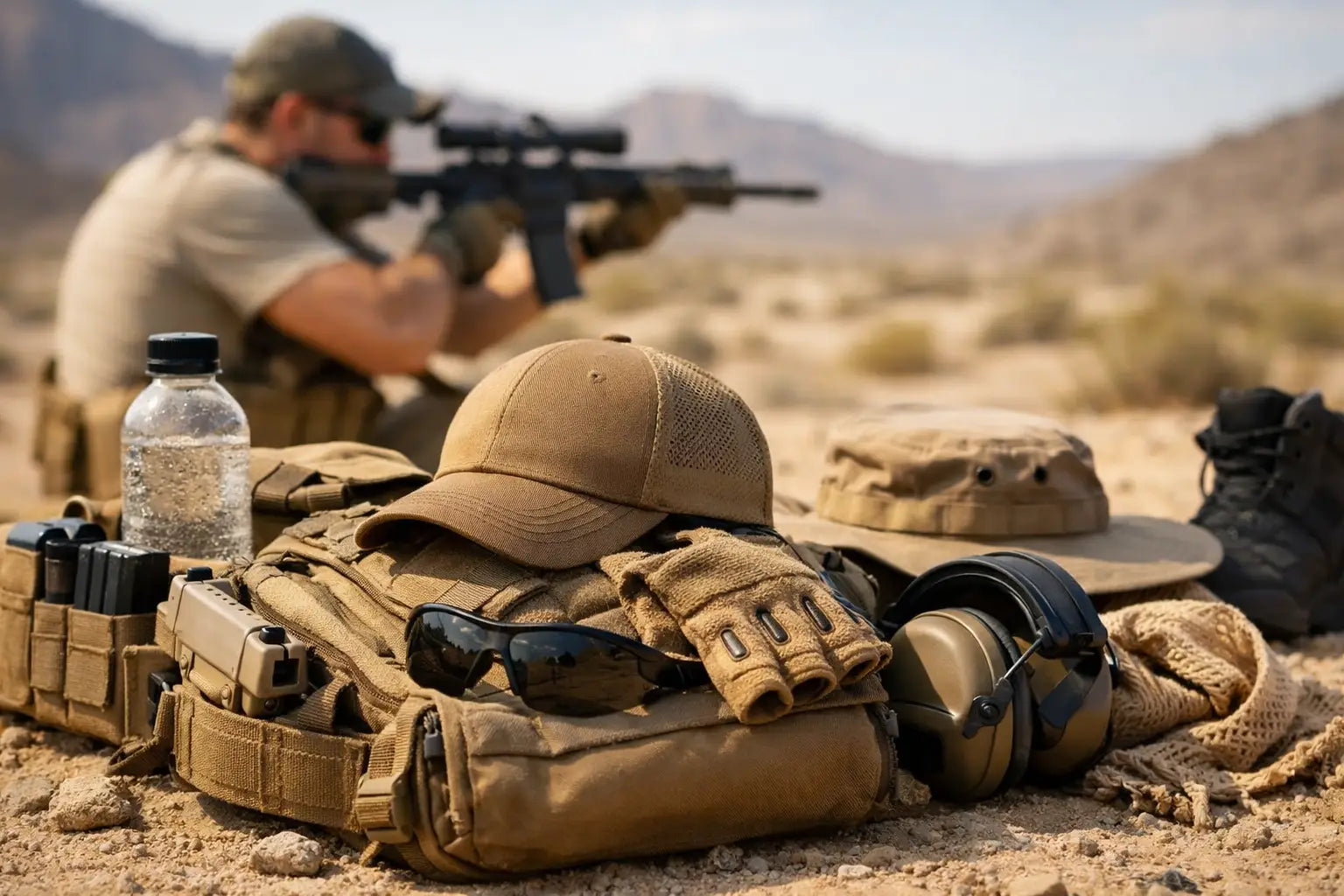
A desert range day can turn from productive to miserable before the first magazine is empty. This hot weather range gear guide focuses on the equipment that earns its place when sun, dust, hot ground, and triple-digit temperatures are part of the plan. The goal is not to carry more gear. It is to carry gear that keeps you protected, hydrated, organized, and able to make sound decisions when the heat is working against you.
Start With Heat-Ready Range Clothing
What you wear matters more than most shooters expect. Cotton may feel comfortable in the driveway, but once it is soaked with sweat, it stays wet, gets heavy, and can chafe under a belt, chest rig, or pack straps. Lightweight synthetic or merino-blend shirts move moisture better and dry faster. For exposed desert conditions, a long-sleeve sun shirt is often the smarter choice than a short-sleeve tee. It protects your arms from direct sun without requiring constant sunscreen reapplication.
Look for loose but controlled fit. Excess fabric can snag on holsters, pouches, and rifle slings, while overly tight clothing traps heat and restricts movement. Earth tones and lighter colors tend to absorb less heat than black, though the best color is still the one that lets you spot dust, loose gear, and small dropped parts easily.
For pants, choose durable stretch fabric that breathes and will not turn into a furnace after an hour on hot gravel. You need enough reinforcement for kneeling, moving around barricades, and sitting on rough terrain, but heavy canvas work pants may be too much in peak summer. A wide, stable belt is equally important. A loaded belt that rolls, sags, or digs into your hips becomes a problem fast when sweat is involved.
Footwear should have a firm sole, ankle support appropriate for the terrain, and enough room for feet that swell in heat. Avoid open footwear at the range. Hot brass, sharp rocks, cactus spines, and uneven ground are not forgiving.
Eye and Ear Protection Need a Desert Upgrade
Eye protection is non-negotiable, but clear lenses are not always the best all-day answer under Arizona sun. Ballistic-rated eyewear with interchangeable lenses gives you more flexibility. A darker lens can reduce fatigue in harsh midday light, while a clear or light-contrast lens is useful when conditions shift or you are shooting in shade. Whatever lens you use, it needs to meet recognized impact standards and fit close enough to block windblown dust.
Fogging is common when you are sweating under a hat, ear pro, and glasses. Choose frames with ventilation and a shape that works with your hearing protection. A pair that seals tightly but fogs every ten minutes is not useful. Keep a clean microfiber cloth in a zip pouch. Wiping lenses with a dirty shirt or dusty glove just grinds grit into the coating.
Electronic hearing protection is a strong choice for outdoor range use because it lets you hear range commands and conversation while cutting harmful impulse noise. In hot weather, low-profile muffs are usually more comfortable with hats and eyewear. If you are running a long session, bring spare batteries or use a model with a dependable rechargeable power source. Foam plugs can serve as a backup, especially if you are near muzzle brakes or under a covered firing line that reflects sound.
Hydration Is Range Gear, Not an Afterthought
A single water bottle is not a hot-weather plan. Desert heat can drain you well before you feel thirsty, and reduced focus is a real safety issue around firearms. Bring more water than you think you will need, and keep part of it cool if possible. An insulated bottle works well at the firing line, while a larger cooler or water container supports the rest of the day.
Electrolytes have a place when you are sweating heavily for hours, but they do not replace water. Avoid treating energy drinks as hydration. Too much caffeine can leave you more jittery, less comfortable in the heat, and more likely to ignore early signs that your body needs a break.
Know the warning signs: headache, dizziness, nausea, unusual fatigue, cramping, confusion, and a drop in coordination. If you or someone in your group starts showing them, stop shooting, get into shade, cool down, and address the issue. Pushing through heat stress is not toughness. It is a bad call that can become an emergency quickly.
Build a practical heat kit
Keep the heat-management items together so they do not get forgotten in the garage. A useful range heat kit includes:
- Cold water and a separate reserve supply
- Electrolyte packets or tablets
- A wide-brim hat or brim extender
- Sunscreen and SPF lip balm
- A cooling towel or damp neck gaiter in a sealed bag
- A compact first-aid kit with blister care
Shade Changes the Entire Range Day
Direct sun turns a normal shooting setup into a heat multiplier. A portable canopy, tarp system, or vehicle-mounted awning gives your group a place to reset between drills and keeps water, medical supplies, and electronics out of punishing heat. It is not a luxury item when the forecast is 105 degrees.
There are trade-offs. A large canopy provides better coverage but can become a hazard in high wind if it is not secured correctly. Use proper stakes, weighted anchors, and tie-downs suited to the surface. Never place shade equipment where it blocks a safe firing line, range officer visibility, or emergency access. If wind conditions are poor, a smaller, lower-profile shelter may be the smarter choice.
Keep ammunition, optics, batteries, and medical supplies out of direct sunlight. A vehicle trunk can become extremely hot, so do not assume it is safe storage just because gear is out of sight. Use an insulated tote or covered container, and do not leave a loaded firearm unattended in a vehicle or at the range.
Organize Gear for Dust, Heat, and Hot Brass
Desert dust finds its way into everything. Open-top bags and loosely packed equipment may be convenient at home, but they create frustration in the field. Use a range bag with durable zippers, separate compartments, and a base that can handle dirt and gravel. Small zip pouches make it easier to isolate batteries, spare eye protection, tools, lubricant, medical supplies, and paperwork.
A shooting mat or folding ground cover is useful even if you do not plan to shoot prone. It gives you a cleaner place to stage gear, kneel, sit, or work on equipment. Choose one that is easy to shake out and does not retain moisture or fine dust. Dark mats get hot quickly, so keep them in shade until needed.
Bring gloves if your session includes steel targets, barricades, vehicle work, or hot equipment. Lightweight gloves protect against rough surfaces and hot metal, but they should still allow you to safely manipulate your firearm and controls. Test them before a range day, not during it.
For firearms and optics, keep maintenance simple. Dust can affect moving parts and lenses, while excessive lubricant can attract grit. Carry the specific tools and supplies your equipment actually requires, plus a bore or chamber flag if your range requires one. A basic rag, lens brush, and small bottle of appropriate lubricant solve more problems than an oversized tool kit that stays buried in the truck.
Plan the Session Around the Temperature
The smartest piece of hot weather range gear is a realistic schedule. Shoot early, take deliberate breaks, and avoid turning a summer afternoon into an endurance test. If your training requires movement or gear work, shorten the blocks and build recovery time into the plan. Quality repetitions matter more than forcing another hour after focus has slipped.
Before leaving, check the range rules, fire restrictions, weather forecast, and wind conditions. In the Southwest, high fire danger may affect what is allowed, especially around steel targets or areas with dry vegetation. Bring a fire extinguisher when appropriate for your location and vehicle, and keep your vehicle positioned for a safe, efficient exit if conditions change.
Arizona Desert Gear is built around this reality: dependable equipment is equipment that still works after it has sat in dust, taken full sun, and been used by someone who is already tired. Choose gear for the conditions you actually face, not the conditions shown in product photos.
A good range day ends with everyone hydrated, alert, and ready to come back. Pack for the heat first, then build the rest of your setup around safe, focused time behind the line.

