

Cart
0
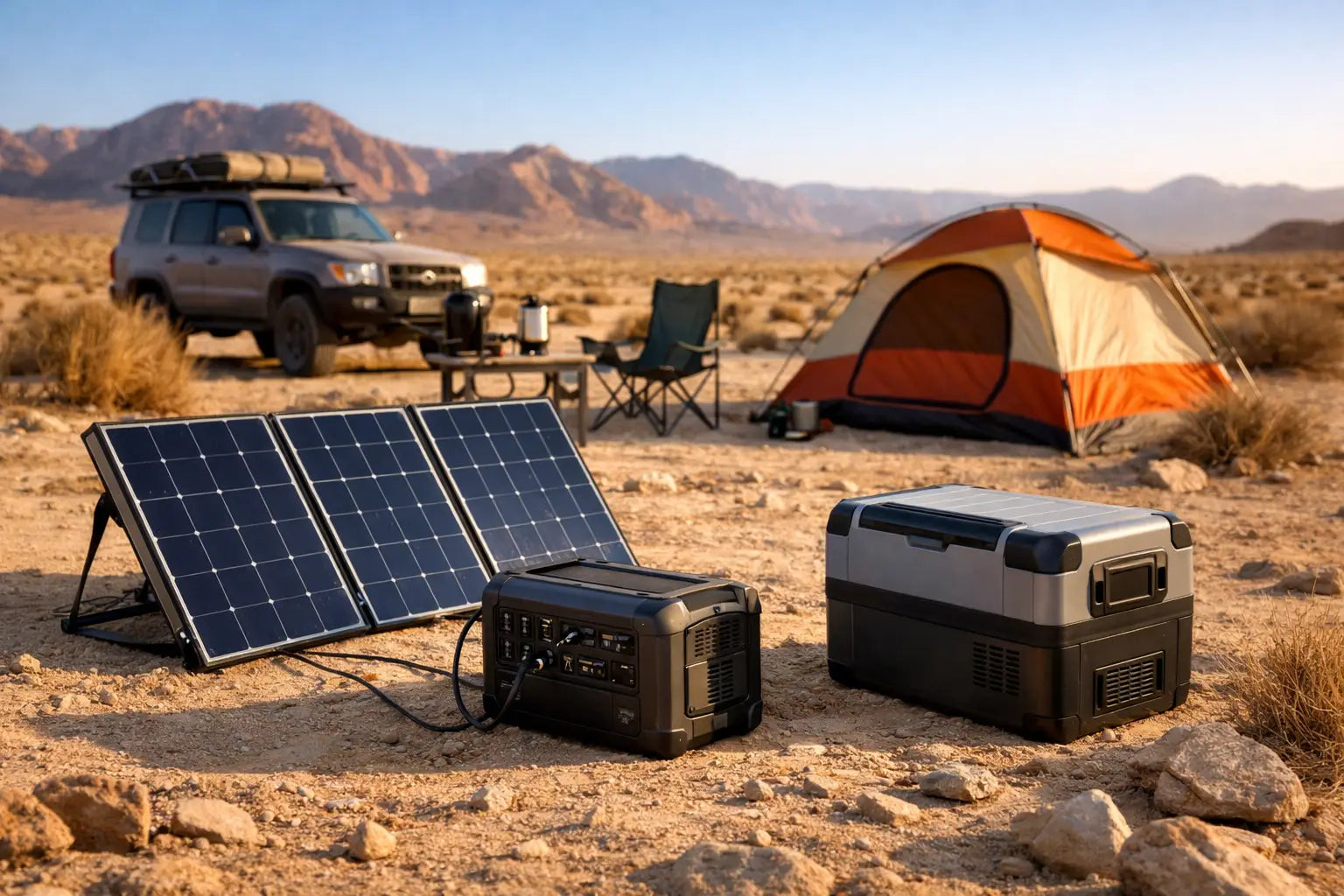
A dead battery at a remote camp is more than an inconvenience. It can mean no lights, no navigation backup, no air compressor, and no way to keep a fridge running through a hot Arizona night. A solar camp power setup gives you a reliable source of off-grid power, but only when it is sized for what you actually use and built for sun, dust, heat, and rough travel.
For a basic weekend camp, a compact power station and folding panel may be enough. For overlanding, hunting camps, or multi-day desert travel, you need a system that accounts for real electrical loads, battery capacity, panel output, wiring protection, and where the gear will ride when the trail gets rough.
Start With Your Real Power Load
Do not start by buying the biggest solar panel you can fit on the roof. Start with the equipment you need to run. Every powered item draws watts, and watts used over time become watt-hours. That number tells you how much battery capacity your camp needs.
A 10-watt LED camp light running for five hours uses about 50 watt-hours. A 45-watt portable fridge running intermittently can use 400 to 700 watt-hours in a day, depending on ambient temperature, insulation, how often it is opened, and how cold it is set. Phones, GPS units, headlamps, camera batteries, radios, fans, and laptops add up quickly.
Write down each device, its watt draw, and the hours you expect to use it per day. Add the totals, then build in a 20 to 30 percent margin. Desert trips rarely go exactly to plan. A cloudy day, a shaded campsite, higher fridge demand, or an extra night on the trail can erase a tight power budget.
If your daily use is around 500 watt-hours, plan for at least 650 watt-hours of usable battery capacity. If a fridge is your primary load and you camp for several days, more reserve is usually worth the extra weight.
Choose the Right Battery for Camp Use
Lithium iron phosphate, usually labeled LiFePO4, is the practical choice for most modern camp systems. It provides a high percentage of usable capacity, weighs less than lead-acid options, charges efficiently, and handles frequent cycling well. It is especially useful when gear must be loaded in and out of a vehicle.
A 12-volt 100Ah LiFePO4 battery provides roughly 1,200 watt-hours of stored energy. In real use, expect somewhat less after conversion losses and battery protection limits. That is enough for lights, devices, and a modest fridge load, but it may not cover a power-hungry cooler, CPAP machine, inverter use, or several days without good sun.
Portable power stations package the battery, inverter, charge controller, outlets, and display into one box. They are fast to deploy and a strong option for truck-bed camps, tent sites, and occasional use. A fixed auxiliary battery system is better for vehicles that spend a lot of time off-grid, especially when paired with vehicle charging and a dedicated fridge circuit.
Heat matters. Do not leave a battery box or power station baking on the dash, roof rack, or exposed ground. High temperatures reduce battery performance and shorten service life over time. Place the unit in shade with airflow, keep vents clear, and avoid sealing it inside a hot cargo compartment while charging.
Size Solar Panels for Desert Reality
Desert sun is strong, but panel ratings are best-case numbers measured in controlled conditions. A 100-watt panel does not produce 100 watts all day. Heat, dust, cable loss, poor angle, partial shade, and the charge stage of the battery all reduce output.
As a practical planning rule, a quality 100-watt portable panel may produce around 300 to 450 watt-hours over a good sunny day when positioned well. A 200-watt setup may produce roughly double that, but only if it gets clear sun for most of the day and is kept reasonably clean.
For light charging and weekend use, 100 watts can work. For a fridge-based camp, 200 watts is a more dependable starting point. If you run a larger fridge, medical equipment, camera gear, or a laptop for work, 300 watts or more gives you breathing room.
Portable folding panels are often the better choice for desert camping because you can park the vehicle in shade while placing the panel in direct sun. Roof-mounted panels are always ready, but a roof rack, rooftop tent, awning, or even a nearby tree can cast enough shade to cut production sharply. The best choice depends on your camp style. Fixed panels favor convenience. Portable panels favor output and campsite flexibility.
Keep Panels Clean and Properly Positioned
Dust is part of camping in the Southwest. A thin layer of fine dust can noticeably reduce solar production, especially when it combines with morning dew or light rain. Wipe panels with a soft cloth and clean water when needed. Avoid abrasive brushes that can scratch the surface.
Aim portable panels toward the sun and adjust them once or twice through the day if practical. A panel lying flat on the ground will still charge, but an angled panel generally performs better. Secure it against wind with stakes, sandbags, or tiedown points. A loose panel can become damaged gear fast when afternoon gusts hit camp.
Build a Solar Camp Power Setup Around Safe Connections
Solar panels, batteries, and inverters can move serious current. A clean, protected electrical layout is not optional. Use properly sized cables, quality connectors, and fuses placed close to the battery's positive terminal. A fuse protects the wire if a short develops. Without it, a damaged cable can overheat or start a fire.
Most portable systems use a built-in charge controller. If you are building around a standalone battery, use an MPPT charge controller matched to your panel voltage and current. MPPT controllers generally harvest more usable power than basic PWM controllers, particularly when panel conditions are less than ideal.
Keep cable runs as short as practical. Long, undersized cables create voltage drop, which wastes solar output and can cause charging problems. Use weather-resistant connectors, protect cables where they pass through metal or sharp edges, and keep plugs out of standing water or loose dirt.
An inverter is only necessary for AC-powered devices. It is not the first thing to add to a camp system. Charging phones, radios, lights, and many laptops directly from 12-volt or USB outlets avoids inverter losses. If you need AC power, choose a pure sine wave inverter and size it for the device's actual draw, not just the biggest number on the box.
Manage the Loads That Drain Power Fast
The fastest way to make a solar setup work is often reducing power use. A well-insulated 12-volt fridge kept out of direct sun consumes far less energy than one sitting in a hot truck bed. Use a fridge cover if it still allows ventilation, pre-chill food before leaving home, and avoid opening it repeatedly.
Run lights that use low-draw LEDs. Charge devices during peak daylight when solar production is strongest. If you use a portable battery, check its display in the morning and again before bed rather than guessing at remaining capacity.
High-draw equipment needs special attention. Electric coffee makers, hair dryers, microwaves, space heaters, and large power tools can flatten a portable battery in a hurry. In the desert, skip the electric heat entirely. For cooking, a stove is usually a better camp tool than an inverter and a countertop appliance.
Pack for the Trail, Not Just the Campsite
A solar system that works in the driveway can fail after one washboard road if it is not secured. Store panels in padded cases, keep connectors capped when not in use, and route cables so they cannot be pinched by tailgates, drawers, or cooler slides.
Carry a few field spares: an inline fuse, spare fuses, a short adapter cable, electrical tape, zip ties, and a basic multimeter. These take little room and can solve the kind of small electrical problem that would otherwise leave your camp without power.
Before every trip, test the whole system at home. Charge the battery, connect the panels, run the fridge, and confirm every outlet works. You want to find a bad cable or weak battery before you are fifty miles down a rough two-track.
A dependable solar camp power setup is not about carrying the most gear. It is about matching your battery and panel capacity to the way you camp, then protecting that equipment from the heat, dust, and hard miles that come with desert travel. Build in reserve, keep your connections clean, and let the sun handle the work while you handle the trail.

