

Cart
0
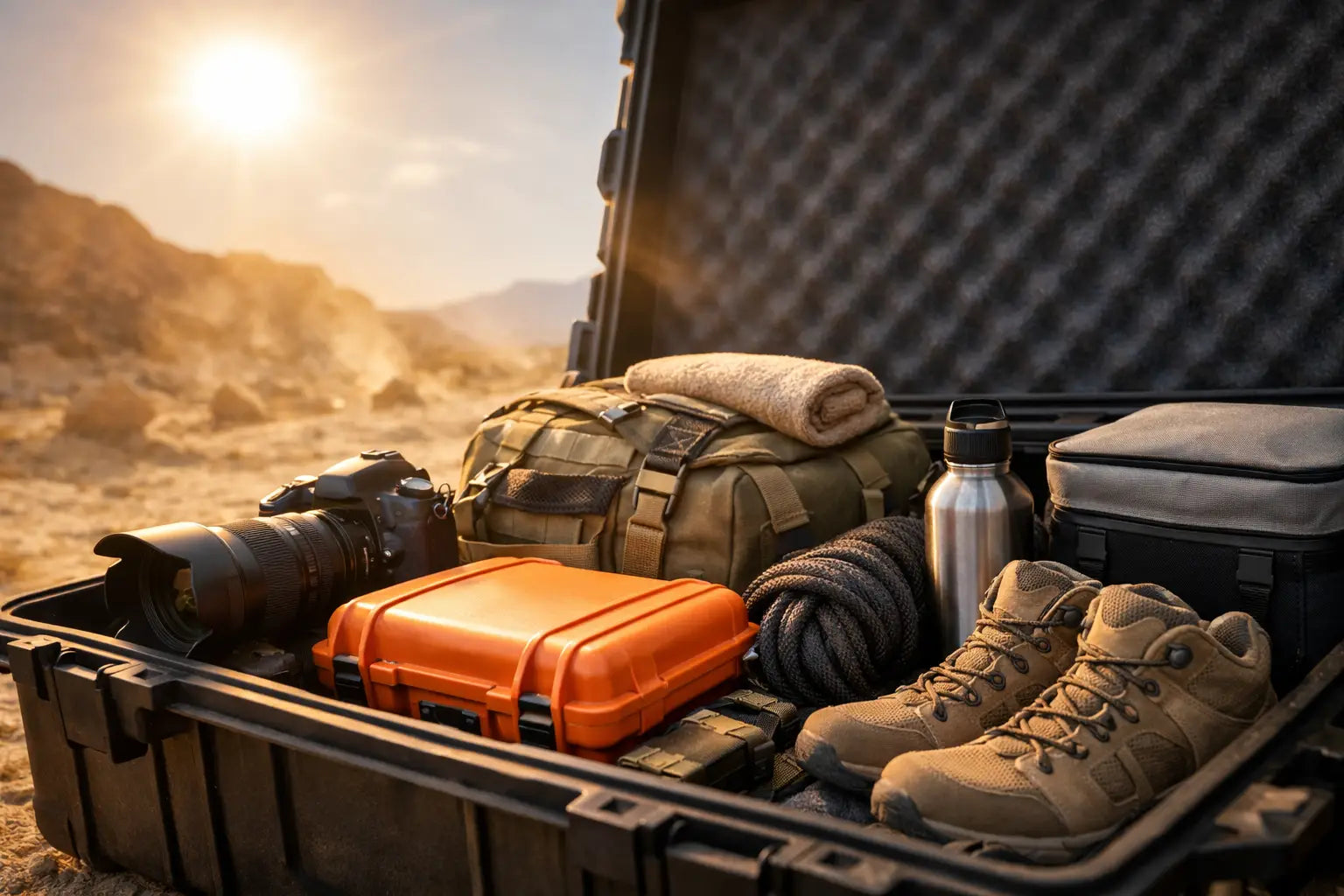
A closed truck in an Arizona parking lot can turn into an oven fast. The problem is not just discomfort. When you are figuring out how to store gear in extreme heat, you are protecting the parts that fail first: batteries, adhesives, optics, coatings, medical supplies, food, and anything pressurized. A good storage plan keeps essential equipment ready without turning your vehicle, garage, or camp trailer into a gear graveyard.
How to Store Gear in Extreme Heat: Start With the Loadout
Not every piece of gear needs the same level of protection. Start by separating equipment into three groups: items that must stay with you, items that can live in a vehicle for short periods, and durable tools that can handle a hotter storage space. This simple step prevents the common mistake of treating a recovery strap, a lithium battery pack, and a first-aid kit as if they have the same heat tolerance.
High-priority gear should come indoors whenever possible. That includes battery-powered devices, radios, headlamps, GPS units, camera gear, medical supplies, sunscreen, food, water treatment tablets, adhesives, and prescription medications. Many of these items can degrade long before they look damaged from the outside.
Vehicle-ready gear can stay packed, but it needs insulation and shade. Think recovery equipment, work gloves, basic tools, tire repair gear, a compact air compressor, tow points, camp chairs, and durable soft goods. Keep these items organized in covered bins or bags so they are protected from direct sunlight, dust, and constant shifting on rough roads.
The toughest category includes metal tools, traction boards, shovels, jack bases, and other equipment built for exposure. Even these items benefit from being secured and covered. Sun-baked plastic handles become brittle, webbing fades, and fine desert dust works into moving parts.
Do not use the vehicle as long-term storage
A truck, SUV, Jeep, or side-by-side is a useful staging area, not a climate-controlled gear room. Interior temperatures can climb far above the outside air temperature, especially with dark upholstery and glass exposure. A shaded driveway helps, but it does not make a parked vehicle safe for sensitive items.
If you keep a trail kit in the vehicle, make it modular. Use a grab-and-go pouch or crate for heat-sensitive equipment, then carry it inside after a trip or whenever the vehicle will sit in full sun for days. This takes a little more discipline, but replacing cooked batteries, dried-out medical supplies, and damaged electronics costs more.
Protect Gear From Heat, Sun, and Dust
Heat damage often comes from a combination of high temperature, ultraviolet exposure, and trapped moisture. The right container and storage location address all three.
Store sensitive equipment inside the home whenever you can. A closet, interior cabinet, or conditioned storage room is better than a garage shelf. In the Southwest, garages routinely stay hot well into the night, so they are fine for hard tools and field bins but not ideal for electronics or medical gear.
For equipment that must stay in a garage, shed, trailer, or vehicle, use insulated soft cases or light-colored hard cases. Dark cases absorb more heat when exposed to sun. Keep cases off concrete floors and away from exterior walls, where stored heat transfers into the container. A shelf near the center of the building is usually the better choice.
Avoid sealing damp gear in airtight containers. After a monsoon storm, river crossing, or sweaty summer hike, let clothing, boots, hydration bladders, and nylon equipment dry completely before packing it away. Heat accelerates mildew and odor when moisture is trapped inside. Open bins for drying, then move gear into closed containers once it is clean and dry.
Dust is another constant in desert country. It scratches lenses, clogs zippers, works into electronics, and turns lubricants into gritty paste. Use fitted cases for optics and electronics, and keep small items in zippered pouches inside larger bins. A simple dust cover over stored gear does more good than leaving it exposed on a rack.
Batteries, Electronics, and Optics Need Their Own Plan
Lithium batteries and extreme heat are a bad combination. Do not leave spare power banks, handheld radios, camera batteries, headlamps, battery tools, or rechargeable lights baking in a vehicle. High temperatures shorten battery life and can create a safety concern if cells are damaged, swollen, or poorly made.
Store batteries in a cool, dry place in their original protective caps or a dedicated battery case. Keep loose cells from contacting metal objects, and check them before a trip. If a battery is swollen, cracked, leaking, or unusually hot, take it out of service.
Electronics need protection even when their batteries are removable. Screens, seals, charging ports, and internal adhesives all take a beating from repeated heat cycles. Keep GPS units, satellite communicators, radios, night-vision equipment, cameras, and tablets indoors between trips. When they ride in a vehicle during a trail day, put them in a padded case out of direct sun.
Optics deserve the same treatment. Binoculars, rangefinders, scopes, red dots, and sunglasses can suffer from warped components, weakened adhesives, and damaged lens coatings. Never leave optics on a dash, roof, tailgate, or exposed camp table. Use lens caps, a padded case, and a shaded storage spot. After a dusty outing, blow loose debris away before wiping lenses so you do not grind sand into the coating.
Keep Medical and Safety Gear Within Date and Temperature Limits
A first-aid kit is only useful if its contents are still dependable. Adhesive bandages can lose grip, ointments can separate, and medications can lose effectiveness after repeated exposure to excessive heat. Check manufacturer guidance for any medication, epinephrine device, electrolyte product, or water-treatment chemical you carry.
For everyday vehicle use, keep a basic trauma and first-aid kit packed in a removable pouch. Bring it inside when the vehicle will be parked for long periods. Replace items that have changed color, separated, dried out, leaked, or passed their expiration date.
The same rule applies to food and hydration gear. Heat can ruin snack bars, melt gels, degrade drink mixes, and affect water containers over time. Rotate consumables often, especially in a vehicle kit. Store water in containers designed for heat and outdoor use, but do not assume any container will keep water cool in a locked truck all day.
Pressurized items need extra care. Fuel canisters, aerosol sprays, butane, and certain cleaning products should never be stored in a hot vehicle or direct sun. Follow the product label and keep them in a ventilated, shaded location away from ignition sources.
Build a Desert-Ready Storage System
The most reliable setup is simple enough to maintain. Use one clearly marked indoor tote for heat-sensitive gear, one vehicle crate for durable trail essentials, and one drying area for gear that comes home dirty or wet. Label containers by purpose, not by brand or vague categories. Labels such as "medical," "power and comms," "recovery," and "camp kitchen" make it easier to spot what needs to come inside.
Choose durable cases with secure latches, but do not mistake a hard case for a cooler. Insulated cases slow temperature changes. They do not make it safe to leave batteries or medications in triple-digit heat for days. If you need gear accessible during a work shift, range day, or overland trip, park in shade when available and use a reflective windshield cover to reduce cabin temperatures.
Inspect stored gear at the start of each hot season and after long trips. Look for faded webbing, cracked plastics, sticky coatings, damaged seals, corroded contacts, weak elastic, and dry-rotted straps. Arizona Desert Gear customers know that failure usually shows up when the trail is rough, daylight is fading, and the nearest parts store is a long way back.
Extreme heat will always be part of operating in the desert. The goal is not to baby your equipment. It is to protect the gear that protects your day, keep sensitive items out of the oven, and make every piece of your loadout ready when you need it.

