

Cart
0
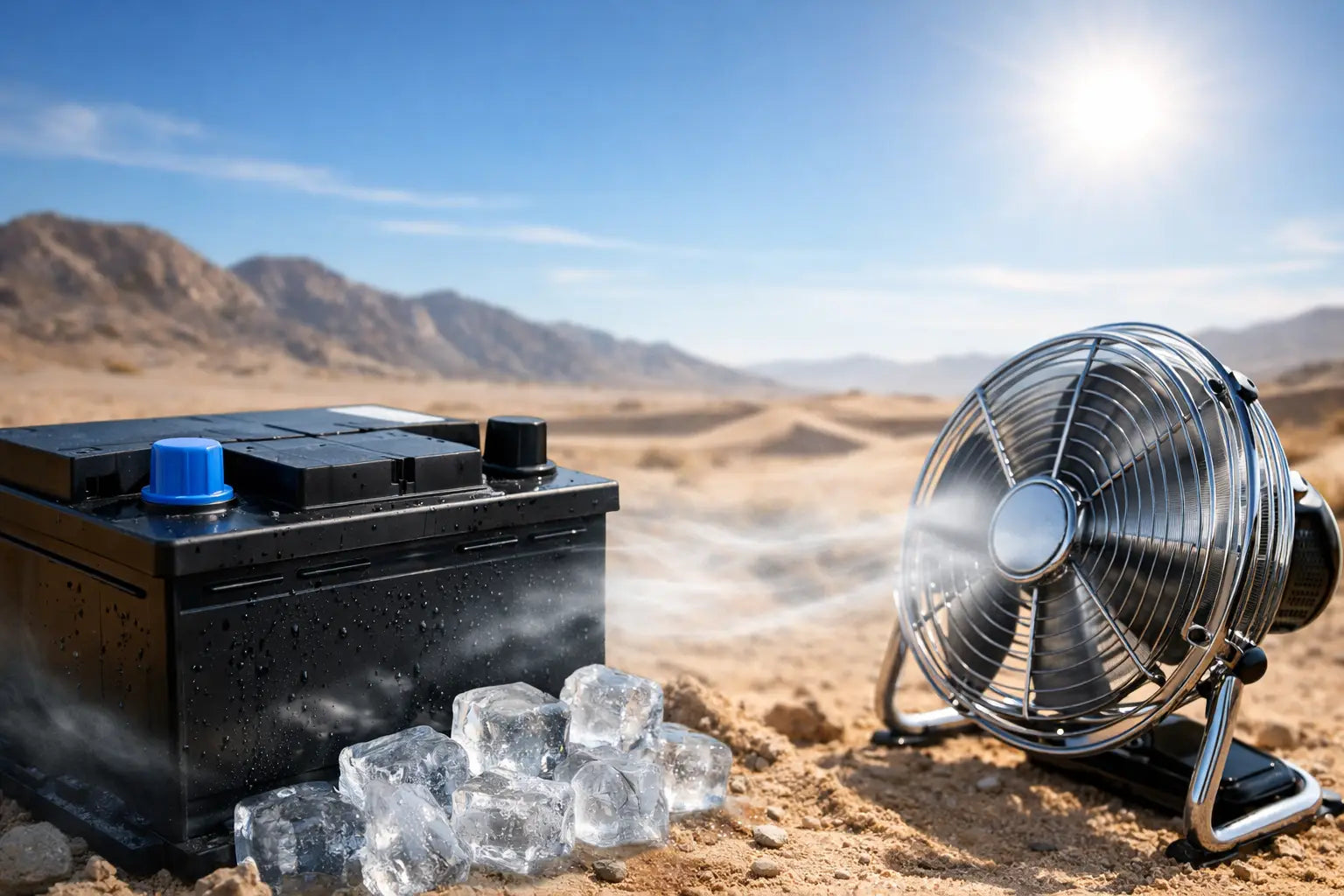
A battery left on an Arizona dashboard can go from working gear to a weak link before lunch. Knowing how to keep batteries cool is not just about extending runtime. It helps protect the lights, radios, navigation tools, power stations, and vehicle systems you count on when the trail gets remote and the temperature climbs.
Desert heat puts every battery under pressure. Direct sun, hot vehicle interiors, dusty storage compartments, and charging in enclosed spaces all add load. The right approach is simple: keep batteries out of direct heat, allow air to move around them, charge them at safe temperatures, and avoid storing them fully drained for long periods.
Why Desert Heat Drains Battery Performance
Heat speeds up the chemical reactions inside a battery. A little warmth may improve short-term output, but sustained high temperatures degrade cells, shorten service life, and increase the chance of swelling or failure. That applies to common alkaline batteries, rechargeable AA and AAA cells, lithium-ion tool batteries, camera packs, vehicle batteries, and larger portable power stations.
Lithium-ion batteries need the most attention. They are common in headlamps, GPS units, handheld radios, action cameras, rechargeable lanterns, power tools, and battery banks. Excessive heat can permanently reduce their capacity. If a lithium battery becomes unusually hot, swells, smells odd, leaks, or shows damage, stop using it. Do not try to revive it with a charger or place it in a freezer.
Your vehicle can make the problem worse. Even when the outside air is 105°F, the interior of a parked truck, SUV, or side-by-side can become far hotter. A center console, glove box, roof-mounted box, or black hard case sitting in direct sun can turn into an oven.
How to Keep Batteries Cool During Travel and Field Use
Start with shade, but do not confuse shade with a sealed hot compartment. Under a canopy, in a ventilated cab, or inside a shaded pack is better than exposed ground or a sun-baked seat. When you stop for a break, move loose power banks, radios, and camera batteries out of direct sunlight. This takes seconds and prevents a lot of unnecessary heat soak.
Use an insulated case or soft cooler for transport when temperatures are extreme. The goal is not to pack batteries against ice. Sudden cold and condensation can create their own problems, especially around terminals and electronics. Instead, use a dry insulated pouch or small cooler that is dedicated to electronics, with the battery separated from cold packs by a towel or divider. It slows the heat gain without exposing gear to moisture.
Avoid stacking batteries tightly together when they are in use or charging. A portable power station needs open space around its vents. Tool batteries, battery banks, and radio packs should not be buried under recovery gear, clothing, or sleeping bags while operating. If the housing is warm to the touch, move it into shade and let it rest before asking it to do more work.
For loose cells, use a proper battery case. It keeps terminals from contacting metal objects, other batteries, or loose gear. A handful of AA batteries rolling around with a multitool, keys, or spare hardware is not field organization. It is an avoidable short-circuit risk.
Charge at the Right Time and Place
Charging creates heat on its own. Combine that with desert temperatures and a closed vehicle, and you can stress a battery fast. Charge devices in the early morning, after sunset, or in an air-conditioned space when possible. If you need to charge off-grid during the day, set up in full shade with good airflow.
Do not charge a battery that has been sitting in direct sun or feels hot. Let it return closer to ambient shade temperature first. Most quality battery systems include protection circuits, but those safeguards are not a reason to ignore the heat. Repeatedly forcing a hot battery through a charge cycle cuts into its useful lifespan.
Solar charging needs the same discipline. A solar panel belongs in the sun. The battery bank or power station does not. Place the panel where it gets clean light, then run the cable to the shaded side of your vehicle, camp table, or shelter. Keep the power station upright, vents clear, and off hot pavement or a truck bed that has been baking all day.
Keep Vehicle Batteries Cool Without Creating New Problems
A vehicle battery lives in a hard environment, especially under the hood of an off-road rig. Engine heat, high ambient temperature, vibration, and dust all work against it. You cannot make an engine bay cool, but you can reduce the factors that accelerate battery failure.
Start with a battery that fits the vehicle and its electrical demands. A winch, fridge, auxiliary lighting, air compressor, communications gear, and inverter can overwhelm a marginal battery system. If your setup pulls serious power when the engine is off, a properly designed dual-battery system or portable power solution may make more sense than repeatedly draining the starting battery.
Keep terminals clean and connections tight. Corrosion increases resistance, and resistance creates heat. Check that the battery is securely mounted, especially if you run washboard roads or rocky trails. A loose battery can suffer internal damage and can create a serious hazard in a rollover or hard impact.
Heat shields and insulating wraps can help in some engine bays, but they are not universal fixes. A poorly fitted wrap may trap heat or interfere with inspection and service. Choose vehicle-specific components, maintain clearance from hot engine parts, and follow the battery and vehicle manufacturer guidance. If your battery is consistently failing in summer, have the charging system tested rather than assuming the battery alone is the problem.
Never pour water on a hot vehicle battery, and do not cover it with a wet towel. Keep the area dry, inspect for leaks or case swelling, and replace a damaged battery promptly.
Store Spare Batteries for the Season You Have
For everyday carry, keep spare cells in a protected pouch inside your pack rather than in an exterior pocket that gets hammered by the sun. When you return home, bring rechargeable batteries and power stations indoors. A garage in July is often too hot for long-term storage, even if the gear is out of direct sunlight.
For longer storage, aim for a dry, temperature-stable area inside the house. Rechargeable lithium-ion batteries are generally best stored partially charged rather than completely full or fully empty. Check them periodically according to the manufacturer instructions. Vehicle batteries and larger power systems may need a maintenance charger, but only use a compatible unit and only in a dry, ventilated location.
Alkaline batteries are less sensitive than lithium-ion packs, but they still leak more often after long exposure to heat. Do not leave them inside flashlights, trail cameras, or backup radios for months without checking them. A leaked AA battery can ruin otherwise dependable equipment.
Choose Gear That Handles Heat Better
No battery is immune to Arizona summer, so build your loadout around realistic conditions. Look for power stations, battery banks, headlamps, and radios with clearly stated operating and charging temperature ranges. A product built for occasional backyard use may not hold up to repeated days in a vehicle, at a range, or on an overland route.
Capacity matters, but so does usable capacity in heat. A large battery pack that has to sit in direct sun to stay connected is not a good field solution. Prioritize gear with protected ports, durable housings, reliable ventilation where needed, and a size that can be stored in the shade. For critical devices, carry a backup power option instead of betting everything on one oversized battery.
Arizona Desert Gear customers often build systems around practical redundancy: a headlamp with spare protected cells, a handheld radio with a backup pack, a vehicle charging option, and a compact power bank kept out of the sun. That setup is more dependable than carrying one device with no recovery plan.
What to Do When a Battery Gets Too Hot
If a battery is warm from normal use, stop using it, move it to a shaded and nonflammable area, and allow it to cool naturally. Keep it away from dry grass, fuel, ammunition, fabric, and other gear. Do not put it in a refrigerator, freezer, or water. Fast cooling can damage the battery, and water creates a separate electrical hazard.
If it is swollen, smoking, hissing, leaking, or too hot to handle safely, keep people clear and treat it as a fire risk. Do not charge it, do not place it in a closed vehicle, and do not transport it loosely. Follow local disposal guidance for damaged batteries once it is safe to do so.
The best habit is simple: protect your power before it becomes a problem. Shade the battery, give it room to breathe, and charge it when conditions are working with you instead of against you. In desert country, reliable power is another piece of safety gear.

