

Cart
0
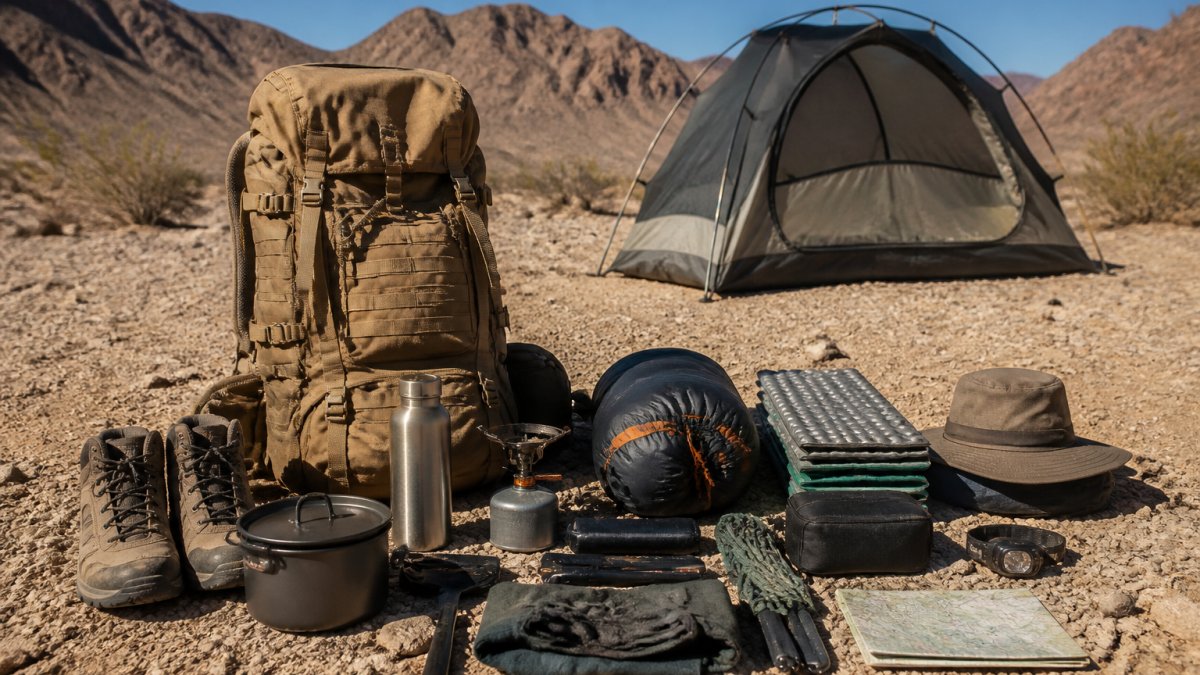
Table of Contents
- Why Desert Camping Demands a Different Packing Strategy
- Your Desert Camping Checklist: What to Pack and Why
- Desert Camping Water Requirements: How Much to Bring
- What to Wear Desert Camping: Layering for Heat and Cold
- Choosing the Right Desert Camping Tent for Wind and Sand
- Packing Tips: How to Fit It All and Protect Your Gear
- Common Packing Mistakes to Avoid
- Conclusion: Pack Smart, Camp Confidently
- Frequently Asked Questions
Last Updated: October 12, 2026
Why Desert Camping Demands a Different Packing Strategy
Learning how to pack for desert camping starts with one hard truth: the desert is not a hot beach. It is a place of extremes, and your gear has to handle all of them in a single day.
Temperatures can swing from scorching afternoons to near-freezing nights. Sand gets into everything. Wind arrives without warning. At Arizona Desert Gear, we've built our whole catalog around these conditions, and we've watched too many first-timers pack for the heat and forget everything else.
A common mistake is treating desert camping like summer camping with less shade. It isn't. You need to plan for four threats at once:
- Heat during the day, which drains water and energy fast
- Cold at night, especially in open, dry air
- Wind and sand, which wreck cheap tents and clog zippers
- Sun exposure, which dehydrates you even when you feel fine
The National Park Service guidance on desert safety puts it plainly: plan for wide temperature swings and bring more water than you think you need. That single mindset shift changes what goes in your pack.
Below, we'll walk through exactly what to bring, how much water to carry, and how to fit it all without wrecking your back.
Your Desert Camping Checklist: What to Pack and Why
A desert camping checklist is a short list of gear that solves the desert's four problems: heat, cold, wind, and sun. Everything else is optional.
Here's the core list we'd hand any camper heading into arid country:
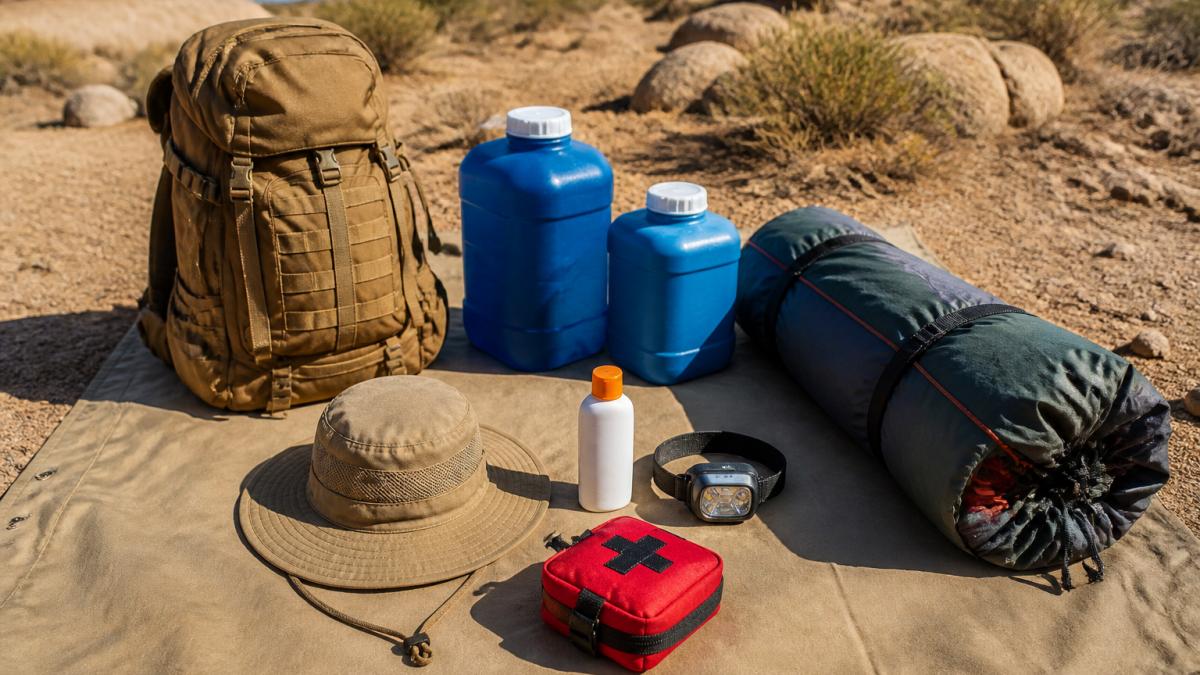
- Water containers (at least 1 gallon per person, per day)
- Electrolyte packets or tablets
- Sunscreen (SPF 30 or higher) and lip balm
- Wide-brim hat and UV sunglasses
- Light long-sleeve shirts and pants
- Insulating mid-layer and warm hat for nights
- Wind-rated tent with sand stakes
- Sleeping bag rated for cold nights
- Headlamp with spare batteries
- First aid kit
- Multi-tool and duct tape
- High-energy, no-cook snacks
Each item earns its spot. Water and electrolytes replace what sweat takes. Long sleeves block sun better than bare skin. A wind-rated tent keeps sand out and stops the walls from collapsing. The warm layer matters because desert nights get genuinely cold.
Pro Tip
Pack your warm layer at the top of your bag, not the bottom. Desert temperatures can drop fast once the sun sets, and you don't want to dig through everything while you're shivering.
Desert Camping Water Requirements: How Much to Bring
The short answer: bring at least one gallon of water per person, per day, and more if you're hiking or working in the heat.
That number isn't a guess. It's the baseline used by most desert safety guides, and it climbs with activity. A day of sitting in shade needs less. A day of hiking, setting up camp, and cooking needs more.
A few rules we follow:
- Never ration drinking water. If you're thirsty, drink.
- Store water in more than one container. A leak in your only jug ruins the trip.
- Keep a reserve you don't touch unless it's an emergency.
- Add electrolytes if you're sweating heavily for hours.
Water also does double duty. You'll use it for cooking and basic cleanup. Plan for that, not just for drinking.
Watch Out
Skipping electrolytes while drinking lots of plain water can leave you feeling worse, not better. Heavy sweating strips salt from your body. Bring packets or tablets and use them.
What to Wear Desert Camping: Layering for Heat and Cold
What you wear desert camping should follow one rule: cover up during the day, layer up at night.
The counterintuitive part is that long sleeves and pants keep you cooler than shorts and a tank top. They block direct sun and slow sweat loss. Light colors reflect heat. Loose fits let air move.
Build your clothing in three layers:
- Base layer: light, moisture-wicking long sleeves and pants
- Mid layer: a fleece or light insulator for evenings
- Outer layer: a wind-resistant shell for gusts and dust
Add a wide-brim hat, UV sunglasses, and a neck gaiter. These three items protect the spots people forget: ears, eyes, and the back of the neck.
For your feet, choose breathable boots with good ankle support. Sand and rock demand grip, and blisters end trips early. Bring two pairs of wool or synthetic socks so you always have a dry set.
Key Takeaway
The desert punishes exposed skin twice: once with sun, once with dry air that pulls moisture out. Covering up is the simplest comfort upgrade you can make.
Choosing the Right Desert Camping Tent for Wind and Sand
A desert camping tent needs two things most tents ignore: wind resistance and sand control.
Standard dome tents can fold in a strong gust. Mesh panels that feel great in a forest let fine sand blow straight through in the desert. Look for a tent with a low profile, a full rainfly, and sturdy poles. Then swap the stock stakes for sand stakes or bury deadman anchors.
A few features worth prioritizing:
- Low, aerodynamic shape to shed wind
- Full-coverage rainfly to block blowing sand
- Sealed or fine-mesh vents to keep grit out
- Reinforced guy-out points for extra tie-downs
Set up your tent so the smallest wall faces the wind. If you can, pitch behind a rock or shrub for a natural windbreak. And always stake it down, even if the evening feels calm. Desert wind shows up fast.
This is exactly the kind of gear we focus on at Arizona Desert Gear. Our tents are built for harsh, dry conditions, and customer Olivia B. noted that her tent and sleeping bag "provided excellent comfort, weather protection, durability, and reliability."
Packing Tips: How to Fit It All and Protect Your Gear
Pack heavy items in the middle of your pack, close to your spine, and keep water accessible at all times. That one habit saves your shoulders and keeps you hydrated without unpacking.
Sand is the enemy of every zipper and seal. Protect your gear with these moves:
- Use dry bags for electronics, matches, and spare clothes
- Keep zippers clean by brushing sand off before opening
- Double-bag anything that must stay dry
- Pack a repair kit with duct tape, cord, and a multi-tool
Distribute weight so the load sits high and tight. Strap your tent and sleeping bag outside if space is tight, but keep snacks and water within reach.
Here's how we'd organize a typical pack:
| Pack Zone | What Goes There | Why |
|---|---|---|
| Top | Warm layer, snacks, headlamp | Quick access at night |
| Middle | Water, food, heavy gear | Balanced weight near spine |
| Bottom | Sleeping bag, spare clothes | Bulky, used less often |
| Outside | Tent, sand stakes, repair kit | Saves interior space |
Pro Tip
Test your full pack weight before you leave. A pack that feels fine in your living room can feel brutal after a mile of soft sand. Adjust early, not on the trail.
Common Packing Mistakes to Avoid
The biggest desert packing mistakes are overpacking clothes, underpacking water, and trusting gear that isn't built for wind and grit.
Watch for these traps:
- Bringing too little water. This is the number one error. Bring more than you need.
- Skipping the warm layer. Clear nights get cold, even after a hot day.
- Using a three-season tent in high wind. It may not survive the first gust.
- Forgetting sun protection for hands and neck. These burn first and hurt most.
- Leaving batteries and electronics exposed. Heat and sand kill them fast.
A common mistake is buying the cheapest gear to "try it out." Cheap stakes bend. Cheap tents tear. In the desert, gear failure isn't just annoying, it's a safety problem.
If you're new to overlanding, you don't need expedition-level gear for a weekend trip. But you do need gear that won't fail when the wind picks up. Start with the essentials done well, then upgrade as your trips get longer.
Conclusion: Pack Smart, Camp Confidently
Packing for the desert comes down to respecting extremes. Bring more water than feels reasonable, layer for cold nights, and choose gear that stands up to wind and sand. Get those right, and the desert becomes one of the most rewarding places you'll ever camp.
At Arizona Desert Gear, we stock durable tents, weather-resistant jackets, rugged packs, and camping tools built for exactly these conditions. Every order ships free within the USA, and our 30-day return policy means you can gear up with confidence. Our customers rate us 4.98 out of 5 across 213 reviews, and names like James W. and Sophia C. keep coming back for gear that performs outdoors.
Get started with Arizona Desert Gear and pack for your next desert trip the right way.
Frequently Asked Questions
What should I pack for desert camping?
Pack a desert camping checklist that includes at least 1 gallon of water per person per day, a wind-resistant tent, layered clothing, high-SPF sunscreen, a wide-brim hat, a headlamp, a first aid kit, and a navigation tool. Also bring a repair kit for gear and a means of communication like a satellite messenger. Avoid cotton clothing and heavy, bulky items. Test all gear before your trip to ensure it works in extreme conditions.
How much water should I bring for desert camping?
Aim for 1 gallon per person per day for drinking and basic hygiene. In extreme heat or if you're active, increase to 1.5 gallons. For a two-night trip, that's at least 2 gallons per person. Store water in durable containers and keep them out of direct sun. Also pack a backup water filter or purification tablets in case of emergency. Never ration water; drink regularly to avoid dehydration.
What kind of tent is best for desert camping?
Choose a tent with a full-coverage rainfly. A freestanding dome tent with sturdy poles handles wind well. A tent with minimal mesh on the lower walls prevents sand from blowing in. Always stake it down with sand stakes or rocks.
How do you stay warm in the desert at night?
Desert temperatures can drop 30-40°F after sunset. Pack insulating layers like a fleece or down jacket, a hat, and gloves. Use a sleeping bag rated for at least 20°F below the expected low. A sleeping pad with a high R-value (4+) insulates you from the cold ground. Wear dry, non-cotton base layers to bed. Keep a headlamp and extra batteries handy for nighttime tasks.

