

Cart
0
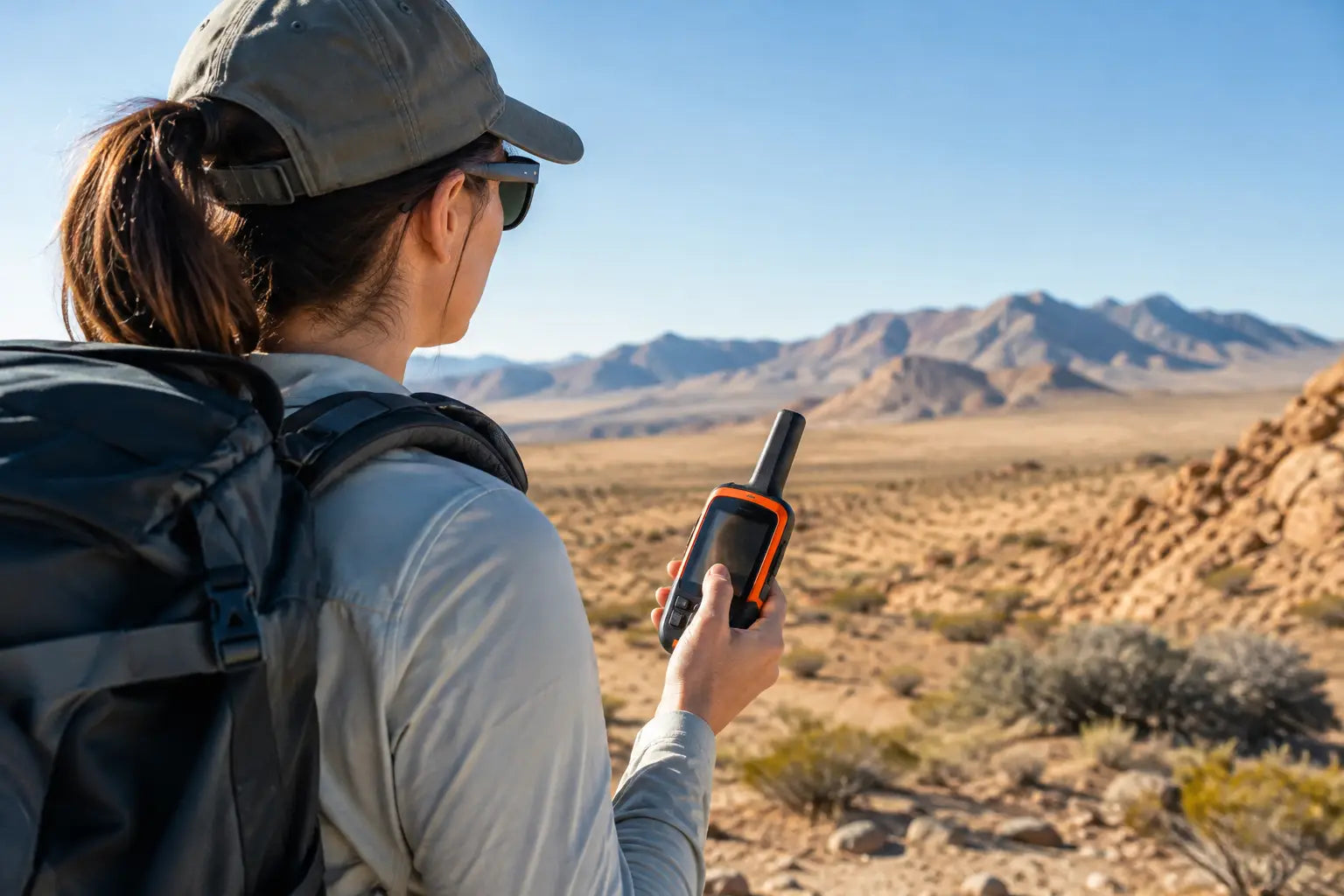
A blown tire 25 miles past the last graded road can turn a normal Arizona day trip into an overnight problem fast. The same goes for a missed turn in a wash, a heat illness on a remote trail, or a rolled side-by-side where nobody is passing through. Knowing when to carry a satellite beacon is less about expecting disaster and more about recognizing when your phone, your vehicle, and your usual backup plan are no longer enough.
A satellite beacon is not required for every walk around a developed campground or every drive on a well-traveled highway. But in the Southwest, distance, heat, sparse traffic, and unreliable cell coverage can stack the odds against a quick recovery. If a delay could become dangerous before help reaches you, carry a way to send an SOS outside the cell network.
When to Carry a Satellite Beacon
Carry a satellite beacon anytime you will be beyond reliable cell service and a self-rescue may not be possible. That can mean a backcountry hike, a remote overland route, a hunting camp, a long off-road run, or work in isolated desert country. The deciding factor is not whether the trip feels extreme. It is whether a bad outcome would leave you unable to contact help, share your location, or get back under your own power.
Desert conditions raise the stakes. A minor ankle injury is inconvenient near a trailhead with steady traffic. It is far more serious several miles into rocky terrain when the temperature is pushing triple digits and your water supply is limited. A mechanical breakdown that is manageable in town can become a medical situation if you are stranded without shade during the hottest part of the day.
You should strongly consider a beacon if your plan includes any of these conditions:
- Travel on unmaintained roads, two-tracks, washes, or trails with little chance of passing traffic.
- Hiking beyond easy turnaround distance, especially solo or in extreme heat.
- Off-roading in areas with spotty coverage, difficult recovery access, or steep terrain.
- Multi-day camping, hunting, or overlanding far from paved roads and developed facilities.
- Traveling during monsoon season, when flash flooding can cut off routes and change terrain quickly.
- Operating with a group that includes children, inexperienced travelers, older adults, or anyone with a medical concern.
Desert Trips Where a Beacon Makes Sense
Remote hiking and backpacking
A beacon belongs in the pack when your route takes you into canyons, mountain ranges, wilderness areas, or desert trails where a phone signal comes and goes. Do not assume elevation solves the problem. You may find service on a ridge and lose it around the next bend, in a drainage, or behind a rock face.
For solo hikers, the case is even stronger. There is no partner to walk out for help, monitor heat exhaustion, stabilize an injury, or make decisions if you are disoriented. A personal locator beacon or satellite messenger gives a solo traveler a last-resort line to emergency services when the situation has gone beyond self-rescue.
Off-road travel and overlanding
Four-wheel drive does not eliminate risk. In fact, capable vehicles often take drivers farther from maintained roads, service stations, and cell towers. A punctured sidewall, damaged steering component, dead battery, or stuck vehicle can leave you stationary in an area that recovery crews cannot reach quickly.
For off-road travel, a two-way satellite communicator can be more useful than a basic SOS-only beacon. It lets you tell a contact what happened, share coordinates, and explain whether you need a tow, extra water, or emergency medical help. That detail can prevent an unnecessary rescue call while getting the right support moving sooner.
A beacon is not a substitute for recovery gear. Carry a full-size spare, tire repair supplies, an air compressor, recovery boards or traction aids where appropriate, water, shade, navigation tools, and a route plan. The beacon is what you use when those preparations cannot solve the problem.
Remote camps and hunting areas
A remote camp can feel safe because you are stationary, but location still matters. If the nearest paved road is hours away and nobody knows your exact site, a medical event or vehicle issue can become serious quickly. This is particularly true when temperatures remain high after sunset or when camp is exposed to wind, dust, and storm runoff.
Hunters should consider a satellite device when moving away from camp, packing out game, or hunting alone. A sudden weather change, a fall in rough country, or a wrong turn after dark are not rare problems. Carry the device on your body or in your day pack, not buried in the truck at camp.
Water routes and changing weather
Desert travel is not always dry travel. Lake trips, rafting routes, and narrow canyon adventures can all put people outside cell coverage. Monsoon storms add another layer of risk. A wash that looked harmless in the morning can become impassable in a matter of minutes, and roads may be blocked by mud, debris, or standing water.
Never drive into flowing water or depend on a satellite device to make a reckless route decision safe. Its value is as an emergency communication tool after sound planning, not permission to push through dangerous conditions.
Beacon, PLB, or Satellite Messenger?
These terms are often used interchangeably, but the gear works differently. Pick the tool that matches your trip.
A personal locator beacon, commonly called a PLB, is built around a dedicated emergency SOS function. When activated, it sends your distress signal and location through satellite networks to rescue coordination services. It is simple, durable, and generally has no monthly service plan. For hikers and hunters who want a true emergency-only device, a PLB is a strong option.
A satellite messenger or communicator usually offers SOS capability plus non-emergency features such as two-way texting, location sharing, weather updates, and check-in messages. It requires an active service plan, and its battery needs regular attention. For overlanders, off-road groups, and families who want to stay in contact outside cell range, the added communication can be worth the ongoing cost.
The trade-off is straightforward. A PLB is purpose-built for a life-threatening emergency and can sit ready for years with proper maintenance. A communicator gives you more information and flexibility, but it demands subscriptions, charging, setup, and familiarity with the device. Neither one replaces judgment.
What Makes a Situation an SOS?
An SOS is for immediate or potentially life-threatening situations where you cannot safely self-rescue. Examples include a serious injury, severe heat illness, being stranded without adequate water, a vehicle crash with injuries, or an exposure risk that will worsen before you can reach help.
Do not activate an SOS simply because you are late, uncomfortable, or frustrated by a breakdown you can safely manage. If you have water, shelter, a working vehicle or camp, and a realistic way to resolve the issue, use non-emergency messaging or your planned check-in contact first.
That said, waiting too long can be a mistake in desert country. Heat illness can progress quickly. A vehicle that is stuck in deep sand may leave you exposed for hours. If you are injured, alone, low on water, and unable to reach a road or communicate by other means, that is no longer a minor inconvenience.
Carry It Right and Test It Before the Trip
A satellite device only helps if it is accessible and ready. Keep it on your person, shoulder strap, belt, or the top pocket of your pack. In a vehicle, store it where the driver or passenger can reach it after a rollover or while outside the cab. Do not leave it under cargo, inside a locked box, or in a vehicle that may be separated from you.
Before leaving, charge the device or verify its battery status, confirm your subscription if required, and review the SOS activation steps. Register a PLB properly and keep your emergency contacts current. Create a check-in plan with someone dependable: where you are going, who is with you, when you expect to return, and when they should escalate if they do not hear from you.
Satellite communication also needs a workable view of the sky. Deep canyons, heavy tree cover, rock walls, and the vehicle roof can interfere with transmission. Move to the most open area you can safely reach, keep the antenna positioned as instructed, and give the device time to send. Do not assume a single failed message means the system will not work.
Arizona Desert Gear customers know that desert readiness is built in layers. Water, navigation, recovery equipment, shelter, a route plan, and a satellite beacon all serve different jobs. Carry the beacon when your route puts you beyond normal help and the consequences of a delay are real. The best day to learn how it works is at home, before the trail runs out and the sun is still high.

