

Cart
0
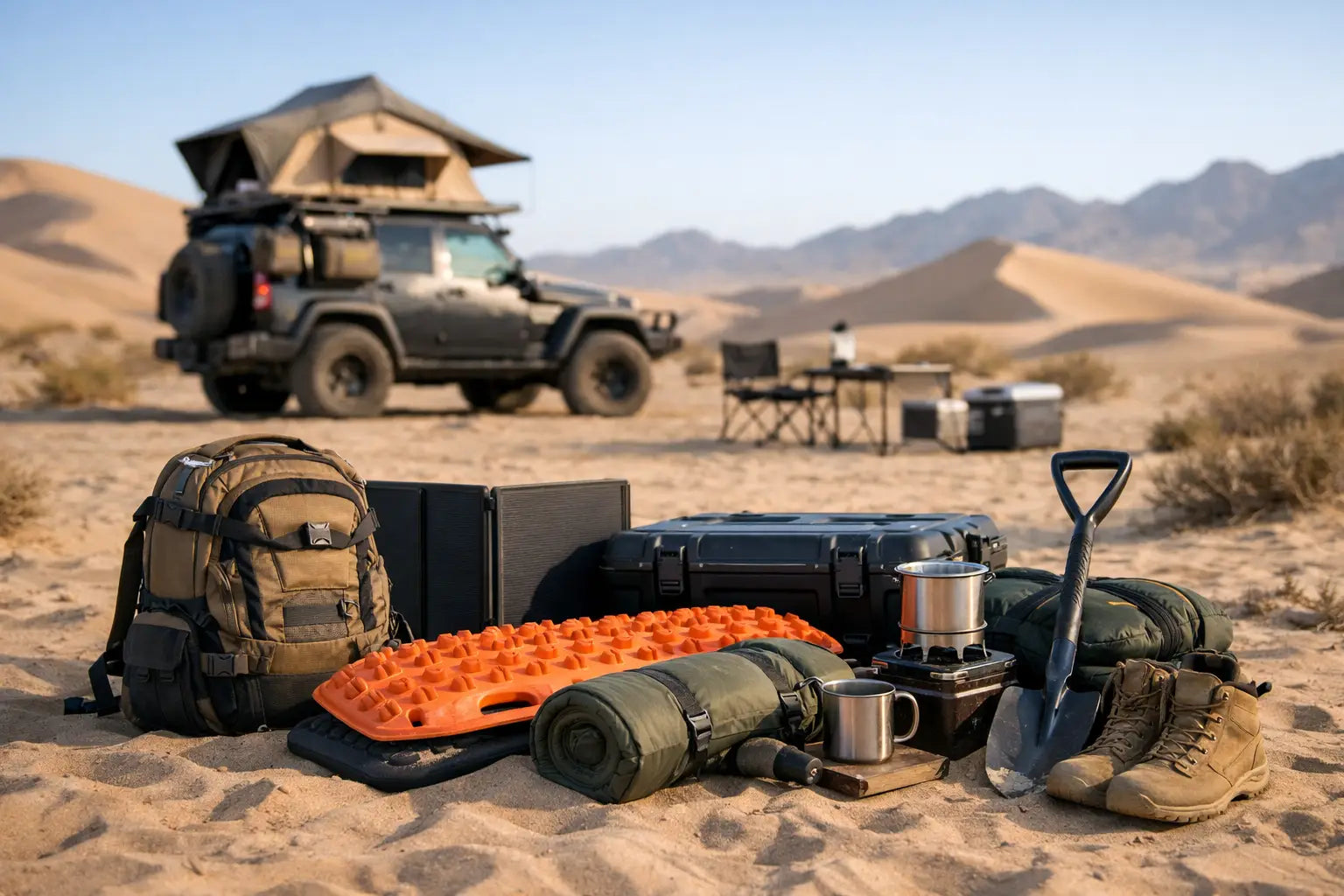
A desert trip usually stops being fun at the same point - when cheap gear meets heat, dust, and distance. The right overlanding gear for desert travel is not about packing more. It is about packing the items that keep your vehicle moving, your water usable, your camp manageable, and your margin for error intact.
Desert travel is hard on everything. Tires run hotter, plastics get brittle, batteries struggle, and fine dust finds its way into every zipper, latch, and connector. A setup that works in the mountains or at a weekend campground can fall apart fast in Arizona, Nevada, New Mexico, or West Texas. That is why gear selection matters more out here. You are not buying for comfort alone. You are buying for exposure, recovery, and self-reliance.
What overlanding gear for desert travel really needs to do
The job of desert gear is simple. It has to survive heat, limit failure points, and stay useful after days of dust and vibration. That sounds obvious, but it rules out a lot of gear that looks good online and underperforms in real conditions.
Start with materials and design. Fabrics should resist abrasion and UV exposure. Storage should seal well enough to keep dust out. Mounts and hardware should stay tight after miles of washboard roads. If a product depends on delicate hinges, thin plastic clips, or gimmicky electronics, it may not belong in a desert loadout.
Weight also matters. Overlanders often add gear one problem at a time until the vehicle is carrying too much of everything. In sand and loose terrain, that extra weight works against you. Heavier rigs sink faster, run hotter, and put more strain on suspension, brakes, and tires. Good desert packing is selective. Carry what solves real problems, not what fills empty space.
Water, shade, and heat management come first
If you get only a few decisions right, make them these. In desert travel, water storage, sun protection, and temperature control matter more than accessories.
Water should be stored in durable containers that can handle impact, heat, and repeated use. Rigid cans work well when you need secure mounting and predictable pouring. Soft systems save space, but they need better protection from punctures and abrasion. For most rigs, a mix makes sense - a primary supply in fixed containers and a smaller, easy-access reserve for camp or short foot travel.
Do not treat water planning like a simple gallon-per-day calculation. Driving delays, route changes, mechanical issues, and hotter-than-expected conditions can all increase consumption. You also need water for cleanup, basic cooking, and sometimes cooling equipment. Running tight on water in the desert is not efficient. It is a planning mistake.
Shade is the next major factor. A good awning, tarp system, or fast-deploy shelter changes how long you can stay functional during the hottest part of the day. It also reduces fatigue, which matters more than people admit. If your shelter takes too long to deploy or needs perfect ground conditions, it may not get used when you need it most.
Cooling tools should be practical, not complicated. Insulated water bottles, reflective windshield covers, breathable clothing, and quality coolers usually do more for comfort and safety than battery-hungry gadgets. In extreme heat, simple systems tend to be more dependable.
Recovery gear for sand and remote terrain
Desert routes do not always look difficult before they turn into recovery problems. A stretch of soft sand, a hidden wash, or a steep loose climb can stop a rig quickly. That is why recovery gear is not optional.
Traction boards are one of the most useful pieces of overlanding gear for desert travel because they solve a common problem without adding much complexity. They work best when paired with smart tire pressure management. Airing down increases flotation and traction, but it only helps if you can air back up reliably. A quality air compressor, tire deflator, and accurate gauge belong in every desert vehicle.
Recovery straps, shackles, gloves, and a shovel also earn their place. The exact setup depends on vehicle weight and travel style. A solo traveler in a lightly loaded 4x4 may prioritize self-recovery tools. A group running heavier rigs may build around strap recoveries and vehicle-to-vehicle support. Either way, cheap recovery gear is a bad gamble. This is one category where durability and proper load rating matter every time.
If you run a winch, protect it from neglect. Desert dust, heat, and long periods without use can turn a winch into dead weight. Keep it maintained, check connections, and do not assume installed means ready.
Tires, power, and spares are where trips are saved
A lot of trip-ending problems start small. A cut sidewall, a dead battery, a broken valve stem, or a failed fuse can force a turnaround faster than any lack of camp comfort.
Tires deserve extra attention in desert travel. Sidewall strength, tread suited to mixed terrain, and proper load range all matter. So does carrying more than a basic repair kit. Plugs, patches, valve cores, a bead tool if you know how to use one, and a full-size spare should be considered baseline gear for serious remote travel. In harsh desert country, one spare is good. The ability to repair and manage tire issues beyond that is better.
Power systems should be kept simple enough to diagnose in the field. Auxiliary batteries, power stations, and solar setups can be useful, but every added connection creates another possible failure point. If your electrical setup powers refrigeration, camp lighting, navigation, and charging, make sure it is organized, fused correctly, and easy to inspect. The desert has a way of exposing messy installs.
Spare parts should match your vehicle, not a generic packing list. Belts, hoses, fuses, fluids, hardware, and basic tools cover a lot of common failures. Older vehicles often need a deeper spares kit. Newer vehicles may need less, but they are not immune to heat-related issues or electronic gremlins.
Storage and organization matter more than people think
Bad storage wastes time, creates dust problems, and hides important gear until it is too late. In desert conditions, organization is not about looking clean. It is about finding what you need fast and keeping it usable.
Dust-resistant cases, tightly sealed bins, and purpose-built pouches help protect gear that cannot afford contamination. Medical supplies, electronics, water fittings, and cooking gear all benefit from better storage. Open tubs and loose bags tend to collect grit, and grit turns into wear.
Keep high-use gear easy to reach. Recovery equipment, tire tools, first aid, lighting, and water access should not be buried under camp chairs and sleeping gear. If something is needed during a heat spike, a tire issue, or a fast stop before dark, you should be able to get to it without unloading half the vehicle.
A drawer system can be useful, but it is not automatically the right answer. Drawers improve access and control, but they add weight and reduce flexibility. For some rigs, modular bins and tied-down cases make more sense. It depends on how often you travel, how long your trips run, and whether your vehicle needs to serve other duties during the week.
Camp gear should earn its footprint
Desert camp gear has one job - make camp livable without overcomplicating the vehicle. Lightweight, compact, heat-tolerant equipment usually wins.
A reliable sleep system matters because desert temperatures swing hard. Hot days do not guarantee warm nights. Your setup should handle both extremes without taking up unnecessary room. Cots, pads, and sleeping bags all have trade-offs in bulk, insulation, and speed of setup. Pick based on season and elevation, not assumptions about daytime heat.
Cooking gear should be dust-aware and stable in wind. A stove that works well in calm backyards may struggle in open desert conditions. Fuel planning matters too. If your cooking system depends on specialized canisters or fragile components, make sure you can support it for the length of the trip.
Lighting should be durable and simple. Headlamps, camp lights, and vehicle work lights all help, but avoid loading your kit with too many rechargeable items unless your power system can support them without stress.
The best setup is the one you can trust
There is no perfect desert build, and there is no universal gear list that fits every route. A day run outside Phoenix, a multi-day trip through remote Nevada, and a winter crossing in southern Utah all ask for different levels of water, recovery support, insulation, and fuel planning.
What stays consistent is the standard. Overlanding gear for desert travel should be durable, field-usable, and worth the space it takes up. If a piece of gear cannot handle sun, dust, vibration, and rough handling, it is not desert-ready. If it solves a real problem quickly and reliably, it belongs in the rig.
That is the mindset behind a solid loadout, and it is why desert travelers keep trimming the fluff and upgrading the basics. When conditions get harsh, dependable gear is not a luxury. It is what gets you home.

