

Cart
0
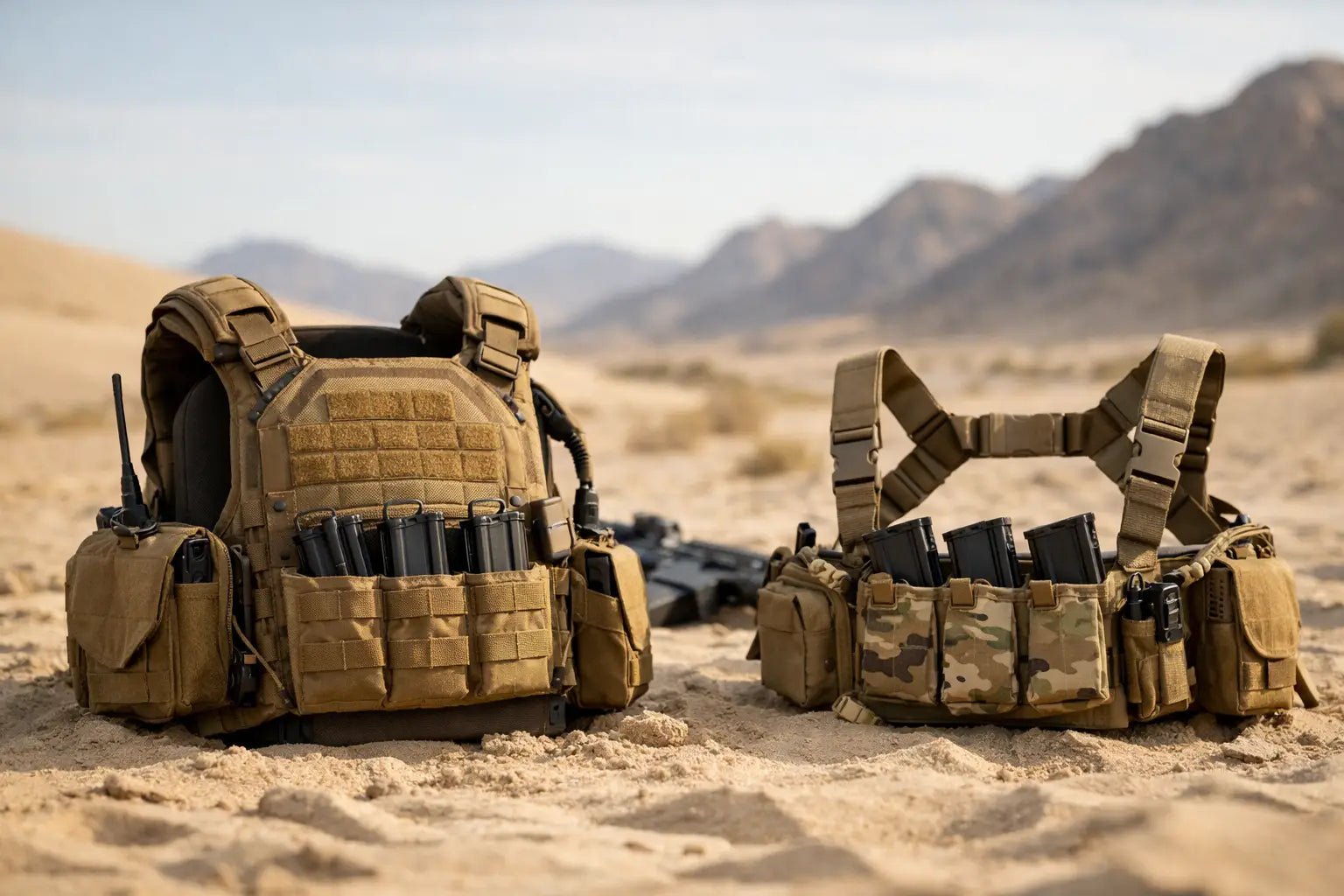
A loaded carrier feels a lot different after three hours under an Arizona sun than it does for fifteen minutes on a square range. That is where the plate carrier vs chest rig decision gets real. Both platforms can carry magazines, medical gear, communications equipment, and field essentials. But they manage heat, weight, protection, and movement in very different ways.
For range training, backcountry travel, ranch work, vehicle-based overlanding, or a serious preparedness setup, the right answer depends on what you need the gear to do. Choose for the conditions you expect to face, not the look you want in a photo.
Plate Carrier vs Chest Rig: The Core Difference
A plate carrier is built to hold ballistic armor plates against the front and back of the torso. Most models also accept magazine placards, pouches, hydration accessories, radios, and medical equipment. Its main purpose is protection, with load carriage added around it.
A chest rig is a lightweight harness with a front-mounted panel for magazines and essential equipment. It normally does not hold armor plates. Its main purpose is carrying the tools you need while keeping your torso, shoulders, and back as free as possible.
That distinction drives nearly every trade-off. A carrier gives you a layer of ballistic protection but adds insulation, bulk, and fatigue. A chest rig sheds weight and runs cooler, but it cannot provide the same protection in a ballistic threat environment.
When a Plate Carrier Makes Sense
A plate carrier is the better choice when the risk profile justifies armor. That may include duty-related training, defensive preparation, security work where permitted and appropriate, or structured range sessions that involve armor use. If the mission requires rifle-rated ballistic protection, a chest rig is not a substitute.
The carrier also works well when you need to carry a broader load without relying on a pack. Depending on the setup, you can mount a magazine placard, compact medical pouch, radio, tourniquet, navigation tools, and hydration support in one platform. For short-duration training or vehicle-based operations, that organization can be useful.
The Desert Cost of Armor
Armor holds heat. There is no way around it. Plates reduce airflow over a large part of the chest and back, while shoulder straps and padded panels can trap additional heat. In dry Arizona conditions, sweat may evaporate quickly, but a carrier still increases physical strain and fluid loss.
The plate itself matters. Steel plates are heavy and can become especially uncomfortable in hot conditions. They also bring functional concerns that should be evaluated carefully for the intended use. Quality ceramic or polyethylene plates may reduce weight, but they are still armor, and armor still changes how your body handles heat and movement.
A plate carrier should fit close enough to keep plates stable, but not so tight that it restricts breathing or turns every bend and seated position into a fight. Keep the load disciplined. A carrier packed with unnecessary pouches becomes hot, awkward, and slow fast.
Best Uses for a Plate Carrier
A carrier is generally the right platform for a range day focused on defensive skills, a prepared vehicle kit where ballistic protection is part of the plan, or situations where trained users have a legitimate need for armor. It can also be useful for short, deliberate training sessions where the goal is to build familiarity with the equipment you would actually use.
It is less appealing for long hikes, routine desert camp tasks, and hot-weather movement where protection is not required. Carrying armor because it might be useful someday can mean carrying extra heat and weight every mile today.
When a Chest Rig Makes Sense
A chest rig is often the more practical answer for hot-weather range use, backcountry travel, off-road trips, and long days outside. It keeps the load centered, accessible, and lighter than a full armor setup. With the right harness, it leaves more room for airflow across the torso and works better with a daypack or hydration pack.
For desert travel, that weight savings matters. A chest rig lets you carry magazines, a radio, a compass or GPS, a small light, and basic medical supplies without turning your upper body into a wall of nylon. You can move through brush, get in and out of a truck, and cover uneven ground with less restriction.
Chest Rigs Run Cooler, Not Cool
A chest rig is cooler than a plate carrier, but it is not invisible. A heavily loaded rig still covers the chest and can interfere with airflow. If it hangs too low or sits too far out from the body, it can bounce when you hike or run. If it is overloaded, it can put pressure on the neck and shoulders.
The answer is not to buy the biggest rig available. Start with what you actually need. For many users, three rifle magazines, a compact medical kit, communications gear, and one or two small utility items are enough. Put water, layers, food, recovery gear, and heavier supplies in a pack rather than forcing everything onto the front of your body.
Best Uses for a Chest Rig
Chest rigs are a strong fit for carbine range sessions, desert ranch work, hunting support roles where legal and appropriate, vehicle recovery trips, and field training where mobility matters more than armor. They are also useful as grab-and-go equipment because they can be worn over a T-shirt, a sun shirt, or light outer layers without much adjustment.
For overlanders, a chest rig can be a practical part of a broader vehicle kit. It keeps critical items on your body if you need to step away from the vehicle, work around a recovery situation, or move on foot while keeping your hands free.
Fit and Load Placement Matter More Than Extra Pouches
Whether you choose a carrier or a rig, poor fit ruins the platform. Your magazines should be accessible without forcing your elbows high or interfering with a natural draw from a belt-mounted holster. Shoulder straps should lie flat and stay clear of pack straps when possible.
Keep the front profile low. Bulky pouches mounted in the center of the chest make it harder to get prone, climb into a vehicle, or work close to the ground. They can also make a steering wheel, rifle stock, or seat belt harder to manage.
Medical gear deserves its own thought. A tourniquet should be secured where you can reach it with either hand. A more complete first-aid kit can ride on a belt, pack, or rear-mounted pouch if you can access it without creating a snag hazard. The goal is usable equipment, not maximum attachment points.
Choosing for Arizona Heat and Terrain
In the Southwest, choose materials and colors with the environment in mind. Dust, sharp vegetation, sun exposure, and repeated vehicle use wear gear hard. Look for sturdy stitching, reliable buckles, abrasion-resistant fabric, and hardware that does not become difficult to operate after exposure to fine dust.
Heat management starts before you put on the rig. Wear a moisture-wicking base layer or lightweight sun shirt, carry more water than you think you need, and plan around the hottest part of the day when possible. If you are wearing armor, reduce your pace and build in more recovery time. Heat illness can take a capable person out of the fight long before equipment failure does.
Also consider your vehicle. A plate carrier takes up more space, can be uncomfortable against a seat back, and may complicate seat belt use. A chest rig is generally easier to stage in a vehicle and quicker to wear for short stops. Neither should be left in direct sun for long periods if you can avoid it. Hot metal, overheated hydration bladders, and degraded gear are all avoidable problems.
The Better Choice Depends on the Job
Choose a plate carrier when ballistic protection is a real requirement and you are willing to accept the weight and heat that come with it. Choose a chest rig when your priority is lighter movement, better ventilation, and efficient access to essential gear.
Some users benefit from owning both. A chest rig can handle most range, travel, and outdoor use, while a properly fitted plate carrier stays reserved for training or situations where armor is justified. If your equipment supports common components, such as removable placards or magazine inserts, you can keep the layout familiar across both setups.
The smartest setup is the one you will wear correctly, train with regularly, and still trust after the trail turns rough and the temperature climbs.

