

Cart
0
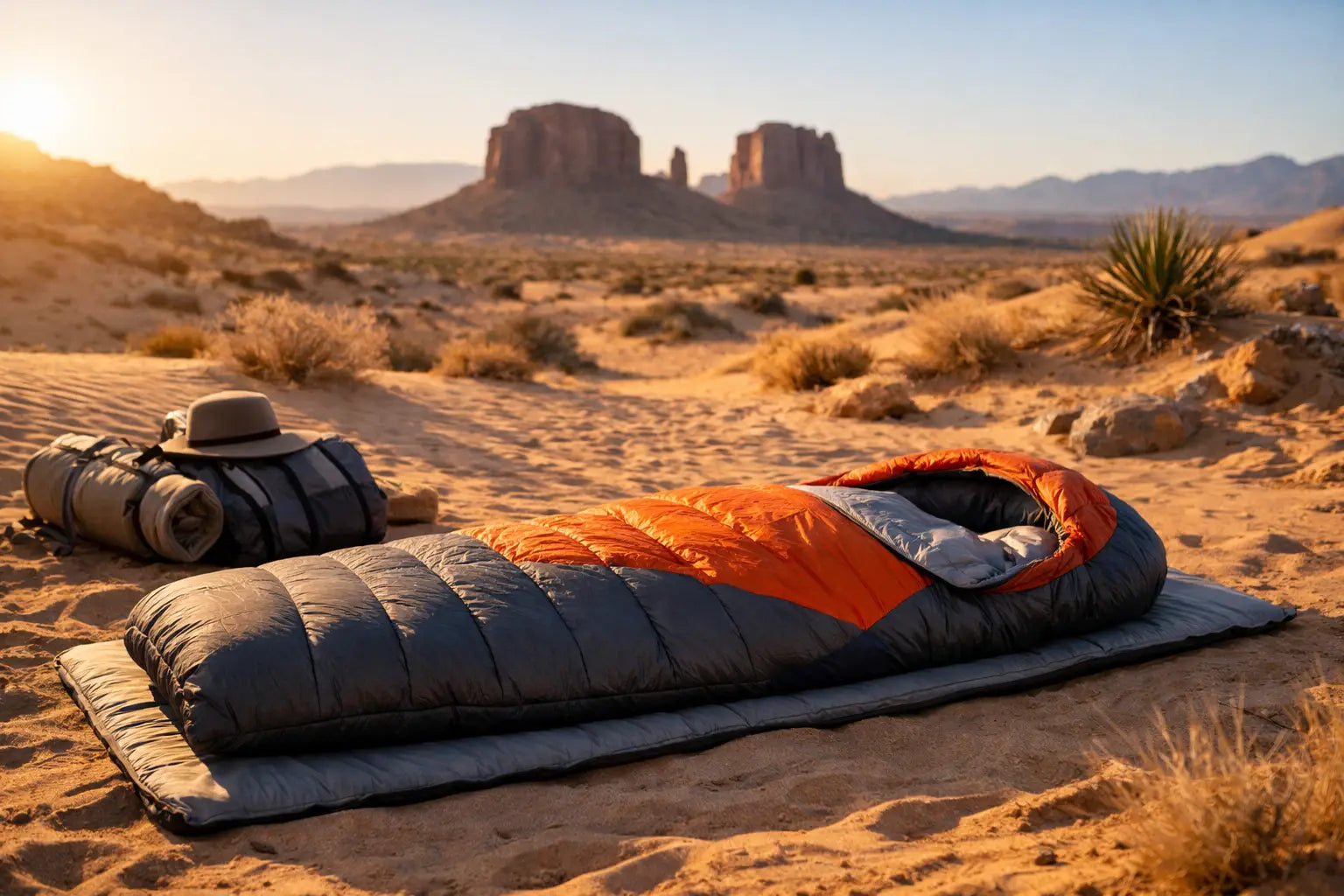
A desert camp can be 95°F before sunset and cold enough to make sleep miserable by 3 a.m. That is why the best desert sleeping bag is rarely the thickest bag on the shelf. It is the one that matches the lowest temperature you will actually face, packs cleanly into your rig or ruck, and still works when dust, wind, and hard ground are part of the plan.
For Arizona campers, overlanders, hunters, range users, and backcountry travelers, the right choice starts with understanding the difference between daytime heat and overnight conditions. Desert country does not hold heat well after dark. Elevation, season, wind exposure, and cloud cover can change a comfortable evening into a cold night fast.
The Best Desert Sleeping Bag Is Rated for the Night, Not the Day
The biggest mistake in desert sleep systems is buying for afternoon temperatures. A warm day does not mean a warm night. In low desert areas, summer nights can stay hot, but shoulder seasons commonly bring sharp temperature drops. Higher terrain in Arizona, New Mexico, Nevada, and Utah can get cold even when the forecast looks mild at the trailhead.
Start with the expected overnight low, then build in a safety margin of roughly 10°F to 15°F. If you expect 40°F, a 20°F or 30°F bag is usually a more dependable choice than a 40°F model, especially if you sleep cold, are tired, have not eaten enough, or are camping on exposed ground.
Pay attention to how the manufacturer states temperature ratings. Many quality bags use standardized testing that separates a comfort rating from a lower-limit rating. The comfort rating is the more useful number for most campers. A lower-limit rating may describe survival or minimal sleep for a warm sleeper, not a pleasant eight-hour night.
For most three-season desert travel, a 20°F to 30°F bag is the practical middle ground. It covers cold desert nights without forcing you into an oversized winter bag. For low-elevation summer camping, a 40°F to 50°F bag, sleeping quilt, or lightweight liner may make more sense. If your trips include late fall, winter, high country, or mountain passes, move toward a 0°F to 15°F system.
Choose Insulation for Your Use, Not a Spec Sheet
Down and synthetic insulation both work in the desert. The better option depends on how you travel and how much abuse your equipment sees.
Down bags are lighter, smaller when packed, and highly efficient for their warmth. They are a strong choice for backpacking, motorcycle travel, and anyone trying to keep a compact camp setup. Modern treated down handles light moisture better than older down fills, but it still loses performance if it gets soaked. Condensation inside a tent, a leaking water container, or an unexpected storm can turn poor storage into a real problem.
Synthetic insulation is bulkier and heavier, but it is dependable when conditions get dirty, damp, or careless. It keeps more insulating value when wet, costs less in many cases, and is easier to live with during rough vehicle-based trips. For overlanding, truck camping, desert hunting camps, and off-road travel, synthetic is often the no-drama choice.
Do not assume the desert is always dry enough to make moisture irrelevant. Nighttime condensation can be heavy near washes, lakes, and desert grasslands. Sweat also matters. A bag that is too warm will collect moisture from your body over several nights, especially when zipped tight.
Mummy Bags, Rectangular Bags, and Quilts
Shape changes how a bag performs. A mummy bag is the most efficient design because it leaves less empty space for your body to heat. Its hood, draft collar, and tapered footbox make it the best option for cold nights, wind exposure, and lightweight travel. The trade-off is less room to move.
A rectangular bag gives you space to turn, vent, and sleep more naturally. It works well for warm-weather vehicle camping, cots, and larger tents. The downside is lower heat efficiency. If you take a rectangular bag into a 30°F night, expect to need more insulation than the number on the hang tag suggests.
A quilt is worth considering for hot-weather desert use. It eliminates the compressed insulation underneath your body and usually connects to a sleeping pad with straps. Quilts ventilate quickly when temperatures stay warm, pack small, and work well for side sleepers. They require more attention to setup, though. If cold air can enter around the edges, the system will feel drafty.
For a one-bag solution, a 20°F or 30°F mummy bag with a full-length zipper is hard to beat. You can open it for ventilation on warm nights and seal it up when the temperature drops.
Your Sleeping Pad Matters as Much as the Bag
A sleeping bag does not insulate well when your body compresses the fill beneath you. The ground pulls heat away, and desert soil, rock, and sand can become surprisingly cold overnight. A good pad is not an accessory. It is part of your sleep system.
Look at a pad's R-value, which measures resistance to heat loss. For warm low-desert nights, an R-value around 2 is often enough. For spring, fall, and higher-elevation trips, an R-value of 3 to 4 is a safer target. For winter desert use or cold high-country ground, choose an R-value above 4.
Inflatable pads offer the best pack size and comfort, but they need protection from thorns, sharp gravel, and cactus debris. Carry a repair kit and clear your sleeping area before setting up. Closed-cell foam pads are less comfortable but nearly indestructible, and they make a solid backup or ground layer under an inflatable pad.
Features That Matter in Desert Camp
A few practical details separate a useful bag from one that stays in the gear bin. A full-length zipper lets you dump heat quickly when temperatures remain high. A well-designed hood and draft collar matter when wind cuts through camp. A snag-resistant zipper saves frustration when you are packing up before daylight.
Exterior fabric should be durable enough to handle tent dust, truck-bed use, and repeated packing. Water-resistant shell fabric helps with condensation and dew, but it is not a substitute for shelter. Lighter fabrics save ounces for backpackers, while tougher shells make more sense for vehicle-supported travel where abrasion is more likely.
A roomy footbox is valuable if you wear dry socks or keep tomorrow's base layer near your feet overnight. Internal stash pockets are also useful for a headlamp, phone, batteries, or a small water filter. In cold conditions, keeping batteries close to your body can preserve runtime.
Do not overlook zipper placement. Right-zip versus left-zip is mostly personal preference, but it matters if you plan to pair two compatible bags together. If you sleep on your left side, test which zipper placement lets you vent and enter the bag without fighting it.
Match the Bag to the Way You Travel
For truck camping and overlanding
Prioritize comfort, durability, and a reliable temperature margin. Weight and packed size matter less when gear rides in a vehicle. A synthetic 20°F to 30°F mummy or semi-rectangular bag paired with an insulated pad is a practical setup for most Arizona three-season trips. Keep it in a compression sack for travel, but store it loosely at home to protect the insulation.
For backpacking and long hikes
Packed size becomes critical. A quality down mummy bag or quilt in the 20°F to 30°F range gives the best warmth-to-weight return. Protect it with a waterproof pack liner or dry bag. Saving a pound is useful, but not if you buy a narrow bag that leaves you unable to sleep after a hard day on the trail.
For hot summer nights
A heavy cold-weather bag becomes a liability. Choose a 40°F to 50°F bag, lightweight quilt, or liner, and use a full zipper for airflow. You may spend part of the night on top of the bag. Even then, bring insulation for unexpected weather changes, especially above the valley floor or during monsoon season.
For cold-weather desert trips
Winter desert camping calls for a complete system: a 0°F to 15°F mummy bag, an insulated pad, dry base layers, and shelter that reduces wind exposure. Do not rely on a fire to make up for an underbuilt sleep setup. Fires die down, fuel runs short, and wind shifts.
Avoid These Common Desert Sleep Mistakes
Do not sleep directly on the ground because the evening felt warm. Do not wear damp clothes inside your bag, and do not crawl in covered in sweat after a long hike. Change into dry layers, eat something substantial, and hydrate before bed. Your body needs fuel and water to produce heat.
Avoid stuffing a sleeping bag into a compression sack for months between trips. Long-term compression weakens loft, which weakens warmth. At home, store it loose in a large breathable sack or hang it in a dry closet.
Finally, do not treat a temperature rating as a guarantee. Your metabolism, pad, shelter, clothing, fatigue level, and wind exposure all change the result. Field-tested comfort is what matters when the temperature drops.
Arizona Desert Gear customers know that desert readiness is not about carrying the most equipment. It is about carrying gear that earns its space. Choose a sleeping bag with enough margin for the coldest realistic night, pair it with a capable pad, and test the system close to home before relying on it miles from pavement.

