

Cart
0
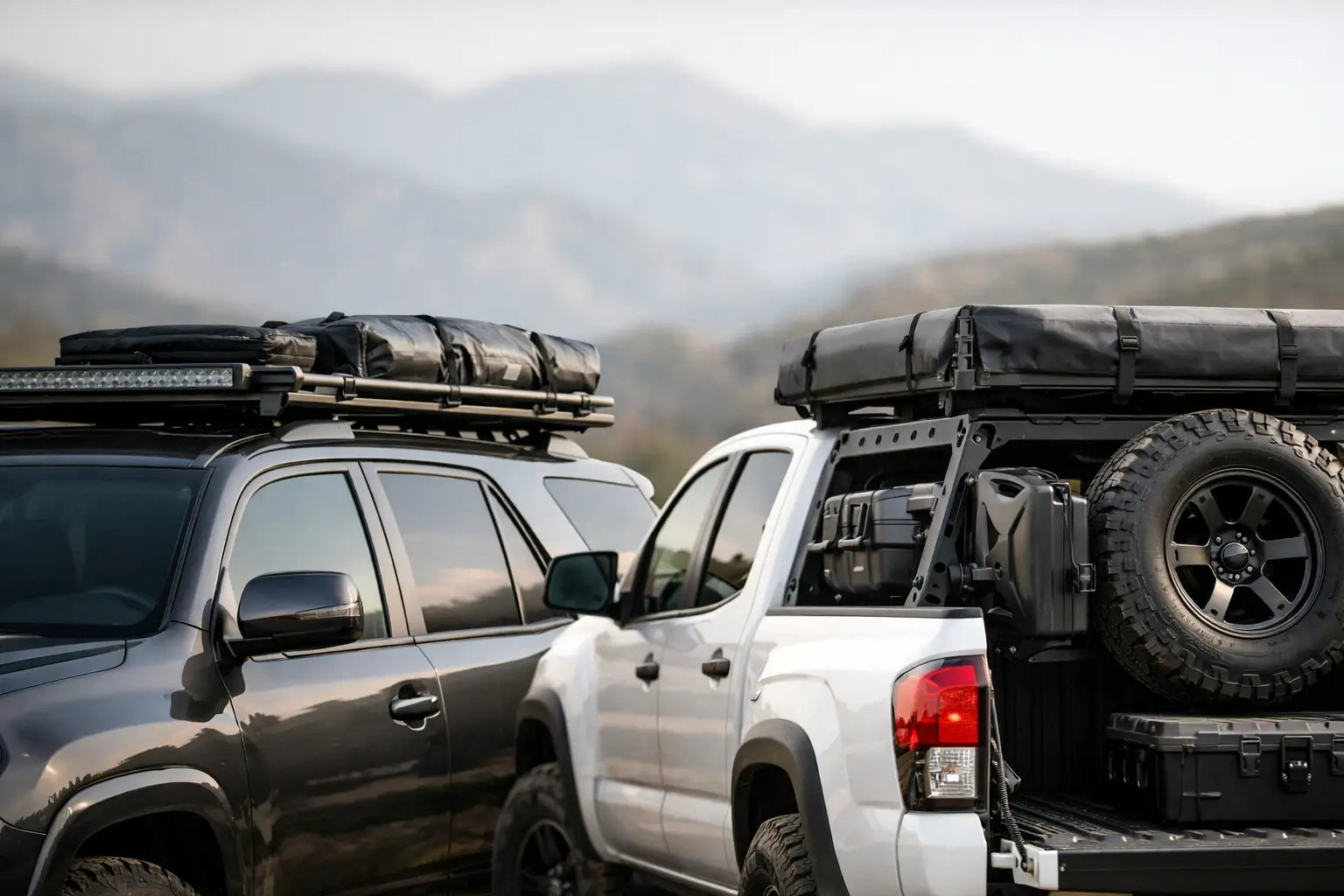
A bad cargo setup shows itself fast in the desert. You feel it at the gas pump, on off-camber trails, and every time you need one piece of gear buried under the wrong load. When you are weighing roof rack vs bed rack options, the right answer usually comes down to how you drive, what you carry, and how often you need to reach it.
For desert travel, this choice is not just about looks or adding more mounting points. Heat, dust, long highway miles, tight trails, and remote camps all put pressure on your setup. A rack that works fine for occasional weekend use in mild weather may become a hassle when you are hauling recovery boards, fuel, water, camp gear, and tools through Arizona backcountry.
Roof rack vs bed rack: the basic difference
A roof rack mounts on top of the cab or SUV roof and uses that high space for cargo, accessories, and longer items. It is common for rooftop tents, storage cases, awnings, light gear, and traction boards. On an SUV, it is often the main external cargo platform. On a truck, it adds carrying capacity without taking up bed space.
A bed rack mounts over the truck bed, usually along the bed rails, and creates an elevated platform behind the cab. Depending on height, it can sit low, mid, or above the cab line. Bed racks are popular for trucks carrying rooftop tents, fuel cans, spare tires, camp boxes, shovels, and off-road accessories while keeping the bed useful underneath.
That sounds simple enough, but the real differences show up in weight distribution, access, clearance, and how much of your vehicle you still want to use day to day.
When a roof rack makes more sense
A roof rack is often the better fit if you drive an SUV, if your truck bed needs to stay open for work or hauling, or if your gear is lighter and used less often. It makes use of space that would otherwise sit empty, which is valuable when every cubic inch counts.
For kayaks, surf rods, lightweight storage boxes, traction boards, and bulky but low-weight gear, a roof rack can be efficient. It also keeps dirty or dusty gear outside the cabin. If you are packing for a weekend camp and do not need constant access to what is mounted up top, a roof rack does the job.
But height is the first trade-off. The higher you load gear, the more you change vehicle handling. That matters in crosswinds, on technical trails, and during quick lane changes on the highway. In desert conditions, where washboard roads and uneven lines are common, weight up high can make a vehicle feel less planted.
Access is the next issue. If you have to climb onto rock sliders or stand on a tire every time you need a shovel, water bag, or storage case, that gets old fast. It is manageable for gear you use once at camp. It is less ideal for items you need during the day.
Roof racks also create more wind resistance. On long Arizona highway runs, that can mean more noise and a noticeable hit to fuel economy, especially with larger gear mounted broadside to the wind.
When a bed rack is the better tool
For a truck owner building around overlanding, range use, or backcountry travel, a bed rack often gives you a better balance of access, stability, and usable space. Because the load sits lower than a roof rack, the truck usually handles better with comparable gear onboard.
That lower mounting position matters when carrying heavier accessories. Water, fuel, spare tires, recovery gear, and loaded storage boxes all add up fast. Putting that weight over the bed instead of on the cab roof helps keep the center of gravity more manageable.
A bed rack also tends to be easier to live with. Gear is easier to reach. Mounting a rooftop tent is usually simpler. Loading and unloading larger items takes less effort. If the rack height is matched to your needs, you can still keep bed space below for coolers, bins, tools, and camp equipment.
This is where bed racks shine in desert use. You can build a truck around utility instead of stacking everything overhead. For drivers carrying heat-sensitive gear, recovery equipment, and supplies for longer stretches away from town, organized access matters as much as total carrying capacity.
The drawback is obvious too. A bed rack only works on a truck, and depending on the design, it can reduce full-bed flexibility. If you regularly haul motorcycles, construction material, large furniture, or other tall cargo, the rack may get in the way unless it is removable.
Roof rack vs bed rack for desert travel
Southwestern travel changes the equation. In cooler, wetter regions, cargo choice is often shaped by weather protection first. In the desert, heat, dust, sun exposure, and distance between stops become bigger factors.
A roof rack leaves gear fully exposed to direct sun, and on a truck that can put cargo at the highest, hottest point on the vehicle. Hard cases can help, but anything mounted externally still takes a beating from UV and dust. Bed racks are not immune to that, but their lower position can make cargo management easier, especially when you need to secure covers, shields, or quick-access containers.
Clearance matters too. Roof-mounted gear can push a truck or SUV into problem territory for garages, drive-thrus, low branches, and certain trail sections. Add a rooftop tent or cargo box and that problem gets worse. Bed racks can still add height, especially full-height models, but low and mid-height options offer more control.
Then there is trail stability. A loaded roof rack can work fine, but the heavier the cargo, the more cautious you need to be on side hills, ruts, and off-camber terrain. A bed rack gives you more room to carry substantial gear without making the vehicle feel top-heavy.
What are you actually carrying?
This is where the right answer usually becomes clear.
If your load is mostly light, long, or occasional-use gear, a roof rack may be enough. Think traction boards, a lightweight awning, camp chairs, a slim cargo case, or skis and paddles for mixed-use travel outside the desert season.
If your setup includes a rooftop tent, fuel, water, tools, recovery boards, a jack, and storage boxes, a bed rack usually makes more practical sense on a truck. It gives you a stronger foundation for a heavier loadout and makes daily use less frustrating.
Frequency matters as much as weight. Gear you use once a day can live higher up. Gear you need repeatedly should be easier to reach. In remote desert travel, that usually means recovery equipment, water, and tools should not require climbing and unpacking half the vehicle.
Daily driver or dedicated adventure rig?
A roof rack often works better for a daily driver that occasionally heads out on weekends. It keeps the vehicle versatile, and on many SUVs it is the cleanest way to add cargo capacity without major changes.
A bed rack makes more sense when the truck is being set up with a clear use case in mind. If your truck is pulling regular duty for camping, off-road travel, hunting access, or range days, a bed rack gives you a more organized and durable platform.
There is also the garage question. Plenty of people build a great setup and then realize it no longer fits where they park. That is not a small problem. If your truck spends nights indoors or has to clear low structures often, measure everything before you commit.
Don’t ignore installation, load ratings, and noise
Not all racks are built for the same job. Static load and dynamic load are different, and that matters if you are mounting a tent or carrying heavier gear over rough terrain. You also need to think about how the rack mounts to the vehicle and whether the system can handle trail vibration over time.
Noise is another real-world issue. Some roof racks are quiet enough unloaded but become loud with accessories mounted. Some bed racks create less wind noise but can still whistle depending on crossbars, panels, and attached gear. If you are logging long highway miles across open country, that gets old in a hurry.
Ease of removal matters too. A permanent setup is fine if the truck is built around it. If you switch between recreation and jobsite use, a rack that can come off without a full weekend of labor is worth considering.
So which one should you choose?
If you drive an SUV, the roof rack is usually the obvious path. If you drive a truck and need the strongest mix of access, stability, and organized cargo carrying, the bed rack usually wins.
Still, roof rack vs bed rack is not really about which one is tougher. It is about which one fits your load, your terrain, and your routine without creating new problems. For desert travel, the best setup is usually the one that keeps weight lower, gear accessible, and your vehicle predictable on rough ground.
If you are building a truck for serious use in the Southwest, utility should lead the decision every time. Pick the rack that helps you carry what you actually need, not the one that looks busiest in the parking lot. A good setup earns its keep every mile after the pavement ends.

