

Cart
0
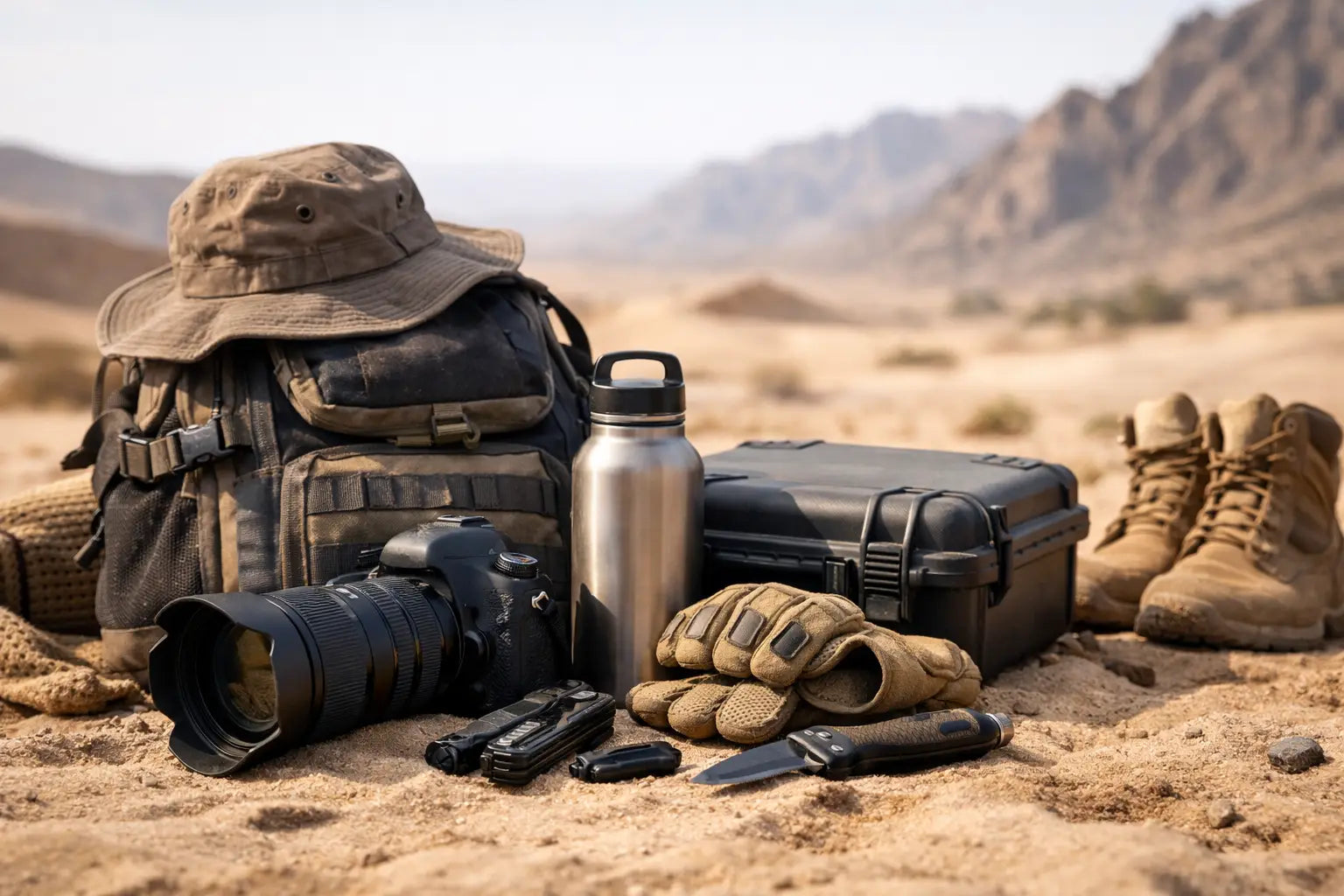
A cheap plastic tote warped in the back of a truck, a dead battery at a trailhead, and a water bottle that tastes like hot rubber are all reminders that desert conditions punish weak gear fast. When people ask what gear survives desert heat, the right answer is not a brand name or one magic material. It is gear built for sustained UV exposure, high interior vehicle temperatures, abrasive dust, and use far from shade, pavement, or a quick replacement.
Desert-ready equipment should do its job after hours in direct sun, after being bounced across a washboard road, and after being covered in fine dust. That standard changes what belongs in your vehicle, pack, camp box, and range bag.
What Gear Survives Desert Heat in Real Use?
Start with materials. Heat-resistant gear is usually simple, purpose-built, and easy to inspect. Look for metal where plastic failure would create a safety problem, UV-stable polymers where weight matters, and fabrics designed to resist sun damage rather than just look tactical.
The desert also exposes a common mistake: buying gear based only on its indoor specifications. A power bank may work perfectly in a climate-controlled house but throttle, swell, or shut down when left on a dashboard. A low-cost cooler may hold ice for an afternoon at the park yet become a warm storage box after a full day in the Arizona sun.
Durability matters, but so does serviceability. Gear with replaceable straps, standard batteries, accessible seals, and simple mechanical parts is usually the better field choice. If a failure can leave you without water, navigation, shelter, vehicle recovery, or communications, avoid relying on a single lightweight consumer-grade item.
Clothing That Works Under Hard Sun
Desert clothing has one job before anything else: manage sun exposure while allowing sweat to evaporate. Long sleeves and long pants may feel counterintuitive to someone new to the Southwest, but lightweight coverage is often cooler and safer than bare skin under direct sun.
Choose loose-fitting shirts with UPF-rated fabric, breathable weave, and enough room to move without pulling tight across the shoulders. Synthetic technical fabrics dry quickly and handle sweat well, while lightweight merino can manage odor and temperature swings. Either can work. The better option depends on your activity, how many days you are out, and whether you can wash or dry clothing.
For pants, prioritize durable lightweight fabric, articulated knees, and pockets that do not become heat traps. Heavy cotton canvas has a place for brush work and range use, but it can hold sweat and become uncomfortable on long hikes. For hiking, scouting, or overlanding in high heat, lighter nylon blends are generally more practical.
A wide-brim hat offers the most all-around shade. A cap works well with eye protection but leaves ears and neck exposed, so add a neck gaiter or sun hood when needed. Sunglasses should have full UV protection and frames that stay secure when wet with sweat. Cheap foam padding and soft rubber coatings often break down quickly under heat, so inspect eyewear regularly.
Water Gear Must Protect Both Capacity and Temperature
Water is not an accessory in desert travel. It is the system that sets your range, recovery options, and margin for error. Carry more than one container type so one leak, lost bottle, or contaminated source does not end the trip.
Insulated stainless steel bottles are dependable for drinking water you want to keep cool. They are heavier than plastic but stand up to sun, repeated use, and rough handling. For bulk transport, use dedicated water jugs with thick walls, secure caps, and handles strong enough to lift when full. Food-grade, UV-resistant containers are worth the cost because thin plastic can become brittle over time.
Hydration reservoirs are useful for hiking and range days, but they need care. Heat can make water unpleasantly warm, and a reservoir stored in direct sun can become difficult to drink from fast enough. Keep it inside your pack, use an insulated hose sleeve if possible, and clean it after every trip. A backup bottle is still smart because hoses, bite valves, and fittings can fail.
Do not count on a small personal filter as your entire desert water plan. Filters are valuable for emergencies and known sources, but many desert routes have no dependable water to filter. Pack water for the route, the delay, and the unexpected overnight.
Power Gear: Keep Batteries Out of the Heat
Heat shortens battery life, reduces charging performance, and can create a real safety issue with damaged lithium-ion packs. Do not leave phone batteries, camera packs, headlamps, power banks, or radios cooking on a dashboard or in an exposed cargo area.
For vehicle use, choose a jump pack rated for the engine size you actually drive and store it in an insulated, shaded location when possible. Check its charge before every trip. A compact jump pack is useful, but it is not a substitute for maintaining your vehicle battery, terminals, and charging system.
Portable power stations can support camp lighting, communications, and small appliances, but their limits matter in summer. Most have operating and charging temperature ranges. Charging a hot battery pack in direct sun is a poor plan, even if the unit is advertised for outdoor use. Set power equipment under shade, allow airflow around it, and avoid sealing it inside a hot vehicle.
Solar panels are useful in the desert because sunlight is plentiful, but their output falls when panels get extremely hot. A portable panel with adjustable legs can be aimed for better output and kept off scorching ground. Treat solar as a way to extend power, not a guarantee that you can run every convenience item without managing consumption.
Storage, Coolers, and Containers That Hold Up
A good desert storage system keeps dust out, gear organized, and heat-sensitive items out of direct exposure. Hard cases and heavy-duty totes made from UV-stable polymer last longer than bargain bins, especially when tied down in an open bed or exposed trailer. Look for reinforced lids, reliable latches, and gaskets when dust control matters.
Not every item belongs in a sealed box. Wet clothing, recovery straps, and damp camp gear need to dry before long-term storage. Sealing moisture inside a case can lead to odor, corrosion, and mildew. Use hard cases for electronics, medical supplies, optics, and mission-critical equipment. Use ventilated bags or open storage for items that need airflow.
Coolers should be selected based on trip length and access, not just insulation claims. A hard cooler with thick insulation and a solid lid is the better choice for multi-day vehicle travel. A soft cooler is easier to carry and works well for a short range day or lunch stop, but it will not hold ice as long in 110-degree conditions. Keep any cooler shaded, open it less often, and separate drinking water from food so you are not constantly dumping cold air.
Vehicle Recovery and Trail Tools Need More Than Strength
Recovery gear lives in a harsh environment: sun, dust, vibration, and often long periods of neglect before it is needed. Buy recovery straps, soft shackles, and kinetic ropes from reputable sources, then inspect them before use. UV exposure can weaken synthetic fibers over time, especially if gear spends every day exposed in a truck bed.
Store soft recovery gear in a bag or enclosed compartment. Keep it clean and dry after mud, water crossings, or use around fuel and oil. Metal recovery hardware should be checked for corrosion, damaged threads, sharp edges, and deformation. A strong shackle is not safe if the recovery point on the vehicle is questionable.
Your tire system deserves equal attention. Carry a quality air compressor rated for the work, a reliable tire gauge, valve tools, plugs, and a full-size spare in usable condition. Desert trails often punish tires long before the engine becomes the problem. The compressor should be tested at home, not for the first time on a hot shoulder with a low tire.
Small Gear That Earns Its Space
Some of the most useful desert equipment is compact and unglamorous. A fixed-blade knife or sturdy folding knife, a metal multi-tool, a headlamp, work gloves, a basic trauma-capable first-aid kit, and paper maps all earn their place because they do not depend on cell service or perfect conditions.
Headlamps should use common batteries or have a rechargeable system you can support in the field. Keep spare batteries in a protected pouch, not loose in a hot glove box. Gloves need enough dexterity for vehicle work and enough protection for hot metal, cactus, sharp rock, and recovery hardware.
For navigation, do not depend on one phone app. Use offline maps, carry a backup power source, and know the route well enough to make decisions if your screen fails. A paper map may feel old-school, but it does not overheat, lose signal, or run out of battery.
Buy for Exposure, Then Maintain for It
The best desert gear is not necessarily the heaviest or most expensive. It is the gear matched to its job, protected from unnecessary exposure, and checked before it becomes urgent. Arizona Desert Gear customers know the difference between equipment that looks tough in a product photo and equipment that stays useful after a summer of dust, sun, and hard miles.
Build your kit around water, shade, mobility, communications, and recovery. Then take it outside, test it in the conditions you actually face, and replace weak links before the desert finds them for you.

