

Cart
0
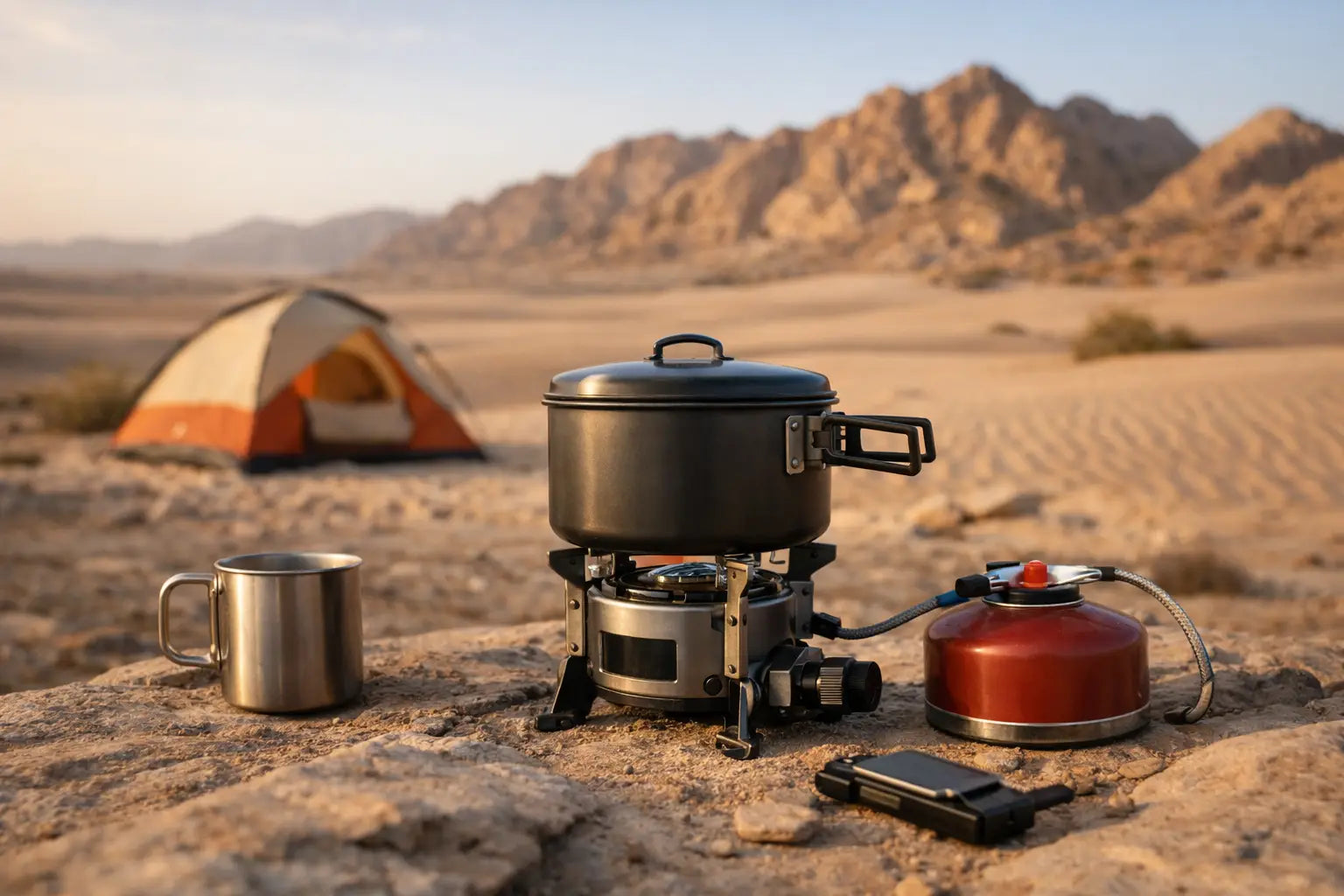
A stove that boils water quickly in a shaded backyard can become a bad piece of gear on an exposed Arizona mesa. Wind strips heat from the pot, loose ground makes narrow supports unstable, and a fuel canister left in direct sun creates a real safety problem. Knowing how to pick a desert camp stove means looking past the advertised boil time and choosing a setup that stays useful when the terrain is hot, dusty, uneven, and a long drive from the nearest store.
Start With Your Desert Travel Style
The right stove depends on how you move through the desert. A solo hiker carrying every ounce on their back needs something different from an overlander cooking for four people from a truck bed. Start by being honest about your trip, your menu, and how often you will actually cook.
For fast day trips, trail coffee, and simple dehydrated meals, a compact upright canister stove is often enough. These stoves are light, quick to deploy, and easy to pack. Their weak point is stability. A small burner screwed directly onto a fuel canister can feel top-heavy with a wide skillet or a full pot of water.
For vehicle-based camping, hunting camps, and longer off-road routes, a remote-canister stove or liquid-fuel stove gives you more control. Remote-canister models sit lower to the ground and usually support larger cookware better. They also work well with a proper windscreen when used according to the manufacturer’s instructions. Liquid-fuel stoves require more practice and maintenance, but they make sense for remote travel where you want a fuel source that is easier to find and carry in larger quantities.
If your camp meals involve more than boiling water, do not buy around minimum packed weight alone. A stove that cannot safely handle your cookware is not saving you anything.
Choose Fuel for Heat, Resupply, and Run Time
Fuel is the first real decision when you pick a desert camp stove. Each fuel type has a place, but none is automatically best in every Southwest condition.
Canister Fuel: Fast and Simple
Isobutane-propane canisters are the easy choice for many campers. They light quickly, burn clean, and eliminate priming or fuel-bottle maintenance. For weekend trips near established campgrounds or towns, they are hard to beat for convenience.
The desert catch is heat management. Do not leave canisters on a dashboard, tailgate, or bare rock in direct sun. High temperatures raise internal pressure, and canisters should never be stored where they can overheat. Keep them shaded, upright, and away from your cooking area until needed.
Canister availability also matters. Common threaded canisters are easy to find in many places, but not every small town or rural gas station will have the size or fuel blend you need. Carry enough for the trip, plus a margin for unexpected wind or longer cook times.
Liquid Fuel: Built for Longer, More Remote Runs
White gas stoves are a strong option for extended desert travel. Fuel bottles pack efficiently, run for a long time, and can be refilled rather than discarded. Some multi-fuel models can also run on unleaded gasoline in an emergency, though that should be treated as a backup option because it burns dirtier and can foul components.
The trade-off is complexity. You need to pump the bottle, prime the stove, manage flare-ups during startup, and keep the fuel line and jet clean. If you choose liquid fuel, practice at home before relying on it at a remote camp. The first time you prime a stove should not be after sunset with wind blowing through camp.
Propane: Best for Base Camp Cooking
Standard propane systems are practical for vehicle camping, larger groups, and real cooking with larger pots or griddles. They are generally stable, familiar, and easy to operate. The downside is bulk. Small disposable cylinders add up quickly, while refillable propane setups need space and secure transport.
For an overland kitchen or a family campsite, that extra bulk may be worth it. For a hike into a canyon, it usually is not.
Prioritize Wind Performance Over Advertised Boil Time
Desert wind changes stove performance fast. A burner can have plenty of heat output on paper and still struggle when a steady gust pushes the flame away from the pot. The result is wasted fuel, slow meals, and frustration when you are trying to make coffee before breaking camp.
Look for a burner head that distributes heat evenly and a stove design that keeps the flame protected without blocking necessary airflow. Wider pot supports also help keep cookware centered when the wind is moving through camp.
A windscreen can improve efficiency, but use it correctly. Never wrap an upright canister stove tightly with a windscreen. Trapped heat can overheat the fuel canister. Instead, use natural shelter where safe, position your cooking area behind a vehicle or rock outcrop, and follow the stove maker’s guidance. Remote-canister and liquid-fuel stoves are often better suited to more complete wind protection, but they still need ventilation and clearance from dry grass or brush.
Do not cook inside a tent, vehicle, rooftop tent, or enclosed awning. Carbon monoxide and fire risk are not worth the shortcut.
Match Stove Stability to Your Cookware
A desert camp stove needs a level, clear spot. That sounds simple until you are parked on decomposed granite, cooking beside a sandy wash, or working around sharp rock. Small feet sink into soft sand. Tiny pot supports wobble on uneven ground. A heavy cast-iron skillet can turn a lightweight backpacking stove into a tipping hazard.
Choose a stove with a wide base if you use pots larger than one liter, cook for more than two people, or make meals that require stirring. Remote-canister stoves generally offer better low-center stability. Some upright stoves can work well with a canister stabilizer, but that does not replace a firm cooking surface.
Set up on mineral soil, bare rock, or another cleared, nonflammable surface where permitted. Keep extra fuel, food packaging, and camp chairs out of the immediate cooking zone. In dry conditions, a small stove accident can become more than a ruined dinner.
Get Enough Output, but Do Not Chase BTUs Alone
High BTU ratings are useful, especially when wind and cold desert nights are working against you. But more output does not always mean better cooking. A powerful burner that only has an on-off feel can scorch tortillas, burn rice, and waste fuel. For most desert campers, flame control matters as much as maximum heat.
Look for a stove that can bring water to a boil quickly but also hold a low simmer. This is especially useful for one-pan meals, coffee, oatmeal, and cooking with a skillet. A regulated canister stove can maintain steadier performance as fuel levels drop, while a basic unregulated model may weaken in cooler temperatures or near the end of a canister.
Consider your typical elevation, too. Arizona travel can shift from low Sonoran Desert country to high-elevation pine zones in a single day. A stove that works fine in warm lowlands may need more fuel and more wind protection on a cold, elevated overnight stop.
Think About Dust, Cleaning, and Field Repairs
Fine desert dust gets into everything. A complicated stove with exposed moving parts may still be a good choice, but only if you are willing to maintain it. Keep burner ports clear, protect threads and valves during transport, and pack the stove in a dedicated pouch or hard case instead of letting it rattle loose in a camp box.
For longer trips, carry the small items that can save a meal: a lighter or stormproof matches, a basic repair kit if your stove supports one, and a backup method for heating water. That backup might be a second compact stove, a small propane burner in a vehicle camp, or simply enough no-cook food to cover a delay.
Check local fire restrictions before every trip. A camp stove may be allowed when wood or charcoal fires are prohibited, but rules vary by land manager and current conditions. A stove is a controlled cooking tool, not permission to ignore closures, wind advisories, or posted fire rules.
A Quick Desert Stove Check Before You Buy
Before committing, make sure the stove fits these practical questions:
- Does it match the number of people and the cookware you actually use?
- Can you get enough compatible fuel for the full trip and an emergency margin?
- Will it stay stable on uneven ground and handle wind safely?
- Can you operate, clean, and repair it with the experience you have?
- Does it pack realistically with the rest of your vehicle or backpacking load?
A dependable desert stove should earn its space every time you pack it. Run a few meals with it in the wind, use the pots you plan to carry, and learn how much fuel your routine actually takes. When the sun drops, the trail gets quiet, and camp is still miles from pavement, that preparation is what turns a stove into useful gear.

