

Cart
0
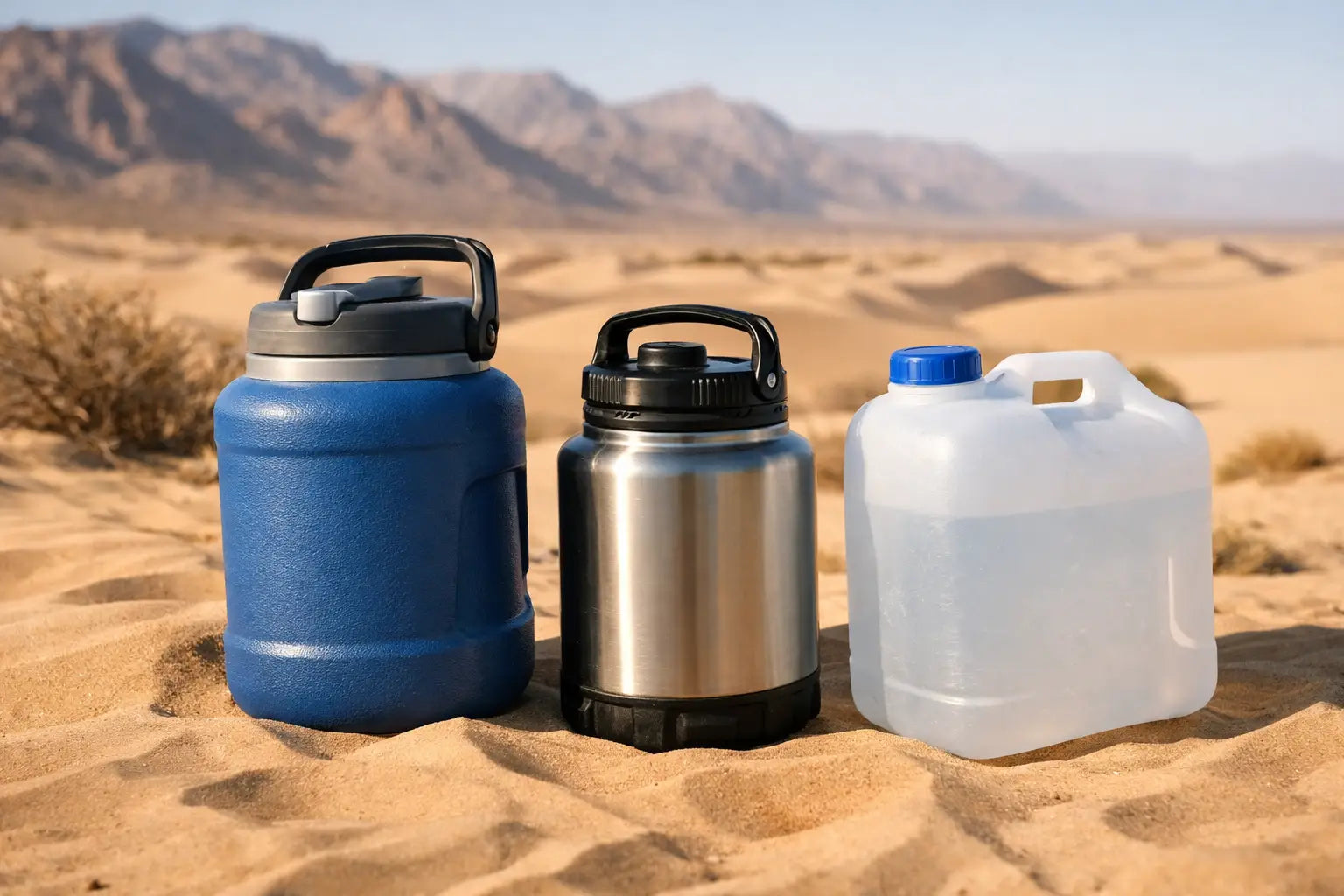
A cheap water container left in an Arizona truck bed can turn into a problem fast. Sun exposure, hot cargo areas, rough roads, and repeated refills punish weak plastic, loose caps, and poorly designed handles. The best heat safe water jugs are not simply big containers. They are dependable water storage built to keep drinking water protected when the day gets hot and the road gets rough.
For desert travel, the right jug depends on how you use it. A family car-camping setup needs a different water solution than a solo trail rig, range bag, work truck, or emergency cache. Capacity matters, but material, closure design, placement, and cleaning habits matter just as much.
What Heat-Safe Really Means for Water Jugs
“Heat-safe” gets used loosely. No water jug can make water stored in direct desert sun stay cool indefinitely. A non-insulated container will absorb heat, and even an insulated jug will eventually warm up in a sealed vehicle parked in triple-digit temperatures.
For practical purposes, a heat-safe water jug should do three jobs. It should be made from food-safe material suitable for potable water, hold its shape without warping or failing under normal hot-weather use, and protect the water from dust, leaks, and contamination. Insulation is a separate advantage. It slows heat gain, but it does not replace smart storage.
Avoid treating a standard utility can or random hardware-store container as drinking-water storage unless it is clearly made and labeled for potable water. A container that is tough enough for fuel, chemicals, or general utility use is not automatically safe for drinking water.
Best Heat Safe Water Jugs by Use Case
The strongest choice is usually the one that matches your trip, your vehicle, and your refill plan.
Insulated stainless steel jugs for hot-day drinking water
An insulated stainless steel jug is the best option when you need cold drinking water available through the day. Quality double-wall stainless models handle heat well, resist retained odors, and are easier to keep free of flavor transfer than many plastic containers. They are a solid fit for day hikes, range sessions, base camp, job sites, and passenger-seat access during long drives.
The trade-off is capacity and weight. Large stainless jugs get heavy quickly, especially once full. They also take up more room than flexible bladders or stackable rectangular containers. For most people, a one- to two-gallon insulated jug works best as ready-to-drink water, not as the entire water supply for a multi-day overland trip.
Look for a wide mouth that is easy to scrub, a cap tether that will not disappear in the dirt, and a lid design you can operate with dusty hands. A built-in dispensing spout is useful around camp, but it adds another part that needs cleaning.
Food-grade HDPE jugs for bulk water storage
For carrying several gallons in a vehicle, food-grade high-density polyethylene, commonly called HDPE, is the desert standard for a reason. It is relatively light, impact resistant, and less prone to shattering than brittle plastic. Opaque or dark-colored HDPE also protects water from sunlight better than clear containers.
A well-made HDPE jug is ideal for overlanding, dispersed camping, off-road recovery kits, emergency supplies, and camp cooking. Choose a purpose-built potable-water container with a secure gasketed cap and a handle that feels substantial when the jug is full. Five gallons of water weighs more than 41 pounds before adding the container, so handle strength is not a minor detail.
HDPE is tough, but it is not invincible. Do not leave it strapped to an exposed roof rack for days in direct summer sun if you can avoid it. Keep it inside the vehicle, under a tonneau cover, in a shaded cargo area, or inside an insulated storage box. That protects both the container and the quality of the water.
Stackable water jugs for vehicle organization
Stackable, rectangular water containers make sense when cargo space is tight. Their shape lets them ride more securely against a truck bed wall, in a drawer system, or on the floor behind a seat. Compared with round jugs, they waste less space and are easier to brace against shifting on washboard roads.
The right stackable jug should have molded grip points, a reinforced base, and a cap positioned where you can pour or fill without removing every container from the vehicle. A spigot can be convenient, but it should be protected from impacts. An exposed plastic spout is an easy failure point when gear shifts or a trail gets rough.
For longer trips, carrying two or three smaller containers is usually smarter than relying on one oversized tank. Separate jugs make weight easier to manage, give you backup if one leaks, and let you reserve one container for drinking water while using another for washing up.
Collapsible water jugs for backup capacity
Collapsible jugs save space when empty, making them useful as secondary storage. They are handy for base camp, planned refill stops, or carrying extra water home after a trip. They are not usually the first choice for permanent truck storage or hard off-road travel.
Heat, sharp gear, repeated folding, and abrasion can shorten the life of soft-sided containers. If you use one, keep it out of direct sun, inspect seams before each trip, and pack it where tools and recovery gear cannot rub through it. A collapsible jug works best as a backup, not as the only water source in remote country.
How to Choose the Right Capacity
Start with how much water you actually need, then add a margin for heat, delays, and vehicle trouble. In hot desert conditions, drinking water disappears faster than most people expect. You also need water for cooking, basic cleanup, pets, and unexpected problems.
For a day trip, a personal insulated jug plus reserve water in the vehicle is a practical setup. For overnight camping, plan for more than your normal daily intake, especially if hiking, working outside, or traveling with kids or dogs. A multi-day trip calls for distributed storage: accessible drinking water, protected bulk water, and an emergency reserve you do not touch unless needed.
Do not fill every available space with one giant container. A 7-gallon jug may sound efficient, but it is awkward to lift, hard to secure, and a major loss if it cracks or contaminates. Two to four smaller jugs are easier to pack and safer to handle.
Features That Matter in Desert Conditions
A strong cap and gasket are more valuable than a fancy-looking exterior. Dust works its way into weak threads, and a poor seal can turn clean water into a gritty mess. Screw caps should thread smoothly and close firmly without requiring excessive force.
Wide-mouth openings make cleaning easier, which matters after the jug has been sitting in warm conditions. Narrow-mouth jugs can be fine for daily drinking, but they are harder to inspect and scrub. If you cannot clean the interior properly, you should not depend on it for repeated field use.
Handles deserve close attention. A thin molded handle may be fine at two gallons but flex badly at five. Test the grip, check for sharp edges, and make sure you can carry the jug with gloves on. For vehicle storage, choose a shape that can be strapped down without crushing the body or stressing the lid.
Keeping Water Safer and Cooler on the Road
Even the best jug needs smart placement. Keep drinking water out of direct sunlight and away from hot metal surfaces, exhaust-adjacent storage, and areas that bake behind rear glass. In an SUV, the cargo area can become extremely hot. A light-colored cover, insulated tote, or shaded footwell can make a noticeable difference.
Fill jugs with cool, clean water before departure. If you are using insulated containers, pre-chilling them helps. For plastic bulk containers, do not freeze them completely unless the manufacturer specifically allows it. Expanding ice can deform a jug, stress seams, or damage a cap.
Clean water jugs after every trip, not only when they look dirty. Empty them, wash with warm soapy water, rinse thoroughly, and allow them to dry completely with the cap off. For deeper cleaning, use a food-safe sanitizing method appropriate for potable-water containers, then rinse according to the product instructions. Stored dampness is where odor and buildup start.
A Practical Desert Water Setup
For most Arizona travel, the most reliable setup is not one “perfect” jug. Use an insulated jug for water you will drink that day, food-grade HDPE containers for protected bulk supply, and a small sealed reserve that stays untouched unless plans change. This approach keeps cold water within reach without betting the whole trip on one container.
Arizona Desert Gear customers know the rule: gear should make a bad day more manageable, not create another failure point. Choose water jugs built for potable water, protect them from direct heat, secure them for rough roads, and carry more water than the map says you should need. When the trail runs longer than planned, dependable water storage is not extra gear. It is part of the plan.

