

Cart
0
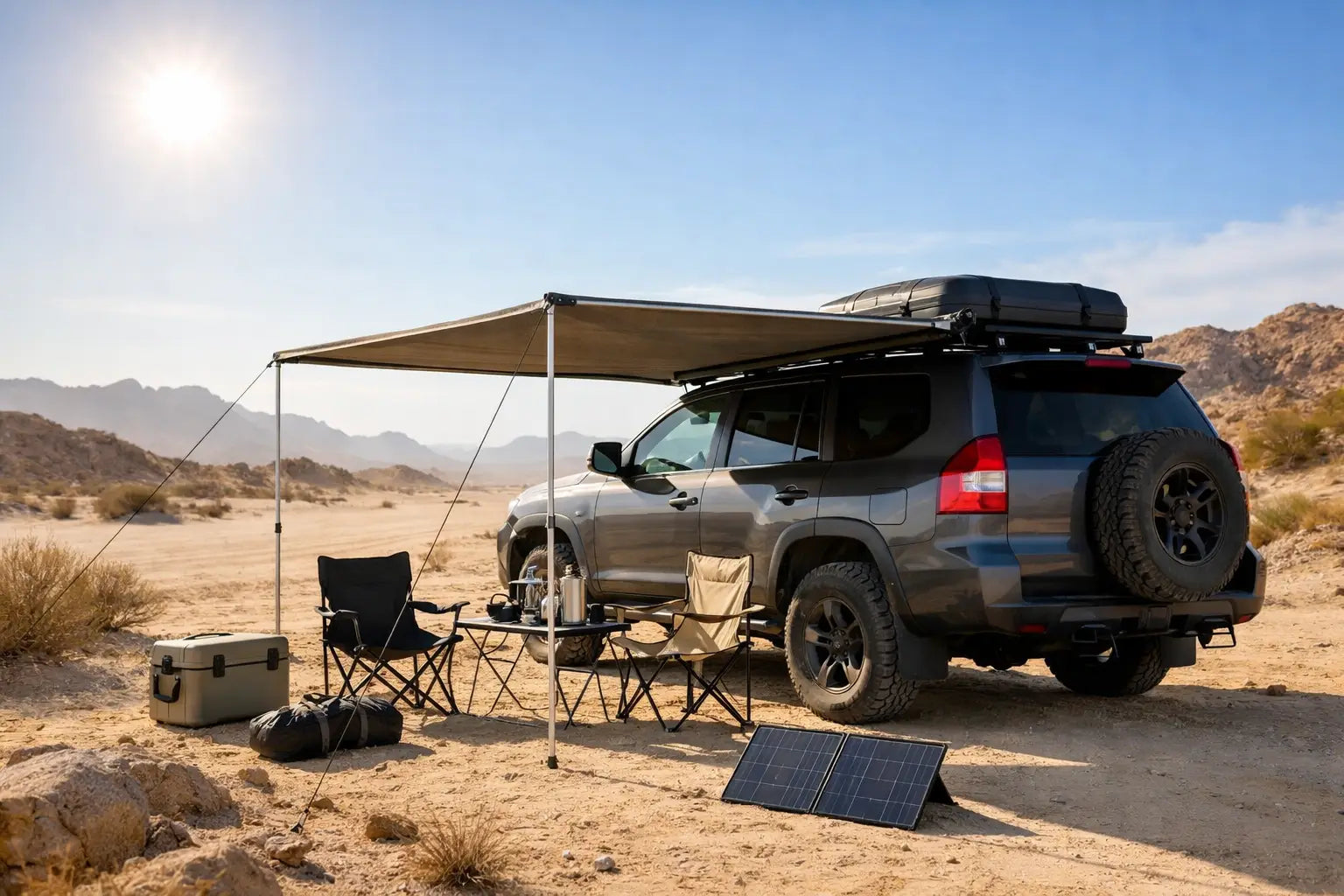
By noon, the side of your truck or SUV can turn into a heat reflector. A solid vehicle awning setup creates usable shade where you need it most: beside the cooler, over the camp kitchen, or next to the tailgate after a long trail day. But desert shade only works when the awning is mounted correctly, placed with the sun in mind, and secured for the wind that often shows up without warning.
For Arizona overlanding, dispersed camping, range days, and trailhead breaks, an awning is not just a comfort item. It can make hot-weather travel more manageable. The difference between a useful shelter and a flapping liability usually comes down to a few practical decisions made before you leave pavement.
Start With the Right Vehicle Awning Setup
The first decision is not fabric color or whether you want walls. It is where the awning will mount and whether the vehicle can support it safely. Most awnings attach to a roof rack, crossbars, bed rack, camper shell rack, or dedicated mounting brackets. The rack needs enough stated capacity for the awning's weight, the brackets, and the load created by wind when the awning is open.
Do not assume factory crossbars are suitable just because they can carry a cargo box. An awning creates leverage well beyond its listed weight. A 40-pound awning mounted high on a vehicle can put significant force on the rack, fasteners, and mounting points when a gust catches the canopy. Use hardware designed for your specific rack system, follow torque specifications, and recheck every bolt after the first few trips.
Mounting height matters too. A high roofline gives you more headroom, but it can make deployment harder and expose the awning to more wind. A lower mounting position is easier to reach and can provide better protection from low-angle sun, though tall campers may need to duck near the outer edge. Before tightening anything down, open the awning in your driveway and check clearance around doors, rear hatches, rooftop tents, and fuel cans.
The side you choose depends on how you use the vehicle. A driver-side awning is common because it provides a consistent work area when parked on the shoulder or trail. A passenger-side awning may make more sense if your camp kitchen, fridge slide, or tailgate access is arranged on that side. There is no universal answer. Set it up around your actual camp routine rather than what looks best in a product photo.
Match the Awning Shape to Your Use
Straight pull-out awnings are simple, compact, and usually the best fit for quick shade stops. They work well for a lunch break, fishing access, or covering a camp table. A 270-degree awning covers more area around the rear of the vehicle and can make a stronger base camp, especially for pickup beds and SUVs with rear storage access.
The trade-off is weight, cost, and setup time. Larger wraparound units need more care in the wind and may require more mounting support. Freestanding designs are convenient in calm conditions, but desert campers should still treat legs, stakes, and guy lines as standard equipment, not optional accessories.
Choose Camp Placement Before You Unroll It
In the Southwest, shade shifts fast. Parking with the awning facing east may feel smart during morning coffee, then leave your cooking area exposed by early afternoon. Take one minute to look at the sun's path, the slope of the ground, and the direction of the wind before committing to a parking spot.
If you are stopping for a few hours, position the awning toward the strongest afternoon sun. In much of Arizona, that often means planning for west or southwest exposure. If you are staying overnight, think beyond shade. Avoid washes, low spots, and loose sandy ground where stakes will not hold. Desert weather can be calm at camp and violent a few ridgelines away. Monsoon storms, dry microbursts, and passing fronts can turn a clear evening into a hard wind event in minutes.
Level ground is not just a comfort issue. An uneven vehicle can leave awning legs at awkward angles, reduce rain runoff, and make the fabric pool water if a storm rolls through. If the vehicle cannot be level, adjust the leg heights so one corner sits lower. That gives water a place to run instead of collecting overhead.
Keep the canopy clear of thorny brush and low branches. Mesquite, palo verde, and catclaw can tear fabric or snag the cover during packing. Give yourself enough room to walk around the awning without brushing against guy lines, especially after dark.
Deploy It Like Wind Is Coming
Desert wind is the main reason awnings get damaged. It is also the reason people damage roof racks, bend support arms, or rip mounting bolts out of weak crossbars. The safest habit is simple: secure the awning from the moment it is open.
Start by parking on stable ground and setting the parking brake. Release the cover, unroll or swing out the canopy, and extend the legs fully before loading the fabric with tension. Adjust the legs so the canopy is taut but not overstretched. Fabric that sags catches wind and collects water, while fabric pulled too tight can strain seams and hinges.
Once the legs are down, stake them out. In hard-packed desert soil, standard thin tent stakes may bend or barely penetrate. Carry heavy-duty stakes suited for firm ground, along with a mallet or compact hammer. In loose sand, longer sand stakes, deadman anchors, or weighted bags may work better. Rocks can help as supplemental weight, but they are not a substitute for proper anchors when wind is building.
Guy lines matter even on awnings advertised as self-supporting. Run them from the outer corners at an angle that pulls away from the vehicle, then add tension gradually. Bright cord or small marker lights help prevent someone from walking into a line after sunset. If you have kids, dogs, or a busy camp kitchen, that small detail saves bruised shins and spilled dinners.
Never leave an open awning unattended. If you are heading down a trail, driving into town for ice, or turning in for the night when wind is forecast, pack it up. Awnings are excellent sun shelters, but they are not permanent structures. The fastest way to protect expensive gear is to close it before conditions force the decision.
Use Walls and Accessories With Purpose
Awning walls can make a major difference when the sun is low, the wind is blowing dust across camp, or you need privacy for changing. They also increase the surface area exposed to wind. That means walls should be installed only after the main awning is properly anchored, and they should come down first when conditions start deteriorating.
For hot, dry weather, a single sun wall on the west-facing side may be more useful than enclosing the entire area. Full enclosures can trap heat unless they have good mesh panels and ventilation. For cooking, keep stoves well away from the vehicle, awning fabric, fuel containers, and enclosed walls. Shade is useful, but it should never create a fire hazard.
A simple ground mat can reduce dust tracked into the vehicle and give you a cleaner place to sit or stage gear. Choose one that dries quickly and shakes out easily. Thick rugs and foam-backed mats collect dust, cactus debris, and moisture, then become another item that needs attention before packing.
Desert Care Keeps an Awning Reliable
Fine dust gets into everything, including zippers, hinge points, telescoping legs, and the awning cover. After a trip, open the awning at home if possible and let it dry completely. Brush off loose dirt, wipe down poles and brackets, and inspect the fabric for thorns, small tears, or abrasion near the vehicle side.
Packing an awning wet is a good way to create mildew and odor, even in Arizona. Desert air is dry, but morning dew, rain, and condensation can still get trapped in rolled fabric. If you have to pack it wet to leave camp, reopen it as soon as you can.
Check mounting hardware regularly, especially after rough roads and washboard trails. Look for loosening bolts, cracked brackets, worn straps, and shifted mounts. A quick inspection before each trip takes less time than dealing with a failed awning mount miles from the nearest hardware store.
Keep a Fast Pack-Up Plan
The best vehicle awning setup is one you can secure quickly. Keep stakes, guy lines, and the mallet in the same labeled bag every time. Practice packing the canopy so fabric is not caught in the cover or folded around the support arms. If two people usually camp together, make sure both know the order: remove walls, release guy lines, pull stakes, lower legs, fold or roll the canopy, then secure the cover.
At Arizona Desert Gear, we favor gear that earns its space on the vehicle. An awning should do exactly that: provide dependable shade, pack down without drama, and stand up to real use when it is correctly mounted and responsibly managed.
Set up early, anchor it well, and keep one eye on the horizon. Desert shade is valuable, but good judgment is what keeps it standing.

