

Cart
0
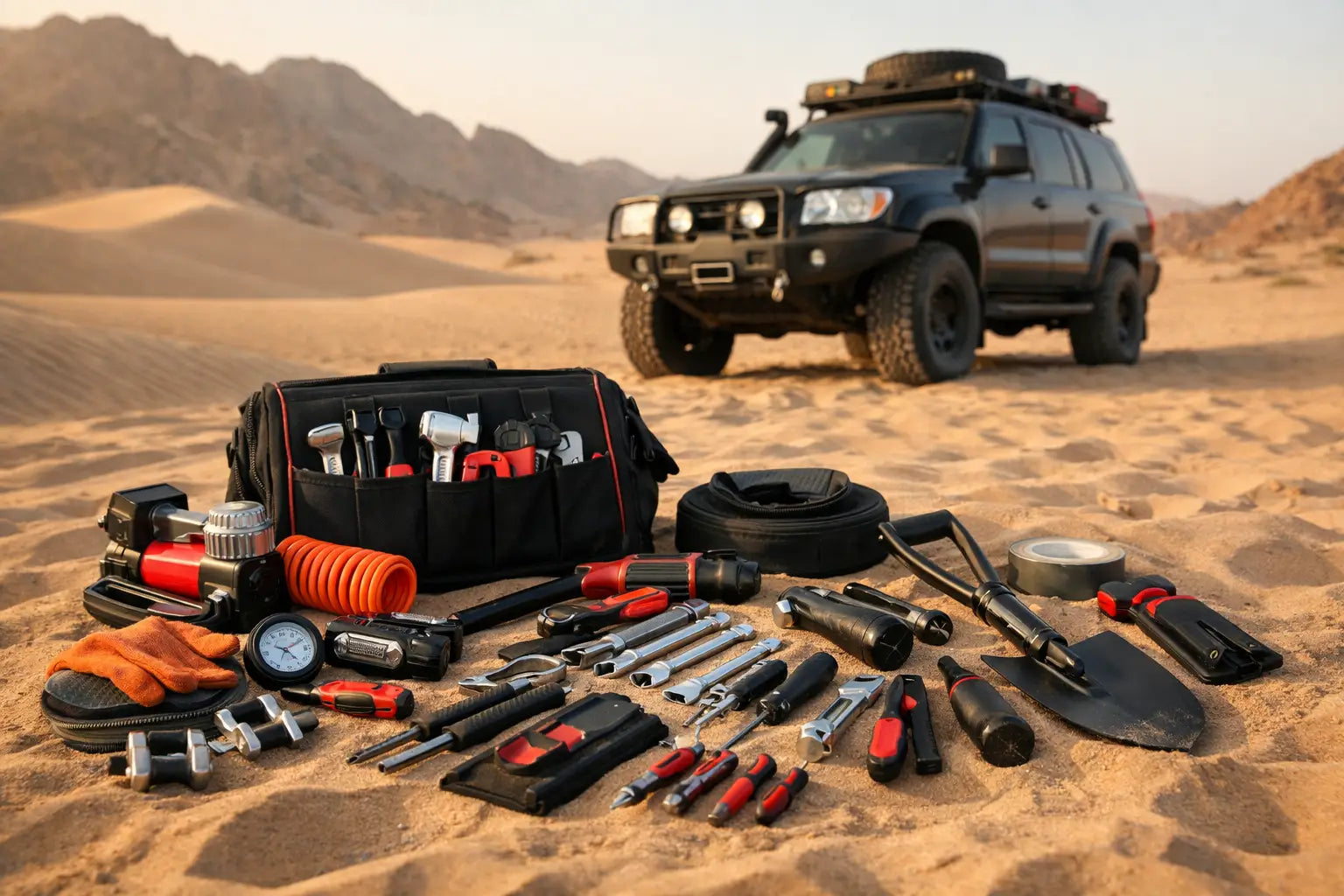
A broken hose clamp, a loose battery terminal, or one backed-out fastener can turn a solid trail day into a long walk in the sun. That is why the best off road tool kits are not the biggest ones on the shelf. They are the kits that let you handle real field repairs fast, in heat, dust, and uneven ground, without hauling a steel box full of tools you will never touch.
For desert travel, that matters even more. Arizona and the Southwest are hard on gear. Plastic gets brittle, cheap cases crack, chrome flakes, and bargain ratchets start slipping right when you need torque. A good off-road tool kit needs to earn its space in your rig. It should cover the most likely failures, stay organized when it gets tossed around, and hold up after months of vibration and dust.
What makes the best off road tool kits different
A basic mechanic set might look fine in a garage, but trail use exposes weak points quickly. The best off road tool kits are built around portability, repair coverage, and durability under bad conditions. That means a compact layout, secure tool retention, and fewer filler pieces.
What you want is a kit that solves common problems on your specific vehicle. That usually includes sockets in the sizes your rig actually uses, a decent ratchet, pliers that can grip under load, screwdrivers that do not cam out, and enough support tools to deal with wiring, clamps, and recovery hardware. If a set is loaded with tiny duplicate bits but skimps on core hand tools, it is built for retail display, not remote travel.
Heat matters too. In the desert, a tool bag can sit in a vehicle at punishing temperatures for hours. Soft pouches need strong stitching and zipper pulls that do not fail under grit. Molded cases need latches that stay shut and hinges that do not get fragile over time. Rubberized handles feel good in a store, but some get slick or start degrading after constant heat exposure.
Build your kit around the repairs you can actually make
A smart off-road kit starts with honesty. You are not rebuilding a transmission on the side of a trail. You are tightening, reconnecting, clamping, cutting, prying, patching, and swapping small parts. That should shape what goes in your kit.
For most trucks, SUVs, UTVs, and overland rigs, the core of the kit should be metric. Many imported vehicles and newer domestic models lean heavily on metric fasteners, though some older platforms still need SAE sizes in a few key places. If your vehicle uses both, do not carry full duplicate sets unless you know you need them. Check your rig in the driveway and note the exact sizes for battery clamps, skid plates, hose clamps, suspension hardware, and accessory mounts.
That is where many prebuilt kits miss the mark. They try to fit every buyer, so they include broad but shallow coverage. A better approach is to start with a strong base kit and tune it to your platform. Add the deep socket sizes you actually use. Add the Torx, Allen, or specialty bits required for your lights, rack, compressor, or winch. If your recovery points, beadlock wheels, or battery system need uncommon tools, those belong in the bag from day one.
The tools that matter most in the field
The ratchet and socket setup is the backbone. A 3/8-inch drive usually offers the best balance for trail repairs. It is compact enough to pack easily but strong enough for most fasteners you will touch away from home. A 1/4-inch drive helps with interior panels, hose clamps, and tighter spaces. A full 1/2-inch setup is useful if you are doing heavy suspension or wheel work, but it adds weight fast. For many drivers, one breaker bar and the correct lug tool make more sense than carrying a full heavy socket set.
Pliers matter more than many people think. Slip-joint pliers, needle-nose pliers, and locking pliers handle a wide range of field fixes. You may need to hold a stripped bolt, pinch a clamp, pull a fuse, crimp a connector, or bend damaged metal out of the way. Cheap pliers show their weakness quickly, especially when your hands are sweaty, dusty, or gloved.
A solid multi-bit screwdriver saves space, but only if the bit holder is strong and the bits fit cleanly. Stripped hardware is common in field repairs, and poor driver fit makes it worse. Hex keys, Torx bits, and a bit adapter often earn their keep on modern rigs with accessories bolted on from multiple brands.
Then there are the support items that separate a real trail kit from a basic socket set. Electrical tape, zip ties, mechanics wire, spare fuses, a valve core tool, tire plug gear, and a small test light or compact multimeter can solve problems that sockets cannot. A utility knife, headlamp, gloves, and a rag sound simple, but when repairs happen after dark or in blowing dust, simple matters.
Best off road tool kits by format
If you are shopping for the best off road tool kits, it helps to think in formats instead of brand names alone.
A compact roll-up kit works well for minimalist rigs, motorcycles, UTVs, and anyone trying to control weight. The big advantage is space efficiency and fast access. You can lay it out on a tailgate or the ground and see everything at once. The downside is lower capacity. If you need deep sockets, specialty pliers, or electrical repair items, a roll can get crowded fast.
A blow-molded hard case is common and can work well if the tool quality is there. These kits are easy to stack and protect tools from getting scattered in the back of the vehicle. The trade-off is bulk. Cases also tend to waste space, and some are frustrating to use if every piece does not snap back into place cleanly after a dusty repair.
A soft tool bag or zip pouch is often the most practical option for serious off-road travel. It allows you to build around your actual vehicle and mix standard hand tools with repair supplies. It is less tidy than a pre-cut hard case, but it packs better and adapts as your setup changes. For desert users, this flexibility is hard to beat.
What to avoid when comparing kits
The first red flag is piece-count marketing. A 250-piece kit sounds impressive until you realize a big chunk of that count comes from filler bits, duplicate hex keys, or tiny sockets you will never use. What matters is usable coverage, not a big number on the label.
The second problem is poor steel and weak engagement. Ratchets with vague teeth, sockets that fit loosely, and bits that round out under pressure are not just annoying. They can turn a manageable repair into damaged hardware on the trail. That is the last thing you want when daylight is fading and the nearest pavement is miles away.
Watch the case and layout too. If tools fall out of their slots every time the kit gets bounced around, it is going to become a loose pile in your cargo area. Dust gets into everything, so simple organization wins. The easier it is to inventory your kit at a glance, the more likely you are to notice what is missing before a trip.
How to set up a desert-ready tool kit
In the Southwest, dust control and heat resistance deserve more attention than they usually get. Fine grit works into ratchets, zippers, and hinges. Keep critical tools in pouches or sleeves inside the main bag, and avoid overpacking so tightly that you cannot put things back quickly.
Use a bag that can handle vibration and rough storage. Reinforced seams and heavy zipper tracks are worth paying for. If you carry metal tools in a hard-mounted drawer system, consider basic anti-rattle organization so your kit does not beat itself up over miles of washboard roads.
It also helps to separate repair categories. Keep your main hand tools together, tire repair items together, and electrical supplies together. That saves time and cuts down on mistakes when the sun is high and you are working fast. Arizona Desert Gear customers usually care less about a showroom-perfect kit and more about grabbing the right tool without digging through a mess.
The right kit depends on your vehicle and trip style
There is no single answer for everyone. A weekend trail rig that stays within radio range of other vehicles can get away with a tighter kit. A solo overland truck running remote desert routes needs more depth, more spares, and more electrical coverage. A UTV kit may prioritize compact tools, tire repair, and quick-access storage. A full-size truck with aftermarket armor, onboard air, and lighting needs a broader mix.
The best strategy is simple. Start with quality core hand tools, match them to your vehicle, and leave room for the failure points you know you are likely to face. A well-built 30-piece kit that fits your rig is better than a generic 180-piece set full of dead weight.
Before your next trip, open your bag and ask one question. If something loosens, cracks, leaks, or loses power fifty miles from pavement, do you have the tools to deal with it without guessing? If the answer is yes, your kit is doing its job.

