

Cart
0
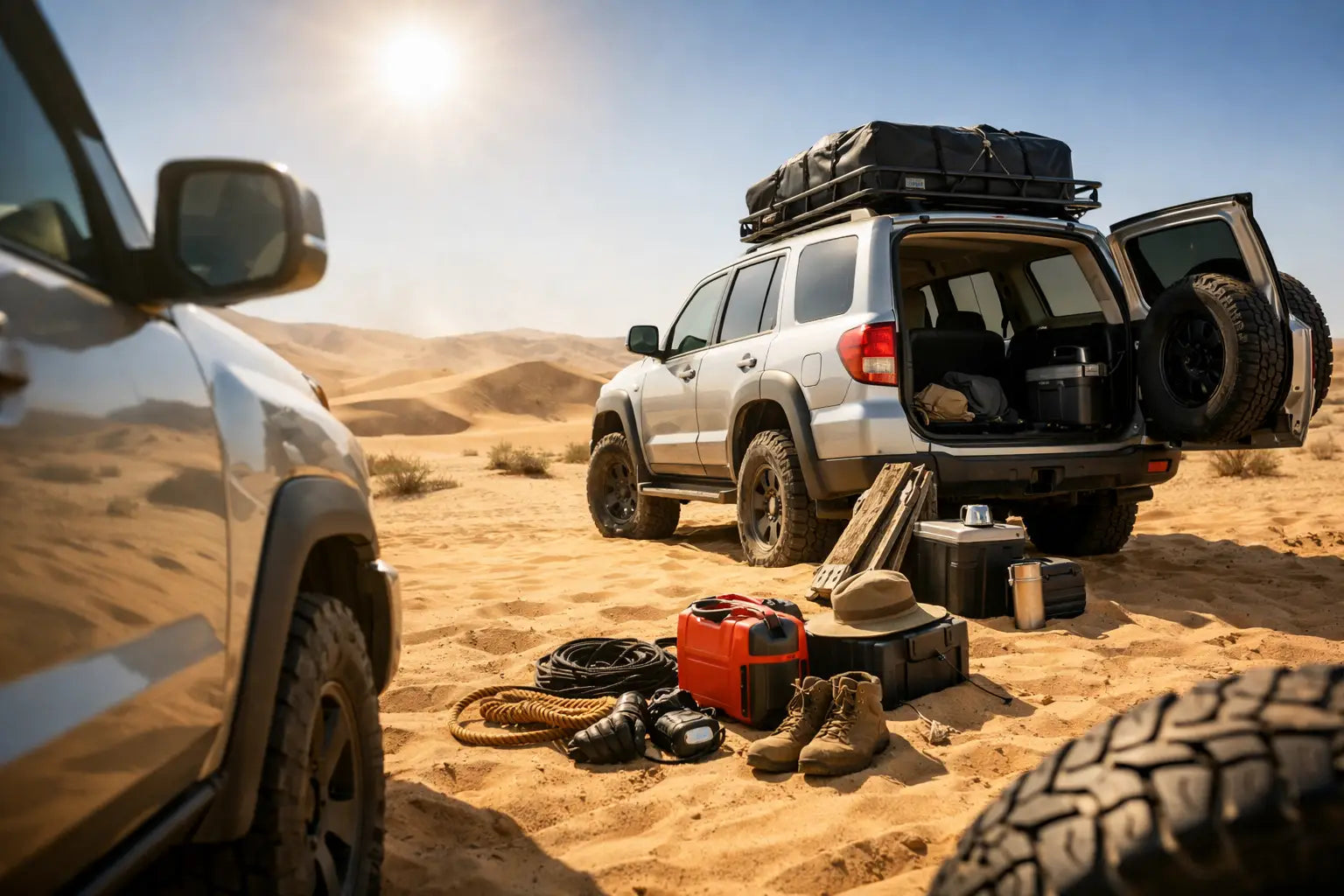
A blown hose, a soft tire, or a dead battery can turn a short desert run into a long walk in triple-digit heat. This desert vehicle readiness guide focuses on the gear, inspections, and margins that matter when your vehicle is operating far from pavement, shade, and reliable cell service.
Desert travel puts pressure on every system at once. Heat works on the engine and battery. Sand works on tires and air filters. Washboard roads loosen hardware. Sharp rock punishes sidewalls and undercarriage protection. A vehicle that performs fine around town may not be ready for an Arizona backroad, a remote range day, or a weekend overlanding route.
Start With a Sound Vehicle Baseline
No recovery board, cooler, or tool kit can make up for basic maintenance that was skipped. Before adding desert-specific equipment, start with the vehicle itself. Check fluid levels and look for leaks around the engine, transmission, differential, transfer case, shocks, and brake lines. A small seepage issue may be manageable near home, but it deserves attention before a remote trip.
Your cooling system needs special attention. Inspect hoses for cracking, swelling, or soft spots. Confirm clamps are secure, the radiator is clean, and the coolant level is correct when the engine is cold. If your temperature gauge has been creeping higher than normal during climbs, towing, or slow trail work, solve that problem before heading deeper into the desert. Do not assume a full coolant reservoir means the system is healthy.
Belts, battery terminals, and electrical connections also deserve a close look. High heat is hard on batteries, and vibration can turn a marginal terminal connection into a no-start situation. If the battery is old, slow to crank, or showing corrosion around the terminals, replace or service it before relying on it in remote country.
Tires Are Your First Line of Readiness
Tires do more than carry the vehicle. They manage traction, ride control, braking, and ground clearance. Inspect tread depth, sidewalls, valve stems, and the spare tire. A spare with low pressure, dry rot, or no matching lug key is not a real spare.
Choose tires that fit how you actually travel. All-terrain tires are a sensible choice for many mixed-use rigs, while more aggressive terrain may call for stronger sidewalls and a more open tread pattern. The trade-off is often road noise, fuel economy, and wear. For most desert drivers, dependable construction and correct pressure matter more than an aggressive-looking tread.
Bring a quality tire gauge and portable air compressor. Lowering pressure can improve traction and reduce harsh impacts on rough roads, but it is not a universal fix. Pressure should match the terrain, tire construction, vehicle weight, and load. Going too low increases the chance of unseating a bead or damaging a sidewall, especially on rocky routes.
Build Real Margins for Water, Fuel, and Power
Desert readiness is about having enough reserve to handle a change of plans. Water, fuel, and battery power should be treated as safety margins, not just trip conveniences.
Carry drinking water beyond what you expect to consume. Plan for passengers, pets, unexpected delays, and the possibility that the vehicle may not move for several hours. Keep some water inside the cabin where it is easier to access, and protect additional containers from direct sun and damage. A dedicated water supply for the vehicle can also help with basic cleanup or a temporary cooling-system emergency, but it should not replace the correct coolant mixture when repairs are available.
Fuel use in the desert is rarely the same as highway fuel use. Deep sand, low-range driving, steep terrain, idling, headwinds, and extra cargo all reduce range. Fill up before leaving pavement, know the distance between reliable fuel stops, and avoid planning around the range shown on the dash. An approved fuel container can add useful reserve capacity, but it must be mounted securely and kept away from ignition sources.
Power planning matters too. Charge phones, navigation devices, lights, radios, and battery packs before departure. A vehicle charger is useful, but a separate power bank gives you backup if the vehicle electrical system fails. If you run a fridge, camp lighting, air compressor, or communications equipment, understand how much power those items draw and how long your battery can support them without risking a no-start.
Desert Vehicle Readiness Guide: Recovery and Repair
Recovery gear is not just for deep sand. It can help with a low-clearance hang-up, loose gravel, muddy monsoon roads, or a tire that needs immediate attention. The key is bringing equipment that matches your vehicle and knowing how to use it without creating a worse problem.
A practical recovery kit should include rated recovery points, a properly rated strap or kinetic rope, soft shackles or rated hardware, gloves, a shovel, traction boards, and a tire repair kit. Do not connect a recovery strap to a trailer ball. Trailer balls can fail under load and become dangerous projectiles.
For desert travel, a basic field repair kit earns its space. Carry the tools needed to change a tire, tighten loose hardware, make minor hose or wiring repairs, and address a puncture. That usually means a lug wrench that fits, a jack that works on uneven ground, a jack base, sockets, pliers, screwdrivers, zip ties, tape, spare fuses, work gloves, and a headlamp.
Pack for the Repairs You Can Actually Make
There is no need to carry a full shop for every day trip. Pack according to your vehicle, route, and skill level. If you know how to repair a tire plug, carry the kit and compressor. If you run an older vehicle with a known weak hose or sensor, carrying that specific spare can be smarter than packing random parts.
The same rule applies to recovery equipment. Practice using your compressor, traction boards, jack, and recovery strap before you need them. A remote trail is the wrong place to learn that your jack will not lift the vehicle high enough or that your recovery points are hidden behind an accessory bumper.
Protect the People Before the Vehicle
A capable rig still needs capable occupants. Keep sun protection, first-aid supplies, navigation, communication, and shade within easy reach. A wide-brim hat, sunglasses, sunscreen, long sleeves, and lightweight gloves are practical field equipment, not optional extras.
Navigation should not depend on one app or one cell signal. Download offline maps, bring a paper map for the area, and tell someone where you are going and when you expect to return. A satellite communicator or emergency beacon adds a major layer of security on routes where cellular coverage is unreliable.
Heat illness can build faster than people expect, especially when loading gear, digging a vehicle out, or hiking for help. Stop early when someone feels dizzy, nauseated, confused, unusually fatigued, or unable to cool down. Shade, water, rest, and a change of plan are often the right call. Pushing through because the destination is close is how manageable trouble becomes an emergency.
Load the Rig for Access, Not Just Capacity
A vehicle can carry a lot of gear and still be poorly organized. Put the items you may need quickly where you can reach them without unloading half the cargo area. Water, first aid, a fire extinguisher, communications, headlamps, and recovery gloves should not be buried under camp equipment.
Secure heavy gear low and close to the vehicle's center. Loose containers become hazards on rough roads, while roof loads raise the center of gravity and make crosswinds more noticeable. Roof storage is useful for lightweight, bulky items, but it is not the place for every piece of equipment.
Dust management is also part of packing. Use sealed bins for food, electronics, and clean clothing. Keep an extra air filter if your route involves extended travel behind other vehicles or through fine powdery conditions. A clogged air filter can reduce performance when the engine is already working hard in heat.
Run a Route-Specific Check Before You Leave
The right setup for a maintained dirt road is different from the right setup for deep sand, rock shelves, or a remote two-track. Check the weather, including monsoon conditions and flash-flood risk. Desert washes can become hazardous quickly when storms are miles away.
Before departure, confirm five things: your route and backup exit, your fuel range, your water supply, your communication plan, and your tire condition. Then take a final walk around the vehicle. Look for leaks, loose cargo, low tires, hanging straps, open latches, and anything that could rub, rattle, or fail after the first hour of washboard.
Desert travel rewards patience more than speed. If the heat is climbing, the route is rougher than expected, or the vehicle starts showing warning signs, turn around while you still have options. The best piece of desert gear is often the judgment to save the hard miles for another day.

